.avif)
.jpg)
Qatar's Prime Minister Sheikh Mohammed bin Abdulrahman Al Thani met one on one with U.S. Vice President J.D. Vance on May 8, with no aides present, to coordinate efforts aimed at ending the Iran conflict. For LNG exporters, this diplomatic engagement creates immediate margin pressure worth approximately $4-6/MMBtu. JKM prices rebounded to low-USD 18s/MMBtu on April 30 as concerns intensified over prolonged closure of the Strait of Hormuz amid escalating tensions in the Middle East. The current $15.94 JKM-Henry Hub spread embeds war risk premiums that Qatar's 77 MTPA export capacity captures but only while Gulf shipping remains constrained. Successful ceasefire negotiations eliminate this diplomatic dividend.
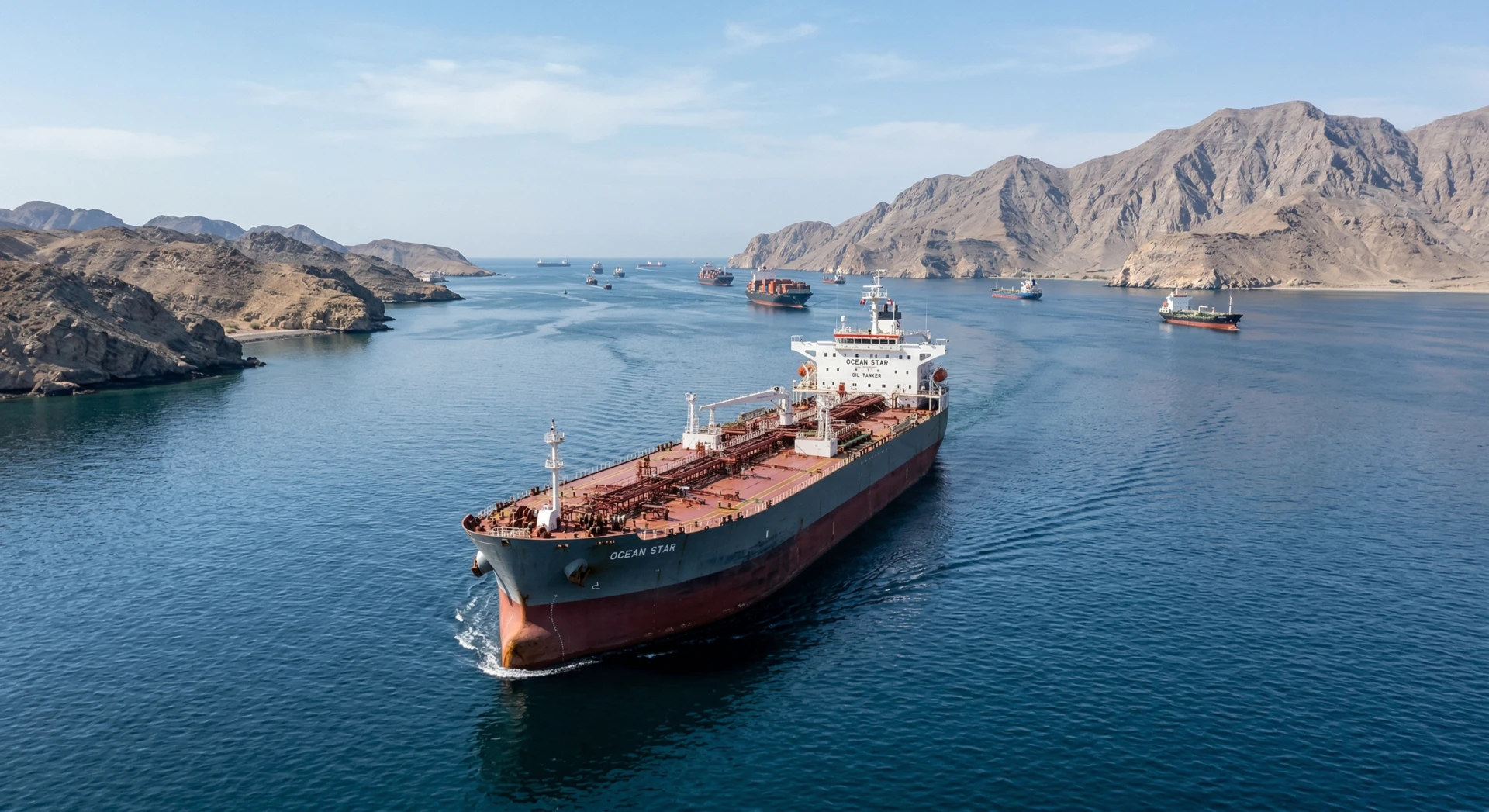
A letter of credit (LC) a bank guarantee that payment will be made once shipping documents are presented becomes the instrument through which Qatar's conflicted position materializes. Prime Minister Keir Starmer has said that UK priorities include reopening the Strait of Hormuz and restoring freedom of navigation. Until the US–Israeli war against Iran, the Strait of Hormuz was open and about 25% of the world's seaborne oil trade and 20% of the world's liquefied natural gas (LNG) passed through it. Qatar's Ras Laffan facility exports 70% of its LNG through Hormuz under normal conditions. Each day the strait remains contested, Qatar captures an additional premium estimated at $3-4/MMBtu above long-term contract pricing, reflecting buyer willingness to pay for non-Gulf supply.
Qatar has been quietly operating as a go-between, while allowing Pakistan to play the main mediating role, according to sources familiar with the matter. While the Trump administration had wanted Qatar to serve as the main conduit, finding its services useful during the Gaza war and other world conflicts, Doha has been hesitant to take on a more prominent role in the Iran talks, believing it would be blamed if they collapsed or accused of bias toward Iran by pro-Israel hawks if the negotiations bore fruit. This reluctance reflects commercial calculation. Qatar's North Field expansion adds 49 MTPA by 2030, requiring stable offtake agreements. Being perceived as Iran-sympathetic threatens buyer relationships in key markets including South Korea and Japan.
Consider a representative transaction: a Q-Flex LNG carrier (capacity 210,000 cubic meters) loading at Ras Laffan for delivery to Incheon. Under pre-crisis contracts, the delivered margin was approximately $8-12/MMBtu. On the same day, a tanker carrying LNG from Qatar drew attention as it passed through the Strait of Hormuz without an Iranian attack for the first time since the war broke out. According to ship tracking data compiled by Bloomberg, the Al Karaana was loaded at the Ras Laffan export facility earlier this month before transiting the strait. This successful transit signals operational normalization but also eliminates approximately $800,000-1.2 million in war risk premiums that would otherwise accrue per cargo.
Freight is not a rounding error it is where margins concentrate under crisis conditions. In the days before the strikes, war-risk ship insurance premiums for the strait increased from 0.125% to between 0.2% and 0.4% of the ship insurance value per transit. For very large oil tankers, this is an increase of a quarter of a million dollars. LNG carriers face similar cost structures. For a $200 million vessel, the additional war risk premium adds $150,000-500,000 per voyage. Qatar's shipping subsidiaries including Nakilat with its 74 vessel LNG fleet capture these premiums when rates are passed to charterers, but lose them when Hormuz normalizes.
On the buy side: Asian utilities securing spot LNG through Qatar face conflicted incentives. Asia-Pacific buyers in Japan, South Korea, and China, who collectively account for the majority of global LNG demand, face supply shortfalls and elevated spot premiums when Qatari LNG cannot transit the strait. During the 2022 European energy crisis, Asian LNG spot prices reached $40–60 per MMBtu above historical contract pricing norms, demonstrating the premium markets will pay when supply security is threatened. JERA and KOGAS prefer diplomatic resolution to reduce supply risk, even at the cost of higher baseline pricing when Qatar faces reduced competition from sanctioned or disrupted Russian volumes.
On the sell side: QatarEnergy confronts strategic complexity beyond immediate pricing. QatarEnergy declared force majeure on all LNG shipments on March 4, 2026, after Iranian attacks on its Ras Laffan facilities. Europe gets 12% to 14% of its LNG from Qatar. All of it previously transited the Strait of Hormuz. QatarEnergy's force majeure declaration directly affects European energy supplies heading into spring. The force majeure mechanism protects Qatar legally but damages long-term buyer confidence. Successful mediation allows Qatar to lift force majeure and restore European supply relationships, but at normalized pricing that eliminates crisis premiums.
For large integrated operators Total, Shell's LNG portfolio, ExxonMobil's Qatari joint ventures ceasefire success triggers immediate contract renegotiation pressure. Long-term agreements signed during the crisis embed war risk premiums of $2-3/MMBtu that become commercially unsustainable if Hormuz reopens permanently. Buyers invoke material adverse change clauses or threaten arbitration. For smaller regional operators independent LNG traders, specialized shipping companies, regional utilities without derivatives access successful mediation eliminates the arbitrage opportunities that crisis conditions create, forcing return to lower-margin baseline operations.
The fundamental tension emerges clearly: The Qatari prime minister told news outlet al-Araby al-Jadeed there is a "high probability" that the U.S. and Iran will reach a deal. Qatar benefits from being the mediator that resolves the crisis enhancing diplomatic capital and long-term strategic relationships while simultaneously losing the commercial premiums that crisis conditions generate. For observers: monitor the JKM-TTF spread alongside diplomatic progress announcements through May 15. Successful ceasefire implementation should compress the spread from current levels above $10/MMBtu to historical norms of $2-4/MMBtu within 30 days of confirmed Hormuz normalization.
.jpg)
.jpg)

'%3e%3cg id='Final-Copy-2_2_' transform='translate(1275.000000, 200.000000)'%3e%3cpath class='st0' d='M7.4,12.8h6.8l3.1-11.6H7.4C4.2,1.2,1.6,3.8,1.6,7S4.2,12.8,7.4,12.8z'/%3e%3c/g%3e%3c/g%3e%3c/g%3e%3cg id='final---dec.11-2020'%3e%3cg id='_x30_208-our-toggle' transform='translate(-1275.000000, -200.000000)'%3e%3cg id='Final-Copy-2' transform='translate(1275.000000, 200.000000)'%3e%3cpath class='st1' d='M22.6,0H7.4c-3.9,0-7,3.1-7,7s3.1,7,7,7h15.2c3.9,0,7-3.1,7-7S26.4,0,22.6,0z M1.6,7c0-3.2,2.6-5.8,5.8-5.8 h9.9l-3.1,11.6H7.4C4.2,12.8,1.6,10.2,1.6,7z'/%3e%3cpath id='x' class='st2' d='M24.6,4c0.2,0.2,0.2,0.6,0,0.8l0,0L22.5,7l2.2,2.2c0.2,0.2,0.2,0.6,0,0.8c-0.2,0.2-0.6,0.2-0.8,0 l0,0l-2.2-2.2L19.5,10c-0.2,0.2-0.6,0.2-0.8,0c-0.2-0.2-0.2-0.6,0-0.8l0,0L20.8,7l-2.2-2.2c-0.2-0.2-0.2-0.6,0-0.8 c0.2-0.2,0.6-0.2,0.8,0l0,0l2.2,2.2L23.8,4C24,3.8,24.4,3.8,24.6,4z'/%3e%3cpath id='y' class='st3' d='M12.7,4.1c0.2,0.2,0.3,0.6,0.1,0.8l0,0L8.6,9.8C8.5,9.9,8.4,10,8.3,10c-0.2,0.1-0.5,0.1-0.7-0.1l0,0 L5.4,7.7c-0.2-0.2-0.2-0.6,0-0.8c0.2-0.2,0.6-0.2,0.8,0l0,0L8,8.6l3.8-4.5C12,3.9,12.4,3.9,12.7,4.1z'/%3e%3c/g%3e%3c/g%3e%3c/g%3e%3c/g%3e%3c/svg%3e) Privacy Choices
Privacy Choices