.avif)
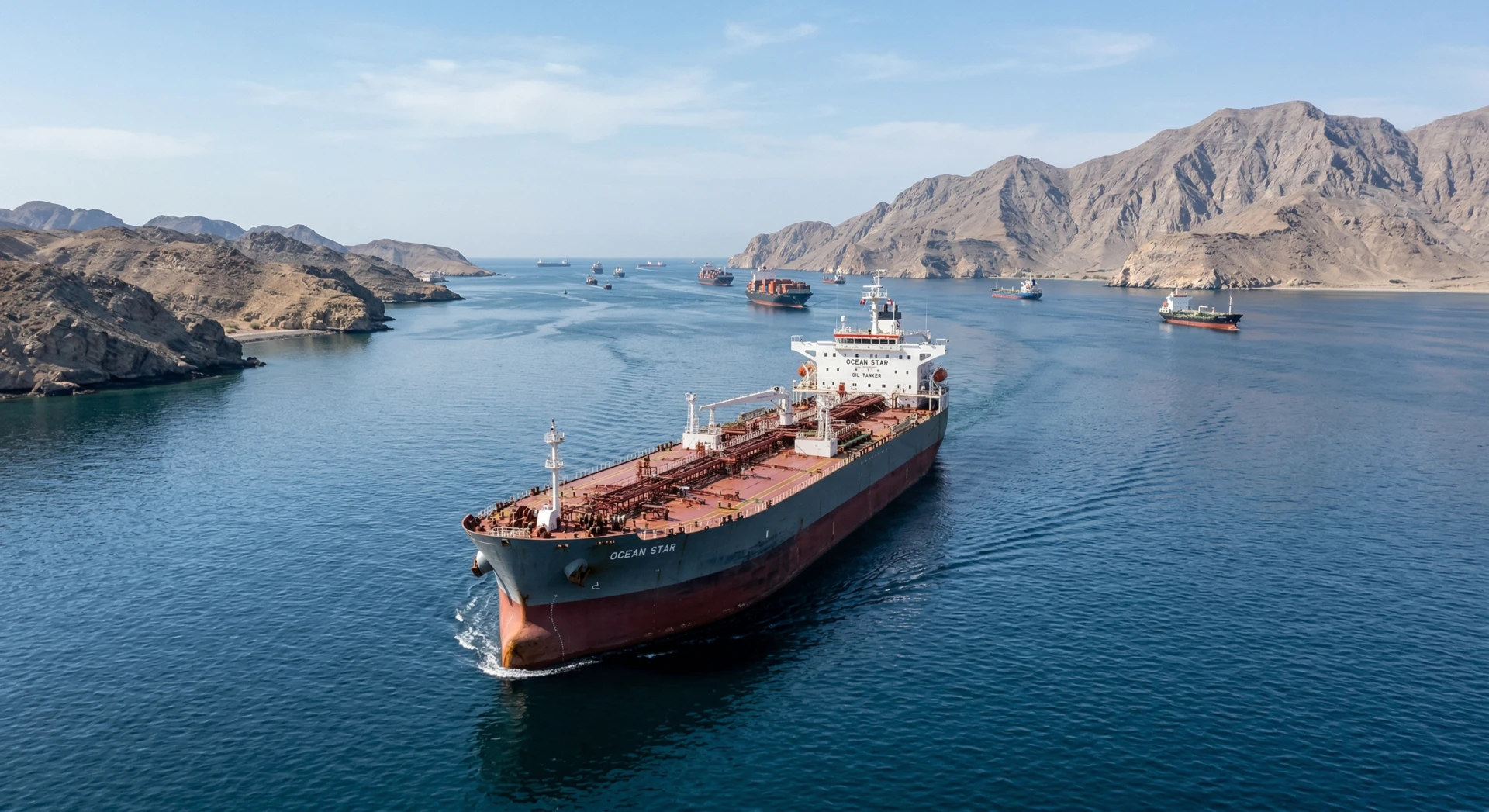
European gas utilities face immediate margin compression of €15–20/MWh as ECB President Christine Lagarde's refusal to step down signals prolonged energy price volatility from the Iran conflict. Lagarde told Bloomberg TV "When there is big clouds on the horizon, the captain does not leave the ship — and this captain is not going to leave the ship, because I see clouds," effectively confirming that central bank policy will remain reactive to energy shocks rather than preventative. The Strait of Hormuz — a narrow waterway through which about 25% of the world's seaborne oil trade and 20% of the world's liquefied natural gas (LNG) passed until the February blockade — has created what the International Energy Agency has characterised as the "largest supply disruption in the history of the global oil market". For utilities operating on thin regulated margins, this translates directly into unrecoverable cost increases that cannot be immediately passed through to consumers.
The mechanics are straightforward and punishing. TTF Gas fell to 42.95 EUR/MWh on April 14, 2026, down 7.46% from the previous day, but it is still 25.28% higher than a year ago. Consider a mid-sized German utility that typically procures 2 TWh annually through forward contracts priced at €35/MWh pre-crisis. At current spot rates of €43/MWh, the utility faces an additional €16 million in annual procurement costs — equivalent to roughly 3–4% of total revenue for a typical regional distributor. This assumes successful procurement; the reality is worse. The disruption of transit via the Strait of Hormuz has reduced LNG supplies from Qatar and the United Arab Emirates by over 300 million cubic metres per day since 1 March. This translates into a loss of over 2 billion cubic metres (bcm) of gas supply every week. European utilities now compete against Asian buyers offering premium rates for scarce alternative supplies.
Lagarde's scenario planning reveals the policy trap. The scenario analysis suggests that a prolonged disruption in the supply of oil and gas would result in inflation being above, and growth being below, the baseline projections. The ECB's March projections forecast headline inflation to average 2.6% in 2026, 2.0% in 2027 and 2.1% in 2028, but Lagarde told Bloomberg Television "We are in between the baseline and the adverse" scenarios for the Iran war. For utilities, this means no immediate rate relief and continued procurement pressure. Backwardation — where near-term gas prices exceed forward prices — signals buyers need physical supply immediately, forcing utilities into spot markets at peak penalty rates.
On the buy side: Large integrated utilities (E.ON, Engie, Iberdrola) with diversified supply books can partially hedge through existing Norwegian pipeline contracts and North American LNG arrangements, though at elevated basis differentials. Regional municipal utilities and cooperative suppliers face existential pressure — they lack the credit facilities for large spot purchases and cannot easily diversify supply sources mid-contract year. On the sell side: Norwegian pipeline operators and US LNG exporters capture the scarcity premium, but European renewable developers see delayed investment as utilities redirect capital toward emergency procurement. For traders and intermediaries: The margin concentrates in physical supply chains and storage arbitrage, not financial derivatives.
Lagarde's commitment to remain through her October 2027 term removes one uncertainty but confirms another: European gas utilities must navigate this supply crisis with reactive monetary policy rather than proactive intervention. For large integrated traders (Shell, Total, a national oil company's trading arm) with derivatives access: hedge residual gas exposure through Henry Hub-TTF spreads and consider storage monetization strategies before winter injection season begins in April. For smaller regional operators — municipal utilities, independent distributors, regional cooperatives — without derivatives access: fix bilateral supply terms immediately with Norwegian producers, diversify storage arrangements across multiple hubs, and accelerate demand response programs. For observers: monitor ECB policy meeting minutes scheduled for April 25 — any reference to "energy pass-through mechanisms" or "temporary accommodation measures" signals potential utility-specific policy tools. The TTF-Henry Hub spread, currently at record levels above €25/MWh, indicates European premium sustainability through summer 2026.
.jpg)
.jpg)

'%3e%3cg id='Final-Copy-2_2_' transform='translate(1275.000000, 200.000000)'%3e%3cpath class='st0' d='M7.4,12.8h6.8l3.1-11.6H7.4C4.2,1.2,1.6,3.8,1.6,7S4.2,12.8,7.4,12.8z'/%3e%3c/g%3e%3c/g%3e%3c/g%3e%3cg id='final---dec.11-2020'%3e%3cg id='_x30_208-our-toggle' transform='translate(-1275.000000, -200.000000)'%3e%3cg id='Final-Copy-2' transform='translate(1275.000000, 200.000000)'%3e%3cpath class='st1' d='M22.6,0H7.4c-3.9,0-7,3.1-7,7s3.1,7,7,7h15.2c3.9,0,7-3.1,7-7S26.4,0,22.6,0z M1.6,7c0-3.2,2.6-5.8,5.8-5.8 h9.9l-3.1,11.6H7.4C4.2,12.8,1.6,10.2,1.6,7z'/%3e%3cpath id='x' class='st2' d='M24.6,4c0.2,0.2,0.2,0.6,0,0.8l0,0L22.5,7l2.2,2.2c0.2,0.2,0.2,0.6,0,0.8c-0.2,0.2-0.6,0.2-0.8,0 l0,0l-2.2-2.2L19.5,10c-0.2,0.2-0.6,0.2-0.8,0c-0.2-0.2-0.2-0.6,0-0.8l0,0L20.8,7l-2.2-2.2c-0.2-0.2-0.2-0.6,0-0.8 c0.2-0.2,0.6-0.2,0.8,0l0,0l2.2,2.2L23.8,4C24,3.8,24.4,3.8,24.6,4z'/%3e%3cpath id='y' class='st3' d='M12.7,4.1c0.2,0.2,0.3,0.6,0.1,0.8l0,0L8.6,9.8C8.5,9.9,8.4,10,8.3,10c-0.2,0.1-0.5,0.1-0.7-0.1l0,0 L5.4,7.7c-0.2-0.2-0.2-0.6,0-0.8c0.2-0.2,0.6-0.2,0.8,0l0,0L8,8.6l3.8-4.5C12,3.9,12.4,3.9,12.7,4.1z'/%3e%3c/g%3e%3c/g%3e%3c/g%3e%3c/g%3e%3c/svg%3e) Privacy Choices
Privacy Choices