.avif)
.jpg)
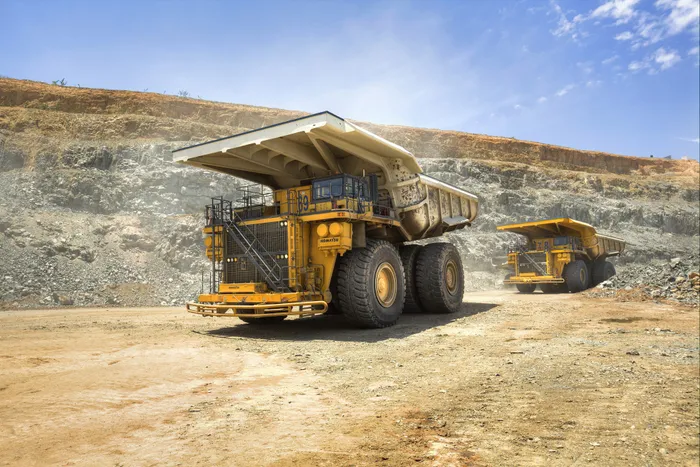
Quebec Premier Christine Fréchette met with U.S. Trade Representative Jamieson Greer in Washington D.C. on April 27, marking her first official foreign trip since taking office earlier this month, as 50% Section 232 tariffs on aluminum apply to Canadian products regardless of USMCA qualification. For Quebec aluminum smelters shipping primary aluminum ingot to U.S. buyers, this tariff adds approximately $1,759/MT to current LME aluminum prices of $3,518/MT, erasing margins entirely on shipments that previously earned $25-35/MT. The United States receives 73.5% of Quebec's $91.2 billion in exports, with aluminum among the primary commodities. Smelters cannot absorb this cost they either shut capacity or redirect tonnage to alternative markets that lack the payment terms, logistics infrastructure, and contract flexibility that make U.S. sales viable.
Fréchette's office didn't release details of her meeting with Greer, but the premier told Radio-Canada their discussions were cordial but did not lead to any major breakthroughs. Section 232 tariffs a national security authority that allows the U.S. president to impose tariffs on specific foreign industries after Department of Commerce investigation were increased to 50% on Canadian steel and aluminum from 25% in June 2025. The timing matters: negotiations between Canada, the U.S. and Mexico on the continental free-trade pact are scheduled to begin July 1. The U.S. is trying to coax Canada's aluminum and steel sectors to expand in the U.S. in order to enjoy tariff relief, essentially leveraging trade access to relocate North American aluminum production southward. U.S. Trade Representative Greer told lawmakers last week: "There are two countries that have retaliated economically against the United States in the past year: the People's Republic of China and Canada".
For large integrated aluminum producers Rio Tinto, Alcoa, or Norsk Hydro's North American operations with derivatives capabilities, the U.S. Department of Commerce has released new procedures allowing certain steel and aluminum producers in Canada and Mexico to qualify for reduced Section 232 tariffs but only if they commit to building new primary production capacity inside the United States. Approved producers will receive a reduced Section 232 tariff rate. The cut can reach 50%, but never drop below 25%. This still represents a $879/MT burden on current aluminum prices, but it provides a mechanism for large operators to secure U.S. market access by committing capital to American facilities. All imported material must meet USMCA rules and be melted and poured or smelted in Canada or Mexico, maintaining some integration while incentivizing southward investment. For smaller regional smelters independent Quebec facilities without downstream integration or balance-sheet capacity for U.S. plant construction no comparable relief mechanism exists.
On the buy side, U.S. aluminum consumers face immediate supply tightening and price increases. Aluminum futures in the UK rose to around $3,520 per tonne, hovering near a more than four-year high as the continued blockage of the Strait of Hormuz threatens a prolonged disruption to Middle Eastern supply. The Persian Gulf accounts for roughly 9% of global primary aluminum. Quebec's capacity withdrawal from U.S. markets compounds this supply pressure. U.S. domestic aluminum production already running near capacity gains pricing power equivalent to the tariff differential, extracting roughly $1,700/MT additional margin from consumers without capacity additions. On the sell side, Quebec smelters face an impossible arithmetic: on a $500,000 shipment of manufactured goods with a 4% MFN rate, USMCA qualification represents a difference of $70,000 in duties, but aluminum faces Section 232 tariffs regardless of USMCA compliance. Route diversification to European or Asian markets requires renegotiating payment terms, securing new logistics arrangements, and accepting longer transit times typically adding 15-25 days to European destinations compared to U.S. Great Lakes delivery.
The share of imports from Canada and Mexico claiming an exemption under USMCA has surged to 85% in aggregate by January 2026, but steel and aluminum products face the highest effective tariff rates at 41.1%, reflecting both existing Section 232 tariffs and later rate increases on June 4 from 25% to 50%. Investment bank Jefferies puts the odds of USMCA renewal at just 10%, with a 75% probability that the agreement slides into a decade of annual reviews and 15% odds of full withdrawal. For aluminum market observers, monitor the LME aluminum premium for U.S. Midwest delivery currently trading around $210/MT above LME cash. If Quebec tonnage diverts permanently from U.S. markets, expect this premium to spike toward $300-350/MT by July, signaling supply tightening that cannot be resolved by incremental domestic production increases. Track also the aluminum futures curve structure: sustained backwardation beyond three months indicates physical supply stress that tariff policy has created but market fundamentals cannot quickly resolve.




'%3e%3cg id='Final-Copy-2_2_' transform='translate(1275.000000, 200.000000)'%3e%3cpath class='st0' d='M7.4,12.8h6.8l3.1-11.6H7.4C4.2,1.2,1.6,3.8,1.6,7S4.2,12.8,7.4,12.8z'/%3e%3c/g%3e%3c/g%3e%3c/g%3e%3cg id='final---dec.11-2020'%3e%3cg id='_x30_208-our-toggle' transform='translate(-1275.000000, -200.000000)'%3e%3cg id='Final-Copy-2' transform='translate(1275.000000, 200.000000)'%3e%3cpath class='st1' d='M22.6,0H7.4c-3.9,0-7,3.1-7,7s3.1,7,7,7h15.2c3.9,0,7-3.1,7-7S26.4,0,22.6,0z M1.6,7c0-3.2,2.6-5.8,5.8-5.8 h9.9l-3.1,11.6H7.4C4.2,12.8,1.6,10.2,1.6,7z'/%3e%3cpath id='x' class='st2' d='M24.6,4c0.2,0.2,0.2,0.6,0,0.8l0,0L22.5,7l2.2,2.2c0.2,0.2,0.2,0.6,0,0.8c-0.2,0.2-0.6,0.2-0.8,0 l0,0l-2.2-2.2L19.5,10c-0.2,0.2-0.6,0.2-0.8,0c-0.2-0.2-0.2-0.6,0-0.8l0,0L20.8,7l-2.2-2.2c-0.2-0.2-0.2-0.6,0-0.8 c0.2-0.2,0.6-0.2,0.8,0l0,0l2.2,2.2L23.8,4C24,3.8,24.4,3.8,24.6,4z'/%3e%3cpath id='y' class='st3' d='M12.7,4.1c0.2,0.2,0.3,0.6,0.1,0.8l0,0L8.6,9.8C8.5,9.9,8.4,10,8.3,10c-0.2,0.1-0.5,0.1-0.7-0.1l0,0 L5.4,7.7c-0.2-0.2-0.2-0.6,0-0.8c0.2-0.2,0.6-0.2,0.8,0l0,0L8,8.6l3.8-4.5C12,3.9,12.4,3.9,12.7,4.1z'/%3e%3c/g%3e%3c/g%3e%3c/g%3e%3c/g%3e%3c/svg%3e) Privacy Choices
Privacy Choices