.avif)
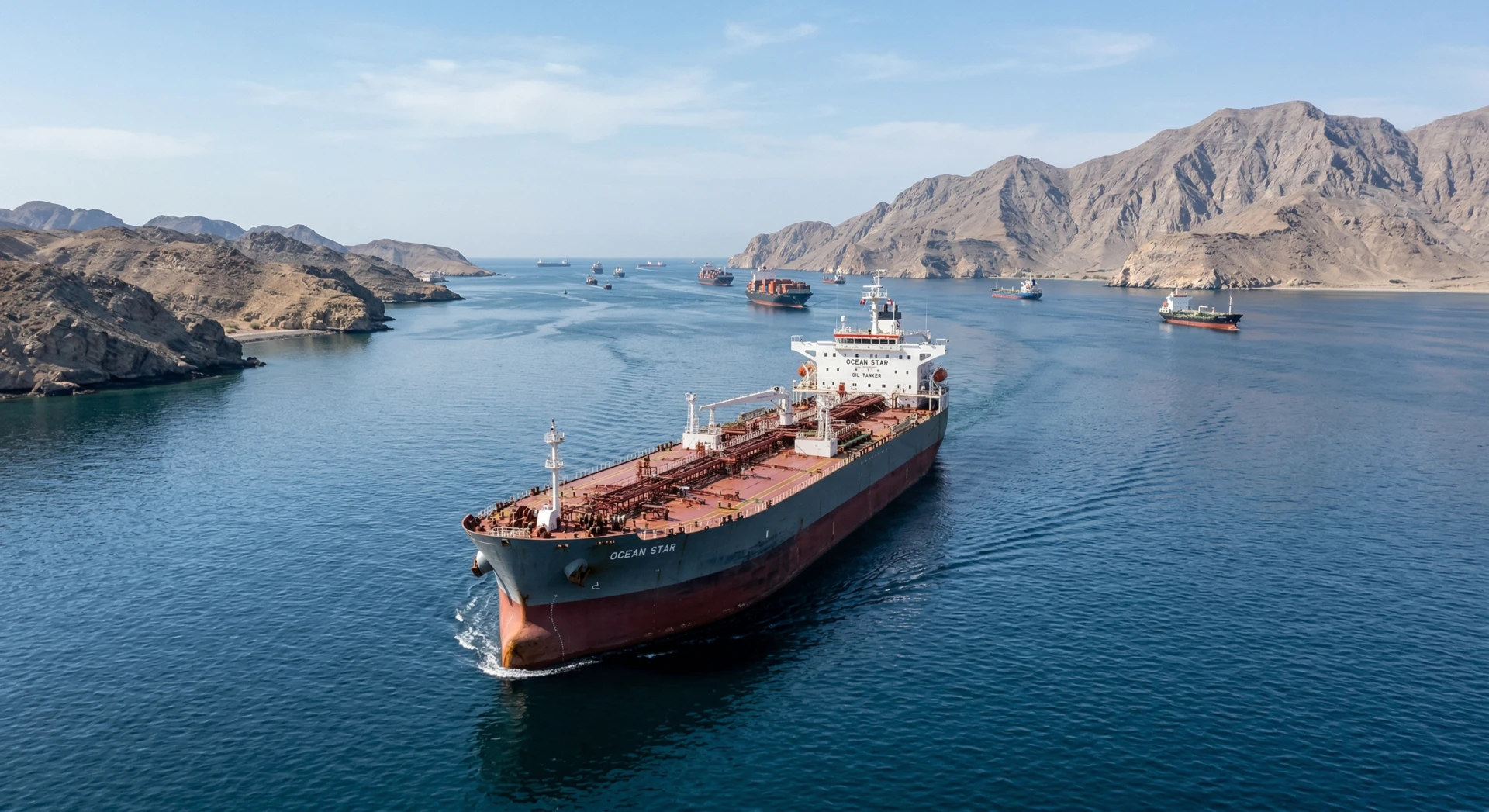
Persian Gulf crude sellers face immediate freight cost increases of $8-12/MT as Israeli strikes on Iranian military infrastructure trigger tanker insurance spikes and vessel diversions away from Hormuz transit routes. According to reports, Israel targeted over 200 Iranian Revolutionary Guard sites including ballistic missile facilities and air defense systems, alongside 140 Hezbollah positions in Lebanon over a 48-hour period. For a typical Saudi Aramco or UAE ADNOC crude cargo — a 2-million-barrel VLCC (Very Large Crude Carrier) loading at Ras Tanura or Jebel Ali — the immediate impact concentrates in war risk insurance premiums, which jumped from 0.025% of cargo value to 0.15% within hours of the strikes. On a $160 million crude cargo, that represents an additional $200,000 in insurance costs alone, before accounting for potential route diversions or scheduling delays that compound freight expenses further.
The targeting of Iranian steel production facilities, which Netanyahu claims were significantly degraded, creates a secondary supply chain disruption that could constrain vessel availability across the Persian Gulf. Iran's steel sector consumes approximately 1.2 million barrels per day of fuel oil and petroleum coke — feedstock that typically moves on smaller product tankers and bulk carriers that also serve the regional crude trade. If confirmed, damage to steel facilities reduces demand for these petroleum products, potentially freeing up smaller vessel capacity for crude movements. However, the more immediate concern for crude sellers is that any Iranian retaliation targeting Gulf shipping lanes would force cargo diversions through longer routes — the Cape of Good Hope instead of Suez Canal transit adds 6,000 nautical miles and 15-20 days to Asian deliveries, fundamentally altering the economics of Atlantic Basin crude competition in Asian markets.
On the sell side, national oil companies and integrated producers with large inventories face the steepest margin compression from elevated freight costs. Saudi Aramco, shipping roughly 7 million barrels per day, absorbs an additional $2-3 million daily in war risk premiums alone at current elevated rates. UAE's ADNOC, moving approximately 3 million barrels daily, faces similar proportional impacts. For these large sellers, the freight cost increase represents 0.5-0.8% of cargo value — manageable but meaningful given crude margins of $8-15/barrel in current market conditions. The real pressure emerges if Iranian retaliation forces systematic route diversions: Cape routing adds $15-20/MT in freight costs, completely erasing margins on marginal crude grades where sellers compete with West African or North Sea alternatives for Asian refinery demand.
On the buy side, Asian refineries with long-term crude supply contracts benefit from freight cost absorption by sellers under typical FOB (Free On Board) arrangements, where the seller bears transportation costs to the delivery point. However, refineries with significant spot crude purchasing — particularly independent Chinese teapots and smaller regional processors — face immediate cost pressures. A medium-sized refinery processing 100,000 barrels per day and sourcing 30% of supply through spot markets sees crude acquisition costs rise by $2-4/barrel purely from freight and insurance premiums. This cost increase flows directly through to refined product margins, particularly diesel and fuel oil where these refineries compete with larger integrated players having more stable crude cost structures.
For large integrated traders with derivatives access — Vitol, Trafigura, Mercuria — the freight premium spike creates both hedging opportunities and margin concentration points. These traders typically hold long positions in crude oil futures and can hedge freight exposure through FFAs (Forward Freight Agreements) — contracts that lock in future shipping costs. A sophisticated trader anticipating extended Hormuz tensions might purchase 3-month FFA protection at $25/MT, knowing that sustained regional instability could push spot freight rates to $40-50/MT. The $25/MT hedge cost becomes profitable if tensions persist beyond current market expectations, while also protecting underlying crude trading positions from freight volatility that could otherwise eliminate trading margins entirely.
For smaller regional operators — mid-sized fuel importers, independent distributors, regional cooperatives — without derivatives access, freight protection requires bilateral contract adjustments or inventory strategy changes. A regional fuel distributor in Southeast Asia typically operates on 30-45 day crude procurement cycles, purchasing spot cargoes for refinery processing. Without FFA access, protection comes through negotiating freight cap clauses in supply contracts — agreeing with sellers to limit freight cost pass-through to $8/MT above baseline levels. Alternatively, these operators can extend inventory positions, purchasing additional spot cargoes before freight rates climb further, though this strategy requires working capital that smaller operators often lack during periods of elevated commodity price volatility.
The Iranian steel production damage, if confirmed, eliminates approximately 2-3 million tonnes of annual steel output that requires roughly 180,000 barrels per day of petroleum coke and heavy fuel oil as feedstock. This demand destruction occurs precisely when regional petroleum product cracks — the price difference between crude oil and refined products — are already compressed due to weak industrial demand across Asia. For crude sellers, reduced heavy fuel oil demand means less revenue from the bottom of the barrel, forcing refineries to increase gasoline and middle distillate yields where margins are currently stronger. The shift benefits crude grades with lower sulfur content and higher middle distillate yields — Murban, Qatar Marine, Basrah Light — while pressuring heavier, higher-sulfur grades like Iranian Heavy or Basrah Heavy that typically command discounts to benchmark pricing.
Freight rate concentration reveals where margin accumulates during Persian Gulf shipping disruptions. VLCC day rates jumped from $35,000 per day to $65,000 within 48 hours of the Israeli strikes — an additional $30,000 daily that accrues entirely to vessel operators, not cargo owners. On a typical 25-day voyage from Ras Tanura to Ningbo, China, this represents $750,000 in additional voyage costs for a 2-million-barrel cargo — approximately $3.75/barrel that reduces seller netbacks or increases buyer acquisition costs. The freight premium concentrates with vessel owners and time-charter operators who can capture spot rate increases, while cargo owners and receivers absorb the cost through reduced margins on the underlying commodity trade.
Financing structures determine who ultimately bears the freight cost increases and associated credit risks during periods of elevated regional tension. Under typical crude oil LC (Letter of Credit) arrangements — bank guarantees that payment will be made once shipping documents are presented — buyers provide financing security but sellers retain freight cost exposure until cargo delivery. However, during periods of elevated war risk, banks often require additional collateral or reduce LC tenor periods, effectively shifting financing costs to sellers who must secure alternative working capital. A mid-sized crude seller without investment-grade credit ratings might face LC margin requirements increasing from 10% to 25% of cargo value, tying up an additional $24 million in working capital per VLCC cargo. These financing constraints can force smaller crude sellers to accept lower netback prices from buyers willing to provide alternative financing arrangements.
Historical precedent from the 1980s Iran-Iraq tanker war demonstrates how Persian Gulf shipping disruptions cascade through global crude markets when freight premiums persist beyond initial shock periods. During 1987-1988, sustained attacks on neutral shipping forced systematic cargo diversions through Cape routing, creating a two-tier crude market where Gulf grades traded at $4-6/barrel discounts to Atlantic Basin alternatives in Asian markets. The current situation differs in that global crude inventories are lower and spare shipping capacity is more limited, suggesting that sustained Gulf shipping disruptions would create more severe price dislocations. For crude sellers, the key risk lies not in initial freight premium increases but in sustained route diversions that fundamentally alter competitive position against non-Gulf crude suppliers targeting the same refinery demand.
For observers monitoring escalation risks, the critical signal is the Platts Persian Gulf VLCC assessment versus West Africa-to-Asia freight differentials over the next 10-14 days. If Persian Gulf freight rates remain elevated above $45/MT while West Africa rates stay near $25/MT, expect systematic cargo diversions as Asian refineries substitute Nigerian Bonny Light or Angolan Girassol for traditional Gulf crude purchases. The freight differential threshold where substitution becomes economically attractive is approximately $12-15/MT, accounting for crude quality premiums and refinery yield differences. Secondary indicators include Baltic Exchange VLCC earnings and Lloyd's of London war risk premium quotes, both of which provide real-time market signals of shipping industry expectations for sustained regional tensions versus temporary disruption.

.jpg)
.jpg)


'%3e%3cg id='Final-Copy-2_2_' transform='translate(1275.000000, 200.000000)'%3e%3cpath class='st0' d='M7.4,12.8h6.8l3.1-11.6H7.4C4.2,1.2,1.6,3.8,1.6,7S4.2,12.8,7.4,12.8z'/%3e%3c/g%3e%3c/g%3e%3c/g%3e%3cg id='final---dec.11-2020'%3e%3cg id='_x30_208-our-toggle' transform='translate(-1275.000000, -200.000000)'%3e%3cg id='Final-Copy-2' transform='translate(1275.000000, 200.000000)'%3e%3cpath class='st1' d='M22.6,0H7.4c-3.9,0-7,3.1-7,7s3.1,7,7,7h15.2c3.9,0,7-3.1,7-7S26.4,0,22.6,0z M1.6,7c0-3.2,2.6-5.8,5.8-5.8 h9.9l-3.1,11.6H7.4C4.2,12.8,1.6,10.2,1.6,7z'/%3e%3cpath id='x' class='st2' d='M24.6,4c0.2,0.2,0.2,0.6,0,0.8l0,0L22.5,7l2.2,2.2c0.2,0.2,0.2,0.6,0,0.8c-0.2,0.2-0.6,0.2-0.8,0 l0,0l-2.2-2.2L19.5,10c-0.2,0.2-0.6,0.2-0.8,0c-0.2-0.2-0.2-0.6,0-0.8l0,0L20.8,7l-2.2-2.2c-0.2-0.2-0.2-0.6,0-0.8 c0.2-0.2,0.6-0.2,0.8,0l0,0l2.2,2.2L23.8,4C24,3.8,24.4,3.8,24.6,4z'/%3e%3cpath id='y' class='st3' d='M12.7,4.1c0.2,0.2,0.3,0.6,0.1,0.8l0,0L8.6,9.8C8.5,9.9,8.4,10,8.3,10c-0.2,0.1-0.5,0.1-0.7-0.1l0,0 L5.4,7.7c-0.2-0.2-0.2-0.6,0-0.8c0.2-0.2,0.6-0.2,0.8,0l0,0L8,8.6l3.8-4.5C12,3.9,12.4,3.9,12.7,4.1z'/%3e%3c/g%3e%3c/g%3e%3c/g%3e%3c/g%3e%3c/svg%3e) Privacy Choices
Privacy Choices