.avif)
.webp)
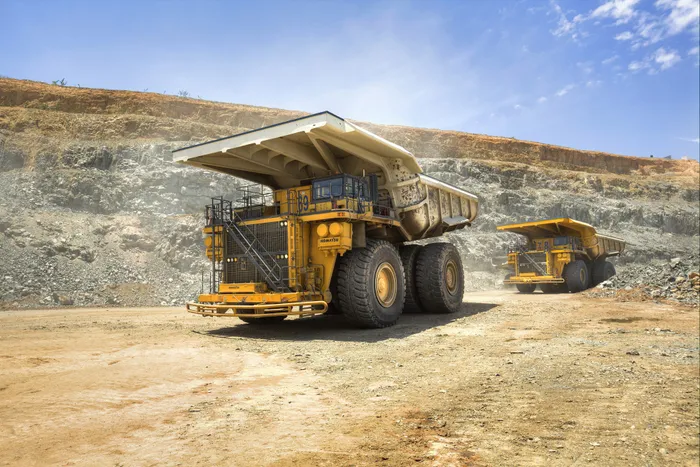
Agricultural Equipment Manufacturers face immediate margin relief as Trump's June 8 proclamation cuts Section 232 tariffs on combines, harvesters, and mobile industrial machinery to 15% from the punitive 25% rate imposed in April. A mid-sized U.S. manufacturer importing a $2 million combine previously paid $500,000 in tariffs now $300,000, recovering $200,000 per unit. Section 232 tariffs trade duties imposed under the Trade Expansion Act of 1962 for national security reasons have compressed equipment margins since Trump restored them to 50% on raw steel and aluminum in June 2025, then applied 25% rates to derivative products in April 2026. The relief runs through December 31, 2027, creating a temporary arbitrage window for equipment procurement.
The 85% U.S. sourced metals requirement for the 10% rate creates a blending arbitrage that favors domestic steel and aluminum producers. LME aluminum at $3,761/MT on June 2, up 52% year over year, trades at a $150-300/MT premium to equivalent U.S. domestic grades when transportation and lead times are included. LME copper at $13,599/MT carries similar premiums. For equipment manufacturers, sourcing 85% U.S. content to qualify for 10% tariffs versus paying 15% on finished imports depends on domestic capacity availability and delivery schedules. U.S. steel production capacity, while expanding, remains constrained by the 18 month ramp period for new electric arc furnaces coming online through 2027.
On the buy side, large integrated manufacturers like Caterpillar or John Deere with established U.S. supply chains can immediately access the 10% rate through existing domestic sourcing arrangements, capturing the full 15 percentage point advantage over the standard 25% rate. Their procurement teams can optimize the 85% threshold by concentrating high weight structural components in U.S. sourced steel while importing specialized alloys or electronics components. On the sell side, smaller regional equipment distributors and agricultural cooperatives importing finished machinery gain 10 percentage points of margin recovery, but lack the scale to influence sourcing decisions or negotiate volume discounts with domestic mills.
For large equipment manufacturers with derivatives access, the margin recovery translates directly to working capital relief roughly $150,000-200,000 per $2 million unit depending on metals content. They can hedge against reverting to 25% rates post-2027 through forward purchasing agreements or long-term supply contracts with domestic mills. For smaller operators without derivatives access independent dealers, regional distributors, farm equipment cooperatives the practical equivalent involves accelerating inventory builds during the 18 month relief window and negotiating extended payment terms with suppliers. The 85% domestic content threshold requires supply chain auditing capabilities most smaller operators lack.
Observers should monitor U.S. steel capacity utilization rates through the American Iron and Steel Institute weekly data, which typically runs 75-80% but may approach 85-90% if equipment demand accelerates under the tariff window. When utilization exceeds 85%, delivery times extend from 8-12 weeks to 16-20 weeks, forcing manufacturers back to the 15% import rate regardless of intent. The Chicago hot-rolled coil futures curve currently in backwardation with spot premiums of $50-75/MT over three month contracts will signal whether domestic supply can meet the surge in equipment driven demand before the December 2027 expiry.




'%3e%3cg id='Final-Copy-2_2_' transform='translate(1275.000000, 200.000000)'%3e%3cpath class='st0' d='M7.4,12.8h6.8l3.1-11.6H7.4C4.2,1.2,1.6,3.8,1.6,7S4.2,12.8,7.4,12.8z'/%3e%3c/g%3e%3c/g%3e%3c/g%3e%3cg id='final---dec.11-2020'%3e%3cg id='_x30_208-our-toggle' transform='translate(-1275.000000, -200.000000)'%3e%3cg id='Final-Copy-2' transform='translate(1275.000000, 200.000000)'%3e%3cpath class='st1' d='M22.6,0H7.4c-3.9,0-7,3.1-7,7s3.1,7,7,7h15.2c3.9,0,7-3.1,7-7S26.4,0,22.6,0z M1.6,7c0-3.2,2.6-5.8,5.8-5.8 h9.9l-3.1,11.6H7.4C4.2,12.8,1.6,10.2,1.6,7z'/%3e%3cpath id='x' class='st2' d='M24.6,4c0.2,0.2,0.2,0.6,0,0.8l0,0L22.5,7l2.2,2.2c0.2,0.2,0.2,0.6,0,0.8c-0.2,0.2-0.6,0.2-0.8,0 l0,0l-2.2-2.2L19.5,10c-0.2,0.2-0.6,0.2-0.8,0c-0.2-0.2-0.2-0.6,0-0.8l0,0L20.8,7l-2.2-2.2c-0.2-0.2-0.2-0.6,0-0.8 c0.2-0.2,0.6-0.2,0.8,0l0,0l2.2,2.2L23.8,4C24,3.8,24.4,3.8,24.6,4z'/%3e%3cpath id='y' class='st3' d='M12.7,4.1c0.2,0.2,0.3,0.6,0.1,0.8l0,0L8.6,9.8C8.5,9.9,8.4,10,8.3,10c-0.2,0.1-0.5,0.1-0.7-0.1l0,0 L5.4,7.7c-0.2-0.2-0.2-0.6,0-0.8c0.2-0.2,0.6-0.2,0.8,0l0,0L8,8.6l3.8-4.5C12,3.9,12.4,3.9,12.7,4.1z'/%3e%3c/g%3e%3c/g%3e%3c/g%3e%3c/g%3e%3c/svg%3e) Privacy Choices
Privacy Choices