.avif)
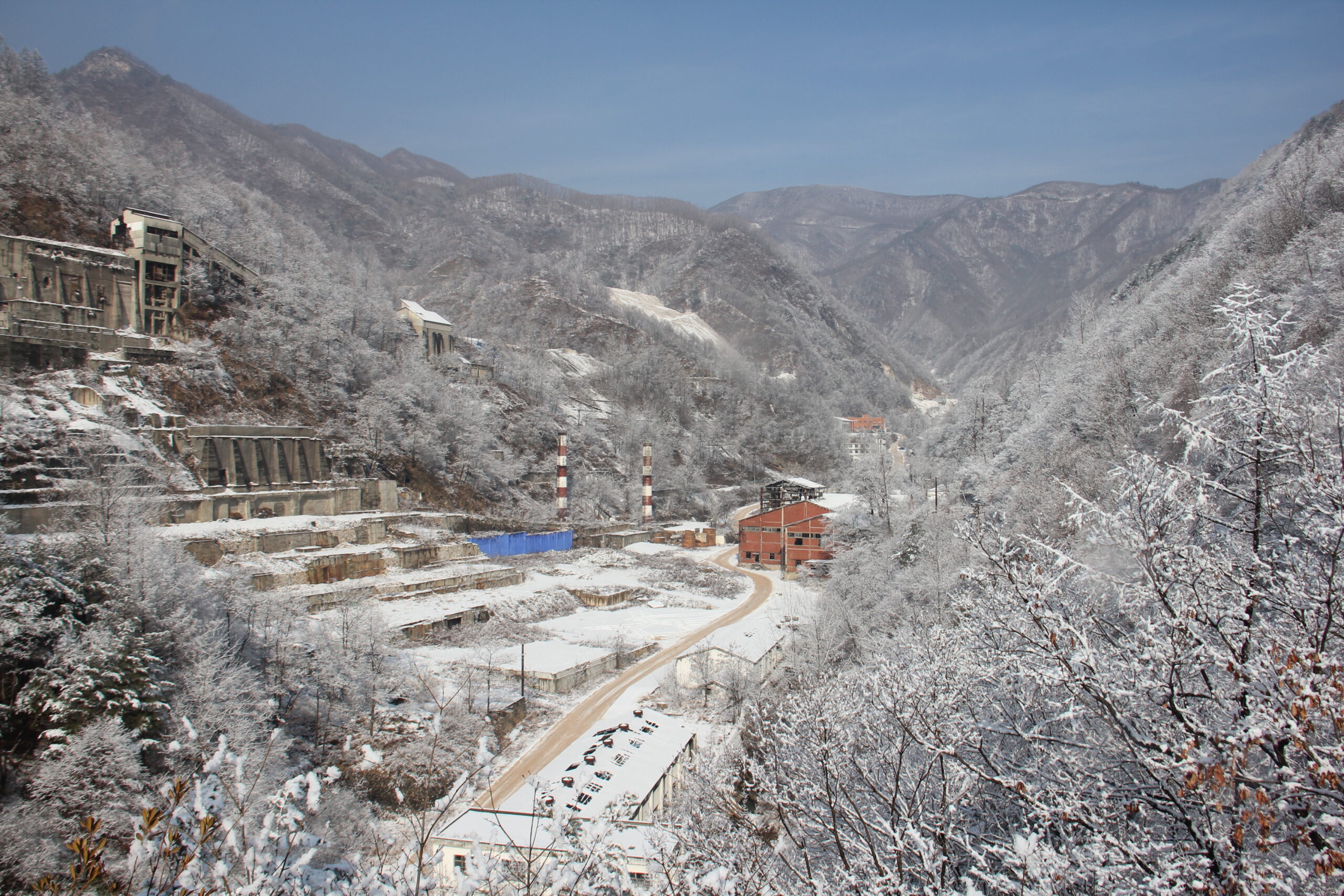
Almonty Industries' imminent production ramp at Sangdong will capture margins exceeding $2,100 per metric ton unit (MTU) as tungsten prices sustain record levels above $3,000 per MTU. Ammonium paratungstate (APT) the benchmark tungsten intermediate that processors convert to tungsten metal or carbide averaged $3,040 per MTU on May 29, compared with $920 per MTU at year start. Oppenheimer raised its price target to $25 from $22 while maintaining an "Outperform" rating, reflecting analyst confidence that elevated pricing will persist through Sangdong's Phase 1 ramp scheduled for July.
Tungsten concentrate processing requires specialized metallurgical expertise that creates natural barriers to new supply. Almonty's Sangdong facility expects to generate data in June and ramp up to Phase 1 throughput in July, with Phase 2 planning starting shortly to roughly double throughput. A mid-sized tungsten operation producing 2,300 tonnes of concentrate annually at current prices generates approximately $115 million in gross revenue triple the $38 million achievable at 2025 price levels. The gap between announced production targets and actual saleable tungsten products often stretches 12-24 months beyond projections, while buyers require extensive qualification periods for new suppliers.
On the buy side, semiconductor manufacturers and defense contractors face input cost increases exceeding 200% for tungsten based components. The current tungsten market is being driven by tightening supply, export restrictions, defense procurement policies, semiconductor demand growth, and Western efforts to rebuild strategic supply chains outside China. A major chip fabrication facility consuming 50 MTU annually now faces $152,000 in additional tungsten costs compared to 2025 forcing either margin compression or component price increases. On the sell side, established tungsten miners with existing production capture the full price premium without capital expansion costs, while new entrants face 24 month qualification periods before accessing premium pricing.
For large integrated tungsten traders with derivatives access, locking forward sales at current spot levels provides protection against eventual price normalization. China controls more than three quarters of global supply, and the changes to its export policies contributed directly to the supply tightness continuing into 2026. Given depleted inventories, restricted Chinese exports and limited near-term new supply, this volatility is widely expected to persist throughout 2026. A major trader fixing 1,000 MTU at $3,000 through 2026 hedges against potential price corrections while capturing current premiums. For smaller regional tungsten processors without derivatives access, the practical equivalent involves negotiating quarterly price-adjustment mechanisms with buyers rather than fixed annual contracts, reducing exposure to potential margin compression.
For observers: monitor Fastmarkets' weekly APT Rotterdam assessment for price direction changes. Fastmarkets' price assessments for tungsten APT 88.5% WO3 min cif Rotterdam and Baltimore duty-free have seen huge rises, from the $900-940 per mtu WO3 in January, to $1,650–1,900 per mtu WO3 by mid-February. A sustained break below $2,500 per MTU signals demand destruction or emergency inventory releases from strategic stockpiles. Conversely, prices above $3,500 per MTU indicate genuine supply crisis requiring government intervention.




'%3e%3cg id='Final-Copy-2_2_' transform='translate(1275.000000, 200.000000)'%3e%3cpath class='st0' d='M7.4,12.8h6.8l3.1-11.6H7.4C4.2,1.2,1.6,3.8,1.6,7S4.2,12.8,7.4,12.8z'/%3e%3c/g%3e%3c/g%3e%3c/g%3e%3cg id='final---dec.11-2020'%3e%3cg id='_x30_208-our-toggle' transform='translate(-1275.000000, -200.000000)'%3e%3cg id='Final-Copy-2' transform='translate(1275.000000, 200.000000)'%3e%3cpath class='st1' d='M22.6,0H7.4c-3.9,0-7,3.1-7,7s3.1,7,7,7h15.2c3.9,0,7-3.1,7-7S26.4,0,22.6,0z M1.6,7c0-3.2,2.6-5.8,5.8-5.8 h9.9l-3.1,11.6H7.4C4.2,12.8,1.6,10.2,1.6,7z'/%3e%3cpath id='x' class='st2' d='M24.6,4c0.2,0.2,0.2,0.6,0,0.8l0,0L22.5,7l2.2,2.2c0.2,0.2,0.2,0.6,0,0.8c-0.2,0.2-0.6,0.2-0.8,0 l0,0l-2.2-2.2L19.5,10c-0.2,0.2-0.6,0.2-0.8,0c-0.2-0.2-0.2-0.6,0-0.8l0,0L20.8,7l-2.2-2.2c-0.2-0.2-0.2-0.6,0-0.8 c0.2-0.2,0.6-0.2,0.8,0l0,0l2.2,2.2L23.8,4C24,3.8,24.4,3.8,24.6,4z'/%3e%3cpath id='y' class='st3' d='M12.7,4.1c0.2,0.2,0.3,0.6,0.1,0.8l0,0L8.6,9.8C8.5,9.9,8.4,10,8.3,10c-0.2,0.1-0.5,0.1-0.7-0.1l0,0 L5.4,7.7c-0.2-0.2-0.2-0.6,0-0.8c0.2-0.2,0.6-0.2,0.8,0l0,0L8,8.6l3.8-4.5C12,3.9,12.4,3.9,12.7,4.1z'/%3e%3c/g%3e%3c/g%3e%3c/g%3e%3c/g%3e%3c/svg%3e) Privacy Choices
Privacy Choices