.avif)

Silver plunged 10.5% as April CPI data came in at 3.8%, above forecast, eliminating expectations for near-term Federal Reserve rate cuts and triggering a broad selloff across non-yielding precious metals. India's decision to raise import duties on silver from 6% to 15% a 150% increase compounded the margin pressure on dealers and importers globally. For a mid-sized Indian silver importer handling a 500 tonne annual volume, the duty increase alone adds approximately $45,000 per tonne to landed costs, wiping out typical import margins of $15-25/tonne and forcing either price increases or inventory liquidation.
UBS slashed its 2026 silver supply deficit forecast from approximately 300 million ounces to 60-70 million ounces an 80% reduction that fundamentally undermines the scarcity narrative supporting silver's rally. The deficit revision stems from demand destruction in three key channels: photovoltaic (PV) manufacturers reducing silver usage due to elevated prices, industrial users substituting alternative materials, and investment flows reversing with ETF holdings dropping by nearly 70 million ounces to around 794 million ounces. This collapse in the supply gap from a structural shortage to a marginal deficit signals that silver's industrial demand curve is more elastic than previously assumed.
The probability of a Fed cut at the June 16-17 FOMC meeting collapsed from 48% to under 8% following the hot April CPI print, raising the opportunity cost for holding zero-yielding silver. Treasury yields spiked while the dollar strengthened, creating a double headwind for precious metals. For institutional investors, the real yield differential between 10 year Treasuries and silver holdings widened by approximately 45 basis points overnight, making dollar-denominated fixed income assets relatively more attractive. The timing could not be worse for silver bulls the metal had been trading as a leveraged play on dovish monetary policy, with typical moves 2-3 times larger than gold during Fed easing cycles.
India's new 15% import duty structure combines a 10% Basic Customs Duty with a 5% Agriculture Infrastructure and Development Cess, effective May 13, creating immediate cash flow pressure for Indian silver dealers. Consider a typical Mumbai based dealer importing 50 tonnes monthly: under the previous 6% regime, a $83/oz silver consignment carried import costs of approximately $5/oz. Under the new structure, those same imports now face $12.50/oz in duties a $375,000 additional monthly burden that smaller dealers cannot easily absorb. Industry experts warned that higher duties may reduce official imports but could lead to a rise in smuggling activities, effectively bifurcating the market between legal and grey channels.
The margin anatomy reveals silver's dual identity as both industrial input and investment asset creates conflicting winner-loser dynamics. On the industrial buy side, manufacturers using silver in electronics, solar panels, and automotive applications benefit from lower input costs potentially saving $2-4/oz on current inventory positions. For a large electronics manufacturer with 200 tonne annual silver consumption, the 10.5% price decline translates to approximately $5.4 million in input cost savings on annual purchasing contracts. However, these gains concentrate among end-users rather than trading intermediaries, who face margin compression from both directions.
On the sell side, the pain concentrates among physical silver dealers and investment focused operators. MCX silver July futures fell to ₹279,570 per kg, reflecting the sharp global price adjustment translated directly into local markets. Indian dealers face a particularly acute squeeze: the 10.5% price decline erodes inventory values while the 15% duty increase makes replacement purchases prohibitively expensive. For established dealers with 30-60 days of inventory, this creates a liquidity crunch existing stock loses value while new imports become economically unviable. Smaller regional operators without hedging capabilities face potential insolvency if the price environment persists.
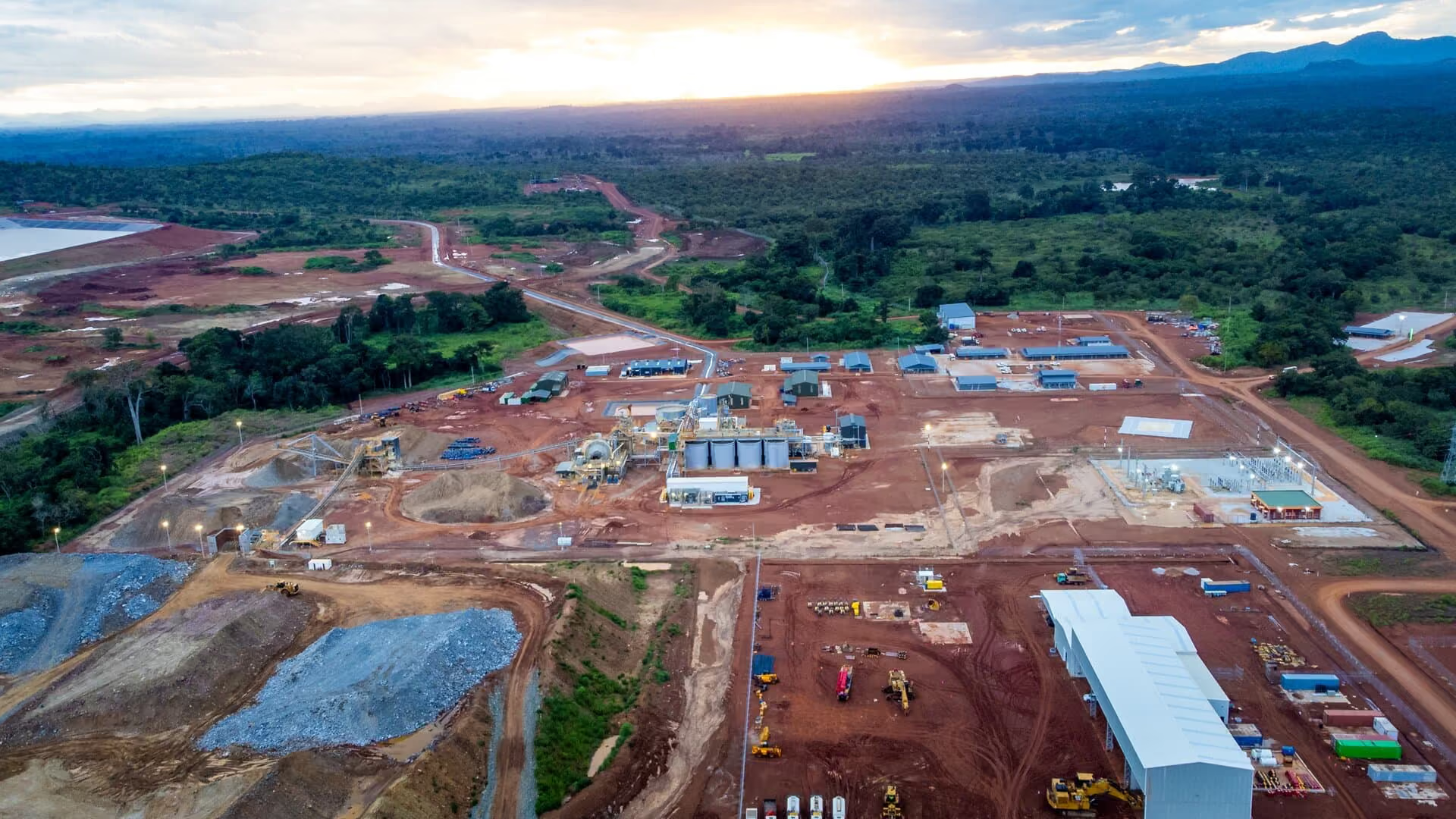
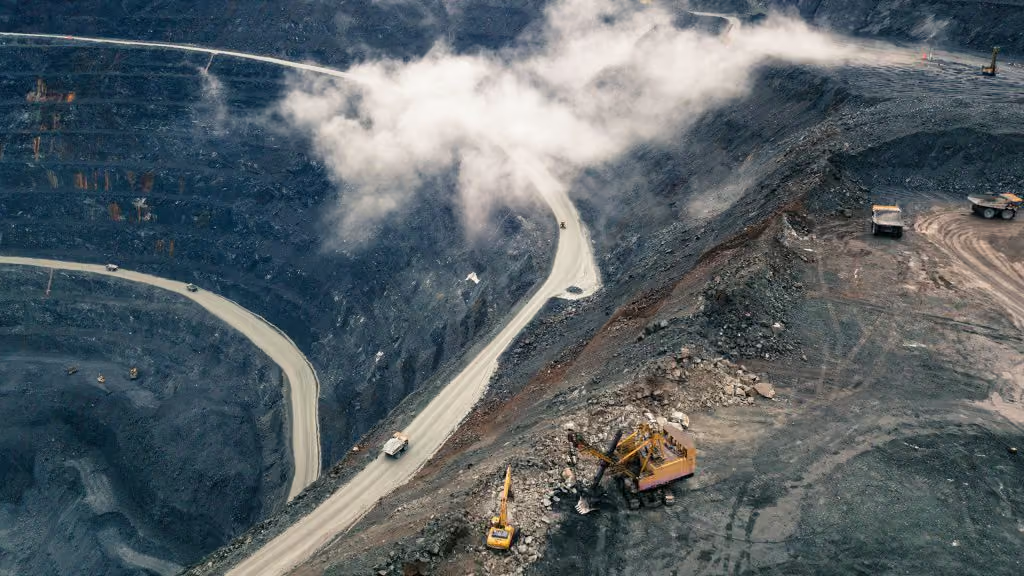
UBS expects mine output to reach approximately 850 million ounces in 2026, providing additional supply-side pressure against the revised deficit. The supply response reflects silver's unique production profile roughly 70% of silver output is a byproduct of copper, lead and zinc mining, limiting miners' ability to quickly adjust silver-specific output. However, higher recycling rates and improved recovery from industrial processes are contributing incremental supply that UBS previously underestimated. For large integrated miners like Hecla or First Majestic, higher output at lower prices creates a cash flow headwind, though base metals co-production provides some cushioning.
UBS still expects gold prices to trend higher, providing an important anchor for silver, with the gold-silver ratio expected to drift toward 75-80 over time. Currently trading around 84-85, this ratio compression would imply silver has room to outperform gold, but on a narrower trajectory than bulls anticipated. For precious metals dealers, this creates a tactical opportunity: selling volatility rather than taking outright long positions captures time decay while avoiding directional risk. However, smaller dealers without derivatives access must rely on inventory management and supplier diversification to navigate the sideways trading environment UBS projects.
For observers, the LBMA Silver Price auction at 12:00 p.m. London time will provide the key daily reference point for physical settlement, while MCX gold June futures at ₹154,010 per 10 grams offers insight into Asian physical demand patterns. Watch for ETF flow data weekly continued outflows below the current 794 million ounce level would validate UBS's demand destruction thesis, while any reversal could signal a floor. The critical threshold is 750 million ounces in total ETF holdings; breaking below this level would likely trigger algorithmic selling and test silver's $75-80 support zone through Q3 2026.



.avif)
'%3e%3cg id='Final-Copy-2_2_' transform='translate(1275.000000, 200.000000)'%3e%3cpath class='st0' d='M7.4,12.8h6.8l3.1-11.6H7.4C4.2,1.2,1.6,3.8,1.6,7S4.2,12.8,7.4,12.8z'/%3e%3c/g%3e%3c/g%3e%3c/g%3e%3cg id='final---dec.11-2020'%3e%3cg id='_x30_208-our-toggle' transform='translate(-1275.000000, -200.000000)'%3e%3cg id='Final-Copy-2' transform='translate(1275.000000, 200.000000)'%3e%3cpath class='st1' d='M22.6,0H7.4c-3.9,0-7,3.1-7,7s3.1,7,7,7h15.2c3.9,0,7-3.1,7-7S26.4,0,22.6,0z M1.6,7c0-3.2,2.6-5.8,5.8-5.8 h9.9l-3.1,11.6H7.4C4.2,12.8,1.6,10.2,1.6,7z'/%3e%3cpath id='x' class='st2' d='M24.6,4c0.2,0.2,0.2,0.6,0,0.8l0,0L22.5,7l2.2,2.2c0.2,0.2,0.2,0.6,0,0.8c-0.2,0.2-0.6,0.2-0.8,0 l0,0l-2.2-2.2L19.5,10c-0.2,0.2-0.6,0.2-0.8,0c-0.2-0.2-0.2-0.6,0-0.8l0,0L20.8,7l-2.2-2.2c-0.2-0.2-0.2-0.6,0-0.8 c0.2-0.2,0.6-0.2,0.8,0l0,0l2.2,2.2L23.8,4C24,3.8,24.4,3.8,24.6,4z'/%3e%3cpath id='y' class='st3' d='M12.7,4.1c0.2,0.2,0.3,0.6,0.1,0.8l0,0L8.6,9.8C8.5,9.9,8.4,10,8.3,10c-0.2,0.1-0.5,0.1-0.7-0.1l0,0 L5.4,7.7c-0.2-0.2-0.2-0.6,0-0.8c0.2-0.2,0.6-0.2,0.8,0l0,0L8,8.6l3.8-4.5C12,3.9,12.4,3.9,12.7,4.1z'/%3e%3c/g%3e%3c/g%3e%3c/g%3e%3c/g%3e%3c/svg%3e) Privacy Choices
Privacy Choices