.avif)
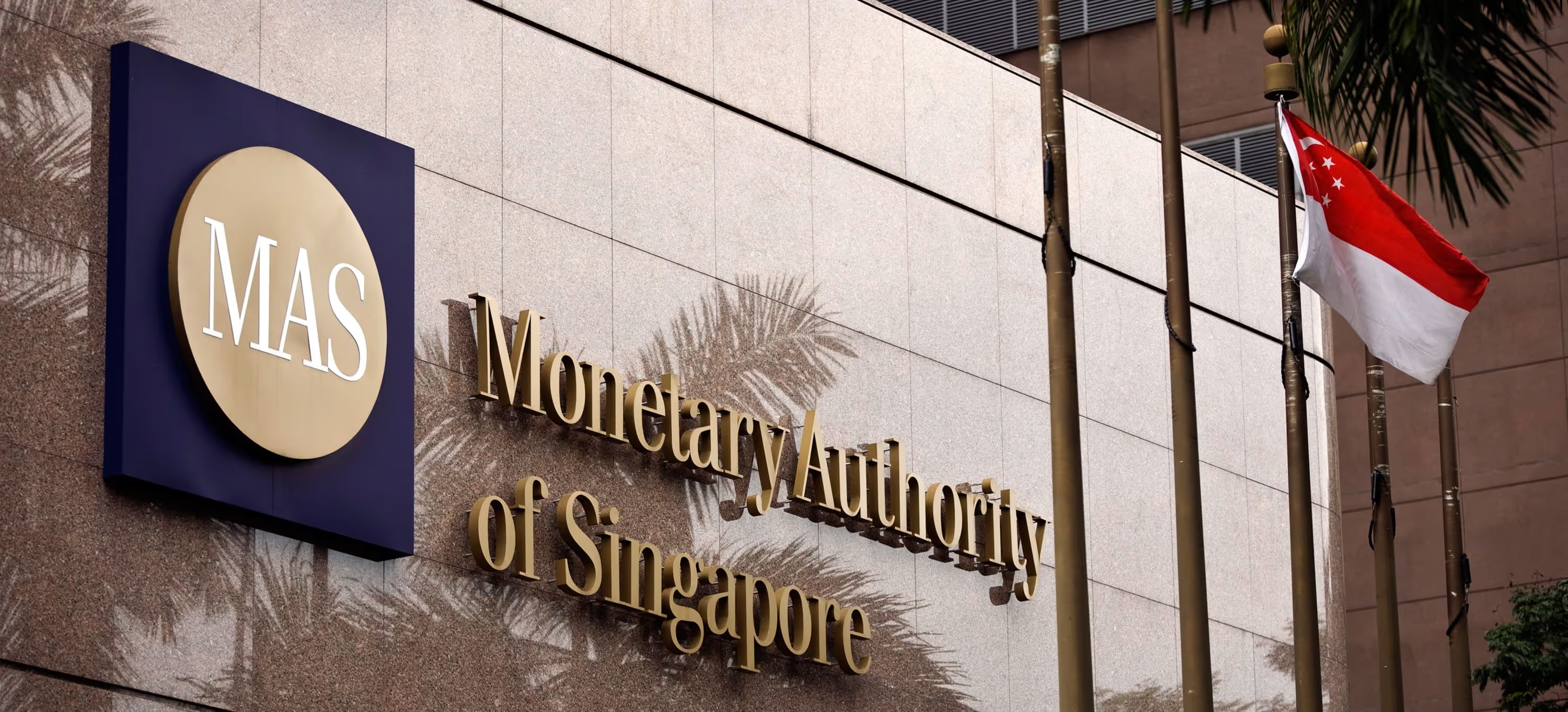
Singapore's push to capture central bank gold custody business creates a 12 month decision window for reserve managers before the infrastructure goes live. The Monetary Authority of Singapore (MAS) is building central bank grade vaulting services and OTC settlement systems for both 400 ounce bars (the London institutional standard) and 1kg kilobars (preferred in Asian markets), directly targeting foreign sovereign mandates currently held by London, New York, and Hong Kong facilities. Reserve managers evaluating custody diversification face a timing consideration: early commitment to Singapore facilities could secure preferential terms, while waiting risks capacity constraints once the system launches. The initiative includes MAS's own vault for central bank gold, with commercial operators like Brink's and Malca Amit handling other demand.
For reserve managers, Singapore's model breaks the traditional custody cost structure. Current arrangements typically involve 8-12 basis points annually for commercial vaulting plus 3-5 basis points for international transport and insurance when moving gold between financial centers. MAS-backed infrastructure eliminates round trip transport costs for Asian central banks while reducing counterparty risk premiums that banks charge for letters of credit on gold trades central bank backing effectively removes settlement risk. The dual 400 ounce and 1kg standard means managers can optimize between institutional and retail focused settlement without format conversion costs. Commercial vault operators, meanwhile, face subsidized competition that undercuts their traditional pricing models.
The broader market impact centers on settlement route economics for bullion dealers and authorized participants in gold ETFs. Traditional London routed settlement involves acquisition at LBMA benchmark rates, international transport insurance, custodial fees, clearing charges, and final realization costs. Singapore's infrastructure targets the clearing component specifically subsidized settlement reduces per-transaction costs while local custody eliminates transport expenses for Asian end-users. This matters most for smaller Asian dealers who previously paid 50-150 basis points over major banks for letter of credit facilities due to perceived settlement risks. Singapore's AAA sovereign rating should compress these spreads to major bank levels, creating margin opportunities for dealers who can redirect flow through the new infrastructure.
The wildcard remains execution risk and competitive response from Hong Kong, which has dominated Asian precious metals custody. While Singapore emphasizes security credentials and regulatory stability, the success depends on attracting sufficient sovereign mandates to create liquidity network effects. Reserve managers watching rather than committing should track early adopter announcements and facility utilization rates once operational. The infrastructure could reshape regional gold flows if MAS captures meaningful market share, but failure to attract anchor tenants would leave Singapore as an expensive redundancy in an already fragmented custody landscape. Commercial vault operators face the uncomfortable reality of competing against subsidized government infrastructure, while bullion dealers must evaluate whether route optimization benefits outweigh switching costs and established relationship networks.





.avif)

'%3e%3cg id='Final-Copy-2_2_' transform='translate(1275.000000, 200.000000)'%3e%3cpath class='st0' d='M7.4,12.8h6.8l3.1-11.6H7.4C4.2,1.2,1.6,3.8,1.6,7S4.2,12.8,7.4,12.8z'/%3e%3c/g%3e%3c/g%3e%3c/g%3e%3cg id='final---dec.11-2020'%3e%3cg id='_x30_208-our-toggle' transform='translate(-1275.000000, -200.000000)'%3e%3cg id='Final-Copy-2' transform='translate(1275.000000, 200.000000)'%3e%3cpath class='st1' d='M22.6,0H7.4c-3.9,0-7,3.1-7,7s3.1,7,7,7h15.2c3.9,0,7-3.1,7-7S26.4,0,22.6,0z M1.6,7c0-3.2,2.6-5.8,5.8-5.8 h9.9l-3.1,11.6H7.4C4.2,12.8,1.6,10.2,1.6,7z'/%3e%3cpath id='x' class='st2' d='M24.6,4c0.2,0.2,0.2,0.6,0,0.8l0,0L22.5,7l2.2,2.2c0.2,0.2,0.2,0.6,0,0.8c-0.2,0.2-0.6,0.2-0.8,0 l0,0l-2.2-2.2L19.5,10c-0.2,0.2-0.6,0.2-0.8,0c-0.2-0.2-0.2-0.6,0-0.8l0,0L20.8,7l-2.2-2.2c-0.2-0.2-0.2-0.6,0-0.8 c0.2-0.2,0.6-0.2,0.8,0l0,0l2.2,2.2L23.8,4C24,3.8,24.4,3.8,24.6,4z'/%3e%3cpath id='y' class='st3' d='M12.7,4.1c0.2,0.2,0.3,0.6,0.1,0.8l0,0L8.6,9.8C8.5,9.9,8.4,10,8.3,10c-0.2,0.1-0.5,0.1-0.7-0.1l0,0 L5.4,7.7c-0.2-0.2-0.2-0.6,0-0.8c0.2-0.2,0.6-0.2,0.8,0l0,0L8,8.6l3.8-4.5C12,3.9,12.4,3.9,12.7,4.1z'/%3e%3c/g%3e%3c/g%3e%3c/g%3e%3c/g%3e%3c/svg%3e) Privacy Choices
Privacy Choices