.avif)
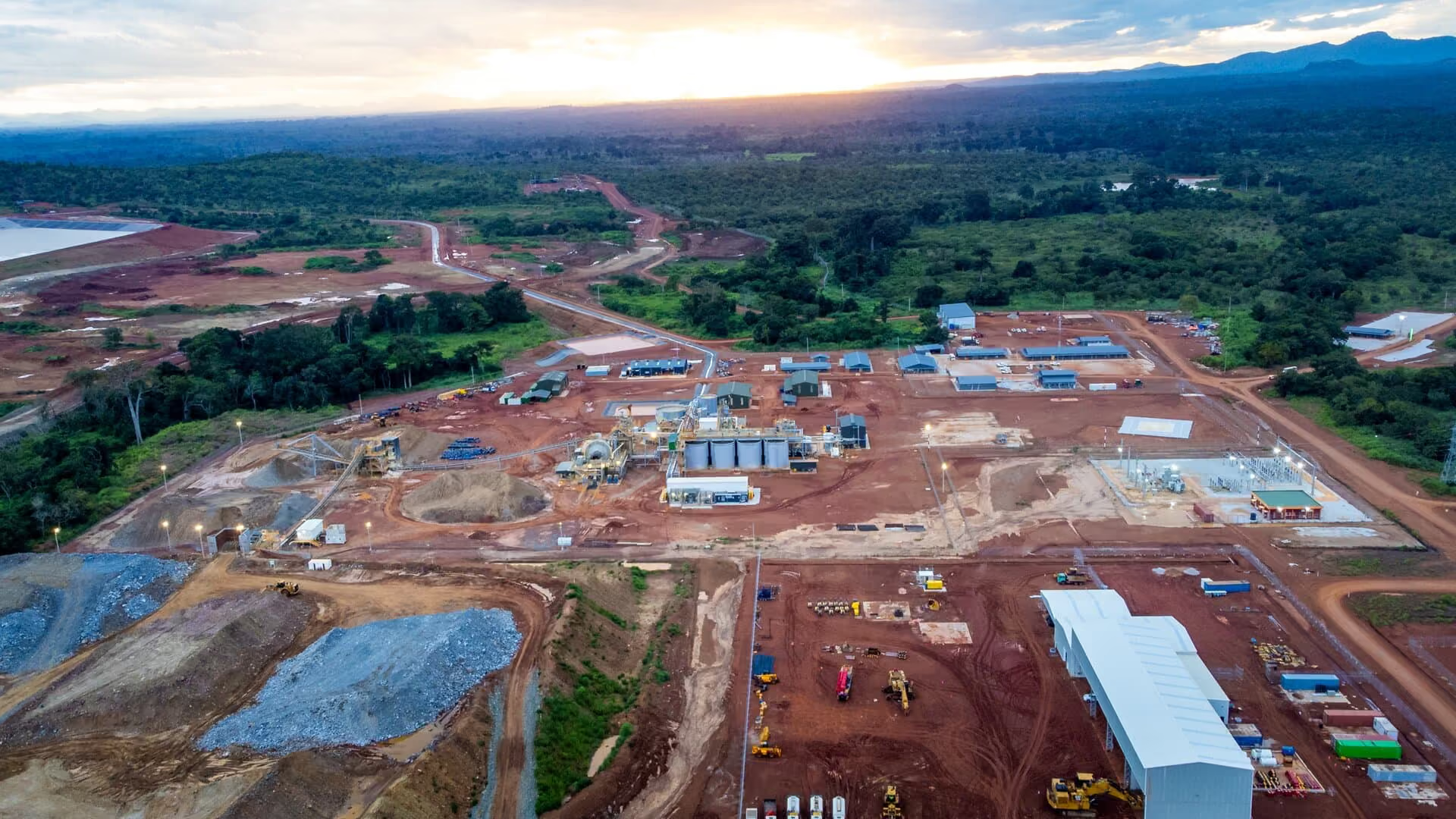
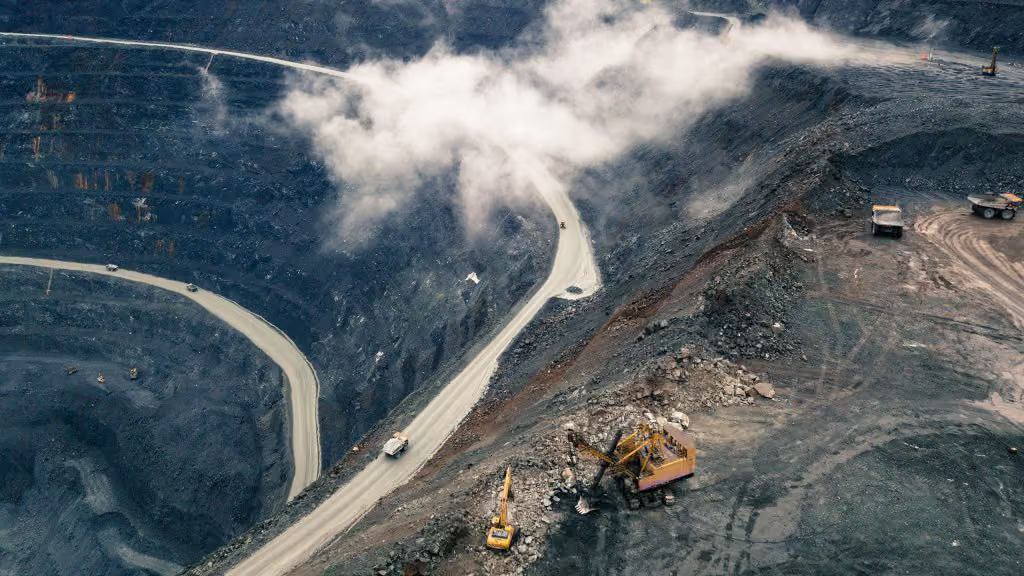
Precious metals smelters face a potential shift in concentrate supply dynamics following the March 26 completion of Contango Ore and Dolly Varden Silver's CAD 490 million merger, creating Contango Silver & Gold Inc. The combined entity controls Alaska's cash-generating Manh Choh gold mine alongside Canada's high-grade Kitsault Valley silver-gold project in the Golden Triangle — a consolidation that could alter negotiating power in concentrate offtake agreements. For smelters currently sourcing from either operation, the merger creates a single counterparty where two previously existed, potentially reducing competitive tension in contract renewals. However, the deal's immediate supply impact remains unclear, as neither company disclosed current production volumes, concentrate grades, or existing offtake commitments in the merger documentation.
The new entity emerges with over $100 million in cash and plans for $50 million in annual exploration spending, signaling aggressive expansion that could eventually increase concentrate availability. The "hub-and-spoke" strategy pairs Manh Choh's near-term cash generation with Kitsault Valley's long-term development potential, suggesting the merged company will prioritize operational efficiency over rapid production scaling. For smelters, this financial strength means a more stable supplier relationship — the combined entity appears less likely to face the funding pressures that often force smaller miners into unfavorable spot sales or concentrate pricing. The 50-50 ownership split between former Contango and Dolly Varden shareholders, with leadership roles distributed across both legacy teams, suggests operational continuity rather than disruptive integration.
Buyers with existing concentrate agreements from either asset should expect renegotiation approaches as the merged entity seeks to optimize its offtake portfolio under unified management. The consolidation gives Contango Silver & Gold increased leverage in discussions, particularly if current contracts were signed when the individual operations carried higher counterparty risk. Sellers of smelting services, meanwhile, may find opportunities as the expanded operation could require additional processing capacity for future production growth. The company's focus on exploration spending indicates potential new concentrate streams, though development timelines remain uncertain given the early-stage nature of much Golden Triangle activity.
The critical unknown remains the actual production pipeline: while the merger creates a stronger financial platform, observers should track whether operational integration enhances or disrupts current output levels. The lack of disclosed production figures or grade specifications makes it impossible to assess whether this consolidation meaningfully tightens concentrate supply or simply reorganizes existing flows. For an industry where relationship stability often matters as much as pricing, the merger's success will ultimately depend on whether unified management can deliver more reliable supply streams than the two companies provided separately — a test that may not become clear until the next contract renewal cycle.



.avif)

'%3e%3cg id='Final-Copy-2_2_' transform='translate(1275.000000, 200.000000)'%3e%3cpath class='st0' d='M7.4,12.8h6.8l3.1-11.6H7.4C4.2,1.2,1.6,3.8,1.6,7S4.2,12.8,7.4,12.8z'/%3e%3c/g%3e%3c/g%3e%3c/g%3e%3cg id='final---dec.11-2020'%3e%3cg id='_x30_208-our-toggle' transform='translate(-1275.000000, -200.000000)'%3e%3cg id='Final-Copy-2' transform='translate(1275.000000, 200.000000)'%3e%3cpath class='st1' d='M22.6,0H7.4c-3.9,0-7,3.1-7,7s3.1,7,7,7h15.2c3.9,0,7-3.1,7-7S26.4,0,22.6,0z M1.6,7c0-3.2,2.6-5.8,5.8-5.8 h9.9l-3.1,11.6H7.4C4.2,12.8,1.6,10.2,1.6,7z'/%3e%3cpath id='x' class='st2' d='M24.6,4c0.2,0.2,0.2,0.6,0,0.8l0,0L22.5,7l2.2,2.2c0.2,0.2,0.2,0.6,0,0.8c-0.2,0.2-0.6,0.2-0.8,0 l0,0l-2.2-2.2L19.5,10c-0.2,0.2-0.6,0.2-0.8,0c-0.2-0.2-0.2-0.6,0-0.8l0,0L20.8,7l-2.2-2.2c-0.2-0.2-0.2-0.6,0-0.8 c0.2-0.2,0.6-0.2,0.8,0l0,0l2.2,2.2L23.8,4C24,3.8,24.4,3.8,24.6,4z'/%3e%3cpath id='y' class='st3' d='M12.7,4.1c0.2,0.2,0.3,0.6,0.1,0.8l0,0L8.6,9.8C8.5,9.9,8.4,10,8.3,10c-0.2,0.1-0.5,0.1-0.7-0.1l0,0 L5.4,7.7c-0.2-0.2-0.2-0.6,0-0.8c0.2-0.2,0.6-0.2,0.8,0l0,0L8,8.6l3.8-4.5C12,3.9,12.4,3.9,12.7,4.1z'/%3e%3c/g%3e%3c/g%3e%3c/g%3e%3c/g%3e%3c/svg%3e) Privacy Choices
Privacy Choices