.avif)

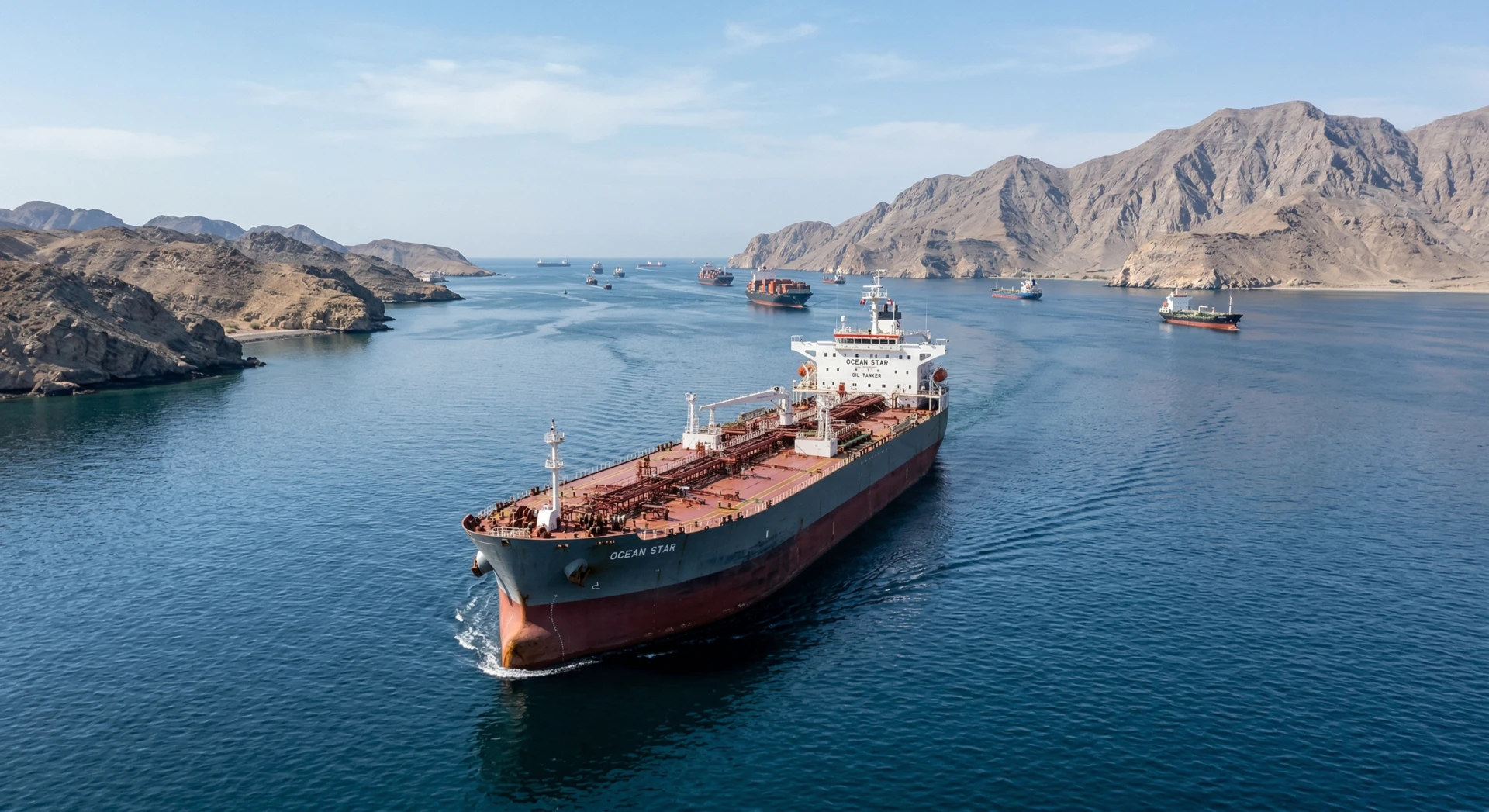
Egypt has signed a $1.5 billion loan agreement with the International Islamic Trade Finance Corporation to support food and energy security, allocating $700 million to the General Authority for Supply Commodities (GASC) while $800 million will support the Egyptian General Petroleum Corporation (EGPC). The deal signed as part of a 2026 annual work programme represents a significant shift in how Egypt finances its critical imports, squeezing out traditional commercial banks that previously competed for this lucrative government business. For Islamic trade finance institutions, this consolidates roughly 15% of Egypt's annual commodity import financing through a single facility structure.
The financing structure operates through murabaha arrangements Islamic compliant cost plus profit contracts where ITFC purchases commodities and resells them to Egypt at predetermined margins rather than charging conventional interest. Egypt typically imports about 10 million tonnes of wheat annually, with the state buyer obtaining roughly half for the country's bread subsidy program on which 70 million people rely. At current CBOT wheat prices around $675 per bushel, the $700 million GASC allocation covers approximately 3.8 million tonnes representing 76% of typical government wheat procurement. The $800 million petroleum allocation addresses what Egyptian officials describe as acute energy sector constraints, including gas shortages that have forced summer electricity rationing.
On the buy side: Egyptian state entities gain predictable financing costs with Islamic institutions typically offering 200-400 basis points below commercial bank Letters of Credit rates for sovereign buyers. GASC procurement managers avoid the foreign exchange volatility that has plagued conventional trade finance since Egypt's 2022 currency crisis the murabaha structure effectively provides built-in hedging through commodity linked pricing. On the sell side: Traditional European and American trade finance banks lose access to approximately $1.5 billion in annual Egyptian government business, representing roughly $15-25 million in annual fee income at standard 100-150 basis point facility margins.
For large integrated commodity houses Cargill, ADM, Louis Dreyfus with established Islamic finance relationships, the shift creates competitive advantage over smaller trading houses lacking shariah-compliant structures. Major international traders can leverage their existing murabaha facilities to compete more aggressively for Egyptian tenders, knowing payment certainty through ITFC guarantees. For mid-sized regional wheat suppliers without Islamic finance access, the change effectively narrows their route to Egyptian market participation, forcing reliance on conventional Letters of Credit that carry higher costs and longer payment terms potentially 180 days versus ITFC's typical 90 day settlement cycles.
For observers: ITFC's total cooperation portfolio with Egypt has reached $24.8 billion through five framework agreements since 2008, with the latest agreement originally signed in 2018 and extended in 2022 for five years. Monitor ITFC facility utilization rates quarterly through their published trade development reports any acceleration beyond the $1.5 billion annual ceiling signals either Egyptian import financing stress or expansion of Islamic trade finance market share. Watch Egyptian wheat import tender awards over the next 60 days to identify which trading houses have adapted to shariah compliant structures versus those losing market access to conventional finance constraints.

.jpg)


'%3e%3cg id='Final-Copy-2_2_' transform='translate(1275.000000, 200.000000)'%3e%3cpath class='st0' d='M7.4,12.8h6.8l3.1-11.6H7.4C4.2,1.2,1.6,3.8,1.6,7S4.2,12.8,7.4,12.8z'/%3e%3c/g%3e%3c/g%3e%3c/g%3e%3cg id='final---dec.11-2020'%3e%3cg id='_x30_208-our-toggle' transform='translate(-1275.000000, -200.000000)'%3e%3cg id='Final-Copy-2' transform='translate(1275.000000, 200.000000)'%3e%3cpath class='st1' d='M22.6,0H7.4c-3.9,0-7,3.1-7,7s3.1,7,7,7h15.2c3.9,0,7-3.1,7-7S26.4,0,22.6,0z M1.6,7c0-3.2,2.6-5.8,5.8-5.8 h9.9l-3.1,11.6H7.4C4.2,12.8,1.6,10.2,1.6,7z'/%3e%3cpath id='x' class='st2' d='M24.6,4c0.2,0.2,0.2,0.6,0,0.8l0,0L22.5,7l2.2,2.2c0.2,0.2,0.2,0.6,0,0.8c-0.2,0.2-0.6,0.2-0.8,0 l0,0l-2.2-2.2L19.5,10c-0.2,0.2-0.6,0.2-0.8,0c-0.2-0.2-0.2-0.6,0-0.8l0,0L20.8,7l-2.2-2.2c-0.2-0.2-0.2-0.6,0-0.8 c0.2-0.2,0.6-0.2,0.8,0l0,0l2.2,2.2L23.8,4C24,3.8,24.4,3.8,24.6,4z'/%3e%3cpath id='y' class='st3' d='M12.7,4.1c0.2,0.2,0.3,0.6,0.1,0.8l0,0L8.6,9.8C8.5,9.9,8.4,10,8.3,10c-0.2,0.1-0.5,0.1-0.7-0.1l0,0 L5.4,7.7c-0.2-0.2-0.2-0.6,0-0.8c0.2-0.2,0.6-0.2,0.8,0l0,0L8,8.6l3.8-4.5C12,3.9,12.4,3.9,12.7,4.1z'/%3e%3c/g%3e%3c/g%3e%3c/g%3e%3c/g%3e%3c/svg%3e) Privacy Choices
Privacy Choices