.avif)
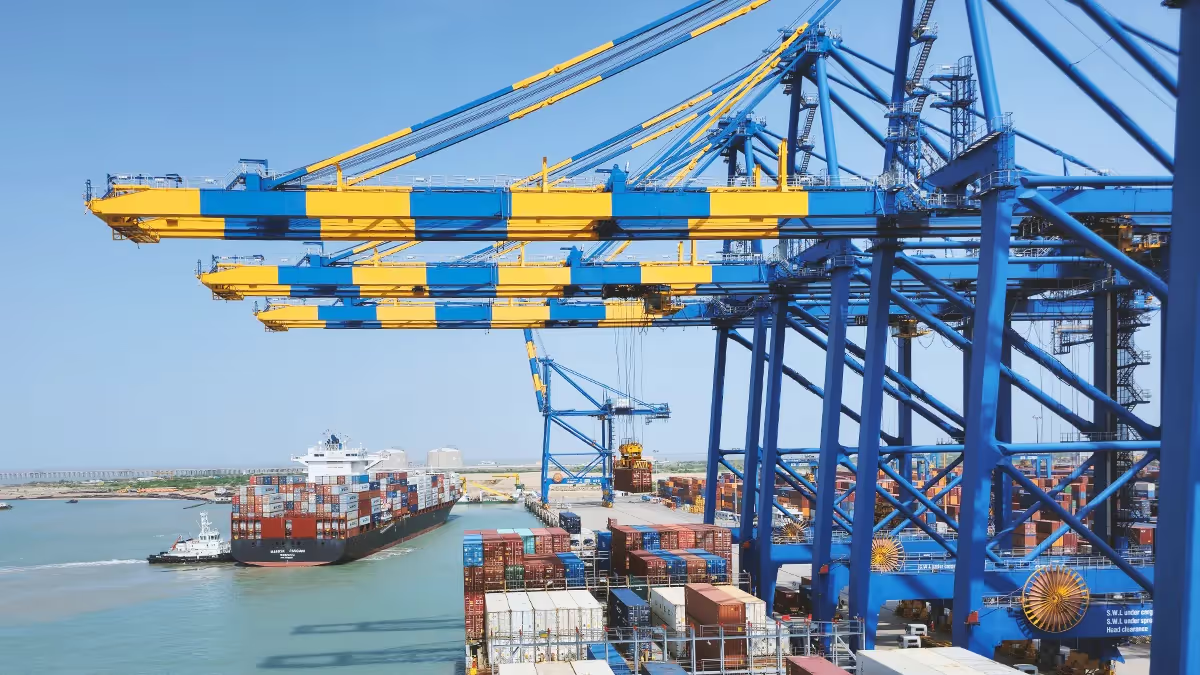
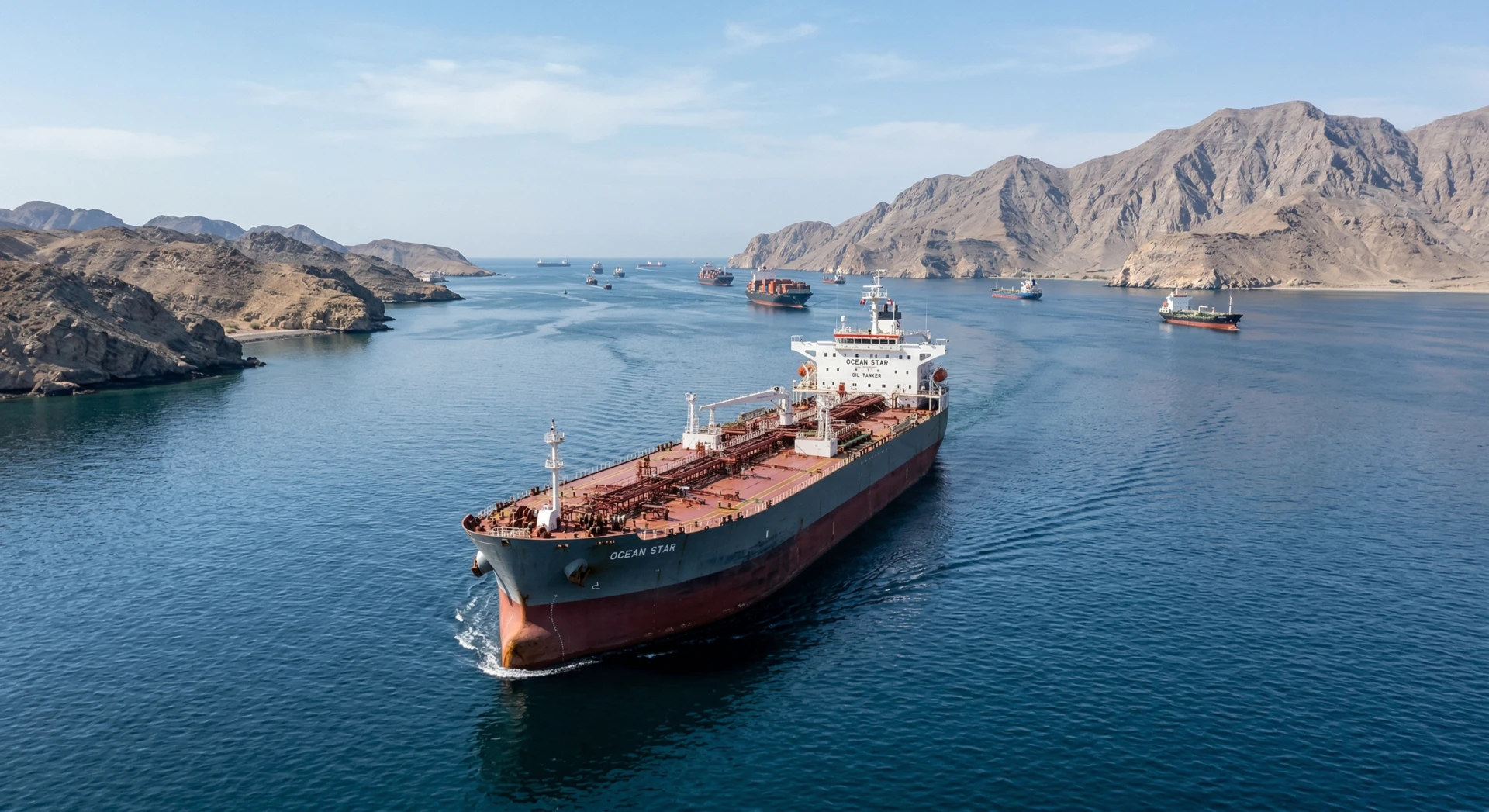
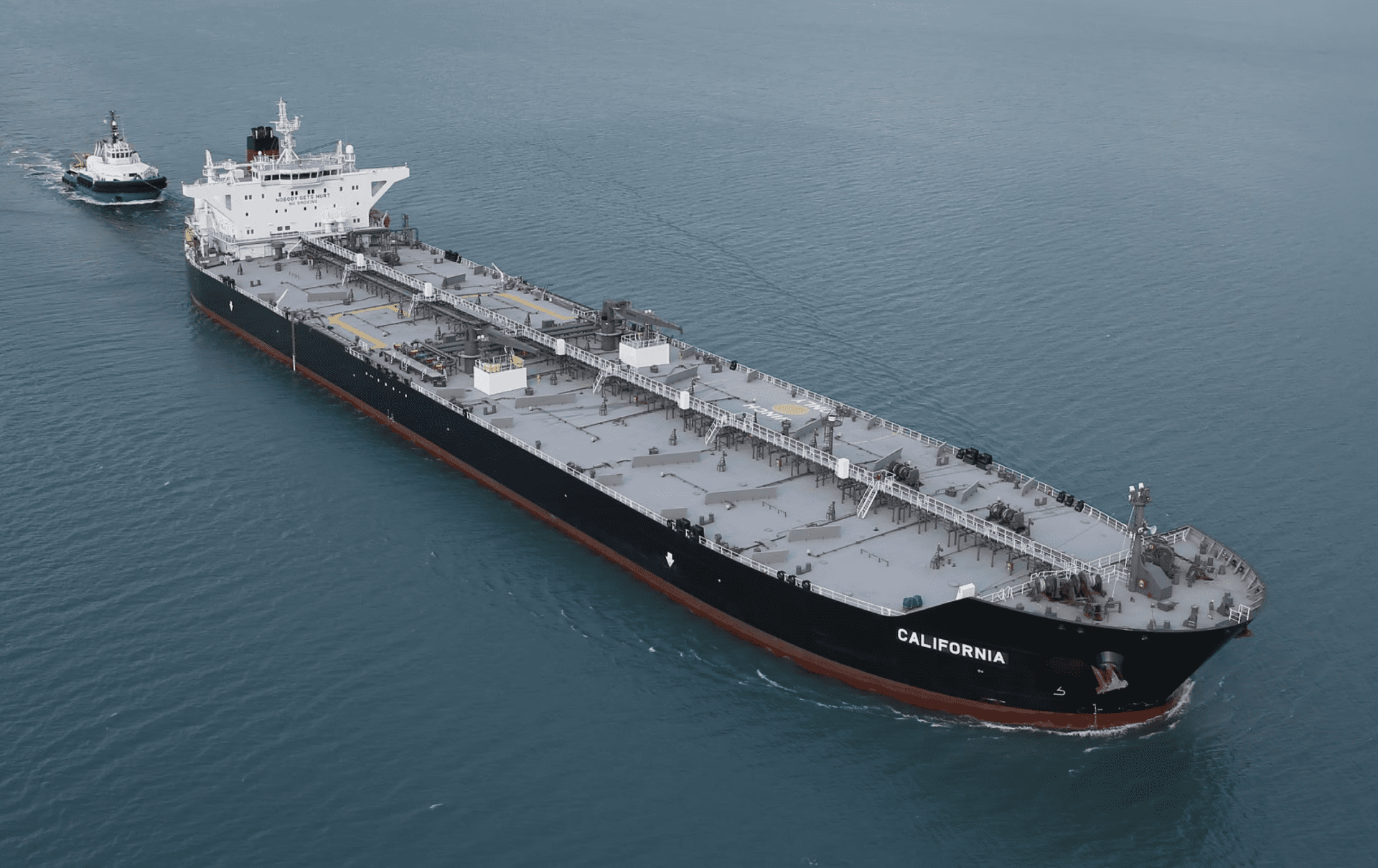
Indian shipowners now have sovereign backed insurance protection against war-zone losses, but the $1.5 billion Bharat Maritime Insurance Pool (BMIP) launched on May 12, 2026 could be consumed by a single major tanker total loss in current Middle East operations. The Department of Financial Services launched BMIP on Tuesday, offering USD 1.5 billion in coverage with a sovereign guarantee of Rs 12,980 crore (approximately USD 1.4 billion) to maintain uninterrupted maritime insurance amid Middle East tensions. Consider a VLCC (Very Large Crude Carrier a supertanker capable of carrying 2 million barrels) valued at $150 million and sailing from Abu Dhabi to India. If you went to the hull market right now and said: 'I've got a tanker going through the Strait of Hormuz,' there is a possibility that you would struggle to find underwriters looking to write that. BMIP fills this gap but one war-zone VLCC total loss plus cargo claims could exhaust 40% of the pool's entire capacity.
All 12 members of the International Group of P&I Clubs, a risk pool that covers 90% of the world's ocean-going tonnage, have given 72 hours' notice of cancellation of parts of their war cover in the Gulf, creating the exact void BMIP addresses. War-risk marine insurance coverage against losses from war, terrorism, piracy, and political violence has become unavailable or prohibitively expensive in zones like the Strait of Hormuz, which carries approximately 20% of global oil flows. War risk premiums have risen as high as 1 percent of the value of a ship in the past 48 hours, from about 0.2 percent last week, with costs potentially rising to 1 percent of its value, marking a 300 percent increase. For Indian shipowners dependent on Persian Gulf energy imports, this withdrawal meant operational paralysis or accepting catastrophic financial exposure.
On the buy side: Secretary M Nagaraju handed over the first Marine Hull & Machinery War Policy to Hoger Offshore and Marine Private Limited, issued by New India Assurance under BMIP, while a Marine Cargo War Policy covering Vedanta Sterlite Copper Ltd's cable wire imports was issued, along with a policy to Balrampur Chini Mills Limited. These first beneficiaries represent India's actual exposure: offshore operators, metal importers requiring continuous raw material supply, and sugar manufacturers dependent on international commodity markets. Each faces potential trade disruption without war-risk coverage, as banks typically require insurance confirmation before releasing letters of credit (LCs) bank guarantees that payment will be made once shipping documents are presented that enable commodity financing. On the sell side: Indian marine insurers gain immediate underwriting fees on $1.5 billion capacity while transferring ultimate catastrophic risk to the sovereign guarantee. The policies will be issued by insurers that are Pool members, using the combined underwriting capacity of the Pool, which would be around Rs.950 crore.
For large integrated operators Indian public sector shipping companies like Shipping Corporation of India, private fleet operators with multiple VLCC exposure BMIP provides the essential sovereign backstop that international markets withdrew. Claims up to $100 million will be handled through the pool's own reserves and underwriting capacity while Claims beyond $100 million will trigger the sovereign guarantee mechanism after all reserves, member contributions, and reinsurance support are exhausted. These operators can now maintain Persian Gulf-India crude and product flows without accepting naked war-risk exposure. For smaller regional operators mid-sized Indian tanker companies, independent bulk carriers, specialized offshore supply vessels serving ONGC operations BMIP offers access to war-risk coverage they could never obtain individually in current markets. However, the pool's structure concentrates them all under single sovereign risk, removing diversification that international markets previously provided.
GIC Re has been appointed as the pool administrator and will oversee operations, reporting, and reinsurance arrangements, with a Governing Body and an Underwriting Committee formed to supervise risk assessment, underwriting discipline, and invocation of sovereign guarantees if needed. This administrative concentration through General Insurance Corporation of India (GIC Re) the state reinsurer means all Indian maritime war-risk exposure flows through a single decision making entity. The margin anatomy shows Indian marine insurers collecting underwriting fees while GIC Re administers the pool and manages reinsurance arrangements, but ultimate catastrophic risk sits with the Indian sovereign guarantee. The government will pool Rs. 950 crores to the fund, with GIC Re adding Rs. 400 crore. Compare this to the global reinsurance market's normal risk distribution: London marine insurers typically spread war-zone exposure across dozens of international reinsurers, creating capital depth that India's domestic pool cannot match.
The freight and logistics reality exposes BMIP's structural constraints. Daily charter rates for oil supertankers have quadrupled within a week to nearly $800,000, with International insurers beginning to sign new war risk contracts for ships entering the Persian Gulf and the Strait of Hormuz at a rate of 1% of a vessel's hull replacement value. Freight rates reflect panic level risk premiums because shipowners know a single missile strike creates total loss exposure that no domestic insurance mechanism can absorb repeatedly. A VLCC charter earning $800,000 daily versus normal rates of $40,000-60,000 demonstrates that freight not insurance premiums captures the true economic cost of war-zone exposure. BMIP addresses insurance availability but cannot alter the underlying reality that multiple major tanker losses would bankrupt any single sovereign guarantee.
The financing structure reveals BMIP's core vulnerability. The Indian government launched the 'Bharat Maritime Insurance Pool' (BMIP), a $1.5 billion domestic maritime insurance mechanism backed by a sovereign guarantee of $1.4 billion, aimed at ensuring uninterrupted maritime insurance coverage for Indian ships, cargo, and trade routes even during war-like situations. Compare this to recent war-zone losses: Estimates by Jefferies suggest that damages from seven reported vessels could lead to industry losses of up to $1.75 billion, with tankers valued at $200 to $300 million facing new insurance rates of approximately 3%, translating to about $7.5 million in premiums. Global marine insurers withdrew from Persian Gulf war risks because potential losses exceed India's entire pool capacity. The sovereign guarantee backstop cannot replenish itself after major claims it represents political risk transfer, not renewable insurance capital.
Historically, domestic marine insurance pools have failed when concentrated war-zone exposure exceeds sovereign fiscal capacity. During the Iran-Iraq Tanker War (1984-1988), Norwegian and other domestic pools were overwhelmed by accumulated war losses, requiring international bailouts. The US and Israel on Feb. 28 began a sustained air campaign against Iran, which has responded with missile and drone attacks against both military targets and energy infrastructure in the Persian Gulf, with Iran threatening to close the Strait and attacking ships attempting to traverse it. Current Middle East conflicts show escalation potential that could generate claims far exceeding BMIP's capacity. India's pool may provide essential short-term trade continuity, but sustained war-zone operations require either conflict resolution or international risk sharing that BMIP explicitly avoids.
The immediate commercial consequence focuses on trade financing availability rather than pure insurance cost. Indian commodity importers steel mills requiring coking coal, refineries importing crude, power plants needing LNG can now obtain the insurance certificates required for LC confirmation and cargo financing. Maritime insurance is linked to international trade because cargo movement and vessel operations depend on insurance cover for port calls, transit, and war-risk routes, with the BMIP designed to reduce dependence on foreign insurers and reinsurers. Banks will accept BMIP war-risk policies as LC collateral because of the sovereign guarantee, maintaining trade finance flows that international insurer withdrawal threatened to sever.
For traders and intermediaries, BMIP creates a geographic arbitrage opportunity. International trading houses with access to diverse war-risk coverage can now compete against Indian importers operating under BMIP protection, but the sovereign guarantee removes India's previous dependency on London marine market pricing cycles. However, BMIP's limited capacity means large trading operations requiring multiple simultaneous war-zone transits cannot rely exclusively on the domestic pool. Trafigura or Vitol operations involving dozens of concurrent Persian Gulf cargoes would exhaust BMIP capacity within weeks of sustained war-zone losses.
The structural reality demonstrates that BMIP addresses insurance availability not insurability. War risk premiums have risen as high as 1 percent of the value of a ship in the past 48 hours, from about 0.2 percent last week, adding hundreds of thousands in costs per voyage. Global insurers withdrew because potential per incident losses in current war zones can reach $500 million to $1 billion when including hull, cargo, pollution liability, and business interruption claims. India's $1.5 billion pool provides essential political insurance sovereign commitment to maintain trade flows but cannot alter the mathematical reality that sustained war-zone operations generate claims exceeding any single nation's fiscal capacity. BMIP succeeds as strategic trade policy while highlighting the fundamental inadequacy of domestic alternatives to global risk distribution.
The Baltic Exchange dry index increased 2.1% to 3063 on Tuesday, the highest since December 2023, while the Baltic Dry Index (BDI) decreased by 56 points to reach 2,978 points. For observers monitoring Indian maritime trade resilience: watch GIC Re's quarterly reserve utilization reports and BMIP claims frequency data. Any sustained pattern of war-zone claims approaching $100 million monthly indicates the pool's commercial limits are being tested. The sovereign guarantee represents political commitment, not unlimited financial capacity and global insurers will only return to Indian trade routes when geopolitical risks return to commercially insurable levels.

.jpg)



'%3e%3cg id='Final-Copy-2_2_' transform='translate(1275.000000, 200.000000)'%3e%3cpath class='st0' d='M7.4,12.8h6.8l3.1-11.6H7.4C4.2,1.2,1.6,3.8,1.6,7S4.2,12.8,7.4,12.8z'/%3e%3c/g%3e%3c/g%3e%3c/g%3e%3cg id='final---dec.11-2020'%3e%3cg id='_x30_208-our-toggle' transform='translate(-1275.000000, -200.000000)'%3e%3cg id='Final-Copy-2' transform='translate(1275.000000, 200.000000)'%3e%3cpath class='st1' d='M22.6,0H7.4c-3.9,0-7,3.1-7,7s3.1,7,7,7h15.2c3.9,0,7-3.1,7-7S26.4,0,22.6,0z M1.6,7c0-3.2,2.6-5.8,5.8-5.8 h9.9l-3.1,11.6H7.4C4.2,12.8,1.6,10.2,1.6,7z'/%3e%3cpath id='x' class='st2' d='M24.6,4c0.2,0.2,0.2,0.6,0,0.8l0,0L22.5,7l2.2,2.2c0.2,0.2,0.2,0.6,0,0.8c-0.2,0.2-0.6,0.2-0.8,0 l0,0l-2.2-2.2L19.5,10c-0.2,0.2-0.6,0.2-0.8,0c-0.2-0.2-0.2-0.6,0-0.8l0,0L20.8,7l-2.2-2.2c-0.2-0.2-0.2-0.6,0-0.8 c0.2-0.2,0.6-0.2,0.8,0l0,0l2.2,2.2L23.8,4C24,3.8,24.4,3.8,24.6,4z'/%3e%3cpath id='y' class='st3' d='M12.7,4.1c0.2,0.2,0.3,0.6,0.1,0.8l0,0L8.6,9.8C8.5,9.9,8.4,10,8.3,10c-0.2,0.1-0.5,0.1-0.7-0.1l0,0 L5.4,7.7c-0.2-0.2-0.2-0.6,0-0.8c0.2-0.2,0.6-0.2,0.8,0l0,0L8,8.6l3.8-4.5C12,3.9,12.4,3.9,12.7,4.1z'/%3e%3c/g%3e%3c/g%3e%3c/g%3e%3c/g%3e%3c/svg%3e) Privacy Choices
Privacy Choices