.avif)
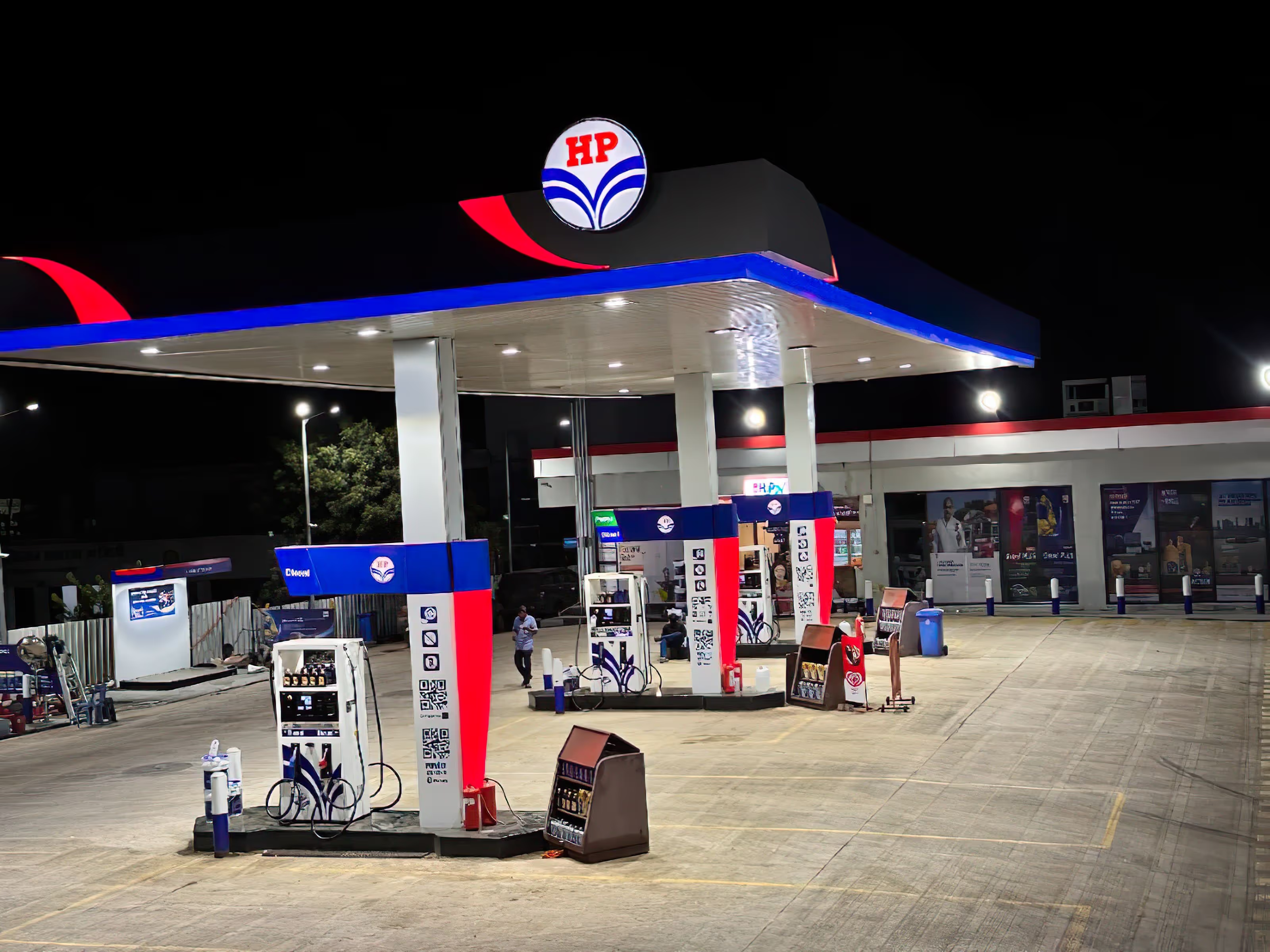
Mumbai's three major refiners Reliance Industries, Bharat Petroleum, and Hindustan Petroleum face a critical procurement window closing within 14 days as India's economic momentum shifts from robust February growth to March moderation, compressing refining margins by an estimated $2-3 per barrel. The Finance Ministry's March review flags higher crude prices and West Asian geopolitical tensions disrupting energy logistics, creating a supply cost squeeze that hits hardest on refiners still heavily weighted toward Middle Eastern crude imports. For a typical 300,000 barrel per day refinery, this margin compression translates to $600,000-900,000 daily cash flow impact. The urgency stems from standard 45-60 day crude procurement cycles cargoes secured now determine April-May processing economics. With Brent futures showing continued volatility above $85/barrel and Middle Eastern suppliers tightening spot availability amid regional tensions, Mumbai refiners must pivot toward Atlantic Basin or African crude sources within this narrow procurement window or accept reduced throughput rates.
India's steel and cement sectors consuming roughly 40% of refined products through construction activity show early demand destruction signals that create a feedback loop compressing refiner margins. The Finance Ministry specifically cites month on month decline in e-way bill generation (electronic waybills for goods movement) and softer PMI flash estimates, indicating reduced industrial logistics activity. Steel production typically consumes 60-80 liters of diesel per tonne for mining, transport, and auxiliary power, while cement plants burn 100-120 liters of fuel oil per tonne of clinker production. A 10% reduction in steel production plausible given 15-20% input cost inflation facing integrated mills removes approximately 2.4 million liters daily from India's gasoil demand. For refiners, this demand destruction coincides with rising crude costs, creating the classic margin squeeze where input costs rise faster than product realization. Mumbai refiners face particular exposure because their coastal locations make them swing suppliers for both domestic and export markets when domestic demand weakens, they compete directly with global refining centers for export outlets.
The procurement mathematics favor non-Middle Eastern crude sources by $3-5 per barrel when factoring in the full supply chain cost structure under current market conditions. West Texas Intermediate (WTI) crude delivered to Mumbai shows a landed cost advantage over Dubai crude when accounting for freight differentials, insurance premiums (now elevated for Middle Eastern routes), and cargo availability. A typical Aframax cargo of 650,000 barrels from the US Gulf Coast to Mumbai costs approximately $1.2 million in freight, versus $800,000 for a similar Middle Eastern cargo, but WTI's current discount to Dubai crude of $4-6/barrel more than compensates. Additionally, Atlantic Basin crude suppliers offer more flexible loading windows critical when refiners need to adjust procurement timing for margin optimization. For Mumbai's refiners, this shift isn't just about immediate cost savings but about supply security: Middle Eastern suppliers are increasingly prioritizing term contract customers over spot buyers, leaving Mumbai's spot market exposure vulnerable to supply gaps.
On the buy side, large integrated trading houses with derivatives access can monetize this crude source arbitrage through location swaps and crack spread hedging, while Mumbai's refiners face constrained hedging options under India's commodity derivatives regulations. Glencore and Vitol-type operators can structure three way deals buying discounted WTI, selling Middle Eastern crude to Asian term buyers, and hedging the crack spread differential through ICE Brent-WTI spreads and gasoil futures. This generates $2-4/barrel arbitrage profit while providing Mumbai refiners with alternative crude sources. On the sell side, Middle Eastern crude suppliers particularly UAE's ADNOC and Saudi Aramco gain pricing power as their traditional Asian buyers compete for reduced spot allocations. ADNOC can command higher official selling prices (OSPs) when spot availability tightens, knowing refiners with inadequate term contract coverage must accept higher prices or reduce runs. For intermediaries, the margin concentrates in providing crude supply flexibility trading houses with storage assets in Singapore or Fujairah can offer Mumbai refiners price discovery services, essentially selling optionality during volatile procurement windows.
Large integrated refiners with 300,000+ barrels per day capacity can deploy sophisticated procurement strategies including crude slate optimization models that maximize margins across multiple feedstock sources, while smaller regional refiners with 50,000-100,000 bpd capacity face binary choices between maintaining runs at compressed margins or reducing utilization. Reliance Industries, processing 1.4 million barrels daily across Jamnagar, can run linear programming models that optimize crude selection across 200+ grades, factoring transport costs, processing complexity, and product yield differentials. Their procurement teams can commit to 60 day forward purchases with confidence in processing flexibility. Smaller operators like Mangalore Refinery and Petrochemicals Limited (MRPL) lack this optimization capability and typically fix crude purchases bilaterally with limited grades. When their preferred Middle Eastern crudes become unavailable or uneconomical, they face starker choices: accept margin destruction or reduce throughput. The 14 day urgency particularly pressures these smaller operators because they lack the inventory buffers and supply chain flexibility to absorb procurement delays. Regional refiners must secure alternative crude sources now or plan for reduced utilization rates through April-May, with corresponding impact on product supply commitments to downstream customers.
The infrastructure construction slowdown creates a second order effect that reshapes India's refined product import-export balance, potentially opening arbitrage opportunities for traders while pressuring domestic refiner cash flows. India's infrastructure projects operate on 18-24 month construction cycles with pre-committed commodity requirements. March's economic moderation doesn't immediately reduce contracted steel and cement demand, but it eliminates the pipeline of new project starts that would drive 2027-2028 consumption. This creates a lag effect where current refiner demand destruction is mild, but forward demand expectations collapse. Smart money anticipates this by positioning for increased refined product imports in Q4 2026 as domestic refining utilization drops below 85%. Singapore based product traders can structure forward import deals with Indian distributors, betting that domestic refinery constraints will open import parity pricing gaps. Simultaneously, this demand destruction forces Mumbai refiners to compete more aggressively in export markets, particularly diesel exports to Europe and gasoline exports to Africa, where they face established competitors with potentially lower production costs.
Market participants should monitor the spread between Mumbai High crude (India's benchmark) and international markers, alongside weekly refinery utilization data from the Petroleum Planning and Analysis Cell (PPAC), for signals of this procurement shift's success or failure. Mumbai High crude trading at discounts exceeding $3/barrel to Brent typically indicates domestic refiners are struggling with feedstock economics and may need to import alternative crudes or reduce runs. Weekly PPAC data showing Mumbai region utilization below 80% would confirm that refiners chose reduced throughput over margin destruction. The forward curve structure for Brent-Dubai spreads provides early warning of Middle Eastern crude availability backwardation (where near-term prices exceed forward prices) signals that supply tightness is temporary, while contango suggests structural supply constraints that justify permanent crude source diversification. For procurement officers, the key decision framework hinges on whether current Middle Eastern crude premiums represent temporary geopolitical risk premiums or structural market shifts toward reduced Asian allocations. This determination drives whether to secure 90 day forward coverage from alternative sources or maintain spot market flexibility betting on Middle Eastern price normalization.



.jpg)
.jpg)


'%3e%3cg id='Final-Copy-2_2_' transform='translate(1275.000000, 200.000000)'%3e%3cpath class='st0' d='M7.4,12.8h6.8l3.1-11.6H7.4C4.2,1.2,1.6,3.8,1.6,7S4.2,12.8,7.4,12.8z'/%3e%3c/g%3e%3c/g%3e%3c/g%3e%3cg id='final---dec.11-2020'%3e%3cg id='_x30_208-our-toggle' transform='translate(-1275.000000, -200.000000)'%3e%3cg id='Final-Copy-2' transform='translate(1275.000000, 200.000000)'%3e%3cpath class='st1' d='M22.6,0H7.4c-3.9,0-7,3.1-7,7s3.1,7,7,7h15.2c3.9,0,7-3.1,7-7S26.4,0,22.6,0z M1.6,7c0-3.2,2.6-5.8,5.8-5.8 h9.9l-3.1,11.6H7.4C4.2,12.8,1.6,10.2,1.6,7z'/%3e%3cpath id='x' class='st2' d='M24.6,4c0.2,0.2,0.2,0.6,0,0.8l0,0L22.5,7l2.2,2.2c0.2,0.2,0.2,0.6,0,0.8c-0.2,0.2-0.6,0.2-0.8,0 l0,0l-2.2-2.2L19.5,10c-0.2,0.2-0.6,0.2-0.8,0c-0.2-0.2-0.2-0.6,0-0.8l0,0L20.8,7l-2.2-2.2c-0.2-0.2-0.2-0.6,0-0.8 c0.2-0.2,0.6-0.2,0.8,0l0,0l2.2,2.2L23.8,4C24,3.8,24.4,3.8,24.6,4z'/%3e%3cpath id='y' class='st3' d='M12.7,4.1c0.2,0.2,0.3,0.6,0.1,0.8l0,0L8.6,9.8C8.5,9.9,8.4,10,8.3,10c-0.2,0.1-0.5,0.1-0.7-0.1l0,0 L5.4,7.7c-0.2-0.2-0.2-0.6,0-0.8c0.2-0.2,0.6-0.2,0.8,0l0,0L8,8.6l3.8-4.5C12,3.9,12.4,3.9,12.7,4.1z'/%3e%3c/g%3e%3c/g%3e%3c/g%3e%3c/g%3e%3c/svg%3e) Privacy Choices
Privacy Choices