.avif)
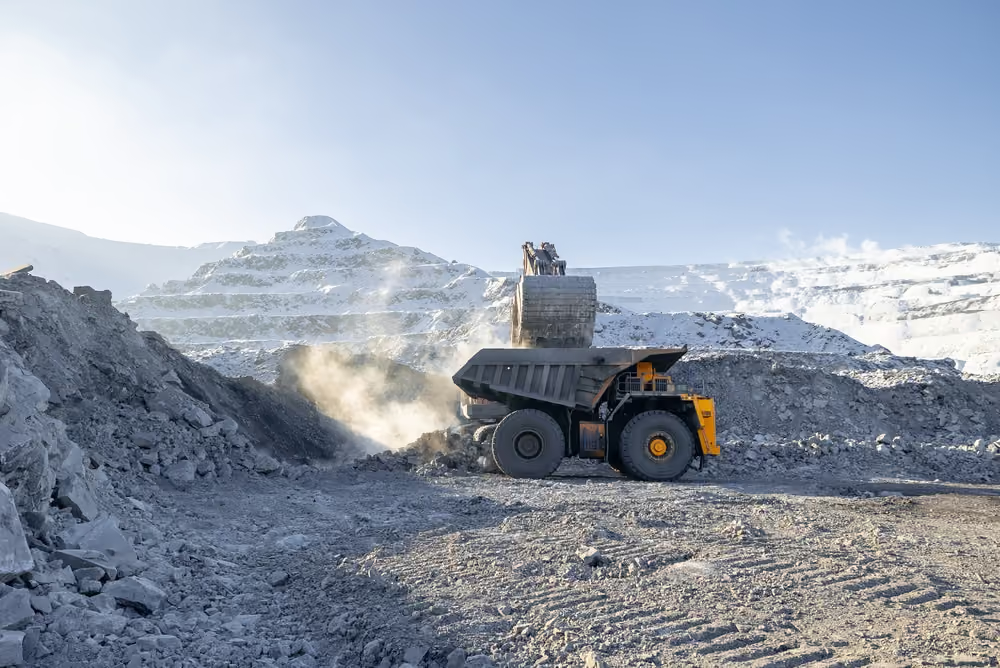
OMC's expansion of Kodingamali bauxite mine from 3.6 to 6 million tonnes per annum will generate approximately $24-36 million in additional mining margin at current $10-15/tonne extraction profits, but the 2.4 million tonne capacity increase exposes a structural flaw in India's aluminum value chain. A bauxite mine a surface operation extracting aluminum ore through open-pit methods can scale output relatively quickly, but alumina refineries complex chemical plants that convert bauxite into aluminum oxide using the energy intensive Bayer process require years to build and billions in capital. India's alumina refining capacity cannot absorb this additional domestic ore without displacing existing supply contracts.
Consider the mathematics: OMC's additional 2.4 million tonnes of bauxite produces roughly 960,000 tonnes of alumina at the standard 2.5:1 conversion ratio. India's total alumina capacity is approximately 7.2 million tonnes, already running near 85% utilization. The incremental volume either displaces imported bauxite reducing margins for international traders but benefiting domestic refiners or gets exported as raw ore at $45-65/tonne, earning significantly less than the $180-220/tonne that alumina commands. The gap represents value destruction at the national level: India exports a commodity and imports the refined product.
On the buy side: Indian alumina refiners (Hindalco, Vedanta, NALCO) benefit from secure domestic bauxite supply at lower logistics costs approximately $8-12/tonne to transport ore 200 kilometers to coastal refineries versus $25-35/tonne for imported Australian bauxite including freight. However, their existing long-term supply contracts with international miners create contractual obligations that limit immediate substitution. For aluminum smelters, bauxite mining expansion provides no direct benefit they require alumina, not ore. On the sell side: OMC captures mining margin expansion from $36 million annually (3.6MT × $10/tonne) to $60-90 million (6MT × $10-15/tonne), but the state enterprise faces the choice of displacing private sector import contracts or accepting lower netbacks on export sales.
For large integrated aluminum producers (Vedanta, Hindalco) with both mining and refining assets: this expansion creates optionality to reduce import dependence but requires careful contract renegotiation with existing suppliers to avoid take or pay penalties. The integrated players can optimize their supply mix by increasing domestic ore usage while maintaining bauxite import flexibility for grade blending Indian bauxite from Odisha averages 50-52% alumina content versus 58-60% for premium Australian ore. For smaller regional smelters without mining assets: the expansion provides no immediate cost benefit since they purchase alumina, not bauxite. Regional cooperatives and mid-sized aluminum fabricators remain exposed to alumina price volatility regardless of upstream mining capacity.
For observers: monitor India's monthly alumina import volumes from China through Mumbai and Kandla ports as the key indicator. If these imports decline more than 200,000 tonnes quarterly through Q4 2026, it signals successful domestic bauxite substitution. Watch aluminum premiums in the Delhi and Mumbai spot markets if domestic premiums to LME narrow below $80/tonne (currently $95-105/tonne), it indicates improved supply chain efficiency from reduced import dependence. The more telling signal: any announcement of new alumina refinery construction in Odisha within twelve months would validate the strategic logic of mining expansion beyond simple volume growth.




'%3e%3cg id='Final-Copy-2_2_' transform='translate(1275.000000, 200.000000)'%3e%3cpath class='st0' d='M7.4,12.8h6.8l3.1-11.6H7.4C4.2,1.2,1.6,3.8,1.6,7S4.2,12.8,7.4,12.8z'/%3e%3c/g%3e%3c/g%3e%3c/g%3e%3cg id='final---dec.11-2020'%3e%3cg id='_x30_208-our-toggle' transform='translate(-1275.000000, -200.000000)'%3e%3cg id='Final-Copy-2' transform='translate(1275.000000, 200.000000)'%3e%3cpath class='st1' d='M22.6,0H7.4c-3.9,0-7,3.1-7,7s3.1,7,7,7h15.2c3.9,0,7-3.1,7-7S26.4,0,22.6,0z M1.6,7c0-3.2,2.6-5.8,5.8-5.8 h9.9l-3.1,11.6H7.4C4.2,12.8,1.6,10.2,1.6,7z'/%3e%3cpath id='x' class='st2' d='M24.6,4c0.2,0.2,0.2,0.6,0,0.8l0,0L22.5,7l2.2,2.2c0.2,0.2,0.2,0.6,0,0.8c-0.2,0.2-0.6,0.2-0.8,0 l0,0l-2.2-2.2L19.5,10c-0.2,0.2-0.6,0.2-0.8,0c-0.2-0.2-0.2-0.6,0-0.8l0,0L20.8,7l-2.2-2.2c-0.2-0.2-0.2-0.6,0-0.8 c0.2-0.2,0.6-0.2,0.8,0l0,0l2.2,2.2L23.8,4C24,3.8,24.4,3.8,24.6,4z'/%3e%3cpath id='y' class='st3' d='M12.7,4.1c0.2,0.2,0.3,0.6,0.1,0.8l0,0L8.6,9.8C8.5,9.9,8.4,10,8.3,10c-0.2,0.1-0.5,0.1-0.7-0.1l0,0 L5.4,7.7c-0.2-0.2-0.2-0.6,0-0.8c0.2-0.2,0.6-0.2,0.8,0l0,0L8,8.6l3.8-4.5C12,3.9,12.4,3.9,12.7,4.1z'/%3e%3c/g%3e%3c/g%3e%3c/g%3e%3c/g%3e%3c/svg%3e) Privacy Choices
Privacy Choices