.avif)
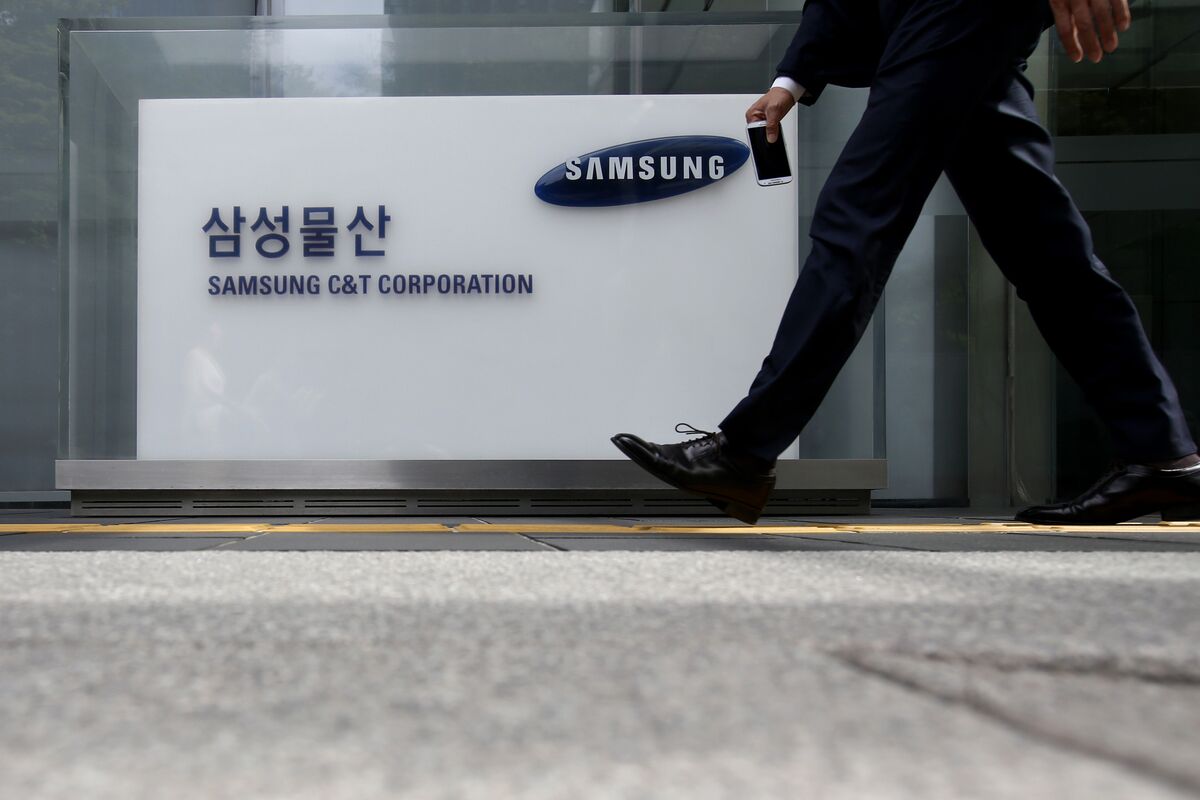
Starting in the second half of fiscal year 2029, Samsung C&T will receive green ammonia under a $3 billion long-term supply contract with Reliance Industries locking in a significant volume of what will be among the first utility-scale green ammonia exports from India's west coast. The deal reshapes the emerging India to Northeast Asia ammonia trade lane and gives Samsung C&T a contracted position that, if European hydrogen import premiums materialise as expected under EU regulatory mandates, could generate substantial resale margin. For green ammonia traders watching the global supply-demand balance, this agreement is not a distant announcement: equipment is already on-site at Jamnagar, solar PV lines are commissioned and producing, and management has signalled that new energy assets begin contributing financially from 2027 onward. The commercial clock is running.
To understand what this deal represents physically, it helps to trace the supply chain from its starting point. Jamnagar, on India's Gujarat coast, sits on the Arabian Sea roughly 2,200 nautical miles from South Korean ports via the Indian Ocean and the Strait of Malacca. Green ammonia ammonia (NH₃) produced by combining green hydrogen, itself made by splitting water using renewable electricity, with nitrogen is a liquid at minus 33°C at atmospheric pressure, transported in specialist refrigerated vessels or pressurised tanks similar to those used for LPG (liquefied petroleum gas). A standard ammonia carrier moves roughly 25,000–60,000 tonnes per voyage. Reliance's 3 million metric tonne per year hydrogen equivalent chemicals target its stated decade goal implies sustained, large-scale export flows requiring dedicated vessel scheduling, terminal infrastructure at both ends, and long-term freight agreements. The Samsung C&T deal is the first commercial anchor on that shipping lane. Without it, the route does not exist. With it, vessel operators, terminal developers, and port authorities on both coasts have a contractual basis to begin investing.
The margin anatomy of a green ammonia export deal in 2029 will depend heavily on the spread between Reliance's production cost and the contracted delivery price, which neither party has disclosed. But the structural logic is visible. Green ammonia production cost today runs approximately $600–900 per tonne for early mover projects, with expectations of falling toward $400–600 per tonne by the late 2020s as electrolyser the device that uses electricity to split water into hydrogen and oxygen costs decline and renewable power becomes cheaper. Spot grey ammonia produced from natural gas, the conventional method trades at roughly $300–400 per tonne in Asian markets currently. The green premium is real and wide. Samsung C&T, as an integrated trading house with downstream distribution into South Korean industrial and power customers, is positioned to capture the spread between its contracted supply price and whatever premium Korean or European buyers will pay for certified low-carbon ammonia under emissions regulations. If EU hydrogen import mandates drive European contracted prices to $700–900 per tonne by 2030, and Samsung C&T holds Indian supply at $500, the intermediary margin is $200 per tonne on millions of tonnes annually, that is a structurally significant position.
On the buy side, Japanese and South Korean industrial gas buyers including steel mills exploring ammonia co-firing (burning ammonia alongside conventional fuel to reduce CO₂ emissions), power generators, and fertiliser compounders face a limited and geographically concentrated set of long-term green ammonia suppliers. Australia, Chile, the Middle East, and now India are the credible origin points. Each buyer seeking certified supply under domestic decarbonisation mandates must either contract early and accept price uncertainty, or wait for market liquidity and accept volume uncertainty. The Reliance-Samsung deal narrows available long-term supply for competing buyers. Reliance management has confirmed it is in advanced discussions with customers in Japan, South Korea, and Europe for additional contracts meaning the next tranche of Jamnagar capacity may be spoken for before it is fully operational. On the sell side, Chinese and Middle Eastern producers of grey ammonia face structural erosion of their position in premium Asian markets as green certification requirements tighten. Chinese producers in particular, who dominate LFP battery cathode materials and export grey ammonia competitively, face a compound threat: Reliance's 120 GWh LFP gigafactory one of the world's largest if commissioned as planned simultaneously compresses the Indian import market for battery cells, while the green ammonia business targets the same North Asian customers currently served by conventional ammonia exporters.
The gigafactory element of this story carries its own critical constraint that the green ammonia opportunity cannot obscure. Scaling LFP lithium iron phosphate, a battery chemistry known for safety and cycle life from 40 GWh to 120 GWh annually requires substantial volumes of battery-grade lithium carbonate, iron phosphate, and graphite. India produces none of these at commercial scale. Global LFP cathode supply chains are heavily concentrated in China, which processes more than 80% of the world's lithium and manufactures the overwhelming majority of LFP cathode material. Anant Ambani's framing that building battery manufacturing in India is a strategic imperative for national resilience in a world where access to technology is being weaponised is accurate as a geopolitical diagnosis but incomplete as a supply-chain solution. Reliance has not publicly disclosed binding supply agreements for battery-grade inputs. A 120 GWh factory fed by spot or short-term Chinese cathode supply is not independent of the same supply-chain risks it was built to mitigate. This is the structural constraint that will determine whether Jamnagar's battery capacity is a genuine industrial platform or an assembly operation with a long upstream dependency.
For large integrated traders and national energy companies with derivatives access the class of operator that includes Mitsui, Marubeni, or Korea Gas Corporation's trading arms the actionable position is establishing long-term offtake or equity stakes in Indian green ammonia projects before the remaining Jamnagar capacity is contracted. The ALMM (Approved List of Models and Manufacturers) certification that Reliance has secured for its HJT heterojunction technology, an advanced solar cell architecture with higher efficiency than conventional cells solar modules creates a domestic content compliance arbitrage: Indian solar developers accessing government procurement schemes requiring ALMM-listed modules will pay a premium over non-certified imports. For smaller regional operators an independent South Asian fertiliser importer, a Korean mid-tier industrial gas distributor the practical equivalent is to begin qualifying Jamnagar origin ammonia within their supply specifications now, ahead of the H2 FY2029 start date, so that procurement processes, storage compatibility, and certification requirements are resolved before first delivery rather than during it.
For observers tracking this story, the single most informative near-term signal is whether Reliance files binding cathode material supply agreements specifically for battery-grade lithium carbonate and LFP cathode active material with its stock exchange disclosures before the 40 GWh first-phase commissioning later in 2026. The Jamnagar solar lines are operational and the HJT ALMM certification is confirmed; those are real. The battery gigafactory's commissioning timeline and cost structure are credible only if upstream mineral supply is secured on terms that do not replicate the China concentration risk the investment is meant to resolve. Watch the Bombay Stock Exchange (BSE) regulatory filing feed and Reliance's Q2 FY2027 earnings call expected October 2026 for any disclosure of cathode or precursor supply agreements. Separately, track the Bloomberg Green Hydrogen Index and Asian ammonia spot price convergence: when the green premium narrows to below $150 per tonne, the economics of the Samsung C&T deal become structurally harder to replicate for competitors. That threshold, if reached before 2029, would validate Reliance's timing and lock in Samsung's margin permanently.
'%3e%3cg id='Final-Copy-2_2_' transform='translate(1275.000000, 200.000000)'%3e%3cpath class='st0' d='M7.4,12.8h6.8l3.1-11.6H7.4C4.2,1.2,1.6,3.8,1.6,7S4.2,12.8,7.4,12.8z'/%3e%3c/g%3e%3c/g%3e%3c/g%3e%3cg id='final---dec.11-2020'%3e%3cg id='_x30_208-our-toggle' transform='translate(-1275.000000, -200.000000)'%3e%3cg id='Final-Copy-2' transform='translate(1275.000000, 200.000000)'%3e%3cpath class='st1' d='M22.6,0H7.4c-3.9,0-7,3.1-7,7s3.1,7,7,7h15.2c3.9,0,7-3.1,7-7S26.4,0,22.6,0z M1.6,7c0-3.2,2.6-5.8,5.8-5.8 h9.9l-3.1,11.6H7.4C4.2,12.8,1.6,10.2,1.6,7z'/%3e%3cpath id='x' class='st2' d='M24.6,4c0.2,0.2,0.2,0.6,0,0.8l0,0L22.5,7l2.2,2.2c0.2,0.2,0.2,0.6,0,0.8c-0.2,0.2-0.6,0.2-0.8,0 l0,0l-2.2-2.2L19.5,10c-0.2,0.2-0.6,0.2-0.8,0c-0.2-0.2-0.2-0.6,0-0.8l0,0L20.8,7l-2.2-2.2c-0.2-0.2-0.2-0.6,0-0.8 c0.2-0.2,0.6-0.2,0.8,0l0,0l2.2,2.2L23.8,4C24,3.8,24.4,3.8,24.6,4z'/%3e%3cpath id='y' class='st3' d='M12.7,4.1c0.2,0.2,0.3,0.6,0.1,0.8l0,0L8.6,9.8C8.5,9.9,8.4,10,8.3,10c-0.2,0.1-0.5,0.1-0.7-0.1l0,0 L5.4,7.7c-0.2-0.2-0.2-0.6,0-0.8c0.2-0.2,0.6-0.2,0.8,0l0,0L8,8.6l3.8-4.5C12,3.9,12.4,3.9,12.7,4.1z'/%3e%3c/g%3e%3c/g%3e%3c/g%3e%3c/g%3e%3c/svg%3e) Privacy Choices
Privacy Choices