.avif)
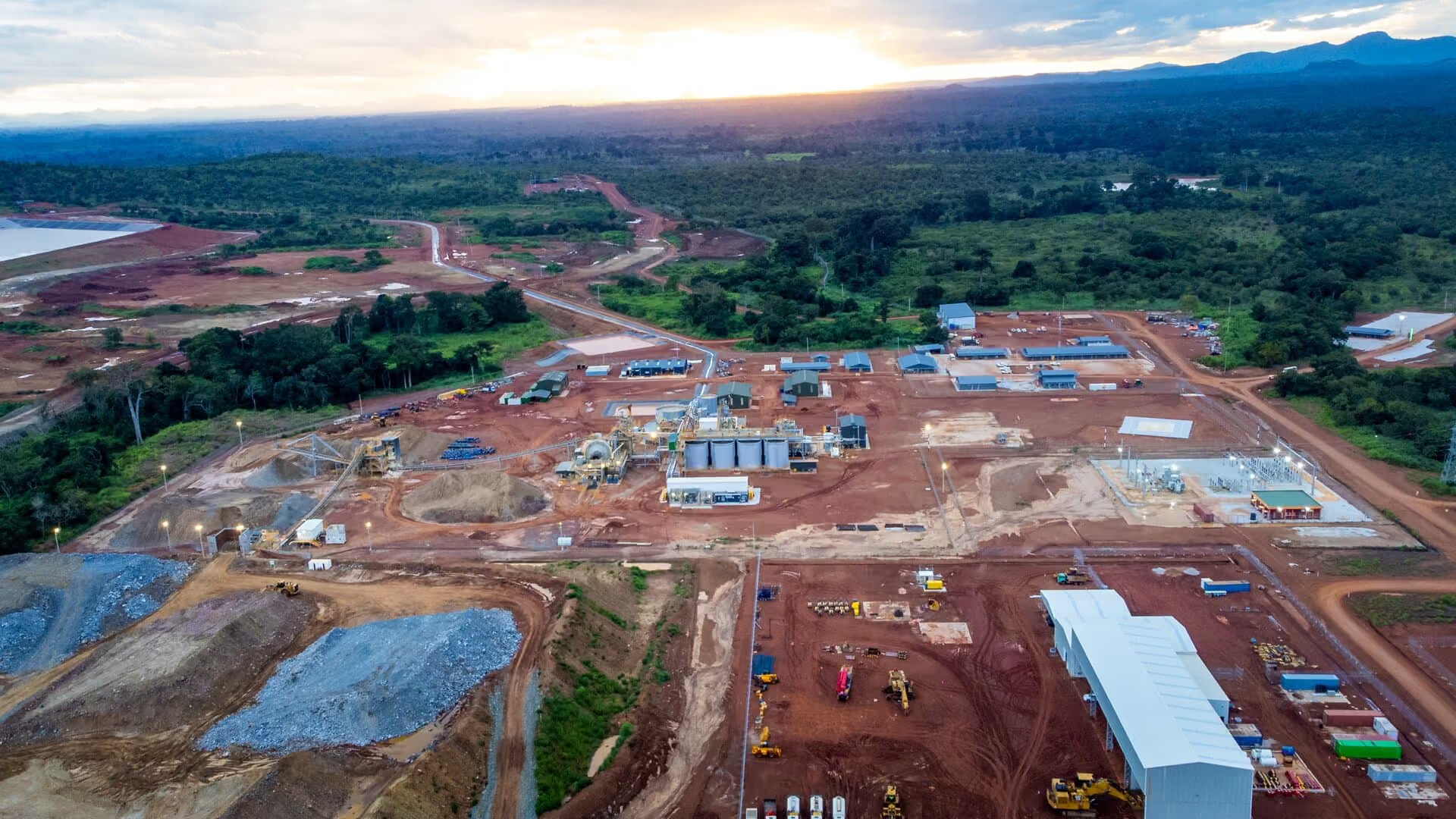
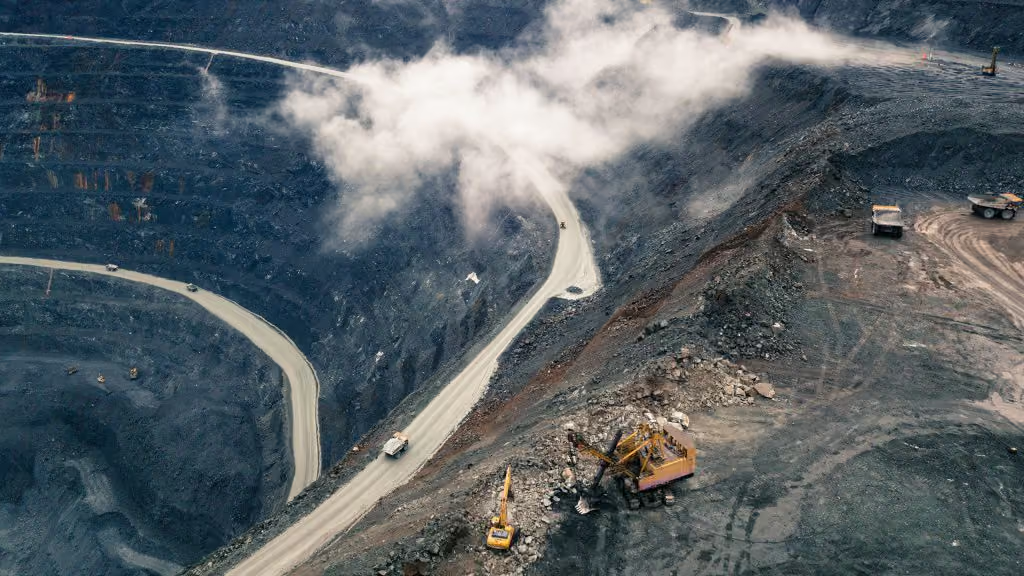
Silver concentrate sellers face a market quirk: institutional money flooding junior miner ETFs creates pricing disconnects without immediate supply relief. The Amplify Junior Silver Miners ETF (SILJ) jumped 5.6% Friday on unusually thin volume — just 2 million shares versus its 11 million average — while new institutional stakes like Capital Fund Management's $2.4 million position signal broader rotation into precious metals exposure. But here's the commercial reality: most SILJ holdings are exploration-stage companies years away from actual metal delivery, meaning ETF inflows inflate equity valuations without adding concentrate supply to spot markets.
The mechanism driving seller leverage centers on this production timeline mismatch. When institutional buyers pile into junior miner equities, they're betting on future silver discoveries and development projects that won't hit concentrate markets for 3-5 years minimum. Meanwhile, current concentrate sellers — those with operating mines and established production streams — benefit from both higher underlying silver prices (SLV gained 6.2% alongside SILJ) and the relative scarcity their immediate supply represents. Companies like Vizsla Silver and Silver Viper Minerals saw 5.7% and 5.1% gains respectively, but neither currently produces significant concentrate volumes for spot delivery.
Sellers with active production streams can leverage this dynamic through strategic timing and contract structure. Spot concentrate pricing should strengthen as ETF-driven silver demand outpaces new supply additions, particularly given the long lead times between junior miner financing and actual production ramp-up. Those selling on shorter-term contracts might consider renegotiation opportunities, while sellers locked into longer-term deals face the challenge of potentially underpriced commitments against a rising price environment. For buyers watching these developments, the key signal isn't ETF flow headlines but actual concentrate availability from operating mines — a much smaller and more concentrated seller base than equity market enthusiasm suggests.
The uncertainty lies in whether institutional appetite for junior miners represents sustainable demand or speculative rotation that could reverse quickly. Dollar weakness and technical bounce conditions currently support precious metals, but macro factors including bond yields and Middle East risk perceptions remain volatile. More fundamentally, the gap between junior miner equity valuations and actual concentrate supply timelines creates potential for sharp corrections if institutional buyers realize their ETF holdings won't translate to near-term metal market tightness. Sellers should watch for early indicators of institutional position changes and concentrate inventory levels at major processing facilities — both will signal whether current dynamics favor extended seller leverage or mark a temporary dislocation.



.avif)

'%3e%3cg id='Final-Copy-2_2_' transform='translate(1275.000000, 200.000000)'%3e%3cpath class='st0' d='M7.4,12.8h6.8l3.1-11.6H7.4C4.2,1.2,1.6,3.8,1.6,7S4.2,12.8,7.4,12.8z'/%3e%3c/g%3e%3c/g%3e%3c/g%3e%3cg id='final---dec.11-2020'%3e%3cg id='_x30_208-our-toggle' transform='translate(-1275.000000, -200.000000)'%3e%3cg id='Final-Copy-2' transform='translate(1275.000000, 200.000000)'%3e%3cpath class='st1' d='M22.6,0H7.4c-3.9,0-7,3.1-7,7s3.1,7,7,7h15.2c3.9,0,7-3.1,7-7S26.4,0,22.6,0z M1.6,7c0-3.2,2.6-5.8,5.8-5.8 h9.9l-3.1,11.6H7.4C4.2,12.8,1.6,10.2,1.6,7z'/%3e%3cpath id='x' class='st2' d='M24.6,4c0.2,0.2,0.2,0.6,0,0.8l0,0L22.5,7l2.2,2.2c0.2,0.2,0.2,0.6,0,0.8c-0.2,0.2-0.6,0.2-0.8,0 l0,0l-2.2-2.2L19.5,10c-0.2,0.2-0.6,0.2-0.8,0c-0.2-0.2-0.2-0.6,0-0.8l0,0L20.8,7l-2.2-2.2c-0.2-0.2-0.2-0.6,0-0.8 c0.2-0.2,0.6-0.2,0.8,0l0,0l2.2,2.2L23.8,4C24,3.8,24.4,3.8,24.6,4z'/%3e%3cpath id='y' class='st3' d='M12.7,4.1c0.2,0.2,0.3,0.6,0.1,0.8l0,0L8.6,9.8C8.5,9.9,8.4,10,8.3,10c-0.2,0.1-0.5,0.1-0.7-0.1l0,0 L5.4,7.7c-0.2-0.2-0.2-0.6,0-0.8c0.2-0.2,0.6-0.2,0.8,0l0,0L8,8.6l3.8-4.5C12,3.9,12.4,3.9,12.7,4.1z'/%3e%3c/g%3e%3c/g%3e%3c/g%3e%3c/g%3e%3c/svg%3e) Privacy Choices
Privacy Choices