.avif)
.avif)
Middle East crude oil traders face a fundamental market restructure as the UAE exits OPEC and OPEC+ on May 1, ending nearly 60 years of membership. The move releases approximately 1.45 million barrels per day of constrained capacity into an already volatile market where Brent crude trades above $111/barrel amid the Iran-Hormuz supply crisis. For traders managing Middle East crude portfolios, this represents the largest single-country production policy shift since Qatar left OPEC in 2019, with immediate implications for contract negotiations, freight optimization, and counterparty concentration risk.
.avif)
The production arithmetic reveals why Abu Dhabi walked away. The UAE's current production capacity stands at 4.85 million bpd, but as part of OPEC+ it has been producing close to 30% below capacity. Before the Hormuz crisis, the UAE produced 3.4 million bpd, which slumped 44% to 1.9 million bpd in March following the strait closure. The quota dispute has specific timeline markers: the UAE refused to sign OPEC+ production cut extensions in 2021 because baseline calculations anchored to 2018 output figures failed to reflect new upstream investment capacity. Even after OPEC granted a higher baseline of 3.5 million bpd in June 2024, ADNOC's capacity expansion rendered that ceiling obsolete within months. The gap between potential and permitted production reached an economically untenable 1.45 million bpd worth approximately $160 million daily at current crude prices.
On the buy side, Asian refiners gain a new unconstrained supplier but face complexity in term contract restructuring. Large integrated refiners like China's Sinopec or India's Indian Oil Corporation must now negotiate directly with ADNOC without OPEC+ production visibility for forward planning. The UAE has signaled it will "gradually increase production to supply global markets, once freedom of navigation is restored in the Strait of Hormuz," creating a timing arbitrage for buyers willing to commit to volumes before Hormuz fully reopens. Consider a major Asian refiner securing 200,000 bpd on 12 month terms, at $2-3/barrel discount to Saudi crude reflecting UAE's new market-access flexibility, this represents $146-219 million annual savings against Aramco's administered pricing.
On the sell side, Saudi Arabia faces its most significant challenge to Gulf crude pricing hegemony since the Iraq return to markets in 2003. Aramco's crude marketers lose coordination premium on competing medium-heavy grades like Arab Light versus UAE's Murban. The Saudi response will likely involve deeper discounts to defend market share, particularly in China where UAE crude competes directly. For Aramco traders, every $1/barrel discount on 7 million bpd of exports represents $2.6 billion annually. The calculation changes fundamentally when a fellow Gulf producer with similar crude characteristics no longer coordinates on price.
For smaller regional operators independent fuel importers, trading houses without derivatives capabilities, regional NOCs, the UAE exit creates both opportunity and execution risk. These operators gain access to potentially more flexible supply arrangements with ADNOC, no longer constrained by OPEC+ allocation discipline. A mid-sized Indian importer securing 50,000 bpd of UAE crude can negotiate responsive volume adjustments based on seasonal demand without hitting quota walls. However, they lose the predictability of OPEC+ coordination signals for inventory planning. The trade-off, more flexible volumes against reduced forward price visibility.
The financing dimension reveals where margin concentration shifts. UAE crude will trade on more bilateral, relationship-driven terms rather than the multilateral coordination structure that characterizes OPEC+ pricing. This advantages large integrated traders with strong UAE relationships, Vitol, Trafigura, Glencore, who can commit to longer-term financing structures that smaller competitors cannot match. Consider a standard 90 day letter of credit financing 2 million barrels, at current crude prices, this represents $220 million working capital commitment. Regional operators without such financing capacity become increasingly dependent on intermediary traders, compressing their margins while concentrating profits among major trading houses.
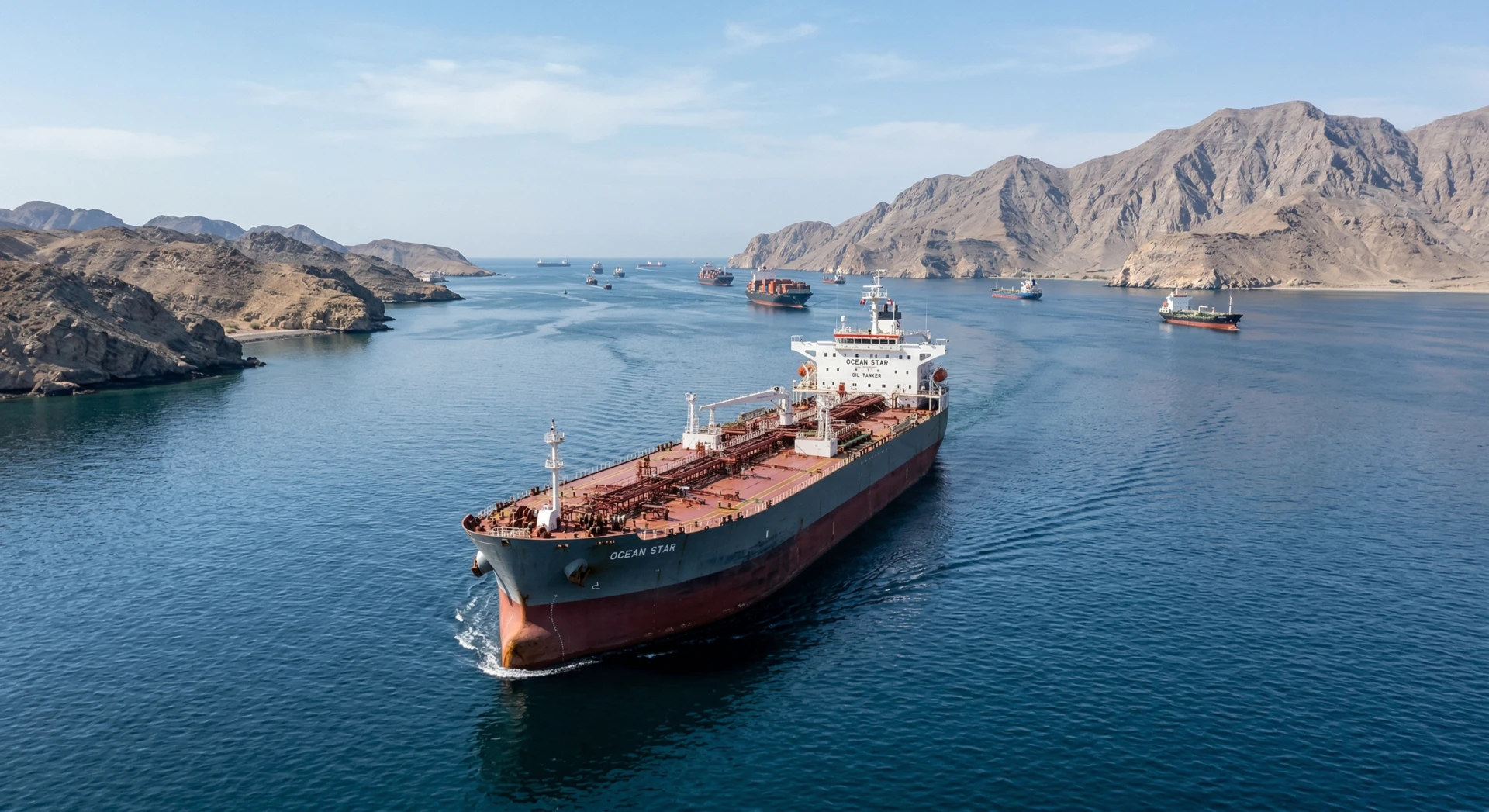
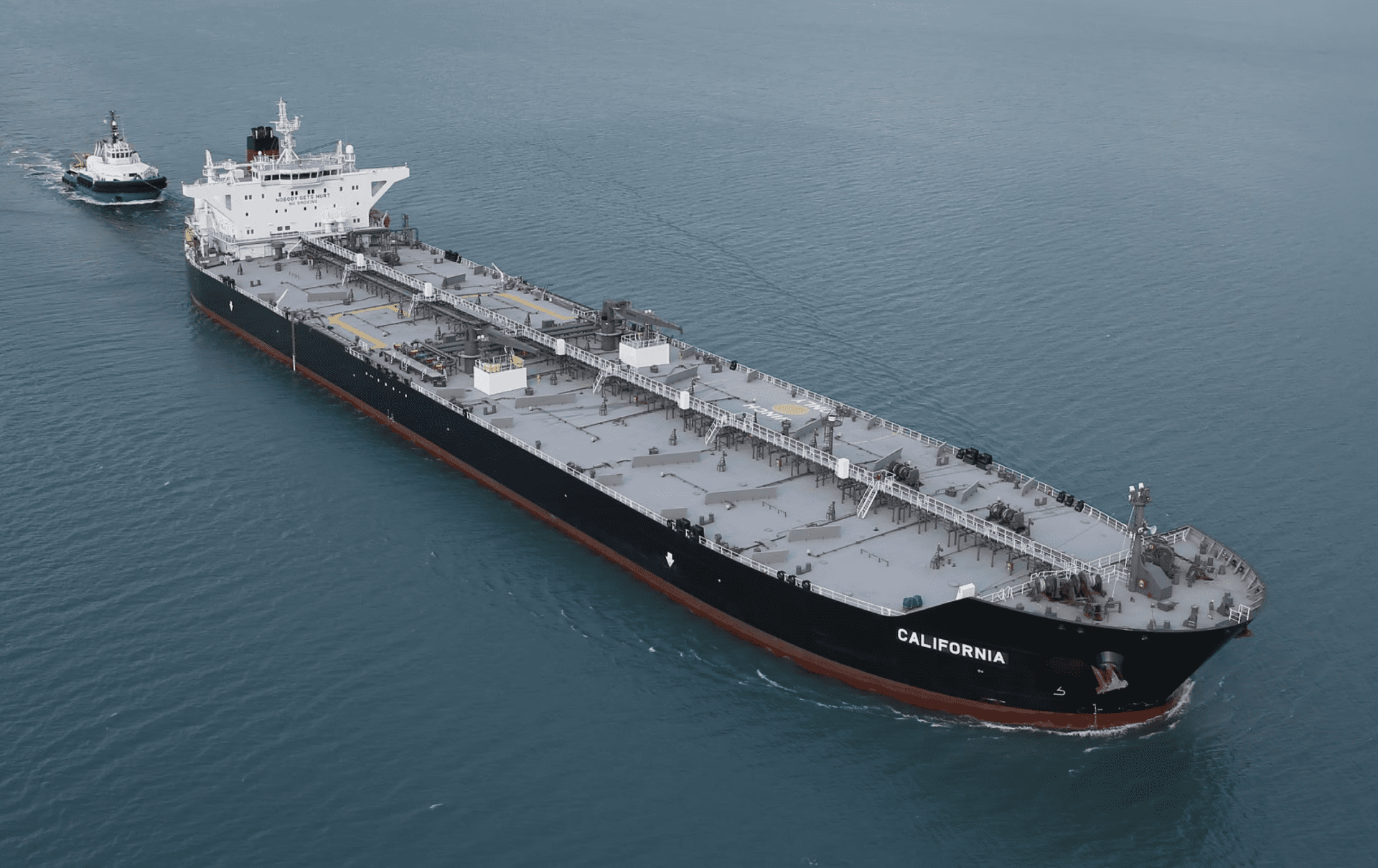
The freight equation compounds these dynamics. UAE crude exports must now compete for tanker allocation without coordinated OPEC+ scheduling. Pre-exit, Gulf crude shipments moved on relatively predictable timing aligned with cartel production schedules. Post-exit, UAE crude competes for Very Large Crude Carriers (VLCCs) on the MEG-Asia route against Saudi, Iraqi, and eventually Iranian crude. At current freight rates of approximately $14/MT, a VLCC carrying 2 million barrels costs roughly $28 million per voyage. UAE crude marketers must now factor independent freight procurement into pricing, while buyers face less predictable delivery timing. The advantage flows to operators with their own tonnage or long-term charter arrangements.
The Iran-Hormuz context transforms this from routine market adjustment to strategic repositioning. The Strait of Hormuz closure has disrupted 20% of global oil supplies, creating artificial scarcity that masks the UAE move's full impact. However, once Hormuz reopens estimated by industry sources to require 3-6 months for full traffic resumption, the additional UAE capacity hits markets during a normalization period. The timing could prove optimal for Abu Dhabi, deploying maximum capacity as competitors scramble to restore normal export operations.
Structurally, this fragments OPEC's ability to function as effective swing producer. The UAE was OPEC's third-largest producer behind Saudi Arabia and Iraq. Its departure removes 1.45 million bpd of coordinated capacity from cartel discipline, representing roughly 7% of OPEC's pre-crisis production capacity. For market observers, the key signal becomes UAE production ramp timing versus Saudi response. If ADNOC reaches 4.85 million bpd capacity within 6 months while Aramco maintains current production discipline, the UAE captures incremental market share permanently.
The precedent implications extend beyond immediate supply adjustments. Qatar's 2019 OPEC exit precedent involved a smaller producer (600,000 bpd) focused on gas strategy. The UAE exit represents a major oil producer choosing competitive advantage over cartel coordination. This signals potential instability in other OPEC+ relationships, particularly Russia's commitment to production cuts versus domestic economic pressures, or Iraq's chronic quota compliance challenges. For traders, this creates systematic coordination risk premium that must be priced into long-term supply contracts.
Geopolitically, the move reflects broader Gulf realignment amid the Iran conflict. The UAE faced missile and drone attacks from Iran, with Tehran's attacks severely constraining UAE oil export capability. By exiting OPEC where Iran remains a member the UAE distances itself from any coordination that might benefit Iranian interests. This adds another layer to the regional security calculus affecting crude trading: UAE crude becomes explicitly aligned with anti-Iranian coalition interests, potentially influencing buyer preferences in countries choosing sides in the regional confrontation.
The operational timeframe matters for execution. UAE Energy Minister Al Mazrouei stated the exit timing minimizes impact on OPEC friends and prices, suggesting coordination despite the unilateral nature. The May 1 effective date provides 30 days for contract adjustment, freight rearrangement, and pricing mechanism transitions. However, actual capacity deployment requires 3-6 months based on field startup timeframes and export terminal optimization. This creates a grace period where market impact remains theoretical until physical barrels actually increase.
For pricing benchmarks, UAE Murban crude gains independence from Dubai/Oman pricing correlation that reflected OPEC+ coordination. Murban could establish wider spreads to regional benchmarks, trading more on specific crude quality characteristics and buyer-seller dynamics rather than cartel pricing discipline. This particularly affects derivatives markets where Murban futures contracts may see increased volatility as independent supply decisions replace coordinated production signals.
The demand side reveals asymmetric impact by region. Asian buyers particularly China and India gain the most flexibility from unconstrained UAE supply. European buyers face more complex logistics given the Hormuz situation but benefit from UAE's stated commitment to "reliable, responsible supply" outside cartel constraints. US buyers, insulated by domestic production, see minimal direct impact but benefit from global price pressure if UAE capacity adds to overall supply availability.
For observers monitoring market evolution, the key indicator becomes the Brent-Dubai spread narrowing as UAE crude availability increases supply optionality in the Middle East pricing complex. If the spread narrows below $2/barrel compared to recent highs above $4/barrel during peak Hormuz disruption this signals UAE capacity successfully displacing the scarcity premium. Alternatively, if Saudi Arabia responds with deeper discounts to defend market share, watch for Arab Light-Brent spreads widening beyond historical ranges, indicating intensified Gulf producer competition.
.jpg)

'%3e%3cg id='Final-Copy-2_2_' transform='translate(1275.000000, 200.000000)'%3e%3cpath class='st0' d='M7.4,12.8h6.8l3.1-11.6H7.4C4.2,1.2,1.6,3.8,1.6,7S4.2,12.8,7.4,12.8z'/%3e%3c/g%3e%3c/g%3e%3c/g%3e%3cg id='final---dec.11-2020'%3e%3cg id='_x30_208-our-toggle' transform='translate(-1275.000000, -200.000000)'%3e%3cg id='Final-Copy-2' transform='translate(1275.000000, 200.000000)'%3e%3cpath class='st1' d='M22.6,0H7.4c-3.9,0-7,3.1-7,7s3.1,7,7,7h15.2c3.9,0,7-3.1,7-7S26.4,0,22.6,0z M1.6,7c0-3.2,2.6-5.8,5.8-5.8 h9.9l-3.1,11.6H7.4C4.2,12.8,1.6,10.2,1.6,7z'/%3e%3cpath id='x' class='st2' d='M24.6,4c0.2,0.2,0.2,0.6,0,0.8l0,0L22.5,7l2.2,2.2c0.2,0.2,0.2,0.6,0,0.8c-0.2,0.2-0.6,0.2-0.8,0 l0,0l-2.2-2.2L19.5,10c-0.2,0.2-0.6,0.2-0.8,0c-0.2-0.2-0.2-0.6,0-0.8l0,0L20.8,7l-2.2-2.2c-0.2-0.2-0.2-0.6,0-0.8 c0.2-0.2,0.6-0.2,0.8,0l0,0l2.2,2.2L23.8,4C24,3.8,24.4,3.8,24.6,4z'/%3e%3cpath id='y' class='st3' d='M12.7,4.1c0.2,0.2,0.3,0.6,0.1,0.8l0,0L8.6,9.8C8.5,9.9,8.4,10,8.3,10c-0.2,0.1-0.5,0.1-0.7-0.1l0,0 L5.4,7.7c-0.2-0.2-0.2-0.6,0-0.8c0.2-0.2,0.6-0.2,0.8,0l0,0L8,8.6l3.8-4.5C12,3.9,12.4,3.9,12.7,4.1z'/%3e%3c/g%3e%3c/g%3e%3c/g%3e%3c/g%3e%3c/svg%3e) Privacy Choices
Privacy Choices