.avif)
.avif)
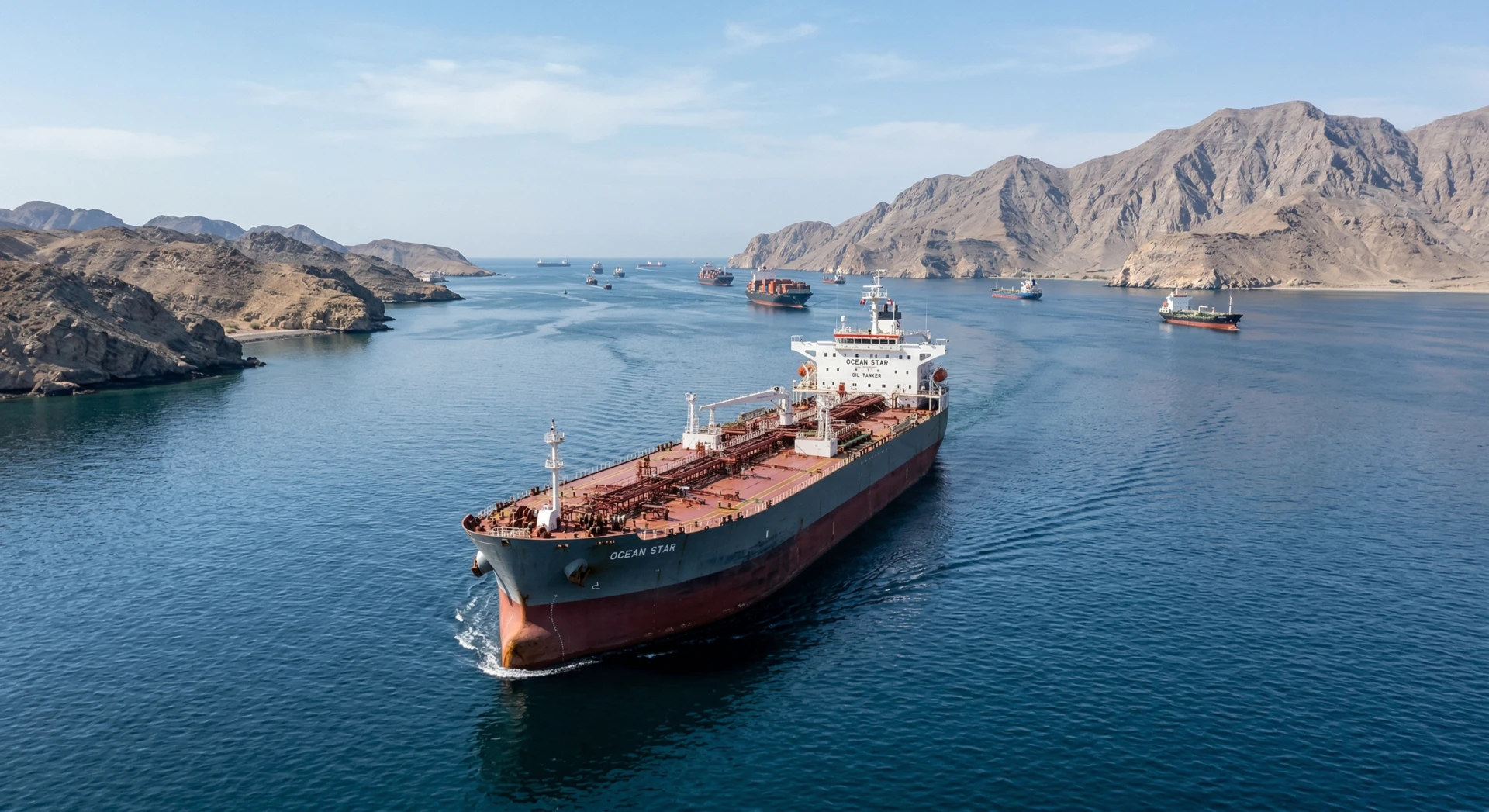
Container shipping lines operating in the Gulf of Oman face escalated detention risks that cannot be assessed before transit, as demonstrated by the weekend transfer of 22 Iranian crew members from the seized container ship M/V Touska to Pakistan for repatriation to Iran. The US handover, described by Pakistani officials as a "confidence-building measure," comes two weeks after US forces boarded the Iranian-flagged vessel following what CENTCOM called a six hour failure to comply with warnings. The seizure occurred when the vessel allegedly attempted to breach the US naval blockade, but no specific criteria have been published for what constitutes a "blockade breach attempt" versus normal commercial transit. For a standard 4,000 TEU container ship carrying $50-80 million in cargo value, a two-week detention translates to approximately $280,000 in direct vessel operating costs alone, not including cargo delay penalties or schedule disruption costs.
The Touska incident illustrates the binary nature of current enforcement: either full passage or complete interdiction. Major container shipping companies including Maersk, CMA CGM, and Hapag-Lloyd have suspended transits through the Strait of Hormuz and related routes, forcing cargo to reroute via the Cape of Good Hope adding weeks to transit times and increasing shipping costs. The Baltic Dirty Tanker Index (BDTI) which measures transportation costs for unrefined crude oil and fuel oil by tankers stood at 3,658 points as of April 9, reflecting elevated freight rates due to longer voyage distances and war risk premiums. The Baltic Clean Tanker Index (BCTI), tracking transportation costs for refined products like gasoline and diesel, has remained relatively stable between $600-1,400, but this stability masks the underlying disruption as vessels avoid the region entirely.
On the buy side: European and Asian container importers are absorbing 15-25% freight surcharges as shipping lines reroute via longer African routes, with lead times extended by 10-14 days for Asia-Europe trades. Tim Huxley, Chairman of Mandarin Shipping, noted that "the strait is still incredibly hazardous and I expect most ships will continue to avoid transit until both sides come up with something more concrete." On the sell side: Iranian-linked container operators face operational paralysis, as the Touska part of the sanctioned Islamic Republic of Iran Shipping Lines (IRISL) fleet demonstrates the binary risk of total vessel and crew detention. For traders and intermediaries: War risk insurance premiums have spiked, with coverage now requiring case by case assessment. Angad Banga, CEO of The Caravel Group, which oversees the world's second largest ship management company, emphasized that "tens of thousands of civilian seafarers continue to operate under risks they did not choose."
For large integrated container operators (Maersk, MSC, CMA CGM) with global route flexibility: Complete Gulf avoidance remains the safest strategy, despite the 20-30% cost penalty from Cape routing. CENTCOM confirmed that "custody of Touska is currently being transferred back to its original ownership after the ship was intercepted and seized when attempting to violate the US naval blockade against Iran last month," but provided no clarity on future enforcement thresholds. For smaller regional container operators without alternative route options: The risk calculus becomes binary either accept potential total loss or exit Gulf trades entirely. Simon Kaye, Global Director of Reinsurance at NorthStandard, noted the lack of "specificity about which countries have asked for this humanitarian mission, nor how this may be coordinated with Iran, if at all." The US has warned shipping companies they could face sanctions for paying Iran in any form to transit the strait safely, creating a compliance trap for operators.
For observers: Pakistan's mediating role having hosted failed US-Iran talks in April and now managing crew transfers provides the clearest signal for diplomatic progress. Pakistani Foreign Minister statements framing transfers as "confidence-building measures" and continued facilitation of "dialogue and diplomacy while pursuing ongoing mediation efforts for regional peace and security" indicate whether negotiations advance. Monitor Pakistani diplomatic statements through May 31, as two Pakistani officials confirmed that "Pakistan's prime minister, foreign minister and army chief continue to encourage the US and Iran to speak directly" and have "passed messages between the two sides." The window for resolution remains open: Trump announced an "open-ended extension of the ceasefire and the continuation of a US blockade until negotiations are concluded one way or the other," making Pakistani mediation updates the key forward indicator for container route normalization.
.jpg)


'%3e%3cg id='Final-Copy-2_2_' transform='translate(1275.000000, 200.000000)'%3e%3cpath class='st0' d='M7.4,12.8h6.8l3.1-11.6H7.4C4.2,1.2,1.6,3.8,1.6,7S4.2,12.8,7.4,12.8z'/%3e%3c/g%3e%3c/g%3e%3c/g%3e%3cg id='final---dec.11-2020'%3e%3cg id='_x30_208-our-toggle' transform='translate(-1275.000000, -200.000000)'%3e%3cg id='Final-Copy-2' transform='translate(1275.000000, 200.000000)'%3e%3cpath class='st1' d='M22.6,0H7.4c-3.9,0-7,3.1-7,7s3.1,7,7,7h15.2c3.9,0,7-3.1,7-7S26.4,0,22.6,0z M1.6,7c0-3.2,2.6-5.8,5.8-5.8 h9.9l-3.1,11.6H7.4C4.2,12.8,1.6,10.2,1.6,7z'/%3e%3cpath id='x' class='st2' d='M24.6,4c0.2,0.2,0.2,0.6,0,0.8l0,0L22.5,7l2.2,2.2c0.2,0.2,0.2,0.6,0,0.8c-0.2,0.2-0.6,0.2-0.8,0 l0,0l-2.2-2.2L19.5,10c-0.2,0.2-0.6,0.2-0.8,0c-0.2-0.2-0.2-0.6,0-0.8l0,0L20.8,7l-2.2-2.2c-0.2-0.2-0.2-0.6,0-0.8 c0.2-0.2,0.6-0.2,0.8,0l0,0l2.2,2.2L23.8,4C24,3.8,24.4,3.8,24.6,4z'/%3e%3cpath id='y' class='st3' d='M12.7,4.1c0.2,0.2,0.3,0.6,0.1,0.8l0,0L8.6,9.8C8.5,9.9,8.4,10,8.3,10c-0.2,0.1-0.5,0.1-0.7-0.1l0,0 L5.4,7.7c-0.2-0.2-0.2-0.6,0-0.8c0.2-0.2,0.6-0.2,0.8,0l0,0L8,8.6l3.8-4.5C12,3.9,12.4,3.9,12.7,4.1z'/%3e%3c/g%3e%3c/g%3e%3c/g%3e%3c/g%3e%3c/svg%3e) Privacy Choices
Privacy Choices