.avif)
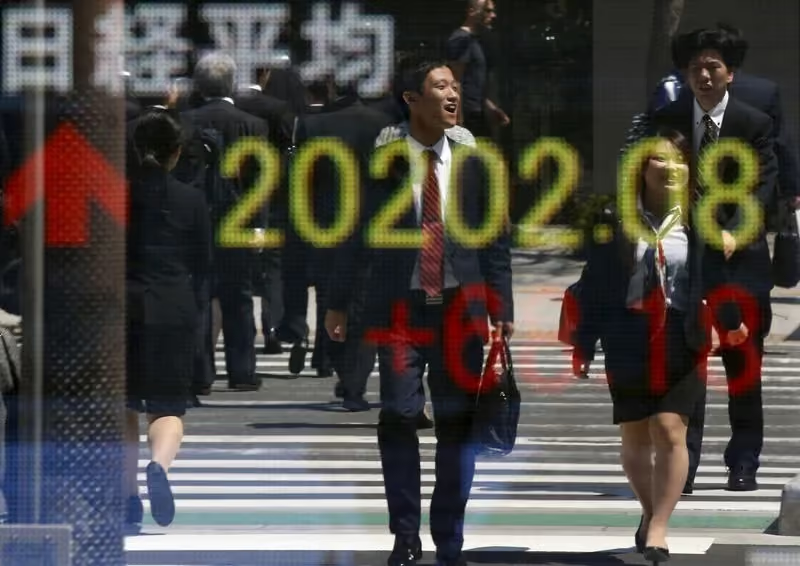
Asian crude oil importers are banking immediate procurement savings as the US-Iran peace deal announced June 14 delivers a double dividend: falling oil prices and strengthening local currencies. Brent crude fell to $87.33 (down from $90.38), while WTI dropped 3.2% to $84.88. For a mid-sized Indian refiner processing 150,000 barrels daily roughly 22,500 tonnes the rupee's expected strengthening to ₹94.80-94.85 from ₹95.11 alongside the $6/barrel oil price decline delivers combined savings of approximately $25-30/barrel. At current throughput, this translates to $4 million daily in reduced crude costs not a rounding error when margins typically run $8-12/barrel. The peace deal formally ends the conflict that disrupted roughly 20% of global oil shipments through the Strait of Hormuz.
The margin anatomy reveals where relief concentrates: oil fell below $86.50 on Friday, the lowest since early March, though traders remain cautious as normalizing flows requires clearing mines from Hormuz, restarting production fields, and repairing damaged facilities. A letter of credit (LC) a bank guarantee that payment will be made once shipping documents are presented becomes cheaper to secure as currency volatility decreases and geopolitical premiums compress. For Asian importers, this matters: LC costs typically run 0.5-1.5% of cargo value, but spike to 2-3% during geopolitical stress. The agreement establishes a 60 day ceasefire and immediate reopening of the Strait of Hormuz to international shipping. Regional refiners paying in strengthening currencies for cheaper crude capture margin on both sides of the transaction.
On the buy side, Asian refiners gain triple relief: Trump announced the Strait will reopen upon signing, authorizing immediate removal of the US naval blockade. Foreign institutional investor flows point toward renewed interest in Indian and Korean debt, supporting local currency appreciation. Consider Reliance Industries' Jamnagar refinery, which processes 1.24 million barrels daily: at current price and currency moves, daily crude costs drop by approximately $35-40 million compared to last week's levels. This margin improvement flows directly to refined product pricing power, particularly as domestic demand for diesel and gasoline remains robust during monsoon logistics seasons. The Indian rupee is growing 6.6% in 2026, with GDP expected to grow 8% in the current fiscal year.
On the sell side, Iranian crude suppliers await physical normalization: "With the opening of the Strait upon signing, oil will flow on both ends again for the Region, and the World". Yet sanctions infrastructure remains. Iranian barrels still face secondary sanctions on financial institutions, insurance restrictions, and vessel tracking requirements that prevent immediate flow normalization. Before the crisis, 25% of global seaborne oil trade and 20% of LNG passed through Hormuz. The immediate beneficiaries are non-Iranian Gulf producers Saudi Aramco, UAE's ADNOC, Qatar Petroleum whose crude reaches Asian refineries without sanctions complications. These barrels command immediate premium capture as buyers secure reliable supply chains ahead of potential Iranian flow restoration.
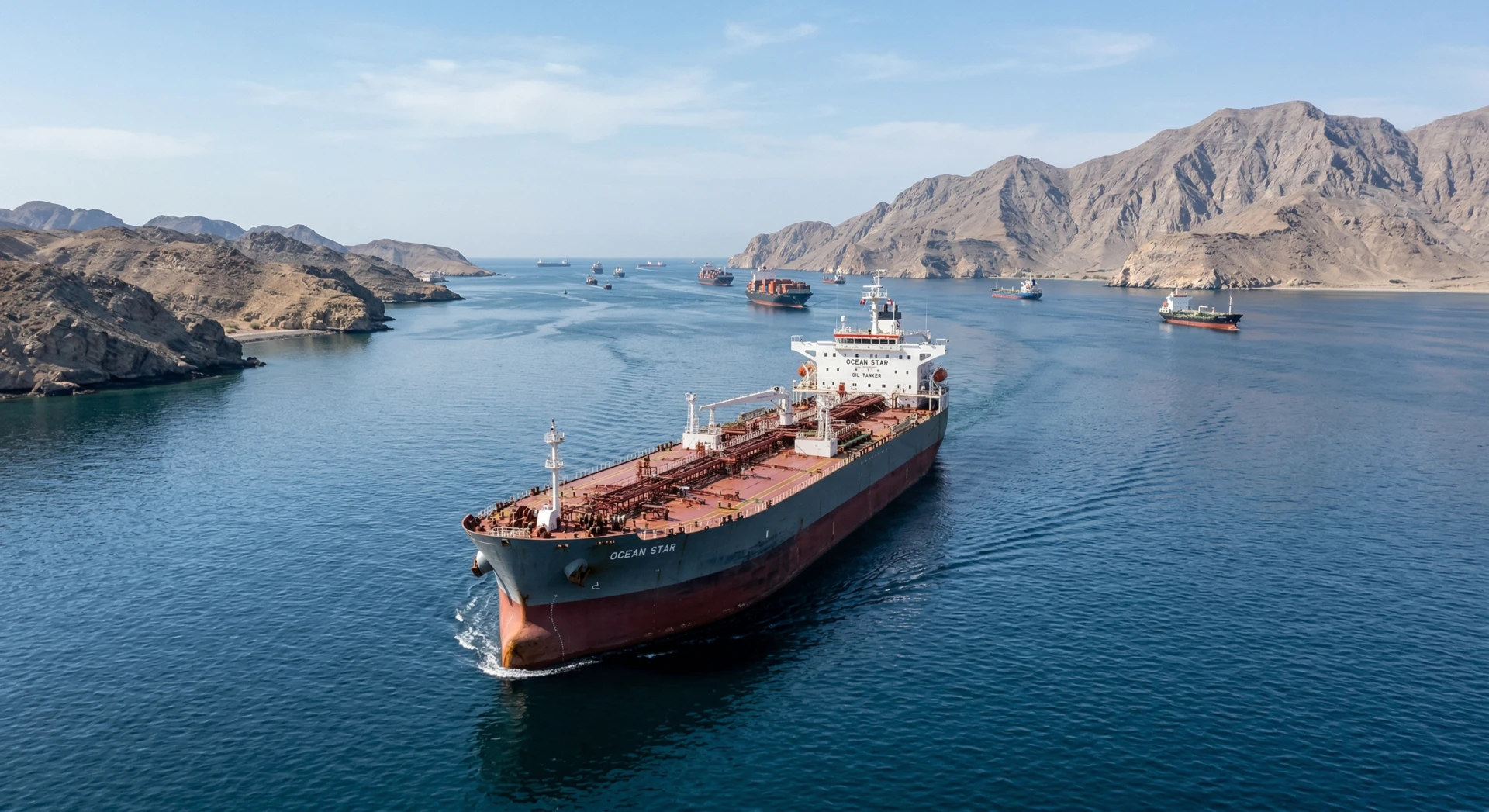
For large integrated trading houses Vitol, Trafigura, Glencore the currency and crude moves create arbitrage opportunities: the won reached six-week highs while global funds poured $2.9 billion into Korean and Indonesian equities this week. These operators hedge currency exposure through NDFs (non-deliverable forwards) cash-settled derivative contracts where no physical currency changes hands allowing them to lock favorable FX rates while maintaining crude price exposure. A VLCC (Very Large Crude Carrier) carrying 2 million barrels from Saudi Arabia to South Korea now benefits from both lower crude acquisition costs and stronger won conversion upon delivery. A Trump administration official indicated 80% probability of deal signing, with agreement involving Hormuz reopening, naval blockade removal, and nuclear program dismantling.
For smaller regional operators independent refiners, fuel distributors, bunker suppliers without derivatives access, practical equivalents emerge: CNY's real effective exchange rate declined 4.6% over the year, while India and Indonesia saw declines over 6.5%, suggesting substantial room for appreciation. Regional cooperatives and mid-sized importers secure bilateral pricing arrangements with term suppliers, fixing currency conversion rates quarterly rather than spot. A Singapore based bunker supplier serving container shipping routes benefits immediately: marine gasoil procurement costs decline while customer payments in USD remain stable, expanding margins on the 50,000-100,000 tonnes monthly typical for mid-tier operators. The Philippine peso strengthened against the rupee, with one peso equaling 0.017 USD while one rupee equals 0.011 USD.
The physical supply chain reality tempers immediate optimism: traders remain cautious after previous breakthrough reports failed to materialize, with risks from US forces intercepting Iranian drones near commercial vessels, and Trump casting doubt on reported draft terms. The number of mines in the strait that Iran effectively controlled since the war began remains unclear, virtually shutting down oil and gas shipments from the Persian Gulf. Mine clearance operations require specialized vessels and weeks of systematic sweeping before commercial traffic normalizes. A VLCC master planning the Kuwait-Japan route must coordinate with naval authorities, secure updated routing instructions, and potentially accept slower transit times through partially cleared channels. The IRGC laid sea mines in the strait, while the US simultaneously blockaded Iranian ports from April 13 to May 29.
Freight implications concentrate margin differently: WTI crude changed 19.06% over 12 months, with today's trading range between $83.20-87.23. Tanker owners operating the Persian Gulf-Asia route capture windfall earnings during reopening phases as daily rates spike on pent-up cargo demand. A VLCC typically earns $25,000-40,000 daily on normal Gulf-Asia runs; during route reopening, rates can spike to $100,000+ daily as charterers compete for available tonnage. This freight premium paid by cargo owners, not vessel operators directly impacts delivered crude costs. The Korean won benefits from technology exports reaching $61.04 billion annually, with semiconductor exports rising 39%. Asian importers temporarily absorb higher freight costs while routes normalize, compressing the margin relief from lower crude prices and stronger currencies.
For observers tracking normalization timing, monitor USD/INR levels: structurally, India remains the standout among high-yielders with solid fundamentals, and could stage meaningful reversal making it one of few high-yielders with 2026 upside potential, while IDR and PHP may remain vulnerable. Watch Korean won emergency meetings: Seoul held emergency weekend sessions as yen and won came under pressure before the peace announcement. The key signal for full flow restoration: when Iranian Heavy crude futures currently suspended on global exchanges resume trading with transparent pricing. Current Brent oil futures settlement date is June 30, 2026, providing a near-term benchmark for sustained price normalization. Until then, Asian importers capture immediate relief while preparing for potential renewed volatility if the 60 day ceasefire framework encounters implementation challenges.
.jpg)
.jpg)
'%3e%3cg id='Final-Copy-2_2_' transform='translate(1275.000000, 200.000000)'%3e%3cpath class='st0' d='M7.4,12.8h6.8l3.1-11.6H7.4C4.2,1.2,1.6,3.8,1.6,7S4.2,12.8,7.4,12.8z'/%3e%3c/g%3e%3c/g%3e%3c/g%3e%3cg id='final---dec.11-2020'%3e%3cg id='_x30_208-our-toggle' transform='translate(-1275.000000, -200.000000)'%3e%3cg id='Final-Copy-2' transform='translate(1275.000000, 200.000000)'%3e%3cpath class='st1' d='M22.6,0H7.4c-3.9,0-7,3.1-7,7s3.1,7,7,7h15.2c3.9,0,7-3.1,7-7S26.4,0,22.6,0z M1.6,7c0-3.2,2.6-5.8,5.8-5.8 h9.9l-3.1,11.6H7.4C4.2,12.8,1.6,10.2,1.6,7z'/%3e%3cpath id='x' class='st2' d='M24.6,4c0.2,0.2,0.2,0.6,0,0.8l0,0L22.5,7l2.2,2.2c0.2,0.2,0.2,0.6,0,0.8c-0.2,0.2-0.6,0.2-0.8,0 l0,0l-2.2-2.2L19.5,10c-0.2,0.2-0.6,0.2-0.8,0c-0.2-0.2-0.2-0.6,0-0.8l0,0L20.8,7l-2.2-2.2c-0.2-0.2-0.2-0.6,0-0.8 c0.2-0.2,0.6-0.2,0.8,0l0,0l2.2,2.2L23.8,4C24,3.8,24.4,3.8,24.6,4z'/%3e%3cpath id='y' class='st3' d='M12.7,4.1c0.2,0.2,0.3,0.6,0.1,0.8l0,0L8.6,9.8C8.5,9.9,8.4,10,8.3,10c-0.2,0.1-0.5,0.1-0.7-0.1l0,0 L5.4,7.7c-0.2-0.2-0.2-0.6,0-0.8c0.2-0.2,0.6-0.2,0.8,0l0,0L8,8.6l3.8-4.5C12,3.9,12.4,3.9,12.7,4.1z'/%3e%3c/g%3e%3c/g%3e%3c/g%3e%3c/g%3e%3c/svg%3e) Privacy Choices
Privacy Choices