.avif)
.avif)
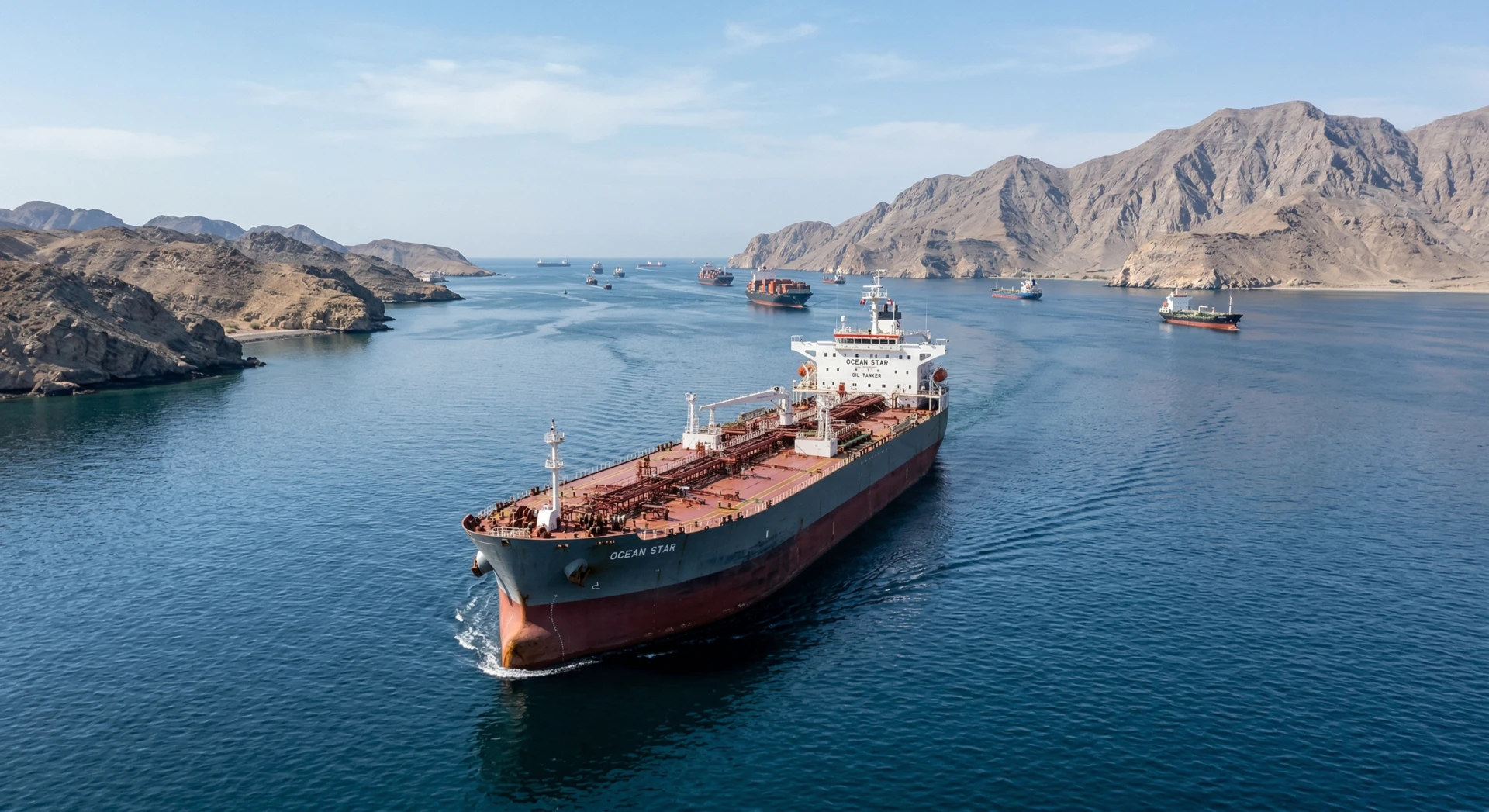
Black Sea tanker operators face immediate margin elimination as three vessels struck by drones off Turkey's northern coast push war risk insurance premiums above viable commercial thresholds. The James II (Palau-flagged), Altura and Velora (Sierra Leone-flagged) were all operating in ballast when attacked, but the incident's commercial impact extends far beyond these specific vessels. War-risk premiums for Black Sea port calls climbed to about 1% of a vessel's insured value, up from roughly 0.6%–0.8% in late December. For a $40 million Aframax tanker, this represents an immediate cost increase from $240,000-$320,000 per voyage to $400,000 adding approximately $6-8/MT to delivered costs on a 100,000 tonne cargo.
The arithmetic of Black Sea crude arbitrage is now fundamentally broken for conventional operators. Consider an Aframax loading 100,000 tonnes of Urals crude at Novorossiysk bound for India. The Baltic Dirty Tanker Index (BDTI) closed at 2,249 points on May 20, translating to approximately $35,000/day for a 15 day voyage. The base freight cost of $525,000 per voyage was previously manageable within typical $3-5/barrel crude price differentials. However, the additional $160,000 in war risk premium a 30% freight surcharge eliminates the margin for any operator without derivative hedging capacity or political risk absorption. The differential between Black Sea and alternative crude sources now needs to exceed $7-8/barrel to justify commercial operation.
On the buy side: Indian and Chinese refiners who constitute the primary destination for Russian crude face immediate pressure to either absorb higher delivered costs or seek alternative supply sources. State-controlled refiners like Indian Oil Corporation possess some capacity to absorb these premiums through integrated margins, but private refiners operating on thin processing spreads cannot. The $6-8/MT insurance surcharge translates to approximately $0.15/barrel additional cost significant when refining margins often operate in the $2-4/barrel range. Refiners are already shifting toward term contracts with shadow fleet operators who factor war risk into annual pricing rather than voyage by voyage exposure.
On the sell side: Russian crude exporters confront a rapidly narrowing pool of available tonnage willing to call at Black Sea ports. Russia uses its shadow fleet of aging, often underinsured tankers to bypass international sanctions on its oil trade. These vessels, typically older than 15 years with complex ownership structures, were already the primary carriers for sanctioned Russian crude. The insurance premium spike forces remaining conventional operators out of the trade entirely, concentrating crude flows into the shadow fleet. This creates a supply chokepoint where vessel availability determines export capacity rather than production volume a structural vulnerability for Russian energy revenues.
For large integrated traders with derivative access, the response involves sophisticated hedging structures combining freight derivatives, currency hedges, and political risk insurance. Companies like Vitol or Trafigura can absorb short-term premium spikes through portfolio effects losses on Black Sea exposure offset by gains elsewhere. They possess access to London P&I club facilities and can negotiate annual war risk facilities rather than voyage specific coverage. The premium becomes a cost of maintaining market position rather than a deal breaking expense. These operators can also utilize time charter arrangements where insurance costs transfer to vessel owners, creating different margin allocation.
For smaller regional operators mid-sized fuel importers, independent distributors, or regional cooperatives the war risk premium spike represents an immediate viability threshold. These operators typically lack access to annual insurance facilities and must purchase voyage specific coverage at prevailing spot rates. Without derivatives capability, they cannot hedge the insurance cost volatility that now changes daily. The practical equivalent involves shifting to alternative supply sources despite higher underlying crude costs, accepting longer-term supply agreements with shadow fleet operators, or exiting Black Sea sourcing entirely. Regional operators in Southeast Asia are already redirecting toward Middle East crude despite $2-3/barrel higher prices.
Freight concentration in this trade lane now determines margin allocation more than crude price differentials. The latest attacks pushed insurers to reassess risk levels for vessels calling at both Ukrainian and Russian terminals. War-risk premiums for Black Sea port calls climbed to about 1% of a vessel's insured value. The vessel operators whether shadow fleet or conventional who can absorb this insurance cost capture the entire margin premium. For shadow fleet operators already factoring elevated insurance into their operational model, the premium spike represents a competitive advantage as it eliminates conventional competition. Freight rates themselves may not increase proportionally, but the total delivered cost structure shifts dramatically.
The supply chain implications extend beyond crude oil to refined products and grain exports transiting the Black Sea. Turkey's Bosphorus Strait through which all Black Sea exports must transit becomes an increasingly critical chokepoint as the available vessel pool narrows. The Turkish transport ministry was not immediately available for comment on the incidents due to the Muslim Eid holiday, but Turkish authorities control strait access and vessel traffic patterns. Any Turkish response to escalating maritime incidents could further constrain available routing options. The concentration of risk in this geographic bottleneck amplifies the systemic impact of each individual incident.
Financing structures in Black Sea trades now require fundamental recalibration. Letters of credit (LC) bank guarantees ensuring payment upon document presentation traditionally assume standard marine insurance coverage. With war risk premiums exceeding 1%, banks must reassess credit facilities and potentially demand additional collateral. The financing cost increase compounds the insurance premium impact, particularly affecting smaller operators dependent on trade finance. Banks may begin excluding Black Sea trades from standard LC facilities, forcing operators into specialized trade finance arrangements with correspondingly higher costs. The effective financing rate for Black Sea crude trades could increase by 200-300 basis points.
Historical precedent suggests these premium levels represent a new operational baseline rather than temporary spike. During the 1980-1988 Tanker War between Iran and Iraq, war risk premiums reached similar levels and remained elevated for years after active hostilities ceased. The jump marks the highest pricing since 2023, when a series of drone strikes on tankers linked to Russia drove rates sharply higher. The insurance market's institutional memory of previous Black Sea incidents creates a ratchet effect where premiums increase rapidly during escalation but decline slowly during de-escalation. Underwriters now factor the demonstrated capability for drone attacks into baseline risk assessments.
For observers monitoring this development, the key signal remains the spread between Black Sea crude prices and alternative sources. When Urals-Brent spreads exceed $8/barrel, conventional operators may re-enter despite elevated insurance costs. Below $6/barrel, only shadow fleet operators remain economically viable. The secondary indicator involves monitoring vessel tracking data for changes in ballast positioning conventional tankers will shift away from Black Sea loading terminals toward alternative positions. Monitoring the dynamics of war risk insurance premiums is critically important for exporters, shipowners, and all participants in the Black Sea logistics market. Watch for Lloyd's of London daily rate assessments and any Turkish government statements on Bosphorus transit policies within the next 48-72 hours.

.jpg)
.jpg)

'%3e%3cg id='Final-Copy-2_2_' transform='translate(1275.000000, 200.000000)'%3e%3cpath class='st0' d='M7.4,12.8h6.8l3.1-11.6H7.4C4.2,1.2,1.6,3.8,1.6,7S4.2,12.8,7.4,12.8z'/%3e%3c/g%3e%3c/g%3e%3c/g%3e%3cg id='final---dec.11-2020'%3e%3cg id='_x30_208-our-toggle' transform='translate(-1275.000000, -200.000000)'%3e%3cg id='Final-Copy-2' transform='translate(1275.000000, 200.000000)'%3e%3cpath class='st1' d='M22.6,0H7.4c-3.9,0-7,3.1-7,7s3.1,7,7,7h15.2c3.9,0,7-3.1,7-7S26.4,0,22.6,0z M1.6,7c0-3.2,2.6-5.8,5.8-5.8 h9.9l-3.1,11.6H7.4C4.2,12.8,1.6,10.2,1.6,7z'/%3e%3cpath id='x' class='st2' d='M24.6,4c0.2,0.2,0.2,0.6,0,0.8l0,0L22.5,7l2.2,2.2c0.2,0.2,0.2,0.6,0,0.8c-0.2,0.2-0.6,0.2-0.8,0 l0,0l-2.2-2.2L19.5,10c-0.2,0.2-0.6,0.2-0.8,0c-0.2-0.2-0.2-0.6,0-0.8l0,0L20.8,7l-2.2-2.2c-0.2-0.2-0.2-0.6,0-0.8 c0.2-0.2,0.6-0.2,0.8,0l0,0l2.2,2.2L23.8,4C24,3.8,24.4,3.8,24.6,4z'/%3e%3cpath id='y' class='st3' d='M12.7,4.1c0.2,0.2,0.3,0.6,0.1,0.8l0,0L8.6,9.8C8.5,9.9,8.4,10,8.3,10c-0.2,0.1-0.5,0.1-0.7-0.1l0,0 L5.4,7.7c-0.2-0.2-0.2-0.6,0-0.8c0.2-0.2,0.6-0.2,0.8,0l0,0L8,8.6l3.8-4.5C12,3.9,12.4,3.9,12.7,4.1z'/%3e%3c/g%3e%3c/g%3e%3c/g%3e%3c/g%3e%3c/svg%3e) Privacy Choices
Privacy Choices