.avif)
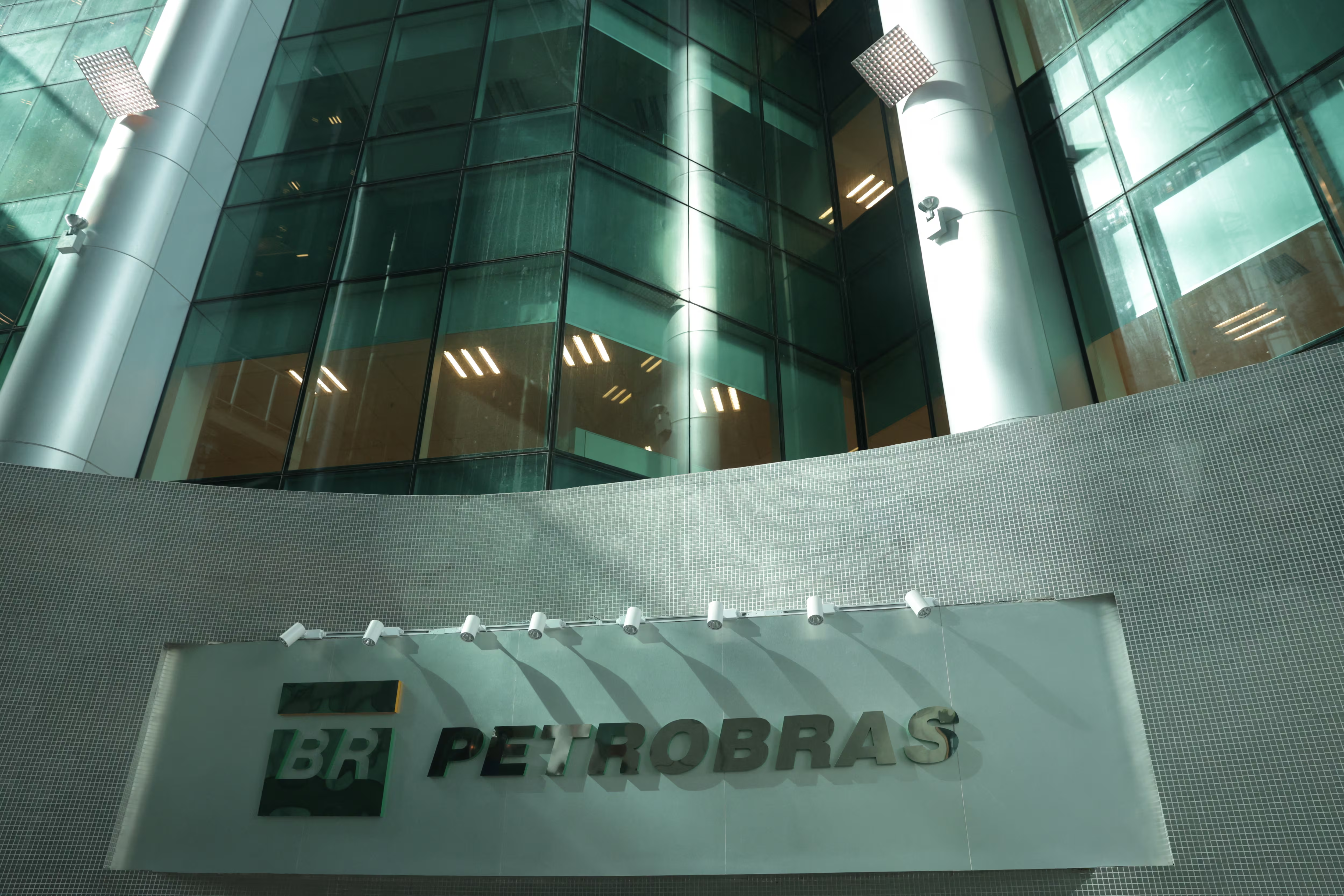
Brazilian Refiners face immediate margin compression as the Finance Ministry raised its 2026 inflation forecast to 4.5% from 3.7%, driven by oil prices that have soared 39% above government assumptions. Brent crude the global oil benchmark that sets pricing for most internationally traded crude traded around $102-111 per barrel this week amid Middle East tensions. The IPCA (Índice de Preços ao Consumidor Amplo) Brazil's consumer price index that determines central bank policy now sits exactly at the 4.5% tolerance ceiling with no headroom remaining. The ministry's oil price assumption jumped to $73.09 per barrel for 2026, up roughly 11% from the previous $65.97, though current spot prices remain significantly higher. Petrobras announced diesel A prices of R$3.65 per liter to distributors, representing a R$0.38 per liter increase.
Government diesel price controls created a policy contradiction that amplifies refiner pressure. Brazilian diesel prices have risen 24% since the war started, reaching R$7.45 per liter despite government measures that zeroed PIS/Cofins import taxes and created a R$0.32 per liter subsidy until December 2026. However, the arithmetic does not balance: the government prevented a R$0.64 per liter increase through subsidies and tax relief, yet Petrobras still implemented a R$0.38 per liter increase to distributors. Brazil's gas stations sell diesel B (85% diesel A and 15% biodiesel), so the R$0.38 diesel A adjustment generates approximately R$0.32 impact on retail diesel B. The IGP-DI (Índice Geral de Preços – Disponibilidade Interna) a wholesale-sensitive inflation index bears the most exposure to fuel cost transmission through transport and logistics chains.
Brazil's position as a net oil exporter creates a structural paradox that refiners must navigate. The Treasury held its 2026 GDP forecast at 2.3%, arguing Brazil benefits from higher oil prices through export revenues. A severe shock scenario could add 0.36 percentage points to GDP while simultaneously pressuring inflation. Petrobras is now pricing diesel at the refinery gate at 63% below import levels, aligning with government pressure to contain prices. This discount represents a direct subsidy from the state controlled refiner to domestic fuel markets, eroding upstream margins while protecting downstream distributors. Since December 2022, diesel A has fallen R$0.84 per liter (29.6% inflation-adjusted), creating a baseline expectation of price stability that current increases violate.
On the buy side: Regional fuel distributors face margin compression from both directions wholesale diesel costs up R$0.38/liter while government subsidies provide only R$0.32/liter relief, creating a R$0.06/liter gap that must be absorbed or passed through to retailers. For Brazil's integrated transport companies logistics operators moving soybeans, sugar, and manufactured goods diesel represents 30-40% of operating costs, making the R$0.32/liter net increase (after subsidies) a material margin impact. On the sell side: Petrobras faces political pressure to maintain artificially low domestic pricing while crude input costs have risen 39% above government assumptions. Independent refiners and diesel importers gained competitive advantage as Petrobras subsidizes domestic pricing through below market refinery gate rates. For smaller regional distributors without integrated refining capacity, the R$0.38/liter increase concentrates at the wholesale purchasing level where hedging options are limited.
The market expects policy tightening as economists raised their year-end Selic rate forecast to 13.25% from 13% and boosted 2026 inflation estimates to 4.92%, well above the 3% target. For large integrated traders with derivatives access: hedge diesel exposure through ICE Gasoil futures or Brent crude swaps, targeting 3 month protection as ceasefire negotiations continue. For smaller regional operators mid-sized distributors, independent trucking companies, agricultural cooperatives without derivatives access: negotiate quarterly diesel contracts with fixed pricing clauses, diversify supplier base beyond Petrobras, and maintain 30-45 day inventory cushions. Goldman Sachs forecasts Q2 Brent at $90/barrel (down from $99) while JP Morgan maintains $100 with overshoot risk to $150 if Hormuz remains closed past mid-May. Watch the Focus survey's weekly inflation consensus any move above 5% for 2026 signals policy panic and potential emergency rate hikes.


.jpg)

'%3e%3cg id='Final-Copy-2_2_' transform='translate(1275.000000, 200.000000)'%3e%3cpath class='st0' d='M7.4,12.8h6.8l3.1-11.6H7.4C4.2,1.2,1.6,3.8,1.6,7S4.2,12.8,7.4,12.8z'/%3e%3c/g%3e%3c/g%3e%3c/g%3e%3cg id='final---dec.11-2020'%3e%3cg id='_x30_208-our-toggle' transform='translate(-1275.000000, -200.000000)'%3e%3cg id='Final-Copy-2' transform='translate(1275.000000, 200.000000)'%3e%3cpath class='st1' d='M22.6,0H7.4c-3.9,0-7,3.1-7,7s3.1,7,7,7h15.2c3.9,0,7-3.1,7-7S26.4,0,22.6,0z M1.6,7c0-3.2,2.6-5.8,5.8-5.8 h9.9l-3.1,11.6H7.4C4.2,12.8,1.6,10.2,1.6,7z'/%3e%3cpath id='x' class='st2' d='M24.6,4c0.2,0.2,0.2,0.6,0,0.8l0,0L22.5,7l2.2,2.2c0.2,0.2,0.2,0.6,0,0.8c-0.2,0.2-0.6,0.2-0.8,0 l0,0l-2.2-2.2L19.5,10c-0.2,0.2-0.6,0.2-0.8,0c-0.2-0.2-0.2-0.6,0-0.8l0,0L20.8,7l-2.2-2.2c-0.2-0.2-0.2-0.6,0-0.8 c0.2-0.2,0.6-0.2,0.8,0l0,0l2.2,2.2L23.8,4C24,3.8,24.4,3.8,24.6,4z'/%3e%3cpath id='y' class='st3' d='M12.7,4.1c0.2,0.2,0.3,0.6,0.1,0.8l0,0L8.6,9.8C8.5,9.9,8.4,10,8.3,10c-0.2,0.1-0.5,0.1-0.7-0.1l0,0 L5.4,7.7c-0.2-0.2-0.2-0.6,0-0.8c0.2-0.2,0.6-0.2,0.8,0l0,0L8,8.6l3.8-4.5C12,3.9,12.4,3.9,12.7,4.1z'/%3e%3c/g%3e%3c/g%3e%3c/g%3e%3c/g%3e%3c/svg%3e) Privacy Choices
Privacy Choices