.avif)
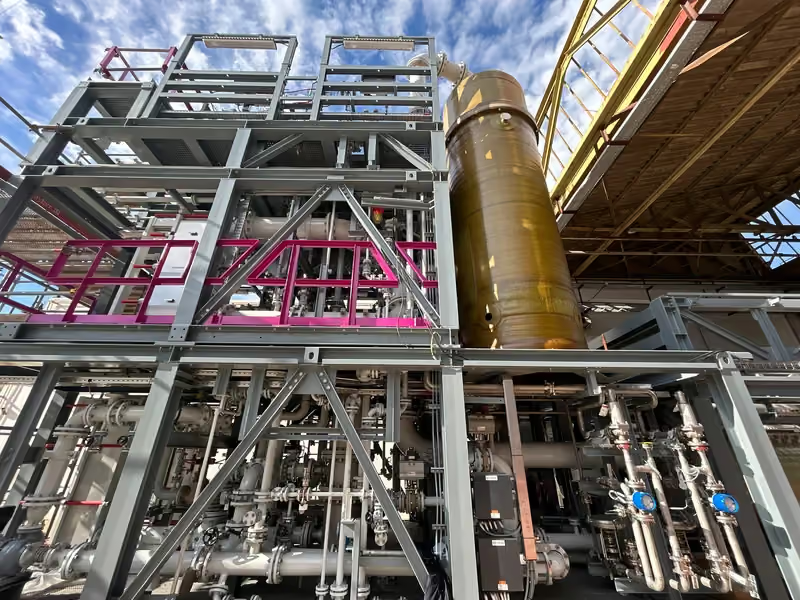
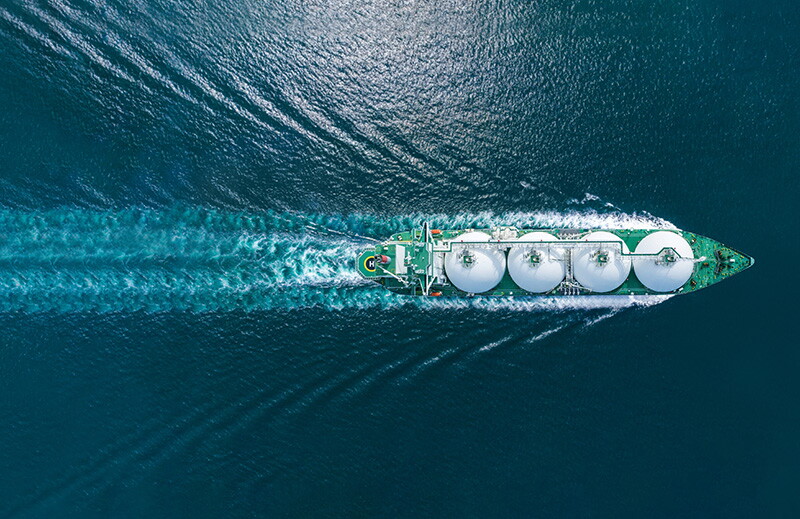
Foreign electrolyzer suppliers TK Nucera and Nel hold an uncontested commercial position in Brazil's emerging green hydrogen market for at least the next five years and Petrobras and Finep's R$150 million (~$28–30 million USD) domestic development program, announced on 18 June 2026, does nothing to change that in the near term. The initiative is significant as a policy signal, but the budget arithmetic is unforgiving: bringing a domestically engineered industrial electrolyzer stack from laboratory to commercial production typically requires hundreds of millions of dollars and a decade of manufacturing iteration. Brazil currently has no industrial electrolyzer manufacturing base. What R$150 million buys is a prototype program, not a competitive supply chain. Green hydrogen producers evaluating Brazilian projects today are still making procurement decisions in a market where imported hardware is the only credible option.
To understand why, it helps to understand what an electrolyzer actually does. An electrolyzer is a device that splits water into hydrogen and oxygen using electricity when powered by renewables, the hydrogen it produces is called green hydrogen (hydrogen with near-zero carbon emissions). The industrial variant relevant here is the alkaline water electrolyzer (AWE) a technology that uses a liquid electrolyte, typically potassium hydroxide solution, to conduct the electrical current between two electrodes. The electrolyzer stack is the core module containing those electrodes and electrolyte chambers the part that is expensive to engineer, hard to manufacture precisely, and where most intellectual property resides. Brazil's call for proposals specifically targets local development of the stack, requiring a consortium of at least three companies plus one Scientific and Technological Institution (ICT). That multi-stakeholder structure is logical for distributing risk across an early-stage industrial program, but it also introduces coordination overhead and timeline risk. On a realistic development trajectory proposal selection, R&D, prototype build, testing, pilot deployment commercial stack output is unlikely before 2031 at the earliest.
The contrast with what established suppliers are already offering is sharp. TK Nucera, the electrochemical technology arm of thyssenkrupp, is marketing standardized ~20 MW AWE modules building blocks that can be combined to reach gigawatt-scale project capacity drawing on more than 600 installed electrolytic cells in the related chlor-alkali industry (a sector that uses similar electrochemical technology to produce chlorine and caustic soda). Nel, the Norwegian manufacturer, operates what it describes as the world's first fully automated alkaline electrolyzer factory at Herøya, Norway, capable of producing A100 stacks at up to 500 MW of annual capacity today, with a roadmap to 2 GW through parallel production line expansion. To put that in project terms: a Brazilian green hydrogen facility targeting 100 MW of electrolyzer capacity would require five of TK Nucera's 20 MW modules, or equivalent Nel A100 units hardware that exists now, can be shipped, and carries a bankable performance history. No Brazilian domestic equivalent will be available on that timeline. For project developers seeking financing today, that decision is already made.
On the buy side, Brazilian green hydrogen project developers and industrial off-takers refining companies, steel producers, ammonia manufacturers exploring low-carbon feedstocks face a straightforward but uncomfortable reality: imported electrolyzer hardware priced in euros or dollars introduces foreign exchange exposure on capital expenditure. A 100 MW electrolyzer system from a tier-one European supplier currently costs approximately €50–80 million at the stack level, depending on specification and delivery terms. At current BRL/EUR rates, that is R$300–480 million a meaningful currency risk for a project financed in reais. On the sell side, TK Nucera and Nel are the clear near-term margin beneficiaries of Brazil's green hydrogen ambitions. Brazil's renewable electricity endowment abundant solar in the northeast, growing wind capacity makes it one of the globally credible green hydrogen production locations, and both suppliers are positioning aggressively for anchor contracts. For a large integrated energy company with derivatives access, currency hedging through BRL/EUR forward contracts can partially mitigate this capex exposure. For a smaller regional green hydrogen developer without treasury infrastructure, the practical equivalent is structuring EPC (engineering, procurement, and construction) contracts with fixed-price equipment supply terms denominated in local currency where suppliers will accept it or negotiating longer payment schedules to distribute exchange rate timing risk.
One technical constraint runs beneath all of this commercial activity. UNSW researchers using operando synchrotron imaging real-time X-ray visualization of internal electrode processes during operation have identified hydrogen bubble accumulation inside porous electrodes as a significant efficiency bottleneck at high current densities. When bubbles become trapped in electrode pores, they block the reaction sites where water splitting occurs and restrict the flow of electrolyte to those sites, a problem called mass transport limitation. The UNSW team found that a highly ordered, uniform pore structure minimized gas trapping and improved performance a finding that has direct implications for how Brazil's domestic program designs its electrode materials, and for how established suppliers differentiate their next-generation stacks. The forward signal for observers: watch the Brazilian Development Bank (BNDES) green hydrogen project pipeline for the first large-scale electrolyzer procurement tender expected to emerge within 18–24 months as early project sponsors reach final investment decision. The supplier awarded that contract will confirm which technology standard anchors Brazil's green hydrogen market for the decade ahead.
.jpg)
'%3e%3cg id='Final-Copy-2_2_' transform='translate(1275.000000, 200.000000)'%3e%3cpath class='st0' d='M7.4,12.8h6.8l3.1-11.6H7.4C4.2,1.2,1.6,3.8,1.6,7S4.2,12.8,7.4,12.8z'/%3e%3c/g%3e%3c/g%3e%3c/g%3e%3cg id='final---dec.11-2020'%3e%3cg id='_x30_208-our-toggle' transform='translate(-1275.000000, -200.000000)'%3e%3cg id='Final-Copy-2' transform='translate(1275.000000, 200.000000)'%3e%3cpath class='st1' d='M22.6,0H7.4c-3.9,0-7,3.1-7,7s3.1,7,7,7h15.2c3.9,0,7-3.1,7-7S26.4,0,22.6,0z M1.6,7c0-3.2,2.6-5.8,5.8-5.8 h9.9l-3.1,11.6H7.4C4.2,12.8,1.6,10.2,1.6,7z'/%3e%3cpath id='x' class='st2' d='M24.6,4c0.2,0.2,0.2,0.6,0,0.8l0,0L22.5,7l2.2,2.2c0.2,0.2,0.2,0.6,0,0.8c-0.2,0.2-0.6,0.2-0.8,0 l0,0l-2.2-2.2L19.5,10c-0.2,0.2-0.6,0.2-0.8,0c-0.2-0.2-0.2-0.6,0-0.8l0,0L20.8,7l-2.2-2.2c-0.2-0.2-0.2-0.6,0-0.8 c0.2-0.2,0.6-0.2,0.8,0l0,0l2.2,2.2L23.8,4C24,3.8,24.4,3.8,24.6,4z'/%3e%3cpath id='y' class='st3' d='M12.7,4.1c0.2,0.2,0.3,0.6,0.1,0.8l0,0L8.6,9.8C8.5,9.9,8.4,10,8.3,10c-0.2,0.1-0.5,0.1-0.7-0.1l0,0 L5.4,7.7c-0.2-0.2-0.2-0.6,0-0.8c0.2-0.2,0.6-0.2,0.8,0l0,0L8,8.6l3.8-4.5C12,3.9,12.4,3.9,12.7,4.1z'/%3e%3c/g%3e%3c/g%3e%3c/g%3e%3c/g%3e%3c/svg%3e) Privacy Choices
Privacy Choices