.avif)
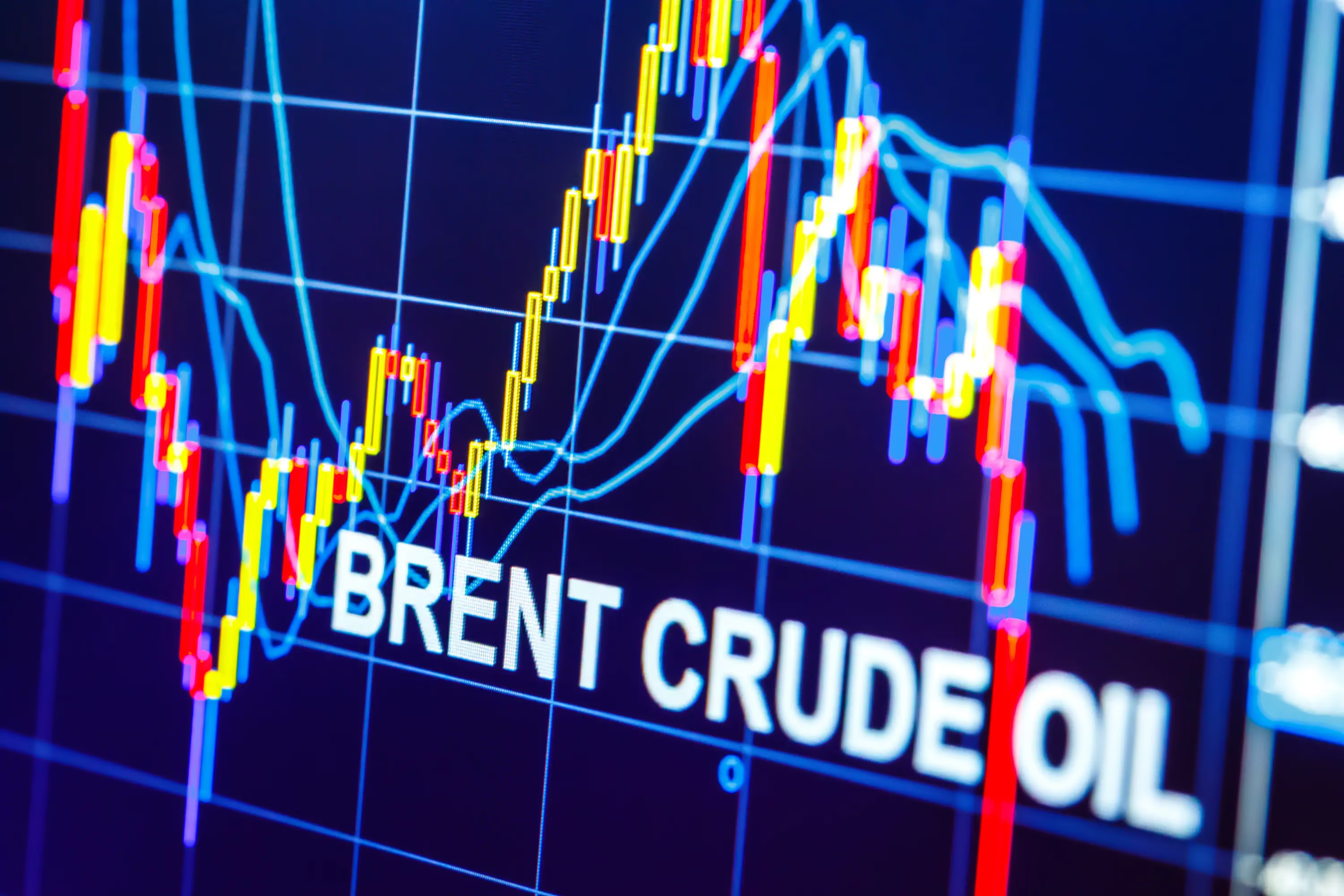
Crude traders who held length through the Hormuz crisis on the expectation that a peace deal would deliver a relief rally are now sitting on the wrong side of a three-month low: Brent settled near $77 a barrel on Tuesday 23 June 2026, down from $80.57 on 19 June and roughly $112 at the April peak and the supply recovery the bears warned about has only just begun to physically materialise. The war premium that defined this market for four months is not leaving. It has left. What replaces it is the harder, more familiar problem the price has been signalling all along: there is too much oil and not enough demand, and the barrels that repriced the market on their way out of the Gulf are about to arrive.
Brent the international benchmark price for crude oil, derived from North Sea production and used to price roughly two-thirds of internationally traded crude has now fallen for the better part of three weeks against a steady drumbeat of supply-recovery news. The trigger was the US-Iran memorandum of understanding signed at Versailles on 17 June, which committed both parties to ending hostilities and reopening the Strait of Hormuz, the 33 kilometre wide chokepoint between Oman and Iran through which roughly a fifth of the world's seaborne oil normally flows. But the decisive evidence for where the market goes next is not the diplomacy. It is the sequence. The price fell hardest in the days before a single additional barrel had cleared the strait, and it has kept falling as the first tankers finally moved. A market that sells off on a supply recovery that has not yet physically happened is not a market worried about supply. It is a market that has already concluded the binding constraint is demand and the demand data has now caught up with the price.
That demand picture is the heart of the matter, and it is worse than most headline coverage has conveyed. In its June Oil Market Report, the International Energy Agency the Paris based body whose monthly data is the most closely watched in the industry cut its 2026 global oil demand forecast to a decline of 1.1 million barrels per day year on year, a downgrade of 700,000 barrels per day in a single month, after second-quarter deliveries collapsed by 5 million barrels per day against the prior year. In plain terms: the agency now expects the world to consume less oil in 2026 than in 2025, an outright contraction of the kind last seen in the early weeks of the 2020 pandemic shock. The IEA explicitly reframed its entire 2026 narrative from "supply shock" to "oil glut", and flagged a significant supply overhang building into 2027, when it projects global supply to rebound by some 8 million barrels per day to around 110 million while demand recovers by only 2 million. The mechanism behind the demand destruction is itself revealing: crude imports into China and Japan have each fallen by roughly 40 percent nearly 6 million barrels per day combined as refiners cut runs in the face of high prices and constrained product availability. The demand has not been deferred. In large part it has been destroyed.
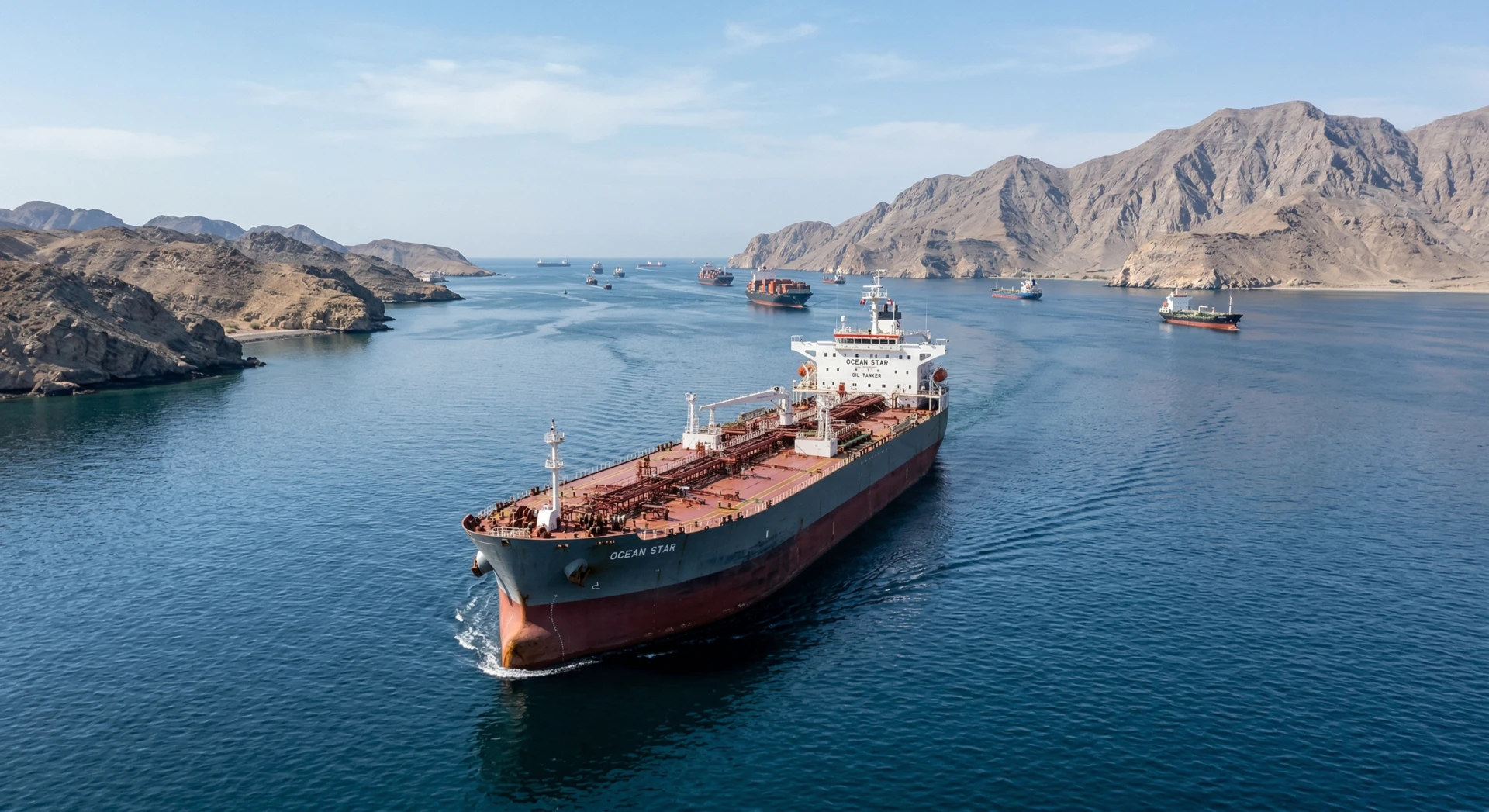
Against that backdrop, the physical supply recovery is now under way, and it is gathering pace faster than the cautious tanker market expected. As of this week, Iran has shipped more than 30 million barrels through the strait over the past seven days the highest level since the conflict began and has been cutting prices on cargoes sold to China to move the volume. On 18-19 June, three Saudi-flagged supertankers carrying roughly 6 million barrels exited Hormuz, broadcasting their positions after weeks of running dark, alongside a Hong Kong flagged crude tanker and a France flagged LNG carrier. Most significantly, Washington has now granted Iran a 60 day licence to sell oil on international markets, removing at a stroke the single largest legal barrier to the return of Iranian barrels. Gulf producers are lining up behind the same trend: Kuwait has lifted force majeure notices and Abu Dhabi's ADNOC has resumed supply operations. Analysts estimate a full reopening could release approximately 80 million barrels of stored and stranded crude into the market. The IEA's own tracking shows Hormuz flows already recovering from a May low of 9.6 million barrels per day to around 12 million, supported by ship to ship transfers in the Gulf of Oman. The glut is no longer a forecast. It is loading.
The freight market is where the most counterintuitive money is being made right now, and it deserves close attention because it is the clearest illustration of why a reopening is not the same as a normalisation. A VLCC a Very Large Crude Carrier, the supertanker class capable of carrying around 2 million barrels earns its operator a daily charter rate that is set by the balance of available vessels against cargo demand on a given route. The benchmark for Hormuz exposure is the Baltic Exchange's TD3C assessment, the Middle East Gulf to China VLCC route, which spiked from roughly $3 per barrel pre-conflict to as much as $11-15 per barrel at the peak. Here is the trap that catches operators who assume reopening means cheaper freight: in the first phase of a reopening, rates do not fall they spike again. The mere prospect of the strait reopening has pulled VLCC tonnage toward the Gulf from other basins, draining vessels from the Atlantic and tightening tonnage lists everywhere at once. The Baltic's West Africa-China VLCC route jumped 92 percent week on week to around $189,000 per day, its highest since the March crisis peak, even though actual fixture activity inside the strait remains thin. The TD3C forward freight agreement for the fourth quarter of 2026 sits near $181,000 per day, more than double the equivalent US Gulf-China contract. Charterers, anticipating the restart, are booking tonnage now and "will flood the market with prompt crude cargoes", as shipbroker BRS put it which means the first weeks of reopening deliver higher freight, not lower, before the backlog clears and rates collapse. For a trader, the freight leg can be the difference between a profitable cargo and a loss, and mistaking the direction of the next thirty days is an expensive error.
On the buy side, the structural beneficiaries are unambiguous: Chinese state refiners, principally Sinopec and PetroChina. Having drawn down inventory through the crisis and cut runs, they are positioned to be first-movers in restocking as discounted Iranian and Gulf barrels return. A Chinese refiner able to lock term volumes in the low to mid $70s through the third quarter hedged against further downside with put options on ICE Brent, which give the holder the right to sell at a fixed strike price and so cap the cost of a further fall secures feedstock certainty while competitors absorb spot volatility. Iran is actively cutting its official selling prices to China to clear stored volume, widening that discount further. The buy-side opportunity is real, but it is also time-bound: the window in which distressed sellers and a still soft demand environment coincide is precisely the window before the market re-prices to a new, lower equilibrium. The buyers who move in the next quarter capture the discount; those who wait for the dust to settle will buy at the clearing price, not below it.
On the sell side, the squeeze on Gulf producers is severe and structural rather than cyclical. Saudi Arabia's fiscal breakeven the Brent price required to balance its national budget is estimated by the IMF at roughly $80-85 per barrel for 2026. At $77 and falling, Riyadh is already running a fiscal deficit on its marginal barrel. The strain is visible at the corporate level: Saudi Aramco's first-quarter 2026 free cash flow of $18.6 billion fell some $3.3 billion short of its $21.89 billion dividend commitment, and that gap widens with every dollar Brent loses. OPEC+ the alliance of OPEC producers and partners including Russia faces a structural contradiction it cannot easily resolve: defending the price requires production cuts, but the members most in need of cuts are also the members most desperate for revenue, and therefore the least willing to pump less. A producer staring at a budget deficit has every incentive to maximise volume even as that volume deepens the glut. This is the classic coordination failure that turns an oversupplied market into a price war, and the market knows it.
Russia presents a separate and compounding anatomy, one that converts the oil glut into a geopolitical instrument. Russian crude already trades at a discount to Brent through the Urals grade, so a falling benchmark hits Moscow harder than most. On top of that, Ukraine's sustained drone campaign against Russian refining infrastructure has, according to multiple reports, taken a material share of Russian refining capacity offline with strikes on plants at Ryazan, Moscow, Kirishi, Nizhny Novgorod and Yaroslavl, and Kpler data indicating roughly 1.2-1.3 million barrels per day of secondary processing capacity offline year on year, much of it attributed to the strikes. Moscow has banned gasoline exports through at least 31 July and jet fuel exports through November, and has been rationing fuel in some regions. The combined effect is a three-way revenue compression that four years of Western sanctions never achieved: a lower benchmark price, reduced crude export volumes as terminals are hit, and a domestic refining crisis that forces Russia to forgo high-value product exports. A Brent slide toward the low $70s does to the Kremlin's war financing what the price cap could not and unlike a sanction, a low price requires no enforcement, no coalition, and no compliance mechanism. It is deflationary for Russian state capacity in a way that is structurally durable.
It is worth dwelling on why a signed deal does not flip the switch back to normal, because this is the single most mispriced element of the current market. War-risk insurance the separate cover shipowners must buy to transit a designated conflict zone, since standard hull and cargo policies exclude war, mines and military action does not reprice on a diplomatic announcement. Premiums are set by actuarial loss history and reinsurance cycles, and they normalise only when sustained, incident-free transit data accumulates, a process the industry measures in years rather than press conferences. Premiums that ran at roughly 0.125 percent of hull value before the conflict spiked to as much as 2.5-5 percent at the peak, translating to $1-5 million per VLCC transit. The historical anchor is sobering: after the Iran-Iraq "tanker war" of the 1980s, during which more than 400 vessels were hit, normalisation took 12 to 18 months even with US Navy warships physically escorting convoys. The strait also still contains an unknown number of Iranian naval mines, and mine clearing in the main shipping lanes is a weeks to months task. Major tanker operators including Hafnia and Torm have said they do not plan to return to the Gulf in the near term; the head of Mitsui OSK Lines warned that operators could wait weeks before resuming transit. The reopening is real, but the friction is also real, and that friction is precisely what keeps a residual war premium alive in the options market even as the directional bet points down.
For the trader, the structural position that follows from all this is a short bias expressed with discipline. A large integrated trader or national oil company trading arm with full derivatives access a Trafigura, a Vitol, an ADNOC trading desk has the tools to be short ICE December 2026 Brent futures, targeting the low $70s as the surplus prices in, while holding a stop above the high $80s in case the diplomatic track collapses and the war premium snaps back. The cleanest confirming signal is the shape of the forward curve. Today the market sits in backwardation, where near-term prices trade above forward prices, the classic signature of physical scarcity. The thesis is confirmed the moment that structure flips into contango where forward prices exceed spot, signalling that the market is willing to pay to store surplus barrels. A shift from backwardation to contango on the Brent front-month versus December 2026 spread within the next thirty days is the forward curve agreeing that the glut has arrived, and it is the signal worth more than any headline. The complementary trade is physical: sourcing discounted post reopening Gulf and Iranian barrels for Chinese term restock, capturing the spread between distressed sellers facing fiscal pressure and Asian buyers rebuilding inventory provided the operator can clear the transit window without overpaying for the VLCC spike described above.
For a smaller regional operator a mid-sized fuel importer in South or Southeast Asia, an independent Indian refinery, a regional energy cooperative the derivatives toolkit is limited, but the practical equivalent is available and the logic is the same. Fix term supply volumes now, at current Brent-linked pricing, before the queued tankers fully clear. This is not a price call; it is a volume security call. The asymmetry the smaller operator faces is stark: if the deal holds and the glut arrives, prices drift toward the low $70s and a term contract fixed today looks slightly expensive but entirely survivable; if the deal collapses, prices snap back above $90 and an unhedged importer is exposed to a supply scramble at the worst possible moment. Fixing the volume removes the catastrophic outcome and leaves only a manageable one. Where bilateral fixed-price agreements with Gulf suppliers are available, they are the regional operator's substitute for a futures hedge. The mistake to avoid is waiting for certainty: by the time the picture is unambiguous, the favourable terms are gone in either direction.
The one development that rewrites this entire analysis is a breakdown of the diplomatic track, and the risk is live rather than theoretical. The follow-up talks scheduled for Bürgenstock in Switzerland were abruptly postponed on 19 June, with the Swiss foreign ministry confirming the meeting would not proceed and the White House citing unresolved logistical issues. More substantively, the nuclear file remains unresolved and contested: US Vice President JD Vance stated that Tehran had agreed to readmit nuclear inspectors, a claim Iranian officials have publicly denied. The MOU is a memorandum, not a binding treaty, and the US 60 day licence for Iranian oil sales is explicitly conditional on Iran abiding by its commitments not pursuing a weapon, neutralising enriched uranium, and not interfering with Hormuz traffic. If that conditionality is triggered, the licence can be revoked, the barrels can be pulled, and the war premium returns within days. This is the asymmetric tail that justifies the stop-loss on any short position and the volume hedge for any importer: the base case is a glut and a slide to the low $70s, but the distribution has a fat tail at the high end that no disciplined operator should ignore.
For everyone watching, the next sixty days resolve the question, and the signals are specific and dated. Watch the daily eastbound VLCC transit count through Hormuz, published by maritime intelligence platforms including Lloyd's List and Kpler: sustained clearance of three or more loaded VLCCs per day confirms the backlog is moving and that Gulf barrels will land into the market within the 20-25 day voyage window, triggering the glut pricing phase. Watch the Brent front-month versus December 2026 spread for the backwardation to contango flip that confirms the surplus in the forward curve. Watch the CBOE Crude Oil Volatility Index, the OVX, against its 30 day average: a sustained drop below it signals the market is retiring the war premium for good. Watch war-risk premium quotations on Gulf transits via Lloyd's List a fall below roughly 0.15 percent of hull value would be the underwriters' verdict, more reliable than any government statement, that Hormuz is functionally normal. And watch the Swiss talks and the nuclear inspector dispute, because that is the one file that can reverse everything. The thesis is straightforward and, after three weeks of price action, increasingly validated: the war premium is gone, the demand destruction is real and measured, and the physical glut is now loading onto tankers bound for a market that already has too much oil. Brent in the low $70s is not the floor of this move. On current trajectory, it is a waypoint.
Flags
- Hormuz eastbound VLCC transit count (Lloyd's List / Kpler): sustained clearance of 3+ loaded VLCCs per day confirms the backlog is moving and Gulf barrels will land within the 20-25 day voyage window, triggering the glut-pricing phase. This is the single most important physical signal.
- ICE Brent front-month vs December 2026 spread: a shift from backwardation into contango within 30 days confirms the forward curve is pricing surplus arrival, validating the short thesis and the low-$70s target. Persistence of backwardation past end-July suggests slower physical clearing and a stickier floor.
- CBOE Crude Oil Volatility Index (OVX) vs 30 day average: a sustained drop below the average confirms the market is retiring the war premium; a spike signals the diplomatic track is wobbling and the tail risk is repricing.
- Gulf war-risk insurance premiums (Lloyd's List): a fall toward the pre-conflict ~0.15% of hull value is the underwriters' verdict more reliable than any government statement that Hormuz is functionally normal. Premiums sticking at multiples of that level mean the reopening is paper, not physical.
- US-Iran Swiss talks and the nuclear-inspector dispute: the one file that reverses the entire thesis. A confirmed collapse or a triggering of the US licence conditionality snaps Brent back above $90; a clean restart and a verified inspection regime accelerates the slide to the low $70s.
Solutions
- High priority - Large integrated traders and NOC trading arms (Trafigura, Vitol, ADNOC Trading): hold or establish short ICE December 2026 Brent positions targeting the low $70s as the surplus prices in, with a stop above the high $80s against a diplomatic collapse. Confirm the thesis on the backwardation to contango flip in the front-month vs Dec 2026 spread. Source discounted post reopening Gulf and Iranian barrels for Chinese term restock, but avoid locking VLCC charters during the first-week front-running spike wait for the backlog to clear before fixing freight.
- Medium priority - Regional fuel importers, independent refineries and energy cooperatives in South and Southeast Asia: fix term supply volumes now at current Brent-linked pricing. This is a volume security call, not a price call it removes the catastrophic outcome (a deal collapse snapping prices above $90 into a supply scramble) and leaves only a manageable one (a glut drifting prices to the low $70s). Where derivatives access is unavailable, bilateral fixed-price agreements with Gulf suppliers are the substitute hedge.
- Low priority - Observers and procurement analysts: track the daily eastbound Hormuz VLCC transit count on Lloyd's List or Kpler (three plus loaded VLCCs/day confirms backlog clearing), the OVX against its 30 day average (a sustained drop retires the war premium), and Gulf war-risk premiums (a fall toward 0.15% of hull value signals functional normalisation). Watch the Swiss talks and nuclear inspector dispute as the reversal trigger.
Pivots
- The contrarian case is not that demand recovers - it is that the deal breaks. The Swiss talks were postponed, not cancelled, and the nuclear-inspector dispute is unresolved, with Iran publicly denying Vance's claim that inspectors would be readmitted. The US 60 day oil licence is explicitly conditional and revocable. If conditionality is triggered, Iranian barrels are pulled, the ~80 million stored barrels stay stranded, VLCC rerouting costs return, and Brent snaps back above $90 within days. The MOU is a memorandum, not a binding treaty operators pricing the glut as a certainty are carrying asymmetric tail risk that justifies a stop-loss and a volume hedge.
- A second, slower-burn pivot: war-risk insurance and tanker caution could keep physical flows well below the headline reopening pace. Major operators (Hafnia, Torm, Mitsui OSK) have signalled they will not rush back; mines remain in the lanes; and the Iran-Iraq tanker-war precedent suggests 12-18 month normalisation timelines even with naval escort. A slower physical clearing than the market expects would put a stickier floor under Brent than the pure glut thesis implies the bear case is right on direction but could be wrong on speed.

.jpg)
.jpg)

'%3e%3cg id='Final-Copy-2_2_' transform='translate(1275.000000, 200.000000)'%3e%3cpath class='st0' d='M7.4,12.8h6.8l3.1-11.6H7.4C4.2,1.2,1.6,3.8,1.6,7S4.2,12.8,7.4,12.8z'/%3e%3c/g%3e%3c/g%3e%3c/g%3e%3cg id='final---dec.11-2020'%3e%3cg id='_x30_208-our-toggle' transform='translate(-1275.000000, -200.000000)'%3e%3cg id='Final-Copy-2' transform='translate(1275.000000, 200.000000)'%3e%3cpath class='st1' d='M22.6,0H7.4c-3.9,0-7,3.1-7,7s3.1,7,7,7h15.2c3.9,0,7-3.1,7-7S26.4,0,22.6,0z M1.6,7c0-3.2,2.6-5.8,5.8-5.8 h9.9l-3.1,11.6H7.4C4.2,12.8,1.6,10.2,1.6,7z'/%3e%3cpath id='x' class='st2' d='M24.6,4c0.2,0.2,0.2,0.6,0,0.8l0,0L22.5,7l2.2,2.2c0.2,0.2,0.2,0.6,0,0.8c-0.2,0.2-0.6,0.2-0.8,0 l0,0l-2.2-2.2L19.5,10c-0.2,0.2-0.6,0.2-0.8,0c-0.2-0.2-0.2-0.6,0-0.8l0,0L20.8,7l-2.2-2.2c-0.2-0.2-0.2-0.6,0-0.8 c0.2-0.2,0.6-0.2,0.8,0l0,0l2.2,2.2L23.8,4C24,3.8,24.4,3.8,24.6,4z'/%3e%3cpath id='y' class='st3' d='M12.7,4.1c0.2,0.2,0.3,0.6,0.1,0.8l0,0L8.6,9.8C8.5,9.9,8.4,10,8.3,10c-0.2,0.1-0.5,0.1-0.7-0.1l0,0 L5.4,7.7c-0.2-0.2-0.2-0.6,0-0.8c0.2-0.2,0.6-0.2,0.8,0l0,0L8,8.6l3.8-4.5C12,3.9,12.4,3.9,12.7,4.1z'/%3e%3c/g%3e%3c/g%3e%3c/g%3e%3c/g%3e%3c/svg%3e) Privacy Choices
Privacy Choices