.avif)
Indian and Turkish crude oil buyers who rely on Urals discount arbitrage face meaningful margin compression within weeks not months as the EU's proposed 21st sanctions package reshapes the compliance cost, verification burden, and freight economics of every Urals-linked cargo.
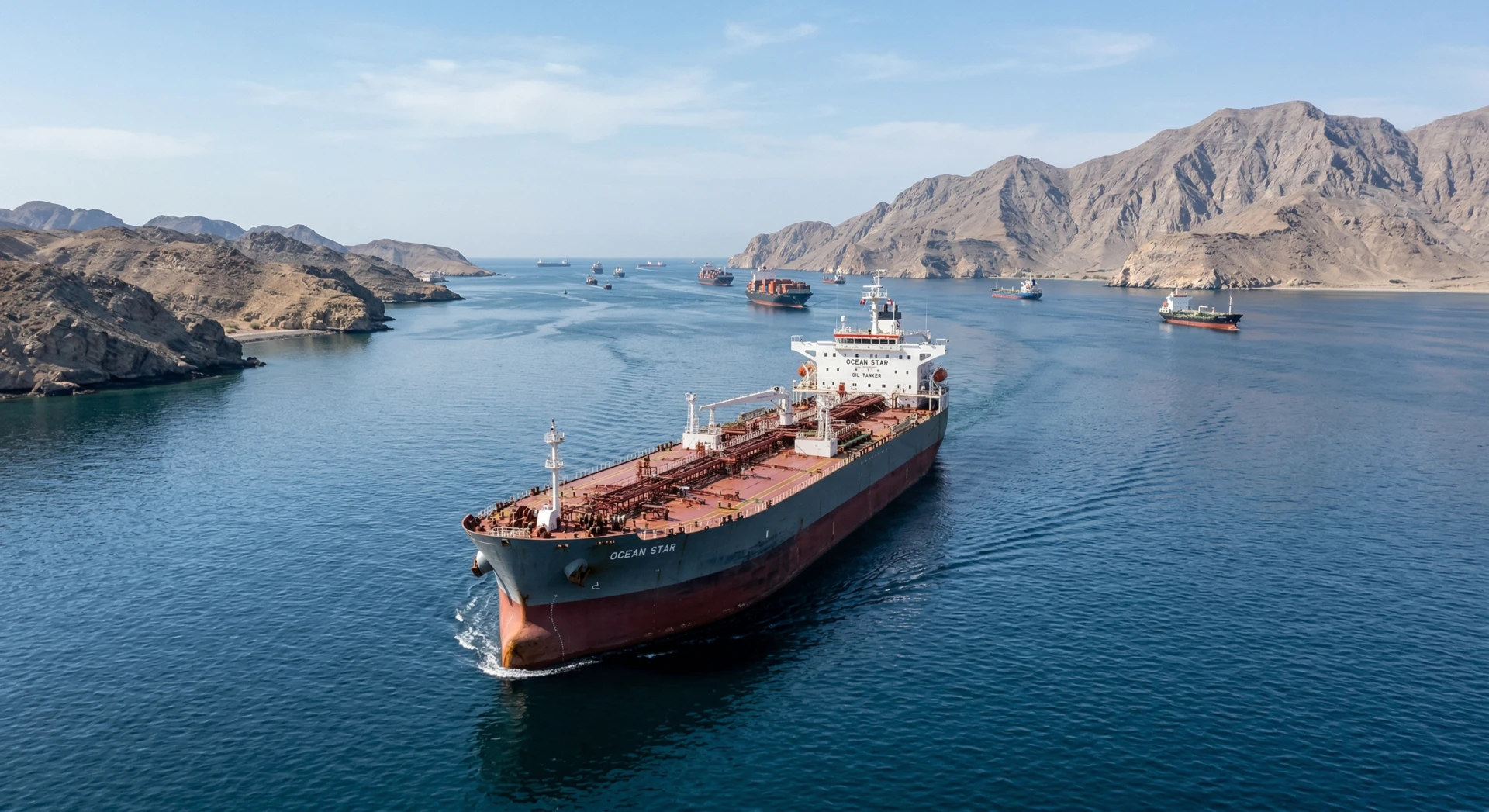
The headline political dispute Italy and France opposing a travel ban on former Russian military personnel, preferring visa based tools over sanctions mechanisms is commercially secondary. What matters to crude oil traders is buried in the energy provisions. The package proposes a floating oil price cap tied approximately 15% below prevailing Urals market prices, a potential reset from the current $60/bbl cap toward $65/bbl following a July review, enhanced tanker controls targeting the shadow fleet (the informal network of older, often anonymously owned vessels that has carried Russian crude outside Western shipping and insurance infrastructure since 2022), and new scrutiny of cryptocurrency payment channels used to settle trades outside dollar clearing systems. Each element intersects with the others in ways that are commercially meaningful and, in some cases, quietly reinforcing.
To understand the margin anatomy here, start with the current Urals trade. Urals crude the benchmark blend of heavy sour Russian oil typically loaded at Primorsk or Novorossiysk on the Baltic and Black Sea respectively has been trading in the $70–72/bbl range in recent weeks. Under the existing $60/bbl G7-mandated price cap, which prohibits Western shipping services, insurance (P&I cover Protection and Indemnity, the industry-standard liability insurance for vessel operators), and financing from being used on any Russian crude cargo priced above the cap, this trade should theoretically be frozen. In practice, it is not. The gap between the cap and actual transaction prices is bridged by the shadow fleet and by triangulated invoicing a structure where a UAE or Turkish intermediary re-invoices the cargo at a declared price below the cap while the actual economic value is transferred through side payments, non-dollar settlement, or commodity linked financing arrangements. The $10–12/bbl gap between cap and market is not a compliance failure in isolation; it is a managed arbitrage that has become structurally embedded in the trade.
Now consider what a cap reset to $65/bbl does to that structure. If Urals trades at $71 and the cap moves to $65, the declared compliance corridor narrows to $6/bbl rather than $11/bbl. An Indian refinery say a mid-sized 200,000 bbl/day operator in Gujarat taking a 1 million barrel Aframax cargo (an Aframax is a medium tanker class carrying roughly 700,000–1,000,000 barrels, typically used on Baltic and Black Sea routes) currently captures a Brent-Urals differential of approximately $8–10/bbl after freight and compliance costs. With a tighter cap corridor and higher verification scrutiny, the cost of maintaining the compliance fiction additional legal documentation, intermediary margins, potential re-routing through a non-EU trackable vessel adds $1–3/bbl. The refinery's net margin shrinks from $8–10/bbl to $5–9/bbl. Still positive, but the margin for error disappears. Any freight spike or Urals price movement turns a profitable cargo into a break-even exercise.
The freight dimension is where the real margin transfer happens, and it is often under discussed. Shadow fleet vessels typically older VLCCs (Very Large Crude Carriers, supertankers carrying around 2 million barrels) or Aframaxes registered under flags of convenience in jurisdictions outside Western regulatory reach currently command a premium of roughly $2–4/MT over conventionally insured tonnage on the key Russia to India route (Baltic/Black Sea loading to Paradip or Vadinar, approximately 25–30 days steaming). If enhanced tanker controls materially increase asset seizure risk or reduce the pool of willing shadow fleet operators, that freight premium widens. A VLCC carrying 2 million barrels at $6/MT earns $12 million per voyage. At $8/MT a plausible outcome if shadow fleet supply contracts the same voyage earns $16 million. That $4 million incremental freight cost falls entirely on the cargo owner, not the vessel. Non-Russian tanker owners operating in grey-zone but technically compliant structures, and Western P&I clubs who reinsure compliant vessels, are the structural beneficiaries of any shadow fleet friction increase.
The deeper enforcement problem is one that neither the EU nor the G7 has publicly resolved: the floating cap formula is only as robust as the price discovery it relies on. The 15% below market mechanism requires knowledge of the actual Urals transaction price. But Urals transaction prices are now systematically opaque. Re-invoicing through UAE and Turkish intermediaries, non-dollar settlement via Indian rupee or Chinese yuan, and the deliberate fragmentation of cargo documentation across multiple jurisdictions mean that no single authority has a clean view of what Urals actually clears at. The Platts Urals assessment published daily by S&P Global Commodity Insights as a CIF (Cost, Insurance, Freight meaning the seller pays freight and insurance to the named destination) Rotterdam price is based on voluntary reporting in a market where almost no compliant Western entity trades Urals. It is, in effect, a model price for a market that no longer operates in the open. The 15% below market formula risks becoming a compliance checkbox: the declared price is below the assessed price, the documents are filed, and the actual economic transfer remains unverifiable.
On the buy side, large integrated traders the NOC trading arms, the Trafiguras and Vitols of this market with full derivatives access can partially hedge Urals discount exposure by going long Brent-Dubai spread derivatives (the Brent-Dubai spread being the price difference between North Sea and Middle East benchmark crudes, which moves inversely when Russian barrels are abundant) and shorting ICE Brent futures to lock in the differential they are targeting. The cost of that hedge has risen as volatility around the package increases: at the money Brent options for August and September delivery have widened in implied volatility by approximately 2–3 percentage points since the package was first reported, adding $0.40–0.60/bbl to hedging costs. For smaller regional operators an independent Bangladeshi or Sri Lankan fuel importer, a mid-tier Turkish trading house derivatives access is limited or absent. Their practical equivalent is to negotiate price review clauses into term supply contracts tied to Platts Urals assessments, build slightly larger inventory buffers to absorb short-term freight spikes, and avoid spot Urals cargoes until the July review outcome is clear.
On the sell side, Russian export economics are already strained at $65/bbl if production and pipeline tariff costs are factored in. Rosneft's published breakeven for Urals export inclusive of Transneft pipeline tariff, port fees at Primorsk, and state export duty is approximately $40–45/bbl, leaving a government revenue margin above that level. But the Russian federal budget was calibrated in the 2026 budget law at an oil price assumption of approximately $70/bbl. A sustained cap at $65 if enforced reduces the revenue per barrel available to the Russian state by $5/bbl, or roughly $8–9 million per day at current export volumes. It is not existential, but it is material, particularly alongside the fish import restrictions (a new non-energy element of the package targeting approximately $300 million in annual Russian fish exports to the EU, primarily pollock and cod from the Far East) which signal an intent to broaden economic pressure beyond hydrocarbons.
For observers, the critical signal is not the Friday EU ministerial meeting outcome itself package approval at that level is almost certain given qualified majority procedures but rather two specific downstream indicators. First, watch the Baltic Dirty Tanker Index (BDTI), the freight rate benchmark for crude oil tanker routes including the key Primorsk to India corridor: a move above 1,100 index points within 30 days of formal package adoption would confirm shadow fleet supply is tightening materially. Second, monitor the Platts Urals CIF Rotterdam assessment against the ICE Brent front-month: if the Urals discount widens beyond $9/bbl after August 1 the likely implementation start date it signals that the cap is landing hard enough to require deeper price concessions to attract cap-compliant buyers. If the discount holds below $7/bbl, the shadow fleet has absorbed the pressure and the cap remains, as it has been, more symbol than constraint.

.jpg)
.jpg)


'%3e%3cg id='Final-Copy-2_2_' transform='translate(1275.000000, 200.000000)'%3e%3cpath class='st0' d='M7.4,12.8h6.8l3.1-11.6H7.4C4.2,1.2,1.6,3.8,1.6,7S4.2,12.8,7.4,12.8z'/%3e%3c/g%3e%3c/g%3e%3c/g%3e%3cg id='final---dec.11-2020'%3e%3cg id='_x30_208-our-toggle' transform='translate(-1275.000000, -200.000000)'%3e%3cg id='Final-Copy-2' transform='translate(1275.000000, 200.000000)'%3e%3cpath class='st1' d='M22.6,0H7.4c-3.9,0-7,3.1-7,7s3.1,7,7,7h15.2c3.9,0,7-3.1,7-7S26.4,0,22.6,0z M1.6,7c0-3.2,2.6-5.8,5.8-5.8 h9.9l-3.1,11.6H7.4C4.2,12.8,1.6,10.2,1.6,7z'/%3e%3cpath id='x' class='st2' d='M24.6,4c0.2,0.2,0.2,0.6,0,0.8l0,0L22.5,7l2.2,2.2c0.2,0.2,0.2,0.6,0,0.8c-0.2,0.2-0.6,0.2-0.8,0 l0,0l-2.2-2.2L19.5,10c-0.2,0.2-0.6,0.2-0.8,0c-0.2-0.2-0.2-0.6,0-0.8l0,0L20.8,7l-2.2-2.2c-0.2-0.2-0.2-0.6,0-0.8 c0.2-0.2,0.6-0.2,0.8,0l0,0l2.2,2.2L23.8,4C24,3.8,24.4,3.8,24.6,4z'/%3e%3cpath id='y' class='st3' d='M12.7,4.1c0.2,0.2,0.3,0.6,0.1,0.8l0,0L8.6,9.8C8.5,9.9,8.4,10,8.3,10c-0.2,0.1-0.5,0.1-0.7-0.1l0,0 L5.4,7.7c-0.2-0.2-0.2-0.6,0-0.8c0.2-0.2,0.6-0.2,0.8,0l0,0L8,8.6l3.8-4.5C12,3.9,12.4,3.9,12.7,4.1z'/%3e%3c/g%3e%3c/g%3e%3c/g%3e%3c/g%3e%3c/svg%3e) Privacy Choices
Privacy Choices