.avif)
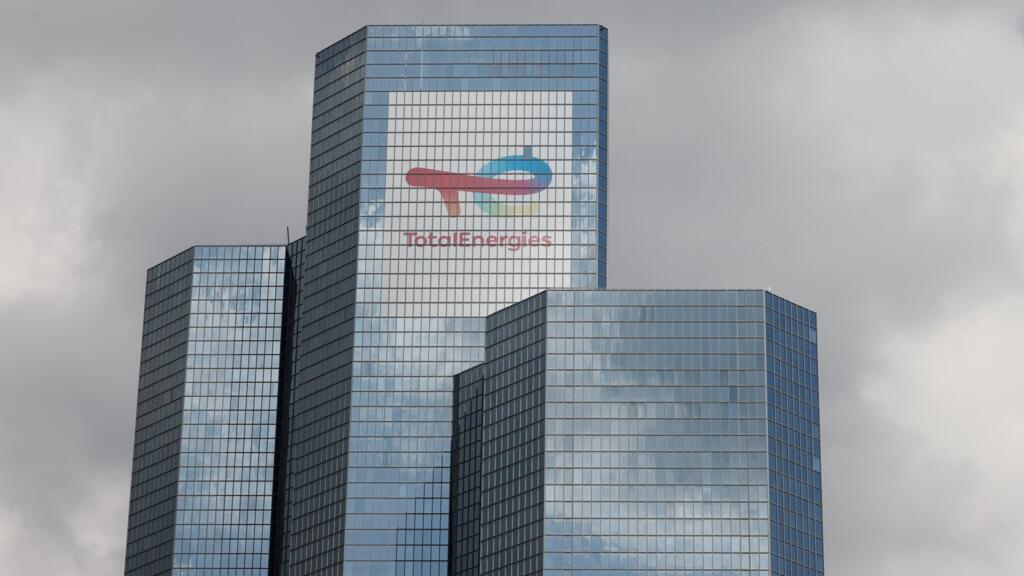
European integrated oil majors now face a legally established obligation to account for Scope 3 emissions the carbon released when customers burn their products within their French corporate duty of vigilance plans, with TotalEnergies given six months from the Paris court ruling of 25 June 2026 to update its disclosures. The immediate commercial consequence is not a production cut. It is a compliance clock, a litigation precedent, and a quietly rising cost of capital for any European major with upstream ambitions.
The ruling turns on France's loi de vigilance the corporate duty of vigilance law, enacted in 2017, which requires large French companies to identify and prevent risks to human rights and the environment arising from their operations and their suppliers. Until this ruling, the law's reach was generally understood to stop at the company's own operational footprint and its direct contractors. TotalEnergies argued exactly that: the combustion of a product by an independent customer is not an extension of its own operations. The court disagreed. Judges found that the inherent causal link between producing oil and gas and the eventual burning of those products means Scope 3 emissions those generated by end users downstream of the point of sale constitute part of TotalEnergies' own impact. That is a significant doctrinal shift, and it was made in a French civil court, not a regulatory agency.
The numbers behind the ruling clarify what is at stake. According to NGO evidence presented to the court, TotalEnergies' Scope 3 emissions amounted to approximately 342 million tonnes of CO2 equivalent in 2024. To benchmark that figure: the entire French economy emits roughly 400 million tonnes of CO2e annually. TotalEnergies' customers, spread across aviation, road transport, shipping, and industrial heat, collectively emit almost as much as France itself and until this ruling, that volume sat outside any legally mandated corporate accounting framework. Scope 1 emissions are those from the company's own operations (refineries, flares, company vehicles); Scope 2 covers purchased energy; Scope 3 covers everything downstream. For oil and gas companies, Scope 3 typically represents more than 85% of their total climate footprint. The court has now said that in France, that 85% must be included in the vigilance plan.
Here is where the headline obscures the structural constraint. The loi de vigilance is a civil law instrument, not a criminal one. It has no fine schedule. Its enforcement mechanism is an injunction a court order to act and TotalEnergies can satisfy this particular order by updating its vigilance plan with Scope 3 disclosure language that technically complies without altering a single barrel of planned production. ESG advisory firms and Scope 3 accounting specialists are the immediate margin beneficiaries. TotalEnergies alone represents a six-month compliance engagement potentially worth tens of millions of euros; if the ruling propagates to other European majors Shell, BP, Equinor, ENI all operate under comparable European governance frameworks the compliance revenue stream becomes structurally durable. The City of Paris, through Deputy Mayor Alice Timsit, called the ruling a landmark step. That framing is accurate as precedent. As an operational constraint on 2026 and 2027 production, it is not yet that.
The real commercial pressure operates one layer deeper, through project finance and insurance. Consider a hypothetical TotalEnergies upstream project a deepwater exploration block off Namibia or a new LNG terminal expansion seeking project finance from a European bank consortium in 2027. Lenders conducting due diligence must now factor in French litigation exposure as a governance risk. Insurance underwriters for that asset covering political risk, construction, and operational liability will apply the same lens. Even without a direct ruling ordering production cuts, each litigation precedent raises the risk premium embedded in financing terms. A project that clears a hurdle rate of, say, 12% internal rate of return at current financing costs may fall below that threshold if governance driven insurance premiums rise 50–80 basis points (hundredths of a percentage point) and legal contingency reserves increase. The NPV net present value, the present day worth of all future cash flows from a project is destroyed not by regulation, but by accumulated litigation risk priced into capital. That mechanism is slower, less visible, and more durable than any single court order.
On the buy side, the direct counterparts to TotalEnergies' production refineries purchasing crude, gas utilities contracting LNG, industrial buyers on long-term supply agreements face no immediate pricing impact from this ruling. Supply from TotalEnergies is not interrupted; production targets have not been ordered down. The indirect exposure is reputational and contractual. Buyers embedded in supply chains that run through French-listed majors may face increased documentation requirements as those majors update their vigilance plans to demonstrate due diligence across their customer base. A European airline purchasing jet fuel under a multi-year offtake agreement may find new ESG disclosure clauses inserted at renewal. On the sell side, TotalEnergies' own stated strategy targeting power generation at 20% of energy output by 2030 was already moving in this direction, though the company has explicitly declined to commit to net-zero by 2050. This ruling does not accelerate that strategy. It validates the litigation risk that makes maintaining the current fossil fuel weighting progressively more expensive to defend to shareholders and financiers.
The structural arbitrage created here is geographic, not operational. If European integrated majors face higher governance overhead, expanded litigation exposure, and Scope 3 disclosure mandates under French and potentially broader EU law, then their cost of capital for new upstream approvals rises relative to US independents, Gulf national oil companies (NOCs), and other non-European producers who face no comparable legal framework. In competitive upstream licensing rounds bidding for exploration blocks in West Africa, Southeast Asia, or South America a TotalEnergies or Shell carrying an additional 30–50 basis points of risk premium in their hurdle rate will be outbid by Saudi Aramco or ExxonMobil on marginal projects. The production does not disappear. It migrates to less-governed producers. The climate benefit of the ruling, if it materialises, depends entirely on whether demand destruction accompanies the producer shift and nothing in this ruling addresses demand.
For large integrated majors with access to capital markets and derivatives hedging instruments, the six-month compliance window is a governance engagement, not a crisis. The practical task is commissioning a Scope 3 inventory audit to GHG Protocol standards the internationally recognised framework for carbon accounting documenting the methodology, and embedding Scope 3 language into the updated vigilance plan before the court deadline. The cost is material but manageable. For smaller, regional operators independent fuel distributors, mid-sized LNG traders, regional refinery operators who supply into or purchase from French listed majors, the practical exposure comes through contract renegotiation. Watch for new ESG compliance representations in supply agreement renewals over the next 12–18 months, particularly where the counterparty is subject to French law. That is the channel through which this ruling reaches operators who were not in the Paris courtroom.
The signal to watch over the next 90 days is not TotalEnergies' compliance filing that will be crafted by lawyers to satisfy the minimum threshold. The operationally significant signal is how European project finance banks BNP Paribas, Société Générale, ING update their upstream energy lending criteria in their next policy revision cycles, typically published in Q3 or Q4 of each year. If Scope 3 litigation risk appears as a named factor in lending exclusion or enhanced due diligence categories, the cost of capital mechanism described above begins to activate at scale. The second signal is whether NGO coalitions file parallel actions against Shell NV or ENI SpA under their respective national duty of care frameworks, each filing amplifying the precedent. The ruling is a disclosure obligation today. Whether it becomes a production constraint depends on whether capital follows the litigation.



.jpg)



'%3e%3cg id='Final-Copy-2_2_' transform='translate(1275.000000, 200.000000)'%3e%3cpath class='st0' d='M7.4,12.8h6.8l3.1-11.6H7.4C4.2,1.2,1.6,3.8,1.6,7S4.2,12.8,7.4,12.8z'/%3e%3c/g%3e%3c/g%3e%3c/g%3e%3cg id='final---dec.11-2020'%3e%3cg id='_x30_208-our-toggle' transform='translate(-1275.000000, -200.000000)'%3e%3cg id='Final-Copy-2' transform='translate(1275.000000, 200.000000)'%3e%3cpath class='st1' d='M22.6,0H7.4c-3.9,0-7,3.1-7,7s3.1,7,7,7h15.2c3.9,0,7-3.1,7-7S26.4,0,22.6,0z M1.6,7c0-3.2,2.6-5.8,5.8-5.8 h9.9l-3.1,11.6H7.4C4.2,12.8,1.6,10.2,1.6,7z'/%3e%3cpath id='x' class='st2' d='M24.6,4c0.2,0.2,0.2,0.6,0,0.8l0,0L22.5,7l2.2,2.2c0.2,0.2,0.2,0.6,0,0.8c-0.2,0.2-0.6,0.2-0.8,0 l0,0l-2.2-2.2L19.5,10c-0.2,0.2-0.6,0.2-0.8,0c-0.2-0.2-0.2-0.6,0-0.8l0,0L20.8,7l-2.2-2.2c-0.2-0.2-0.2-0.6,0-0.8 c0.2-0.2,0.6-0.2,0.8,0l0,0l2.2,2.2L23.8,4C24,3.8,24.4,3.8,24.6,4z'/%3e%3cpath id='y' class='st3' d='M12.7,4.1c0.2,0.2,0.3,0.6,0.1,0.8l0,0L8.6,9.8C8.5,9.9,8.4,10,8.3,10c-0.2,0.1-0.5,0.1-0.7-0.1l0,0 L5.4,7.7c-0.2-0.2-0.2-0.6,0-0.8c0.2-0.2,0.6-0.2,0.8,0l0,0L8,8.6l3.8-4.5C12,3.9,12.4,3.9,12.7,4.1z'/%3e%3c/g%3e%3c/g%3e%3c/g%3e%3c/g%3e%3c/svg%3e) Privacy Choices
Privacy Choices