.avif)
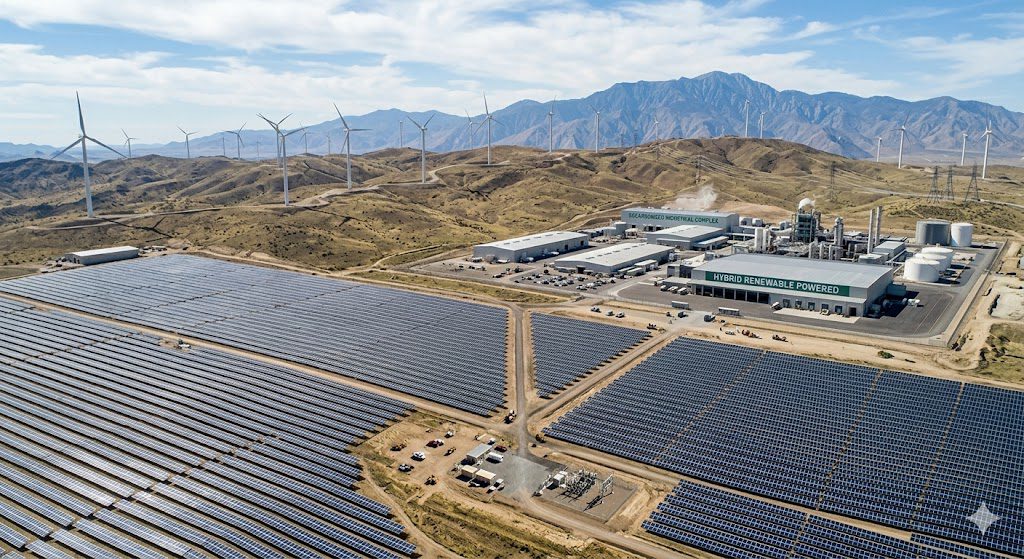
Gujarat Alkalies and Chemicals (GACL) has committed to locking in up to ₹90–160 crore in annual electricity savings on paper through a 160.24 MW hybrid renewable deal that will determine whether Indian chlor-alkali producers can structurally undercut regional competitors on caustic soda, starting from commissioning of Phase 1.
A group captive arrangement a structure in which an industrial consumer holds at least 26% equity in the special purpose vehicle (SPV) that owns the power plant, allowing it to consume that plant's output at cost-reflective captive rates rather than full grid tariffs is the legal and financial backbone of this deal. GACL, one of India's largest chlor-alkali producers with plants at Dahej and Vadodara, has signed such an arrangement with CleanMax Enviro Energy Solutions for a two-phase hybrid project: Phase 1 delivers 16.50 MW wind and 21.70 MWp solar; Phase 2 adds 59.40 MW wind and 62.64 MWp solar, reaching a combined 160.24 MW. Total projected annual generation is approximately 36.9 crore units 369 million kilowatt hours. Chlor-alkali production, which uses electrolysis to split brine into chlorine, caustic soda, and hydrogen, is one of the most electricity intensive processes in the chemical sector: electricity can account for 40–50% of total production cost. The commercial logic is straightforward control the electricity price, and you control the margin.
The number that matters is missing from the announcement: the contracted captive tariff per unit. Grid electricity for large industrial consumers in Gujarat currently runs approximately ₹6–8 per kWh, including demand charges and state levies. Captive renewable projects in comparable Indian structures have achieved delivered costs of ₹3.50–4.50 per kWh. Apply a midpoint saving of ₹3.00/kWh to 369 GWh of annual output, and the implied annual saving lands between ₹90 crore and ₹160 crore a material number against GACL's market capitalisation of roughly ₹5,076 crore (NSE data, June 2026). Translated into per-tonne terms: a typical membrane cell chlor-alkali plant consumes around 2,200–2,500 kWh per tonne of caustic soda equivalent. At a ₹3/kWh saving, that is ₹660–750 per tonne, or approximately $8–9/MT at current exchange rates meaningful in a product where global spot margins can compress to single digits. The 3.51% share price move on announcement day reflects the market pricing in precisely this potential, though without the tariff disclosure, that confidence may be premature.
On the buy side procurement teams at downstream chemical consumers and formulators purchasing caustic soda from GACL the near-term impact is muted. The project is phased across contractual timelines that have not been disclosed publicly; Phase 1 is unlikely to be commissioned before late 2026 or 2027, meaning grid-tariff based pricing governs GACL's cost base for now. If the full 160 MW comes online and the implied saving is real, buyers should expect GACL to deploy margin recovery in selective export pricing into Southeast Asian markets notably Indonesia, Vietnam, and Bangladesh, where Indian caustic soda already competes on freight-adjusted cost. On the sell side, GACL's competitive position relative to Indian chlor-alkali producers still fully exposed to grid tariff will harden. A peer running at ₹7/kWh grid cost against GACL at an effective ₹4/kWh captive rate faces an $8–9/MT structural cost disadvantage not a cycle disadvantage, a permanent one, for the duration of the power purchase agreement. The announcement is also CleanMax's single largest group captive deal to date, signalling appetite from developers to absorb the capital structuring complexity of large industrial offtake.
For a large integrated chemical group or national chemicals trading arm with derivatives access able to hedge caustic soda forward on regional indices and model delivered cost scenarios the actionable step is to build GACL's implied cost curve into procurement models now, before Phase 2 commissioning changes the competitive landscape. For a smaller regional chlor-alkali buyer or independent distributor without that analytical infrastructure, the practical equivalent is simpler: request multi-year supply agreements with GACL before the cost advantage is fully priced into contract terms, and avoid locking into long-term supply with higher-cost producers until the commissioning timeline is clearer. The critical unknown for all observers is the SPV equity structure Indian group captive rules require the offtaker to hold at least 26% of the SPV, which means GACL has balance sheet exposure to CAPEX that has not been quantified in any public filing. Watch GACL's next quarterly results (Q1 FY2027, expected August 2026) for any capital commitment or debt disclosure associated with the SPV. If the tariff or equity structure is disclosed before then via a regulatory filing with SEBI or a Gujarat Electricity Regulatory Commission (GERC) approval notice that document will be the single most commercially useful data point this deal has yet produced.
.jpg)

'%3e%3cg id='Final-Copy-2_2_' transform='translate(1275.000000, 200.000000)'%3e%3cpath class='st0' d='M7.4,12.8h6.8l3.1-11.6H7.4C4.2,1.2,1.6,3.8,1.6,7S4.2,12.8,7.4,12.8z'/%3e%3c/g%3e%3c/g%3e%3c/g%3e%3cg id='final---dec.11-2020'%3e%3cg id='_x30_208-our-toggle' transform='translate(-1275.000000, -200.000000)'%3e%3cg id='Final-Copy-2' transform='translate(1275.000000, 200.000000)'%3e%3cpath class='st1' d='M22.6,0H7.4c-3.9,0-7,3.1-7,7s3.1,7,7,7h15.2c3.9,0,7-3.1,7-7S26.4,0,22.6,0z M1.6,7c0-3.2,2.6-5.8,5.8-5.8 h9.9l-3.1,11.6H7.4C4.2,12.8,1.6,10.2,1.6,7z'/%3e%3cpath id='x' class='st2' d='M24.6,4c0.2,0.2,0.2,0.6,0,0.8l0,0L22.5,7l2.2,2.2c0.2,0.2,0.2,0.6,0,0.8c-0.2,0.2-0.6,0.2-0.8,0 l0,0l-2.2-2.2L19.5,10c-0.2,0.2-0.6,0.2-0.8,0c-0.2-0.2-0.2-0.6,0-0.8l0,0L20.8,7l-2.2-2.2c-0.2-0.2-0.2-0.6,0-0.8 c0.2-0.2,0.6-0.2,0.8,0l0,0l2.2,2.2L23.8,4C24,3.8,24.4,3.8,24.6,4z'/%3e%3cpath id='y' class='st3' d='M12.7,4.1c0.2,0.2,0.3,0.6,0.1,0.8l0,0L8.6,9.8C8.5,9.9,8.4,10,8.3,10c-0.2,0.1-0.5,0.1-0.7-0.1l0,0 L5.4,7.7c-0.2-0.2-0.2-0.6,0-0.8c0.2-0.2,0.6-0.2,0.8,0l0,0L8,8.6l3.8-4.5C12,3.9,12.4,3.9,12.7,4.1z'/%3e%3c/g%3e%3c/g%3e%3c/g%3e%3c/g%3e%3c/svg%3e) Privacy Choices
Privacy Choices