.avif)
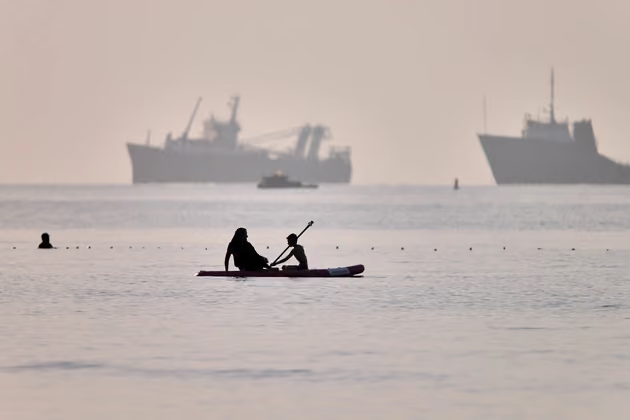
VLCC charterers operating on standard time-charter fixtures through the Strait of Hormuz are absorbing war-risk insurance surcharges of $300,000–$700,000 per voyage as of late June 2026 costs that arrived without warning and sit entirely outside the freight rates locked in weeks or months ago.
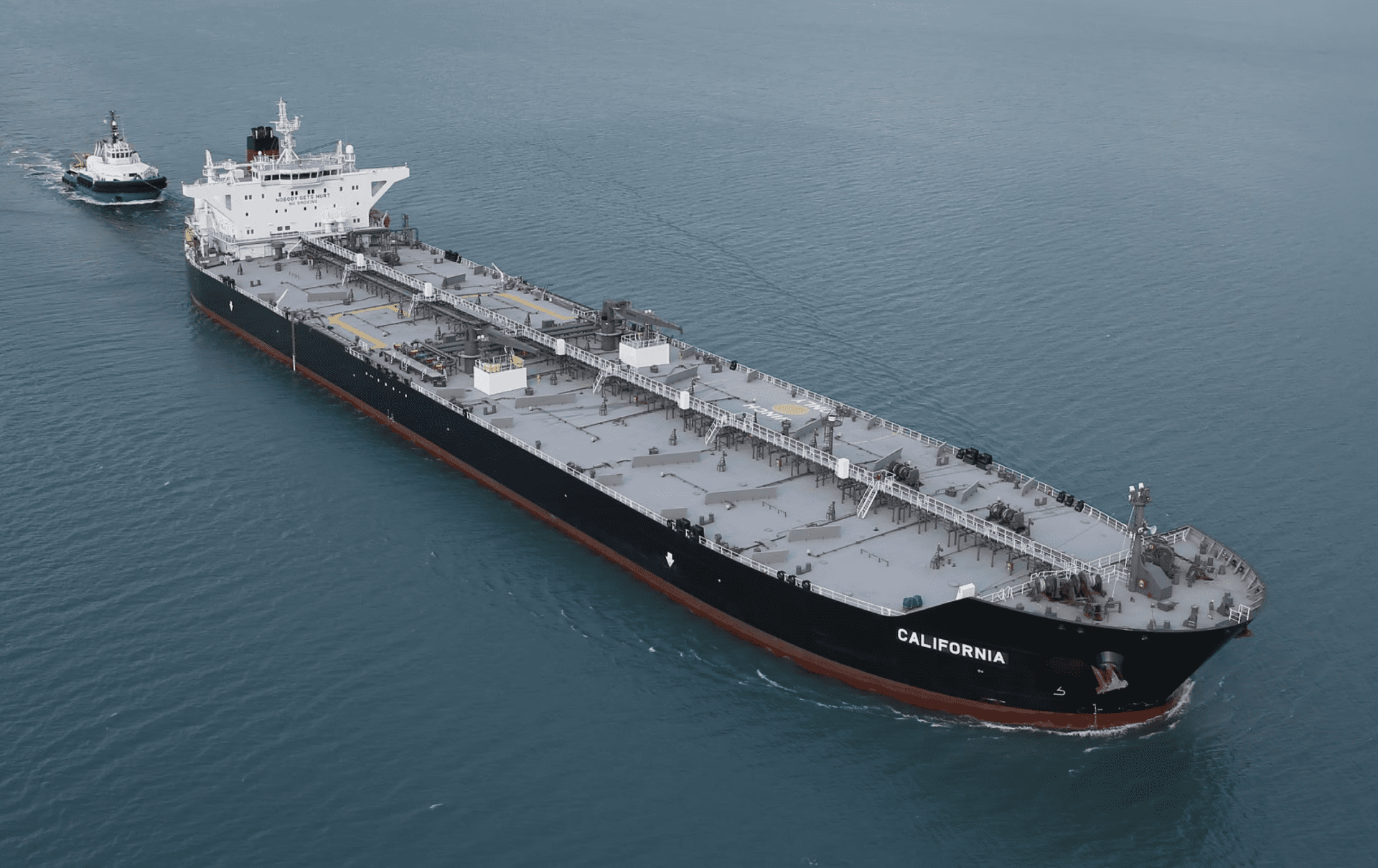
As of 29 June 2026, that passage remains open and active. VLCCs Very Large Crude Carriers, supertankers capable of carrying approximately 2 million barrels of crude were loading at Ras Tanura, Saudi Arabia's primary Gulf export terminal, even as geopolitical tension between the United States and Iran intensified. According to reports, a company helicopter crash on Sunday killed 14 people near active loading operations, illustrating that risk at these terminals is not merely theoretical. Iranian loadings accelerated under sanctions waivers, with simultaneous use of multiple berths at Kharg Island Iran's principal crude export terminal on the northern Gulf for the first time in nearly a week, according to available vessel tracking data.
Three of the loaded VLCCs departed their berths and proceeded on their voyages dark that is, with AIS (Automatic Identification System) transponders switched off. AIS is the vessel tracking technology that allows ports, insurers, receivers, and regulators to monitor a ship's position in real time. Going dark is a tactical response to security exposure: a vessel broadcasting its position and cargo en route through a contested strait is a more legible target. But darkness carries its own cost. P&I clubs Protection and Indemnity clubs, the mutual insurance associations that cover third-party liability for most ocean going vessels can exclude or limit coverage for vessels that are non-compliant with AIS requirements. Destination ports in Japan, South Korea, and India may require continuous AIS history as a condition of entry or cargo clearance. The loading data, in other words, captures departures. It does not capture whether those cargoes are insurable at destination.
To understand what the current environment costs at the voyage level, consider a VLCC on a standard MEG to Japan route approximately 3,500 nautical miles from Ras Tanura to Chiba or Yokkaichi, transiting Hormuz outbound and carrying 2 million barrels of crude. At a base freight rate of $14/MT, the voyage earns the vessel operator roughly $28 million gross. The war-risk insurance uplift at current Hormuz premium levels conservatively $300,000, up to $700,000 per transit for a non-shadow fleet vessel adds a voyage cost that was not in the fixture when the charter was agreed. On a fixture struck three months ago at a lower base rate, say $9/MT ($18 million gross), the $500,000 midpoint war-risk addition represents nearly 3% of gross voyage revenue erased before bunker and port costs. For a charterer locked into a time-charter a rate-fixed hire agreement that uplift is a direct margin compression. For a spot-market operator, it can be re-priced into the next fixture. The distinction matters enormously to who absorbs the cost.
Two Iranian-flagged VLCCs named Dan and Hawk, according to vessel-tracking reports entered the Strait of Hormuz on Saturday, signaling ongoing Iranian participation in crude loadings despite the political backdrop. Iranian vessels operating outside the compliant Western fleet occupy a structurally different cost environment: shadow-fleet operators and their associated export intermediaries are capturing freight and crude premiums that sanctioned-compliant market participants cannot access. The shadow fleet broadly, vessels operating outside Western P&I coverage, often with opaque ownership structures and non-Western insurance has expanded significantly since 2022, and Hormuz is one of the corridors where its economics are most visible. One loaded VLCC that departed Ras Tanura subsequently cleared the Strait and, according to tracking data, is routing toward Japan confirming that the standard long-haul route remains physically viable even under present conditions.
On the buy side, Japanese and South Korean refinery procurement teams face a specific problem: cargoes that departed a Gulf terminal on schedule may arrive with gaps in their AIS history, raising questions for port state control authorities and P&I claim validity. An integrated refiner like a Japanese major ENEOS, for example will typically require clean documentation as a condition of cargo acceptance. If a vessel's tracking record contains unexplained dark periods in or near Hormuz, the cargo's bankability its ability to be financed, cleared, and delivered against a letter of credit comes into question. The letter of credit, the bank guarantee that payment will be made once compliant shipping documents are presented, is the instrument that makes international crude trade work. A vessel arriving without clean AIS history may not satisfy LC documentation requirements, leaving both buyer and seller exposed.
On the sell side, Saudi Aramco and Abu Dhabi National Oil Company (ADNOC) the dominant Gulf exporters are in a structurally insulated position: their term customers absorb freight, their cargoes load on compliant vessels, and their official selling prices (OSPs) are set monthly and do not fluctuate with short-term security premiums. The pressure falls instead on the independent VLCC operators and time-charterers who must transit Hormuz on someone else's fixed pricing. For smaller regional operators a mid-sized Indian refiner running on spot crude purchases, a Southeast Asian independent without long-term shipping contracts the practical response is to widen the supplier base toward cargoes that do not require Hormuz transit: West African crude on Suezmax vessels, US Gulf crude on long-haul VLCCs via Cape routes. The Cape of Good Hope re-route bypassing Hormuz entirely by rounding southern Africa adds approximately 10–14 days on a MEG to Europe voyage, and becomes economically rational only when sustained war-risk premiums exceed the additional bunker and time-charter cost of the detour, a threshold that has not yet been broadly crossed.
For large integrated traders Trafigura, Vitol, or a national oil company trading arm with full derivatives access the current environment creates a specific optionality trade. The JKM-TTF spread the price difference between Japan-Korea Marker LNG delivered into Northeast Asia and the Title Transfer Facility benchmark for European natural gas widens when Hormuz risk rises, because the market prices in potential disruption to Qatari and UAE LNG flows. Traders with divertible LNG cargoes, or options on floating LNG storage, can extract carry from spread widening even when physical LNG flows, as they currently are, persist. Qatar and UAE LNG shipments continued through the Strait as of the report date, but the perception of risk is itself a tradeable signal. For smaller operators without derivatives access, the equivalent is simpler: fix destination optionality contractually, and ensure cargo insurance terms explicitly cover Hormuz-transiting dark-period voyages before booking freight.
The last comparable period of systematic Hormuz disruption was the Iran-Iraq tanker war of the 1980s, when freight rates tripled within weeks of each major attack on shipping. The current environment has not produced that scale of freight response yet because throughput has not materially broken down and diplomatic signals, according to available reports, point toward a halt in hostilities and renewed talks. But the structural risk premium is embedded and compounding quietly. Observers tracking this situation should monitor two specific signals in the near term: the Baltic Exchange's Middle East Gulf to Japan VLCC dirty tanker route (TD3C), published daily, which will register any freight repricing as charterers begin building war-risk into spot fixture negotiations; and Lloyd's of London war-risk premium rates for Hormuz transits, which function as the insurance market's real-time verdict on vessel exposure. If TD3C spikes above $20/MT or Lloyd's premiums breach $1 million per transit, the calculus on Cape re-routing and cargo diversion shifts from theoretical to operational. Watch both within the next 30 days.
.jpg)
.jpg)

'%3e%3cg id='Final-Copy-2_2_' transform='translate(1275.000000, 200.000000)'%3e%3cpath class='st0' d='M7.4,12.8h6.8l3.1-11.6H7.4C4.2,1.2,1.6,3.8,1.6,7S4.2,12.8,7.4,12.8z'/%3e%3c/g%3e%3c/g%3e%3c/g%3e%3cg id='final---dec.11-2020'%3e%3cg id='_x30_208-our-toggle' transform='translate(-1275.000000, -200.000000)'%3e%3cg id='Final-Copy-2' transform='translate(1275.000000, 200.000000)'%3e%3cpath class='st1' d='M22.6,0H7.4c-3.9,0-7,3.1-7,7s3.1,7,7,7h15.2c3.9,0,7-3.1,7-7S26.4,0,22.6,0z M1.6,7c0-3.2,2.6-5.8,5.8-5.8 h9.9l-3.1,11.6H7.4C4.2,12.8,1.6,10.2,1.6,7z'/%3e%3cpath id='x' class='st2' d='M24.6,4c0.2,0.2,0.2,0.6,0,0.8l0,0L22.5,7l2.2,2.2c0.2,0.2,0.2,0.6,0,0.8c-0.2,0.2-0.6,0.2-0.8,0 l0,0l-2.2-2.2L19.5,10c-0.2,0.2-0.6,0.2-0.8,0c-0.2-0.2-0.2-0.6,0-0.8l0,0L20.8,7l-2.2-2.2c-0.2-0.2-0.2-0.6,0-0.8 c0.2-0.2,0.6-0.2,0.8,0l0,0l2.2,2.2L23.8,4C24,3.8,24.4,3.8,24.6,4z'/%3e%3cpath id='y' class='st3' d='M12.7,4.1c0.2,0.2,0.3,0.6,0.1,0.8l0,0L8.6,9.8C8.5,9.9,8.4,10,8.3,10c-0.2,0.1-0.5,0.1-0.7-0.1l0,0 L5.4,7.7c-0.2-0.2-0.2-0.6,0-0.8c0.2-0.2,0.6-0.2,0.8,0l0,0L8,8.6l3.8-4.5C12,3.9,12.4,3.9,12.7,4.1z'/%3e%3c/g%3e%3c/g%3e%3c/g%3e%3c/g%3e%3c/svg%3e) Privacy Choices
Privacy Choices