.avif)
Iranian crude oil traders could recover $10–20 per barrel in margin currently surrendered through shadow intermediaries but not yet, and perhaps not for months, regardless of what Tehran announced on 29 June 2026.
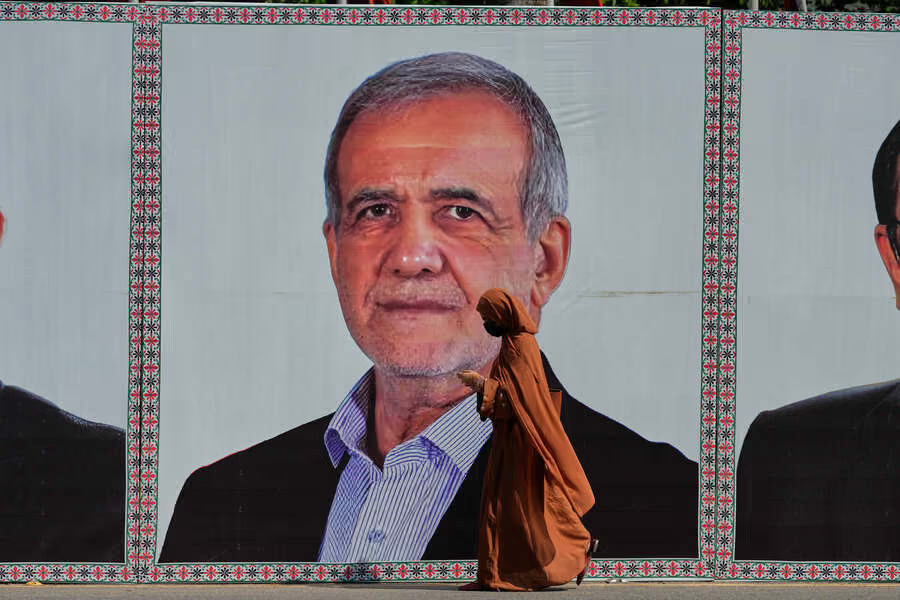
Iranian President Masoud Pezeshkian confirmed, according to reports from the Islamic Republic News Agency, that $6 billion of Iran's assets frozen in Qatar will be released in phases through two Qatari institutions Al-Ahli Bank and Dukhan Bank with Iran's central bank controlling access and funds earmarked strictly for humanitarian purchases. Tehran simultaneously asserted that oil and petrochemical sanctions have been lifted as part of a broader ceasefire and interim memorandum of understanding brokered by Qatari and Pakistani mediators, with technical talks ongoing in Doha to operationalise the agreement. U.S. officials have publicly denied that any frozen assets have been released, creating an immediate and material gap between what Tehran is asserting commercially and what Washington is confirming legally. For crude oil traders, that gap is not a diplomatic footnote it is the entire operational problem.
The $6 billion figure requires context to be understood correctly. It represents approximately 6% of an estimated $100 billion in Iranian sovereign and commercial assets frozen globally across multiple jurisdictions a pool accumulated over decades of escalating sanctions. The $6 billion tranche mirrors the structure of a 2023 prisoner-swap arrangement, under which South Korean-held Iranian oil revenues were transferred to restricted accounts in Qatar and earmarked for humanitarian purchases through a tightly controlled mechanism. The funds do not move freely: they are released in phases, each phase tied to benchmarks in the broader talks, and each disbursement requires compliance sign-off from the intermediary banks. This is not liquidity returning to Iranian crude trading operations it is sovereign revenue, slowly, conditionally, being made available for food and medicine imports. The distinction matters because some market commentary has conflated the asset release with an immediate improvement in Iran's oil export capacity. These are separate instruments operating on separate timelines.
The critical barrier to any legitimate re-entry of Iranian crude into mainstream markets is not diplomatic it is the OFAC compliance architecture. OFAC is the U.S. Treasury's Office of Foreign Assets Control, the regulatory body that administers and enforces economic and trade sanctions. For Iranian oil sanctions to be operationally lifted, OFAC must issue updated guidance, amend the relevant executive orders, and modify the SDN list the Specially Designated Nationals list, which identifies entities with whom U.S. persons and institutions are prohibited from transacting. None of those regulatory instruments have been publicly issued or confirmed as of this writing. Without them, a Western bank cannot open a letter of credit the bank guarantee that makes international commodity trade executable for an Iranian crude cargo. A P&I club the mutual insurer that covers third-party liability for vessel operators cannot provide cover. A mainstream commodity trader cannot execute without primary sanctions exposure. The diplomatic agreement, if it exists as Tehran describes, is necessary but not sufficient. The operational compliance infrastructure to execute trades has not yet been built, and building it typically takes months even under conditions of full political goodwill.
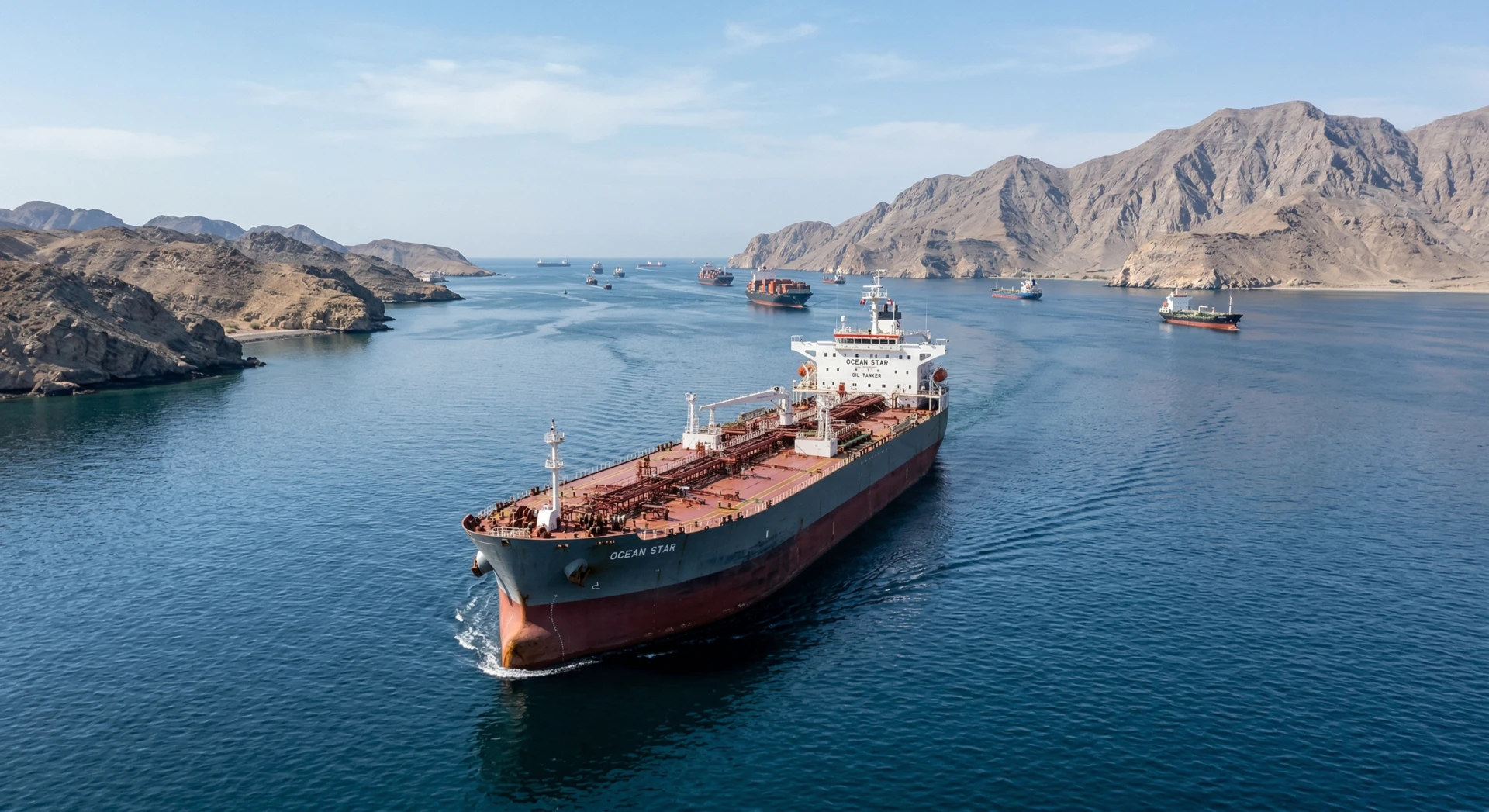
Consider the margin anatomy at current volumes. Iranian crude is estimated to be selling at a discount of $10–20 per barrel to comparable Middle Eastern grades a discount paid not to the buyer but extracted through the intermediary chain required to obscure origin. A representative cargo: a suezmax vessel (a tanker carrying approximately 130,000 tonnes, or roughly 1 million barrels) loading Iranian crude at Kharg Island in the Persian Gulf, transferring cargo ship to ship near Fujairah in the UAE or at Malaysian transshipment points to obscure origin, before final delivery to a Chinese teapot refinery an independent, smaller-scale Chinese refinery that operates outside the integrated major refinery system and has historically been more willing to accept sanctioned crude. The STS transfer ship to ship, meaning cargo pumped between vessels at sea to change the apparent origin adds roughly $2–4 per barrel in operational cost and 7–12 extra days to the voyage. At 1 million barrels per cargo, the full intermediary discount represents $10–20 million surrendered per voyage by NIOC alone. Across estimated Iranian export volumes of 1.5–1.8 million barrels per day, the annual margin loss from this structure runs to $5–8 billion. That is the prize that genuine sanctions relief would recover eventually.
On the buy side, Chinese teapot refiners are the primary near-term counterparty watching this situation. They currently receive Iranian crude at a procurement discount of approximately $10–20 per barrel relative to Saudi Arab Medium, which partially compensates for the compliance risk, shadow fleet surcharges, and the operational complexity of the obscured supply chain. If Iranian crude were to re-enter legitimate markets, that discount would compress materially potentially to $3–5 per barrel or less, in line with standard Middle Eastern sour crude differentials. For a teapot refiner processing 100,000 barrels per day, that compression represents a procurement cost increase of roughly $1.5–2 million per day, or $550–730 million annually. The discount is not charity it is the market price of compliance risk being transferred from seller to buyer. Remove the risk, remove the discount. On the sell side, NIOC and Iranian petrochemical exporters stand to recover that surrendered margin, but only if the compliance infrastructure materialises. The sell-side gain is real but contingent; the buy-side loss is structural and arrives the moment Iranian barrels trade openly.
For large integrated traders a Vitol, Trafigura, or a major national oil company's trading arm the practical position right now is watchful non-participation. These operators have the derivatives access to hedge Middle Eastern sour crude price exposure through instruments like TD3C (the VLCC freight rate benchmark on the Middle East Gulf to China route) and Dubai crude futures on the DME. But their compliance departments will not approve Iranian crude transactions without confirmed OFAC guidance updates. The opportunity cost of early engagement is existential U.S. dollar clearing access, correspondent banking relationships, and P&I insurance are all at risk. For smaller regional operators an independent Asian trading house, a mid-tier refiner in India or Southeast Asia the calculus is different. Operators in jurisdictions with more permissive secondary sanctions posture may find a 60–120 day compliance arbitrage window: a period in which Iranian crude flows through intermediary channels at still-compressed but narrowing discounts, before Western banks can participate and before the full compliance framework is operational. This window, if it opens, concentrates margin in Asia-based intermediaries precisely because larger Western operators remain on the sidelines.
The freight dimension reshapes who benefits if sanctions genuinely lift. Iranian crude currently moves predominantly on the shadow fleet vessels operating outside mainstream insurance, classification, and AIS (Automatic Identification System, the vessel tracking system that identifies ship position and identity) coverage. Shadow fleet operators charge a premium of $2–5 per barrel for this service, which functions as a risk surcharge. If Iranian crude re-enters legitimate trade lanes, NIOC would shift to standard VLCC charters on the MEG-China (Middle East Gulf to China) route, the TD3C benchmark trade lane. Current TD3C rates are approximately $18,000 per day for a 270,000 tonne VLCC. The volume of Iranian crude returning to legitimate VLCC trade potentially 500,000 to 1 million barrels per day that currently bypasses mainstream tanker markets would represent a meaningful addition to VLCC demand, with upward pressure on TD3C rates. Shadow fleet operators lose their premium; mainstream VLCC operators gain utilisation. The freight market is not neutral in this scenario it is a redistribution of roughly $1–3 billion annually in tanker revenue from shadow to mainstream operators.
Observers should set one specific tripwire: watch for a Federal Register notice from the U.S. Treasury amending the Iranian Transactions and Sanctions Regulations (ITSR) the primary legal instrument governing U.S. economic sanctions on Iran. If that notice does not appear within 60 days of the diplomatic announcement, the operational compliance architecture has not moved, and Iranian crude re-entry into legitimate mainstream markets remains blocked regardless of what any ceasefire framework states. A secondary signal: track whether Glencore, Trafigura, or any major P&I club (the International Group of P&I Clubs covers approximately 90% of the world's ocean-going tonnage) issues a public compliance update or amended underwriting guidelines for Iranian-origin cargoes. These institutions move only when they have legal clarity, and their silence or action will be the most reliable real-time indicator of whether diplomatic agreement has translated into operational permission. The gap between those two conditions is where the real intelligence lies.
.jpg)
.jpg)

'%3e%3cg id='Final-Copy-2_2_' transform='translate(1275.000000, 200.000000)'%3e%3cpath class='st0' d='M7.4,12.8h6.8l3.1-11.6H7.4C4.2,1.2,1.6,3.8,1.6,7S4.2,12.8,7.4,12.8z'/%3e%3c/g%3e%3c/g%3e%3c/g%3e%3cg id='final---dec.11-2020'%3e%3cg id='_x30_208-our-toggle' transform='translate(-1275.000000, -200.000000)'%3e%3cg id='Final-Copy-2' transform='translate(1275.000000, 200.000000)'%3e%3cpath class='st1' d='M22.6,0H7.4c-3.9,0-7,3.1-7,7s3.1,7,7,7h15.2c3.9,0,7-3.1,7-7S26.4,0,22.6,0z M1.6,7c0-3.2,2.6-5.8,5.8-5.8 h9.9l-3.1,11.6H7.4C4.2,12.8,1.6,10.2,1.6,7z'/%3e%3cpath id='x' class='st2' d='M24.6,4c0.2,0.2,0.2,0.6,0,0.8l0,0L22.5,7l2.2,2.2c0.2,0.2,0.2,0.6,0,0.8c-0.2,0.2-0.6,0.2-0.8,0 l0,0l-2.2-2.2L19.5,10c-0.2,0.2-0.6,0.2-0.8,0c-0.2-0.2-0.2-0.6,0-0.8l0,0L20.8,7l-2.2-2.2c-0.2-0.2-0.2-0.6,0-0.8 c0.2-0.2,0.6-0.2,0.8,0l0,0l2.2,2.2L23.8,4C24,3.8,24.4,3.8,24.6,4z'/%3e%3cpath id='y' class='st3' d='M12.7,4.1c0.2,0.2,0.3,0.6,0.1,0.8l0,0L8.6,9.8C8.5,9.9,8.4,10,8.3,10c-0.2,0.1-0.5,0.1-0.7-0.1l0,0 L5.4,7.7c-0.2-0.2-0.2-0.6,0-0.8c0.2-0.2,0.6-0.2,0.8,0l0,0L8,8.6l3.8-4.5C12,3.9,12.4,3.9,12.7,4.1z'/%3e%3c/g%3e%3c/g%3e%3c/g%3e%3c/g%3e%3c/svg%3e) Privacy Choices
Privacy Choices