.avif)
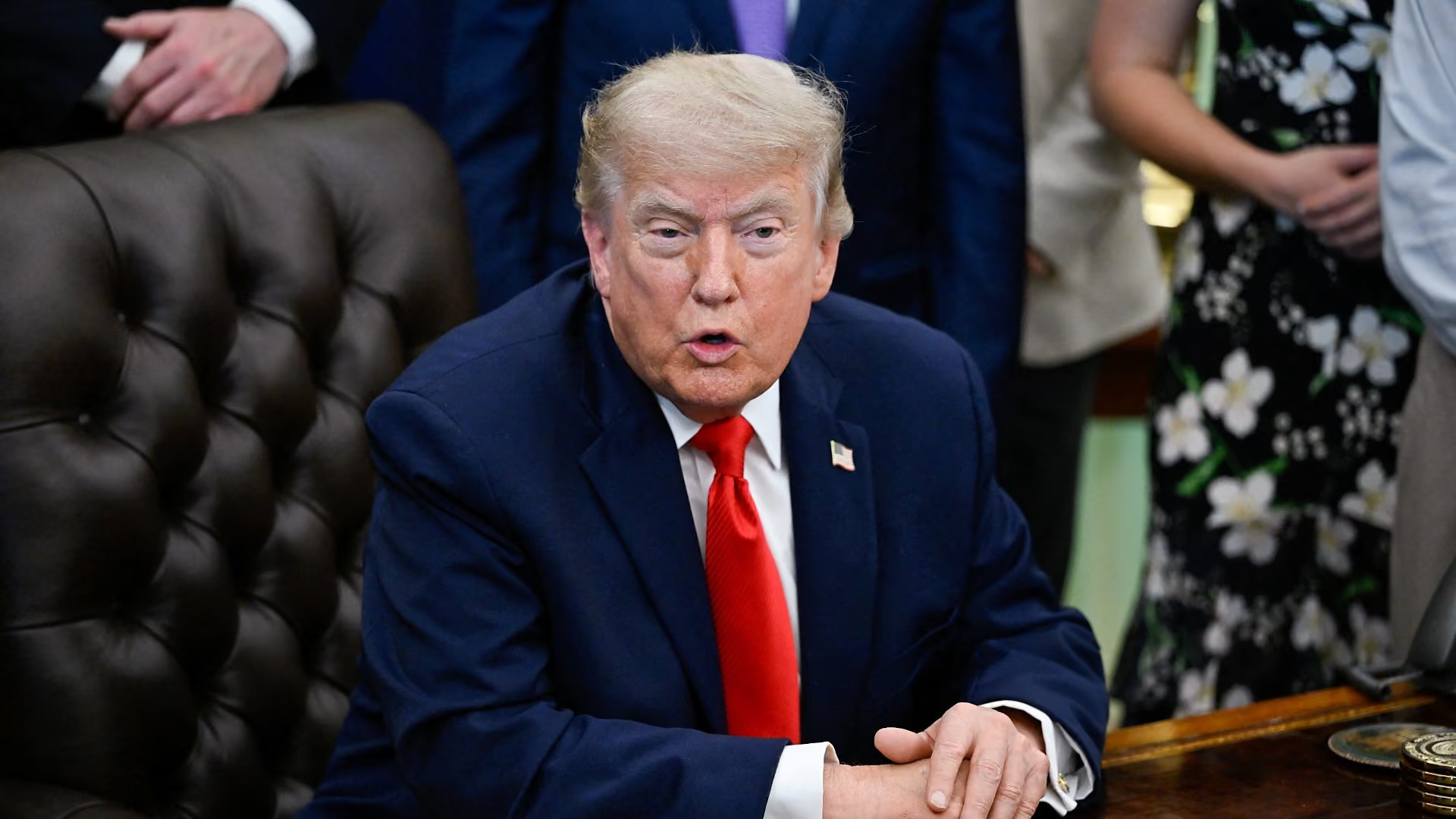
The US and Iran say they have reached an agreement that will take effect on Friday. President Donald Trump says the Strait of Hormuz will reopen upon signing. For crude oil traders, this means the immediate collapse of freight rates that reached historic peaks during the 2 month blockade. The Baltic Exchange's MEG-China TD3C index went parabolic after the outbreak of war, coming in at a record $423,736 per day on Monday, up 94% from Friday. At normalized peace time levels of $20,000-30,000/day, the freight differential alone represents $12-15/barrel in cost savings for Asian refiners sourcing Middle East crude a margin swing that reshapes every arbitrage calculation from Kuwait to Tokyo.
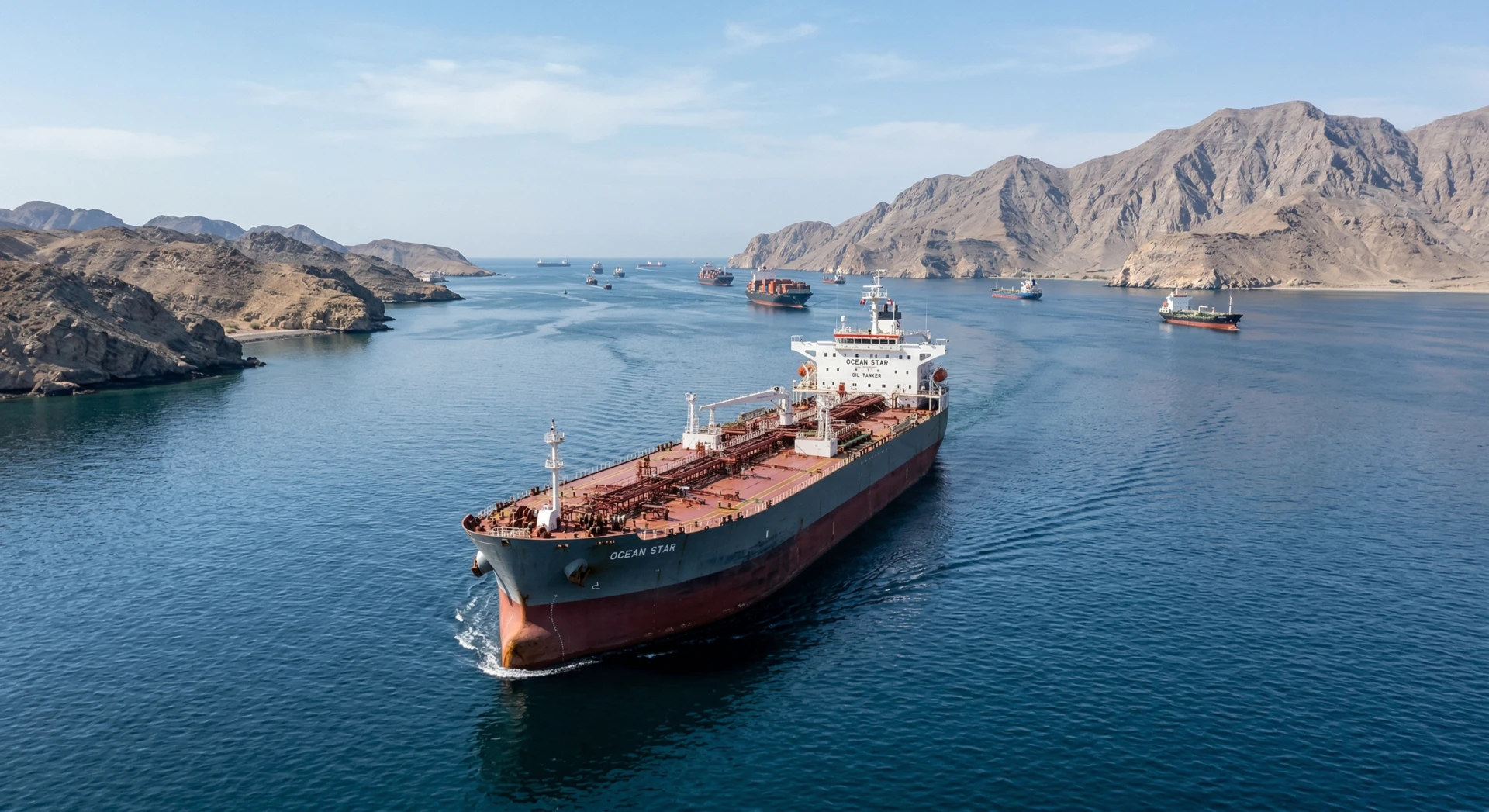
The Strait of Hormuz a 33 kilometre waterway between Iran and Oman is the world's most critical oil chokepoint. Until the US–Israeli war against Iran, the Strait of Hormuz was open and about 25% of the world's seaborne oil trade and 20% of the world's liquefied natural gas (LNG) passed through it. On 13 April 2026, the United States imposed a naval blockade on Iran following the failure of the Islamabad Talks to end the 2026 Iran war. The blockade effectively created a dual chokepoint: Iran's Revolutionary Guard preventing westbound traffic, while US naval forces intercepted eastbound shipments to Iranian ports. This strangled the primary artery feeding Asian refineries with Middle East heavy crude grades essential for their operations.
A VLCC (Very Large Crude Carrier) a supertanker capable of carrying 2 million barrels or roughly 300,000 tonnes of crude oil became the key battleground for margin compression during the crisis. According to Clarksons, VLCC spot rates from the Middle East Gulf to China surged above $400,000/day, with a peak of $424,000/day compared to pre-crisis levels around $25,000-35,000/day. At wartime peak rates, a single MEG-Asia voyage cost approximately $25-30 million in freight alone. At normalized rates of $22,000/day for the typical 22 day voyage, that same cargo costs $4.8 million to transport a $20+ million differential that either compresses refinery margins or inflates end-user fuel costs depending on contract terms.
On the buy side: Asian refiners operating complex conversion units designed for Middle East heavy crude including major facilities in South Korea (SK Innovation, GS Caltex), Japan (JXTG, Idemitsu), and China (Sinopec, CNOOC) faced impossible arithmetic during the blockade. Consider a 300,000 tonne Iranian heavy crude cargo delivered to Ulsan, South Korea. Pre-blockade, the all-in delivered cost included roughly $7-10/barrel freight. At peak crisis rates of $420,000/day, freight alone added $38-42/barrel exceeding the crude oil purchase price for many grades. These refiners either suspended Iranian crude purchases entirely or absorbed crushing margin compression that rendered complex refining operations uneconomical.
On the sell side: Middle East crude producers and national oil companies faced a stark choice between margin destruction and market share loss. Saudi Aramco, Kuwait Petroleum Corporation, and Abu Dhabi National Oil Company (ADNOC) could absorb freight premiums to maintain market share, essentially subsidizing Asian buyers' delivered costs. Iran's National Iranian Oil Company, targeted by both sanctions and blockade, faced complete exclusion from key Asian markets regardless of pricing. The reopening allows Iranian crude to return to market at substantial discounts potentially $8-12/barrel below comparable grades as Tehran prioritizes revenue recovery over margin optimization.
For traders and intermediaries: Independent trading houses (Vitol, Trafigura, Gunvor) specializing in Middle East-Asia arbitrage saw their business model temporarily shattered. Physical oil trading depends on predictable freight costs that allow arbitrage calculations between regional price differences. When VLCC rates quadrupled overnight, established spread relationships collapsed. Traders holding long-term supply contracts at fixed delivered prices faced massive losses when freight costs exceeded total cargo value. The reopening restores traditional arbitrage opportunities, particularly the Brent-Dubai spread that determines whether West African or North Sea grades can compete with Middle East supply in Asian markets.
Freight financing becomes critical for smaller operators without derivative hedging access. Large integrated traders hedge VLCC exposure through Forward Freight Agreements (FFAs) financial contracts that lock in future freight rates independent of physical vessel availability. A major trader might hedge 50-70% of expected quarterly VLCC requirements at $35,000/day through December 2026, providing cost certainty even if spot rates fluctuate. For smaller regional importers independent Asian refiners, fuel distributors, petrochemical feedstock buyers without FFA access, the freight volatility created existential risk. These operators rely on traditional time charter arrangements or freight cost-plus contracts with suppliers, requiring 3-6 month lead times for rate negotiation.
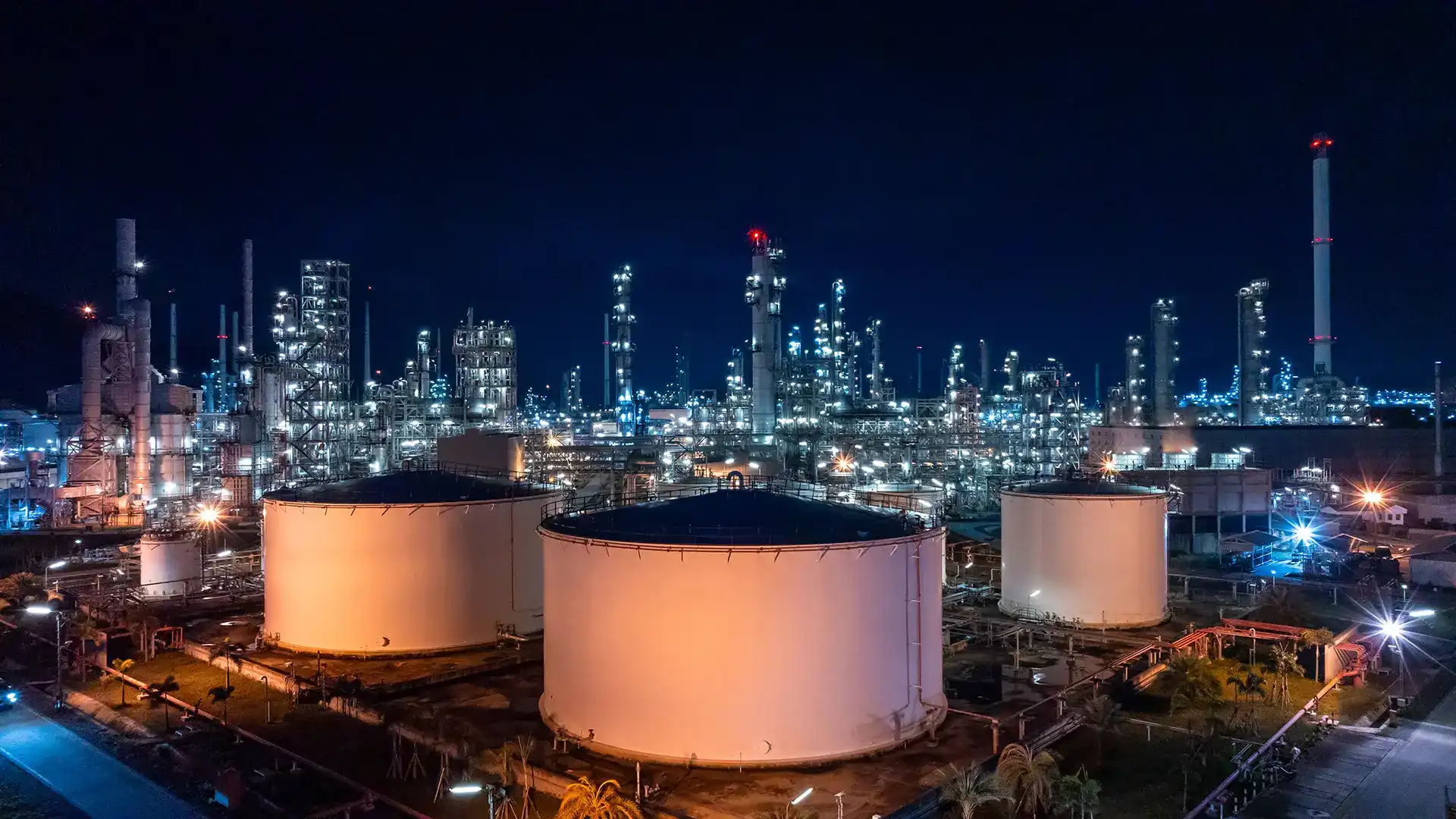
The physical infrastructure reality constrains Iran's export recovery timeline despite political agreement. On 13 April 2026, the United States imposed a naval blockade on Iran, effectively idling Iran's export infrastructure for two months. Loading terminals at Kharg Island Iran's primary crude export facility handling 90% of exports require 2-3 weeks to resume full operations after extended shutdown. Crude oil pipelines need pressure testing, storage tanks require inspection for water contamination, and export blending facilities must restart operations to meet buyer specifications for sulfur content and viscosity. Iran's National Iranian Tanker Company (NITC) fleet of 40+ VLCCs spent the blockade period in layup, requiring crew remobilization and vessel certification before commercial operations resume.
Route economics shift dramatically with Hormuz reopening, affecting global oil flow patterns established during the crisis. Asian refiners sourcing replacement barrels during the blockade paid substantial premiums for West African crude (Nigerian Bonny Light, Angolan Cabinda) shipped via the Cape of Good Hope a 45-50 day voyage versus 20-22 days for MEG crude via Hormuz. The reopening makes these alternative supply routes immediately uneconomical. A 300,000 tonne West African cargo to South Korea costs approximately $8-10 million freight via Cape route at current Suezmax rates around $180,000/day. The same volume from Kuwait via reopened Hormuz costs $4.8 million freight at normalized VLCC rates a $3-5 million advantage favoring Middle East supply.
Marine insurance markets face immediate repricing as war risk premiums evaporate. During the blockade, war risk insurance for Hormuz transit reached 2-3% of cargo value approximately $12-18 million for a full VLCC load at $600 million cargo value. Lloyd's of London and other maritime insurers suspended coverage entirely for Iranian waters, forcing vessel operators to self-insure or avoid the region. Iranian attacks on tankers and insurers' withdrawal of war risk cover have effectively closed the Strait of Hormuz. Peace deal implementation allows standard marine insurance rates around 0.1-0.2% of cargo value a $10-15 million per voyage cost reduction that flows directly to vessel operators or, in competitive markets, to oil buyers through reduced delivered prices.
Arbitrage opportunities emerge immediately as regional price differentials normalize. The Brent-Dubai spread the price difference between North Sea Brent crude and Middle East Dubai crude compressed to near parity during the blockade as Middle East supply scarcity inflated Dubai prices. The current price of Brent Oil futures is 87.33, with a previous close of 90.38. Today's trading range for Crude Oil WTI futures is between 83.20 and 87.23. With Hormuz reopened, normal Brent-Dubai spread of $2-4/barrel favoring Brent allows Mediterranean refiners to source cheaper Middle East crude, while Asian refiners regain access to preferred heavy grades for complex conversion units. This spread normalization creates immediate profit opportunities for traders with storage capacity in key locations.
Crude oil inventory dynamics require careful monitoring as normal flow patterns resume. Asian strategic petroleum reserves, depleted during the crisis as governments released stocks to moderate price spikes, need replenishment. China's Strategic Petroleum Reserve, targeted at 90 days consumption (roughly 550 million barrels), dropped to 60 day coverage during peak crisis. South Korea's requirement for 140 day coverage fell to 100 days. Both countries prioritize inventory rebuilding, creating sustained demand for Middle East crude that supports regional price floors even as supply normalizes. This restocking demand may temporarily maintain freight rates above long-term equilibrium levels.
Geopolitical risk remains despite the peace framework, requiring contingency planning for renewed disruption. Iran's deputy foreign minister said 60 day nuclear negotiations will begin only once the US releases billions in frozen funds. A US official rejected Iran's assertions. The agreement defers rather than resolves nuclear issues, sanctions relief, and regional proxy conflicts that triggered the original crisis. Oil market participants must price residual political risk into forward contracts and hedging strategies. Term contracts for 2027 delivery likely include force majeure clauses specifically addressing Hormuz closure scenarios.
For large integrated traders and national oil companies with derivatives access: The priority is reestablishing physical supply chains while hedging against renewed disruption risk. A major trader might secure 6 month VLCC time charters at $45,000-55,000/day premium to current spot but providing fleet availability guarantee if crisis recurs. Simultaneously, these operators can sell crude oil call options at $110/barrel (Brent) or $100/barrel (Dubai) to monetize renewed volatility expectations while maintaining upside participation in peaceful scenario. This combined physical-financial strategy provides operational continuity regardless of geopolitical developments.
For smaller regional operators without derivatives access: The focus shifts to supply diversification and inventory management rather than financial hedging. A mid-sized South Korean refiner might negotiate evergreen supply contracts with multiple Middle East producers (Saudi Aramco, ADNOC, Kuwait Petroleum) including force majeure protections and alternative sourcing clauses. Building strategic inventory to 45-60 days versus typical 20-30 days provides operational buffer against future disruptions without requiring complex financial instruments. Term pricing should incorporate Hormuz risk premium of $2-4/barrel above normalized levels.
For observers monitoring resumption pace and sustainability: Track three critical indicators within specific timeframes. First, monitor Iranian crude export volumes reported weekly in Tanker Trackers and Kpler data sustainable recovery requires 1.5-1.8 million barrels/day exports within 30 days of deal signing, reaching pre-crisis levels of 2.2-2.5 million barrels/day within 60 days. Second, watch VLCC fixture rates on key routes (MEG-China TD3C, MEG-Singapore TD2) reported daily by Baltic Exchange rates should normalize to $25,000-40,000/day range within 10-15 business days of Hormuz reopening. Third, observe sanctions compliance in oil trading payment systems successful transaction processing through SWIFT for Iranian crude purchases indicates durable implementation versus temporary ceasefire that could collapse within weeks.
.jpg)
.jpg)

'%3e%3cg id='Final-Copy-2_2_' transform='translate(1275.000000, 200.000000)'%3e%3cpath class='st0' d='M7.4,12.8h6.8l3.1-11.6H7.4C4.2,1.2,1.6,3.8,1.6,7S4.2,12.8,7.4,12.8z'/%3e%3c/g%3e%3c/g%3e%3c/g%3e%3cg id='final---dec.11-2020'%3e%3cg id='_x30_208-our-toggle' transform='translate(-1275.000000, -200.000000)'%3e%3cg id='Final-Copy-2' transform='translate(1275.000000, 200.000000)'%3e%3cpath class='st1' d='M22.6,0H7.4c-3.9,0-7,3.1-7,7s3.1,7,7,7h15.2c3.9,0,7-3.1,7-7S26.4,0,22.6,0z M1.6,7c0-3.2,2.6-5.8,5.8-5.8 h9.9l-3.1,11.6H7.4C4.2,12.8,1.6,10.2,1.6,7z'/%3e%3cpath id='x' class='st2' d='M24.6,4c0.2,0.2,0.2,0.6,0,0.8l0,0L22.5,7l2.2,2.2c0.2,0.2,0.2,0.6,0,0.8c-0.2,0.2-0.6,0.2-0.8,0 l0,0l-2.2-2.2L19.5,10c-0.2,0.2-0.6,0.2-0.8,0c-0.2-0.2-0.2-0.6,0-0.8l0,0L20.8,7l-2.2-2.2c-0.2-0.2-0.2-0.6,0-0.8 c0.2-0.2,0.6-0.2,0.8,0l0,0l2.2,2.2L23.8,4C24,3.8,24.4,3.8,24.6,4z'/%3e%3cpath id='y' class='st3' d='M12.7,4.1c0.2,0.2,0.3,0.6,0.1,0.8l0,0L8.6,9.8C8.5,9.9,8.4,10,8.3,10c-0.2,0.1-0.5,0.1-0.7-0.1l0,0 L5.4,7.7c-0.2-0.2-0.2-0.6,0-0.8c0.2-0.2,0.6-0.2,0.8,0l0,0L8,8.6l3.8-4.5C12,3.9,12.4,3.9,12.7,4.1z'/%3e%3c/g%3e%3c/g%3e%3c/g%3e%3c/g%3e%3c/svg%3e) Privacy Choices
Privacy Choices