.avif)
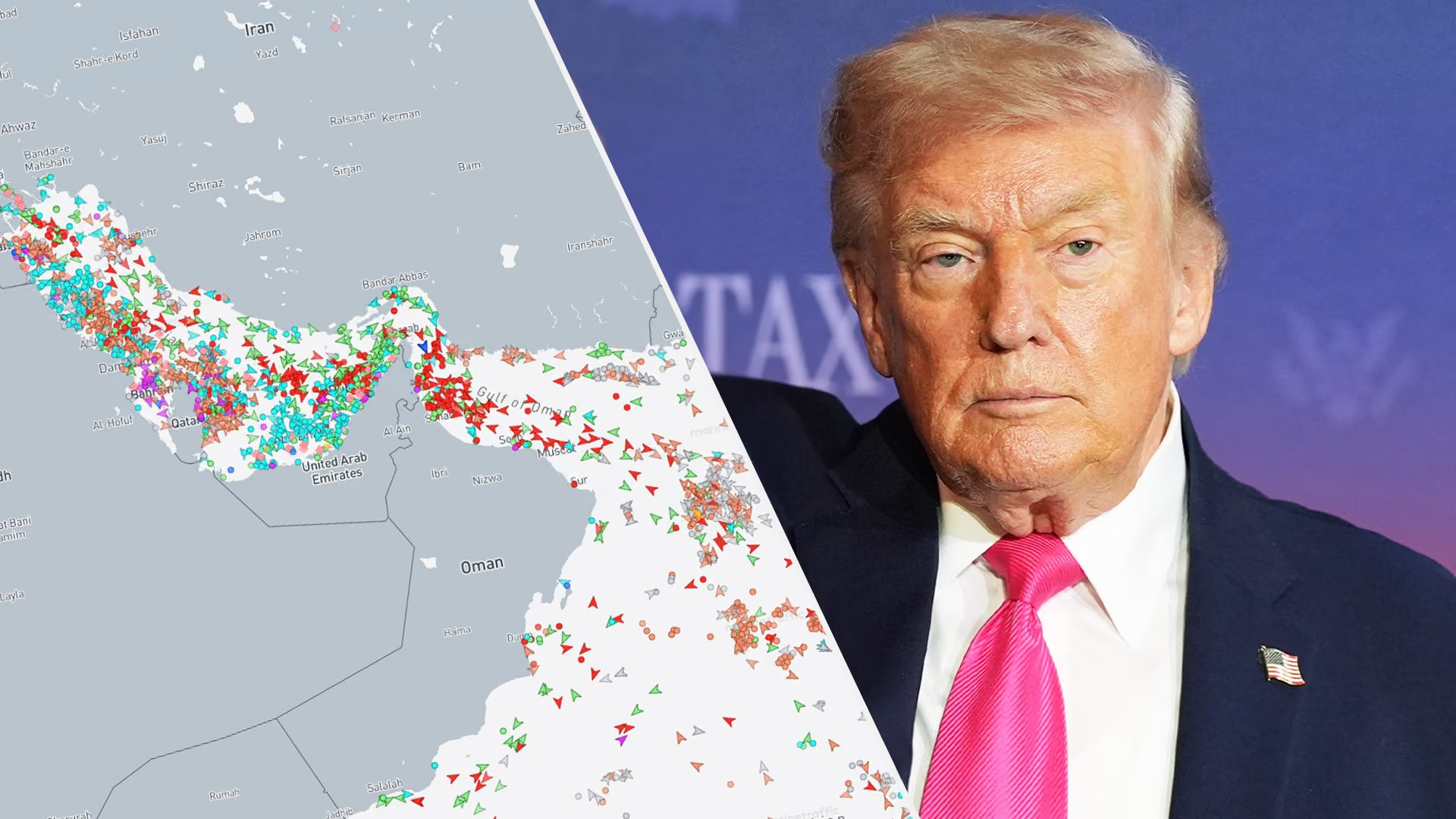
Asian crude oil traders face a structurally ambiguous pricing environment starting 19 June 2026: headline oil prices have fallen on Hormuz reopening news, but the relief is shallower than equity markets are pricing, and it expires in 60 days.
The Strait of Hormuz a 33 kilometre wide chokepoint at the mouth of the Persian Gulf through which roughly 20% of all globally traded oil passes daily reopened this week following what reports describe as a US-Iran interim agreement. The market reaction was swift and, on the surface, unambiguous: Japan's Nikkei logged its fifth consecutive record close, South Korea's Kospi surged on improved risk appetite, and crude futures pulled back sharply. But for crude oil traders moving physical barrels through the Gulf, the real question is not what prices did today it is what the freight and insurance markets will do over the next 60 days, and what happens when the clock runs out.
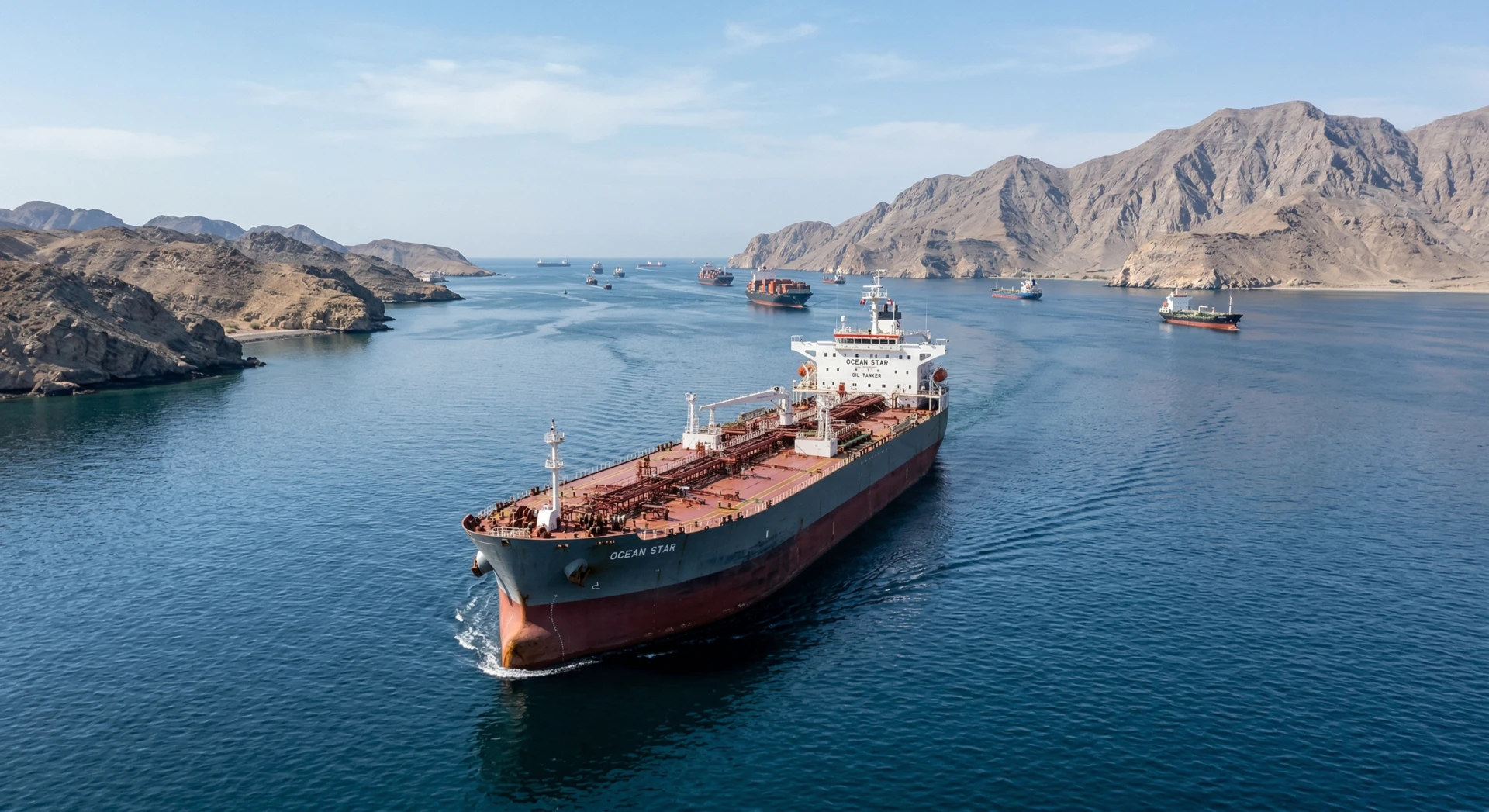
Decomposing the margin anatomy for a crude oil trader routing Middle Eastern barrels to Northeast Asian refineries requires separating three distinct cost layers: the crude price itself (typically priced against the Dubai benchmark a monthly average of physical Gulf crude transactions that sets the reference for most Asian crude contracts), freight, and war-risk insurance. Before the Hormuz disruption, a VLCC a Very Large Crude Carrier, capable of lifting approximately 2 million barrels on the standard TD3C route from the Arabian Gulf to Japan was earning roughly $30,000–$35,000 per day. At the height of the crisis, war-risk surcharges and elevated freight rates pushed the all-in shipping cost for that same voyage up by an estimated $3–6 per barrel. For a 2 million barrel cargo, that is $6–12 million in additional cost per voyage not a rounding error, but the entire margin on many trades.
Now consider how much of that cost actually unwinds. Spot VLCC rates tracked most closely via the Baltic Exchange's TD3C assessment, which measures Arabian Gulf to Japan freight in Worldscale points and dollars per metric tonne will soften as the perceived closure risk partially deflates. Enrichment analysis suggests a likely softening of $5,000–$15,000 per day depending on the speed at which insurance surcharges ease. But here is the structural constraint: war risk underwriters specialist marine insurers who price additional premiums when vessels transit conflict adjacent waters have no contractual or actuarial basis to fully reprice on a 60 day temporary arrangement. Insurance desks will maintain elevated hedging costs or embed optionality clauses rights to reprice if conditions deteriorate for the duration of the window. The freight relief is real but capped. The full pre-crisis baseline is not recoverable in the near term.
The currency transmission problem compounds the picture for Asian buyers, and it is almost entirely absent from the equity market celebration. Japan and South Korea are both net crude importers who purchase oil in US dollars, then convert to yen and won respectively. A stronger US dollar driven by what bond markets are pricing as a more hawkish Federal Reserve stance, with two year Treasury yields holding around 4.18% directly erodes the purchasing power of yen and won against that dollar. Two year yields steady at 4.18% and 30 year yields declining only marginally (down approximately 3 basis points to 4.9%, per Moneycontrol) signal that bond markets are relieved on energy inflation but have not abandoned their view that US rates stay elevated. The result: a Japanese refiner buying a 2 million barrel VLCC cargo at, say, a $5/barrel lower crude price gains approximately $10 million in dollar terms but if the yen has depreciated 3–5% against the dollar since the disruption began, the landed cost in yen may be flat or marginally worse. The headline price relief is partially illusory at the domestic procurement level.
On the sell side, crude producers and national oil companies (NOCs) in the Gulf face a narrowing of the Brent-Dubai spread the price differential between North Sea Brent crude and Middle Eastern Dubai crude, which determines whether Atlantic Basin oil can economically reach Asian refineries. As Gulf supply risk premiums deflate, Dubai crude's scarcity premium compresses relative to Brent. Traders who entered long-Dubai, short-Brent positions during the disruption betting that Gulf barrels would command a premium over Atlantic alternatives now face the need to close those positions at reduced profit or at a loss depending on entry timing. For a large integrated trader a Trafigura, Vitol, or a major NOC trading arm this is a derivatives management question: closing futures and swap positions on the Dubai Mercantile Exchange (DME) or ICE while simultaneously managing physical cargo commitments. For a smaller regional trader or independent refinery buyer without sophisticated derivatives access, the practical equivalent is bilateral term renegotiation with suppliers: locking in a fixed differential to the Dubai mean of platts (MOPS) the reference price for refined products in Asia before the 60 day window creates renewed uncertainty.
The 60 day ceiling creates a specific structural problem that no amount of operational efficiency resolves: it forces tanker operators and cargo owners to make scheduling decisions VLCC bookings are typically fixed 30–60 days in advance that will mature exactly at the point when the ceasefire may or may not be renewed. According to Commonwealth Bank of Australia geo-economics analyst Madison Cartwright, the arrangement was only guaranteed for 60 days, with future governance of the Strait led by Iran and Oman, leaving scope for Iran to impose a maritime service fee effectively a toll on vessels transiting the waterway. Such a fee has no precedent under established international maritime law, which treats straits used for international navigation as subject to the right of transit passage free of charge. If imposed, it would trigger reassessment of Cape of Good Hope routing sending VLCCs around the southern tip of Africa, adding approximately 10–14 days per voyage and $1.50–$3.00 per barrel in additional freight cost. The last time comparable Hormuz disruption economics reshaped routing at scale was the Iran-Iraq tanker war of the 1980s, when freight rates tripled within weeks of major attacks.
For large integrated traders and NOC trading arms, the actionable response is position management across two timeframes simultaneously. In the immediate window days 1 through 30 the priority is to partially unwind war-risk hedges, specifically freight forward agreements (FFAs, which lock in future freight rates at a fixed level), as TD3C softens, while retaining optionality by keeping a portion of FFA protection live through day 60. Monitor the Brent-Dubai spread daily: if it widens beyond $3–4 per barrel within the 60 day window, that is the market signalling scepticism about ceasefire durability and warrants reassessing cargo routing assumptions. For smaller regional operators independent fuel importers, regional cooperatives, mid-sized Asian refiners without FFA access the equivalent discipline is to fix forward freight terms bilaterally with shipowners for voyages scheduled to complete before day 60, avoiding exposure to the rate spike that would follow any ceasefire breakdown.
The single most time-bound signal for observers is the Baltic TD3C Arabian Gulf to Japan VLCC rate, published daily by the Baltic Exchange. Watch for whether it returns to the pre-disruption range of $25,000–$30,000 per day within the next 30 days. If it does, the market is pricing full normalisation an assumption that structural insurance constraints make probably wrong. If it stalls at $35,000–$45,000 per day, the market is correctly reflecting the 60 day ceiling risk. A secondary signal: the DME Oman crude front month versus second month spread. If that spread moves into backwardation near-term prices above forward prices, indicating urgent demand for immediate physical supply treat it as a leading indicator that the ceasefire's 60 day guarantee is being tested earlier than the calendar suggests.

.jpg)
.jpg)

'%3e%3cg id='Final-Copy-2_2_' transform='translate(1275.000000, 200.000000)'%3e%3cpath class='st0' d='M7.4,12.8h6.8l3.1-11.6H7.4C4.2,1.2,1.6,3.8,1.6,7S4.2,12.8,7.4,12.8z'/%3e%3c/g%3e%3c/g%3e%3c/g%3e%3cg id='final---dec.11-2020'%3e%3cg id='_x30_208-our-toggle' transform='translate(-1275.000000, -200.000000)'%3e%3cg id='Final-Copy-2' transform='translate(1275.000000, 200.000000)'%3e%3cpath class='st1' d='M22.6,0H7.4c-3.9,0-7,3.1-7,7s3.1,7,7,7h15.2c3.9,0,7-3.1,7-7S26.4,0,22.6,0z M1.6,7c0-3.2,2.6-5.8,5.8-5.8 h9.9l-3.1,11.6H7.4C4.2,12.8,1.6,10.2,1.6,7z'/%3e%3cpath id='x' class='st2' d='M24.6,4c0.2,0.2,0.2,0.6,0,0.8l0,0L22.5,7l2.2,2.2c0.2,0.2,0.2,0.6,0,0.8c-0.2,0.2-0.6,0.2-0.8,0 l0,0l-2.2-2.2L19.5,10c-0.2,0.2-0.6,0.2-0.8,0c-0.2-0.2-0.2-0.6,0-0.8l0,0L20.8,7l-2.2-2.2c-0.2-0.2-0.2-0.6,0-0.8 c0.2-0.2,0.6-0.2,0.8,0l0,0l2.2,2.2L23.8,4C24,3.8,24.4,3.8,24.6,4z'/%3e%3cpath id='y' class='st3' d='M12.7,4.1c0.2,0.2,0.3,0.6,0.1,0.8l0,0L8.6,9.8C8.5,9.9,8.4,10,8.3,10c-0.2,0.1-0.5,0.1-0.7-0.1l0,0 L5.4,7.7c-0.2-0.2-0.2-0.6,0-0.8c0.2-0.2,0.6-0.2,0.8,0l0,0L8,8.6l3.8-4.5C12,3.9,12.4,3.9,12.7,4.1z'/%3e%3c/g%3e%3c/g%3e%3c/g%3e%3c/g%3e%3c/svg%3e) Privacy Choices
Privacy Choices