.avif)
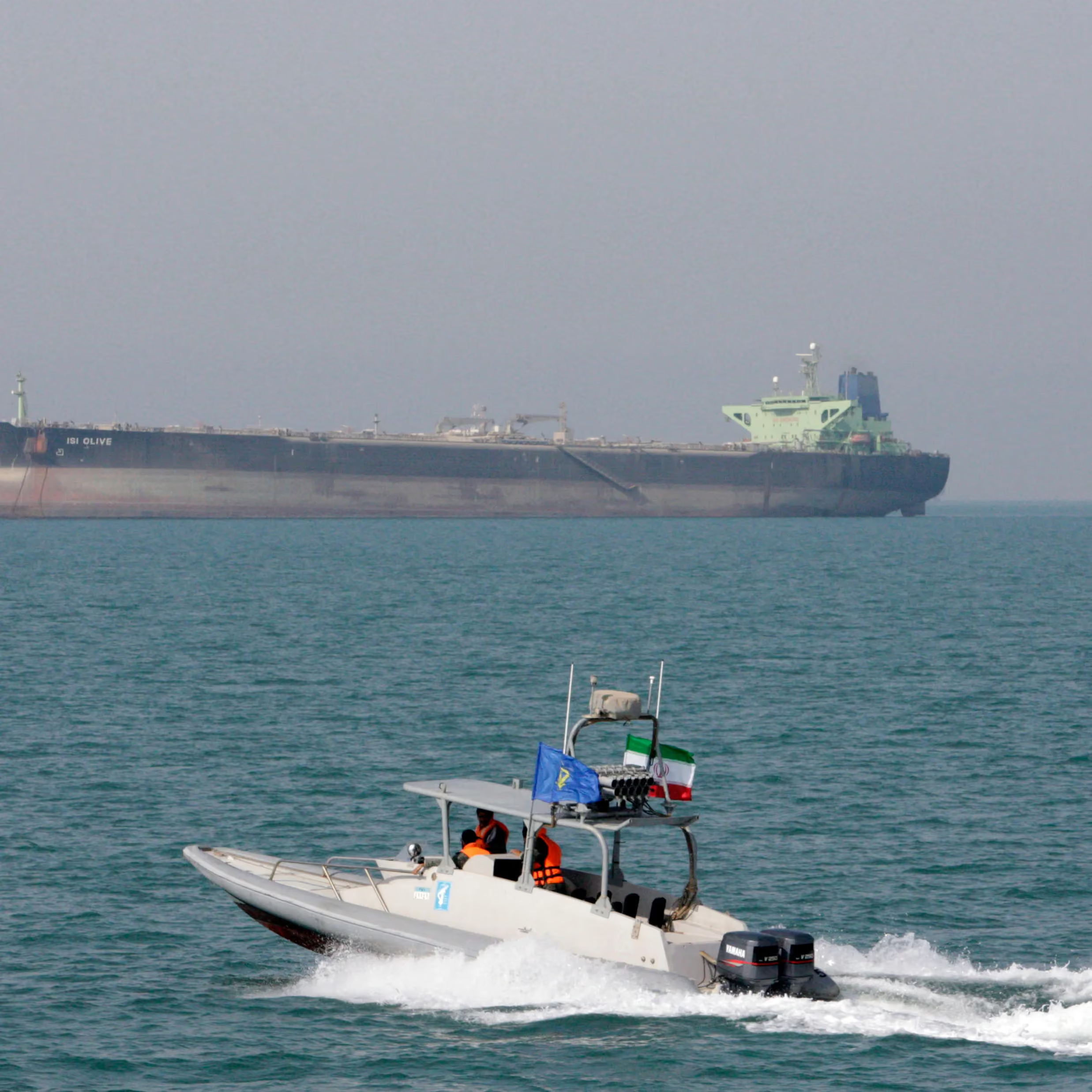
Crude oil tanker operators transiting the Strait of Hormuz are absorbing an estimated $1–4 per barrel increase in all-in landed costs as of late June 2026, driven not by the oil price itself Brent is drifting near $72 per barrel but by war-risk insurance premiums that remain structurally elevated even after a fragile US-Iran ceasefire was agreed. The gap between what equity markets are pricing and what physical freight markets are actually charging is the story that matters for operators. The STOXX 600 held near 636 points on 29 June, treating the stand-down as broadly credible. War-risk underwriters and tanker operators, working from the same geopolitical facts, have reached a different conclusion entirely.
According to reports, Iranian forces fired on an oil tanker in the strait in the days immediately preceding ceasefire negotiations, prompting US strikes on Iranian installations. Tehran, sources indicate, subsequently launched drone and missile attacks on targets in Bahrain and Kuwait before talks began in earnest. What matters for vessel operators is not the diplomatic headline but the enforcement reality: the Islamic Revolutionary Guard Corps (IRGC) Navy, which controls small boat and missile assets in the strait, operates with considerable tactical autonomy from Iran's diplomatic apparatus. A ceasefire agreed in one channel does not automatically constrain assets in the other. War-risk underwriters price that gap explicitly.
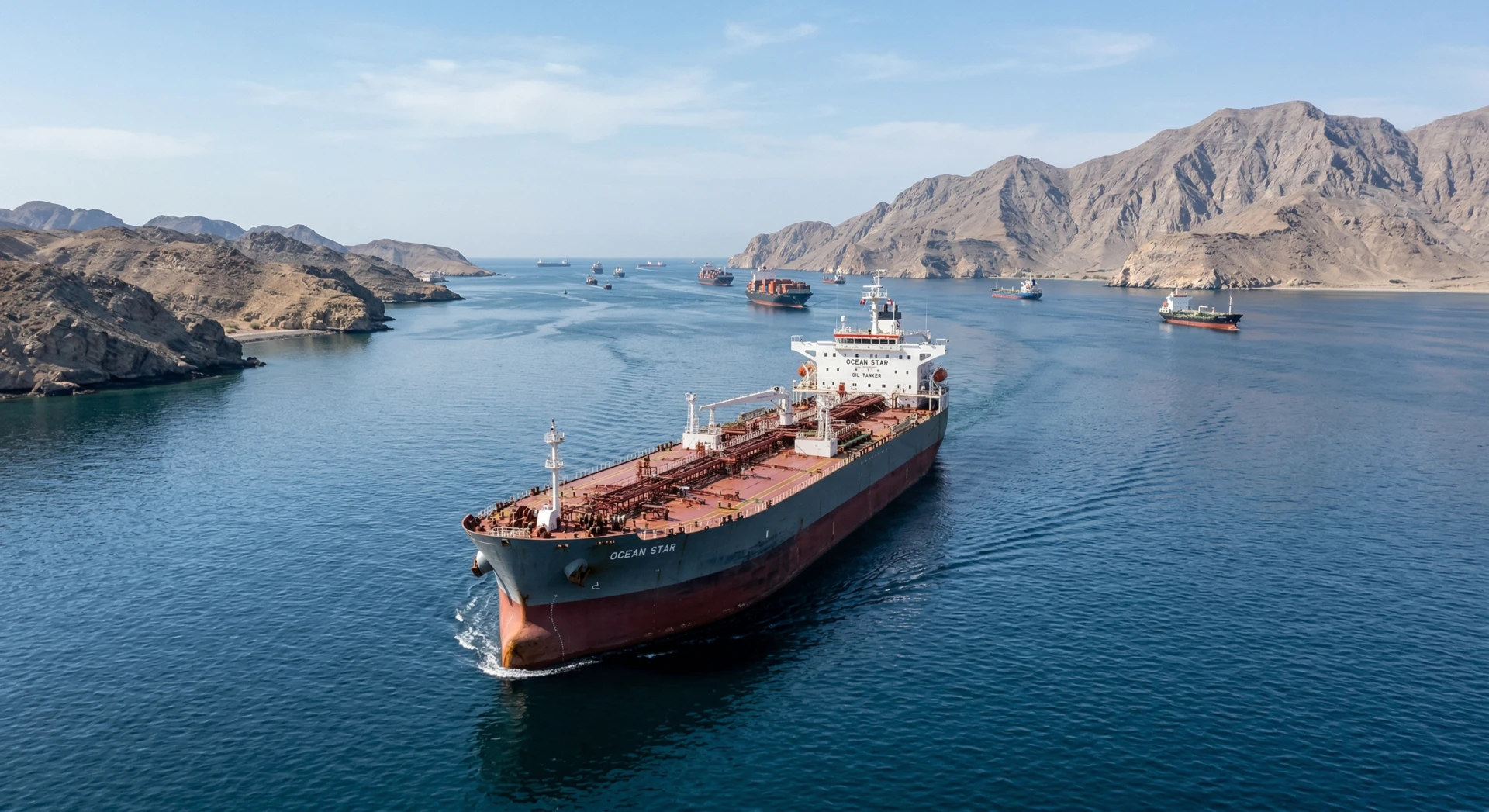
War-risk insurance a separate premium layered on top of standard hull and cargo coverage, triggered when vessels enter designated high-risk zones is the mechanism translating geopolitical uncertainty into real freight costs. Before the tanker attack, war-risk premiums for Hormuz transits were running at approximately 0.1–0.15% of vessel value per voyage. According to enrichment data, they have risen to an estimated 0.2–0.5% of cargo value per voyage since the incident, and have not come down with the ceasefire announcement. On a VLCC a Very Large Crude Carrier, a supertanker capable of moving approximately 2 million barrels carrying a cargo worth roughly $144 million at $72/bbl, that premium range translates to an additional $288,000–$720,000 per voyage at the low and high ends respectively. Per barrel, that is $0.14–$0.36 of insurance cost alone, before accounting for any freight rate adjustment the vessel owner negotiates to reflect elevated risk.
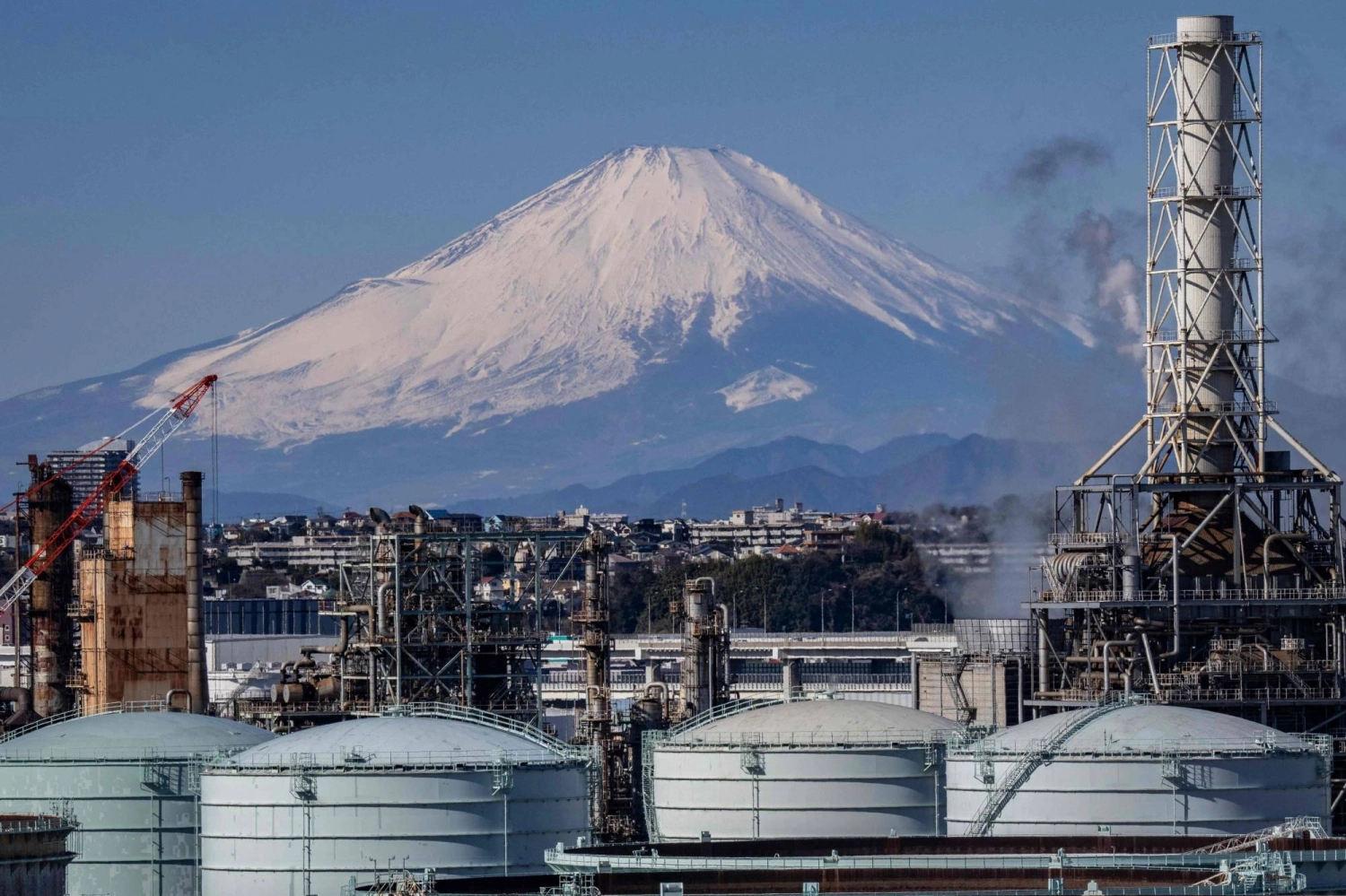
The full landed cost impact on Asian crude importers, who are the dominant buyers of Middle East Gulf (MEG) origin barrels, runs wider than insurance alone. Freight rates on the key MEG to Japan VLCC route have firmed alongside war-risk sentiment. Taken together elevated freight plus war-risk surcharge spot crude importers in Northeast and Southeast Asia are absorbing an estimated $1–4 per barrel of additional cost on MEG-origin barrels, depending on vessel class, voyage terms, and whether the cargo owner or the vessel operator bears the insurance directly. On a 2 million barrel VLCC cargo, the top of that range represents $8 million in additional delivered cost per voyage. For a Japanese refinery running five to six such cargoes per month, the annualised impact at the midpoint is material: roughly $180–360 million in incremental landed cost versus a Hormuz-normal baseline. That cost does not disappear because a ceasefire was announced it persists as long as underwriters believe the risk persists.
On the sell side, national oil companies and equity producers in Abu Dhabi, Kuwait, and Saudi Arabia are watching the Brent-Dubai spread the price differential between North Sea Brent crude and Middle East benchmark Dubai crude with particular attention. If Hormuz risk re-prices Dubai and Oman crudes higher relative to Brent (because buyers demand a discount to compensate for delivery risk, or conversely, because supply tightness pushes MEG crudes to a premium), the arbitrage economics for Atlantic Basin crude reaching Asian refineries shifts. A Brent-Dubai spread that widens beyond approximately $2–3 per barrel historically triggers flows of West African or North Sea crude eastward via the Cape of Good Hope the route around southern Africa, adding roughly 10–14 days and $1.50–3.00 per barrel in freight cost but entirely bypassing Hormuz. Sellers of Atlantic Basin crude benefit from that re-routing appetite; MEG producers face a competitive pressure they did not have before the incident.
The operational response differs sharply by operator scale. For a large integrated trading house a Trafigura, Vitol, or a national oil company's trading arm with access to freight derivatives the instrument of choice is a Forward Freight Agreement (FFA), a financial contract that locks in future freight rates on named routes, hedging the cost of future voyages even while the spot market gyrates. At current market conditions, the cost of FFA protection on the MEG-Japan TD3C route is elevated but accessible; the larger question is whether to hedge at current elevated rates or hold exposure, which is itself a position. For a smaller regional operator a mid-sized independent tanker owner operating two to four vessels in the MEG region, without derivatives access the practical equivalent is bilateral negotiation: fixing voyage charter rates for two to three months forward with major charterers rather than trading spot, accepting a slightly lower rate in exchange for eliminating war-risk volatility. Critically, smaller operators should also verify whether their existing insurance policies cover armed conflict explicitly, as many standard marine policies contain war-exclusion clauses that require separate endorsement.
The signal observers should watch is the weekly war-risk premium rate published by the Joint War Committee (JWC) the Lloyd's Market Association body that designates high-risk maritime zones combined with the Baltic Exchange TD3C freight index, which tracks VLCC rates from Ras Tanura, Saudi Arabia, to Chiba, Japan. If JWC premiums begin declining from current elevated levels within the next 30 days, that is the market's verification not of diplomatic progress, but of underwriters actually pricing reduced physical risk. If TD3C holds above 50,000 World Scale points while Brent softens further below $70, the divergence between crude price and freight cost will compress refinery margins in Asia to a degree that triggers cargo deferrals. That deferral signal visible in MEG crude export nomination data published by tanker tracking services such as Vortexa or Kpler is the physical confirmation that financial market calm and freight market reality have not yet reconciled.

.jpg)
.jpg)

'%3e%3cg id='Final-Copy-2_2_' transform='translate(1275.000000, 200.000000)'%3e%3cpath class='st0' d='M7.4,12.8h6.8l3.1-11.6H7.4C4.2,1.2,1.6,3.8,1.6,7S4.2,12.8,7.4,12.8z'/%3e%3c/g%3e%3c/g%3e%3c/g%3e%3cg id='final---dec.11-2020'%3e%3cg id='_x30_208-our-toggle' transform='translate(-1275.000000, -200.000000)'%3e%3cg id='Final-Copy-2' transform='translate(1275.000000, 200.000000)'%3e%3cpath class='st1' d='M22.6,0H7.4c-3.9,0-7,3.1-7,7s3.1,7,7,7h15.2c3.9,0,7-3.1,7-7S26.4,0,22.6,0z M1.6,7c0-3.2,2.6-5.8,5.8-5.8 h9.9l-3.1,11.6H7.4C4.2,12.8,1.6,10.2,1.6,7z'/%3e%3cpath id='x' class='st2' d='M24.6,4c0.2,0.2,0.2,0.6,0,0.8l0,0L22.5,7l2.2,2.2c0.2,0.2,0.2,0.6,0,0.8c-0.2,0.2-0.6,0.2-0.8,0 l0,0l-2.2-2.2L19.5,10c-0.2,0.2-0.6,0.2-0.8,0c-0.2-0.2-0.2-0.6,0-0.8l0,0L20.8,7l-2.2-2.2c-0.2-0.2-0.2-0.6,0-0.8 c0.2-0.2,0.6-0.2,0.8,0l0,0l2.2,2.2L23.8,4C24,3.8,24.4,3.8,24.6,4z'/%3e%3cpath id='y' class='st3' d='M12.7,4.1c0.2,0.2,0.3,0.6,0.1,0.8l0,0L8.6,9.8C8.5,9.9,8.4,10,8.3,10c-0.2,0.1-0.5,0.1-0.7-0.1l0,0 L5.4,7.7c-0.2-0.2-0.2-0.6,0-0.8c0.2-0.2,0.6-0.2,0.8,0l0,0L8,8.6l3.8-4.5C12,3.9,12.4,3.9,12.7,4.1z'/%3e%3c/g%3e%3c/g%3e%3c/g%3e%3c/g%3e%3c/svg%3e) Privacy Choices
Privacy Choices