.avif)

Russian crude oil traders face a structural repricing of Urals differentials, Indian refinery margin dynamics, and European product crack spreads simultaneously starting now and extending through at least the end of 2026.
Ukraine's sustained drone and missile campaign has, according to multiple reports, knocked more than one-third of Russia's refining capacity offline since March. Gasoline output has fallen approximately 17%, to roughly 850,000 barrels per day (bpd), triggering rationing and queuing across Russian regions. The damage is not evenly distributed across Russia's refining system: at least one major Moscow area refinery was struck twice, with a June 18 strike igniting fires and destroying key processing equipment not expected to return to service until year end, sources indicate. President Putin has publicly dismissed the damage as "not critical," but the Kremlin's own policy response authorising gasoline imports from India, pledging accelerated repairs, and exploring arms industry protection of energy assets tells a different story. For crude oil traders, this matters because the downstream damage in Russia is now reshaping crude demand signals, product trade routes, and spread relationships across three linked markets simultaneously.
Start with the margin anatomy. A Russian refinery say, a complex facility in the Volga region processing 200,000 bpd of Urals crude operates with broadly fixed costs: staff, catalyst, utilities, and depreciation running approximately $4–6 per barrel regardless of throughput. At 100% utilisation, those costs are absorbed across the full run. At 67% utilisation roughly where the damaged segment of Russia's refinery system now sits fixed costs per barrel of output rise to approximately $6–9/bbl on the reduced volume, while product revenues fall proportionally. That alone compresses operator margins by $3–5/bbl before accounting for the cost of emergency repairs, lost export revenue from naphtha and fuel oil streams, and the sanctions constrained sourcing of replacement equipment many of which require Western turbomachinery or control systems now subject to export restrictions. The margin destruction in Russian downstream is structural, not cyclical, through the end of 2026 at minimum.
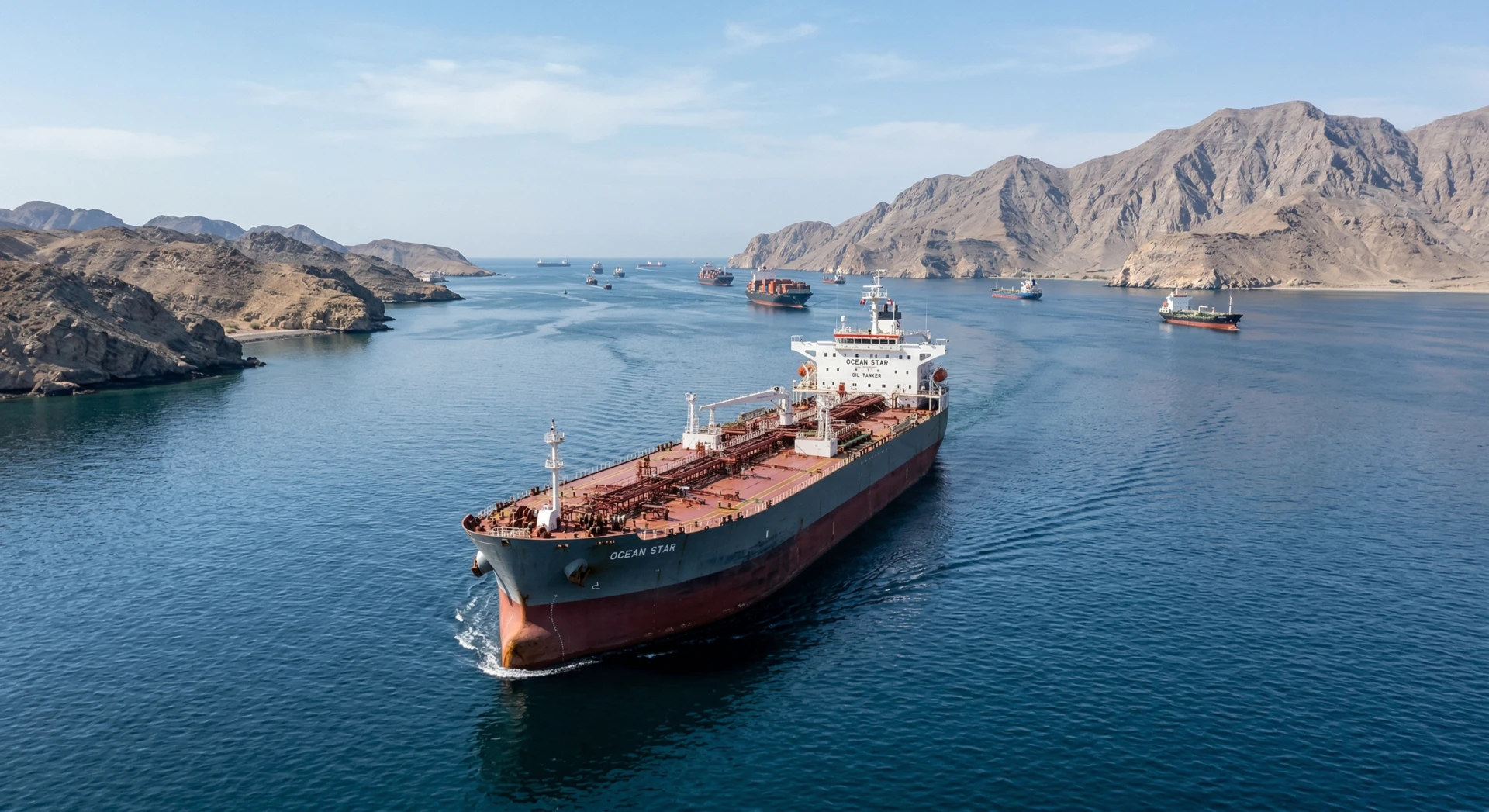
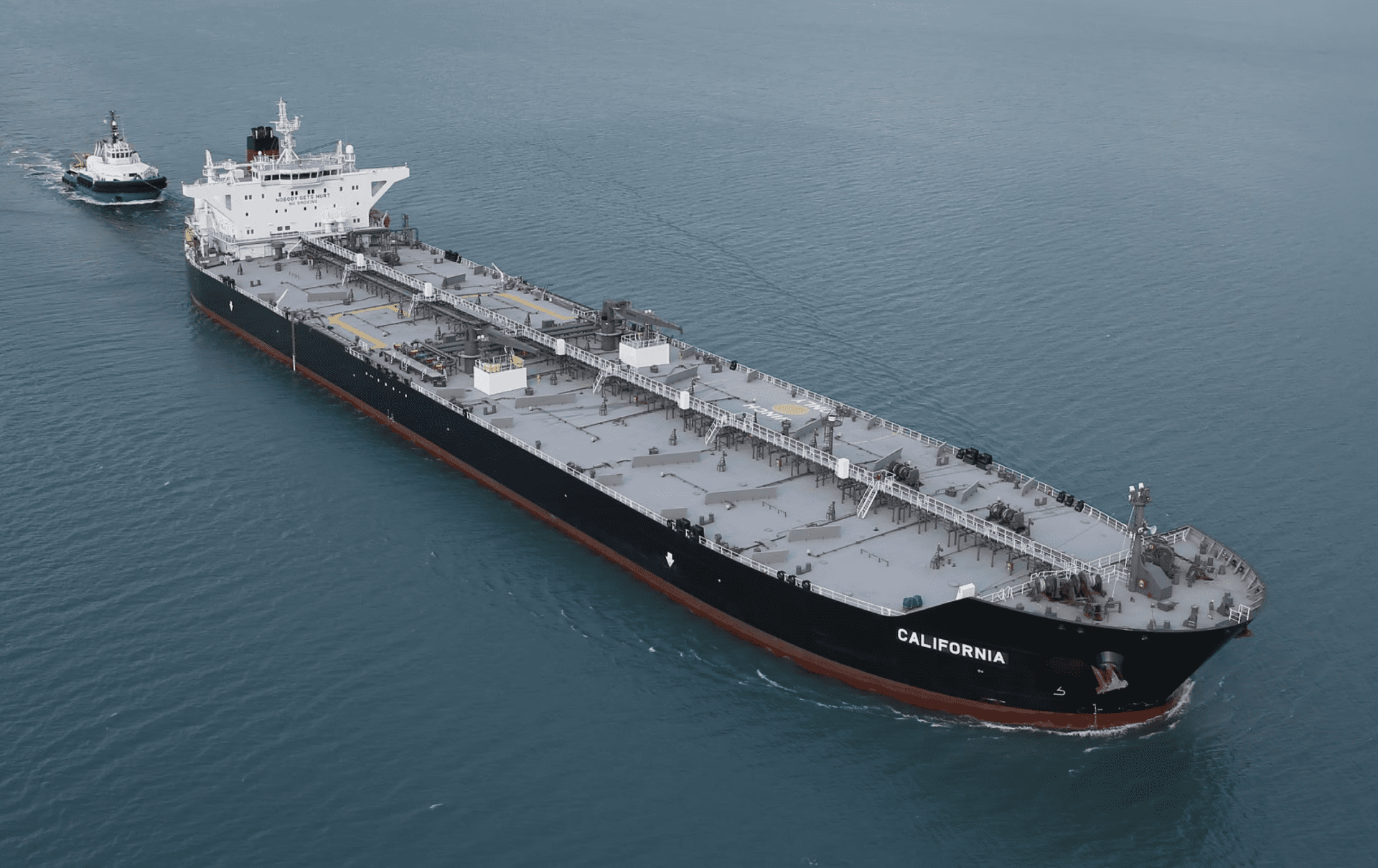
The freight dimension is where margin is being reallocated most visibly. Russia's refining infrastructure was built as an export oriented system: large volume product pipelines and Baltic and Black Sea terminal configurations designed to push fuel oil, gasoil, and naphtha outward to European buyers. That system is not easily reversed. Importing gasoline at scale requires inbound terminal capacity, dedicated tankage for blending and distribution, and road or rail connectivity from marine receipt points to inland deficit regions many of which are hundreds of kilometres from the nearest deep-water berth. The emerging India to Russia clean product route is running on Medium Range (MR) and LR1 tankers product tankers of 45,000–75,000 tonnes rather than the Very Large Crude Carriers (VLCCs) that dominate crude flows. Freight on MR tankers from Indian west coast ports (Sikka, Jamnagar) to Russian Baltic or Black Sea terminals is currently running in the range of $30–40 per metric tonne, adding materially to the landed cost of gasoline that Russian distributors must absorb. The vessel owners on this route not the cargo buyers or sellers are capturing the margin of scarcity.
The arbitrage structure for crude oil traders is a two-legged opportunity, and the legs move in opposite directions. Leg one: if Russian domestic refinery crude intake falls further as more capacity is damaged or idled, the refineries still running will pull less Urals, softening domestic crude demand and potentially widening the Urals discount to Dated Brent the benchmark price for North Sea crude used as a global reference. The Urals discount to Brent was already elevated at $12–15/bbl before the current refinery damage; a further softening of even $2–3/bbl materially affects the economics for any buyer lifting Urals on a spot basis. Leg two: European refiners, who have largely replaced Russian product imports with alternative supplies since 2022, now face a tighter Atlantic Basin gasoline balance as Indian product flows divert east toward Russia. European gasoil crack spreads the refinery margin on converting crude into diesel, expressed as the price difference between gasoil futures and crude may find structural floor support through Q3 2026, offering a positioning opportunity for traders with both crude and product exposure.
Consider a specific worked example. An Indian private sector refiner Reliance Industries at Jamnagar, operating one of the world's largest refinery complexes purchases Urals crude at an approximately $12/bbl discount to Brent, processes it at a refining cost of approximately $3–4/bbl, and produces gasoline with a crack spread (the gross margin from converting crude into gasoline) of approximately $14–18/bbl at current Singapore MOGAS 92 prices. Net of freight to Russia at $35/MT (roughly $5/bbl), the blended margin on the Russia bound gasoline volume is approximately $4–8/bbl above what a domestic or standard export sale would yield. On 40,000–50,000 bpd of exported gasoline a plausible initial volume that represents an incremental margin capture of $58–$146 million annually. The numbers are meaningful for Indian refiners but modest against Russia's 850,000 bpd gasoline shortfall. This is a commercial opportunity for Indian refining, not a solution to Russia's supply problem.
On the buy side, European independent refiners and fuel distributors who previously competed with Russian product imports now face a structural supply reconfiguration. Russian gasoil and naphtha, which historically supplied Central and Eastern European markets, have been replaced since 2022 but the further reduction in Russian refinery output means less of any Russian product will be available for re-export through Belarus or informal channels still operating at the margins. Buyers in Poland, Hungary, and the Baltic states who source product from spot markets should note that Atlantic Basin gasoline balances are tightening as Indian barrels redirect. On the sell side, Russian downstream operators face margin destruction that is not recoverable through price adjustment alone fixed costs are unchanged, equipment lead times are measured in months, and the sanctions environment constrains access to the turbomachinery and process control systems needed for rapid repair. Putin's public dismissal of the damage as manageable does not alter the physical reality of capacity offline until December 2026 at the earliest, if repair timelines reported by analysts hold.
For large integrated traders a Trafigura, Vitol, or a national oil company trading arm the instrument of choice is a spread position: long Urals crude (or a Brent-Dubai spread position capturing Middle East crude relative cheapness) against short European gasoil cracks, structured across Q3–Q4 2026. This captures the simultaneous softening of Russian crude and the tightening of Atlantic Basin product. The cost of carrying the hedge margin requirements on ICE gasoil futures and any Urals exposure managed through physical or swap instruments is manageable for operators with derivatives access, and the structural basis for the trade is well-grounded in the supply chain disruption. For smaller regional operators a mid-sized fuel importer in Southeast Europe or a regional cooperative purchasing heating oil derivatives access is limited. The practical equivalent is to fix forward purchase terms now on gasoil or gasoline for Q4 2026 delivery, before the full tightening of Atlantic Basin balances is priced in. Locking in term supply at today's forward prices, even at a modest premium to spot, insulates against the scenario where Indian barrels continue flowing east and European spot markets tighten into autumn.
The structural constraint that neither Putin's statements nor market commentary has adequately priced is the import logistics bottleneck. Russia's product import infrastructure terminal capacity, storage, inland distribution was built for export volumes, not import receipt. Getting Indian gasoline into Russia's ports is operationally feasible; getting it into the regions of Russia actually experiencing shortages inland areas served by pipeline systems designed to move product outward is a different engineering and logistics challenge. This asymmetry between political announcements ("we will import gasoline") and physical delivery capability is where information asymmetry concentrates. Traders who correctly model the time lag between import authorisation and meaningful inland distribution likely measured in quarters, not weeks will price Russian crude and European product balances more accurately than those relying on headline policy signals.
The time-bound signal to monitor is the Argus Urals CIF Rotterdam differential published daily by Argus Media and ICE gasoil front-month crack spreads, tracked weekly. If the Urals discount widens beyond $15/bbl to Dated Brent by the end of July 2026, it signals that Russian domestic refinery crude demand is softening further as capacity remains offline confirming the structural leg of the trade. If ICE gasoil crack spreads hold above $15/bbl through August, it confirms that Atlantic Basin product tightening is structural rather than seasonal. Watch both simultaneously: they move on the same underlying cause, and a divergence between them cracks weakening while Urals widens would signal demand destruction in Europe offsetting the supply constraint, changing the trade's risk profile materially.

.jpg)

'%3e%3cg id='Final-Copy-2_2_' transform='translate(1275.000000, 200.000000)'%3e%3cpath class='st0' d='M7.4,12.8h6.8l3.1-11.6H7.4C4.2,1.2,1.6,3.8,1.6,7S4.2,12.8,7.4,12.8z'/%3e%3c/g%3e%3c/g%3e%3c/g%3e%3cg id='final---dec.11-2020'%3e%3cg id='_x30_208-our-toggle' transform='translate(-1275.000000, -200.000000)'%3e%3cg id='Final-Copy-2' transform='translate(1275.000000, 200.000000)'%3e%3cpath class='st1' d='M22.6,0H7.4c-3.9,0-7,3.1-7,7s3.1,7,7,7h15.2c3.9,0,7-3.1,7-7S26.4,0,22.6,0z M1.6,7c0-3.2,2.6-5.8,5.8-5.8 h9.9l-3.1,11.6H7.4C4.2,12.8,1.6,10.2,1.6,7z'/%3e%3cpath id='x' class='st2' d='M24.6,4c0.2,0.2,0.2,0.6,0,0.8l0,0L22.5,7l2.2,2.2c0.2,0.2,0.2,0.6,0,0.8c-0.2,0.2-0.6,0.2-0.8,0 l0,0l-2.2-2.2L19.5,10c-0.2,0.2-0.6,0.2-0.8,0c-0.2-0.2-0.2-0.6,0-0.8l0,0L20.8,7l-2.2-2.2c-0.2-0.2-0.2-0.6,0-0.8 c0.2-0.2,0.6-0.2,0.8,0l0,0l2.2,2.2L23.8,4C24,3.8,24.4,3.8,24.6,4z'/%3e%3cpath id='y' class='st3' d='M12.7,4.1c0.2,0.2,0.3,0.6,0.1,0.8l0,0L8.6,9.8C8.5,9.9,8.4,10,8.3,10c-0.2,0.1-0.5,0.1-0.7-0.1l0,0 L5.4,7.7c-0.2-0.2-0.2-0.6,0-0.8c0.2-0.2,0.6-0.2,0.8,0l0,0L8,8.6l3.8-4.5C12,3.9,12.4,3.9,12.7,4.1z'/%3e%3c/g%3e%3c/g%3e%3c/g%3e%3c/g%3e%3c/svg%3e) Privacy Choices
Privacy Choices