.avif)
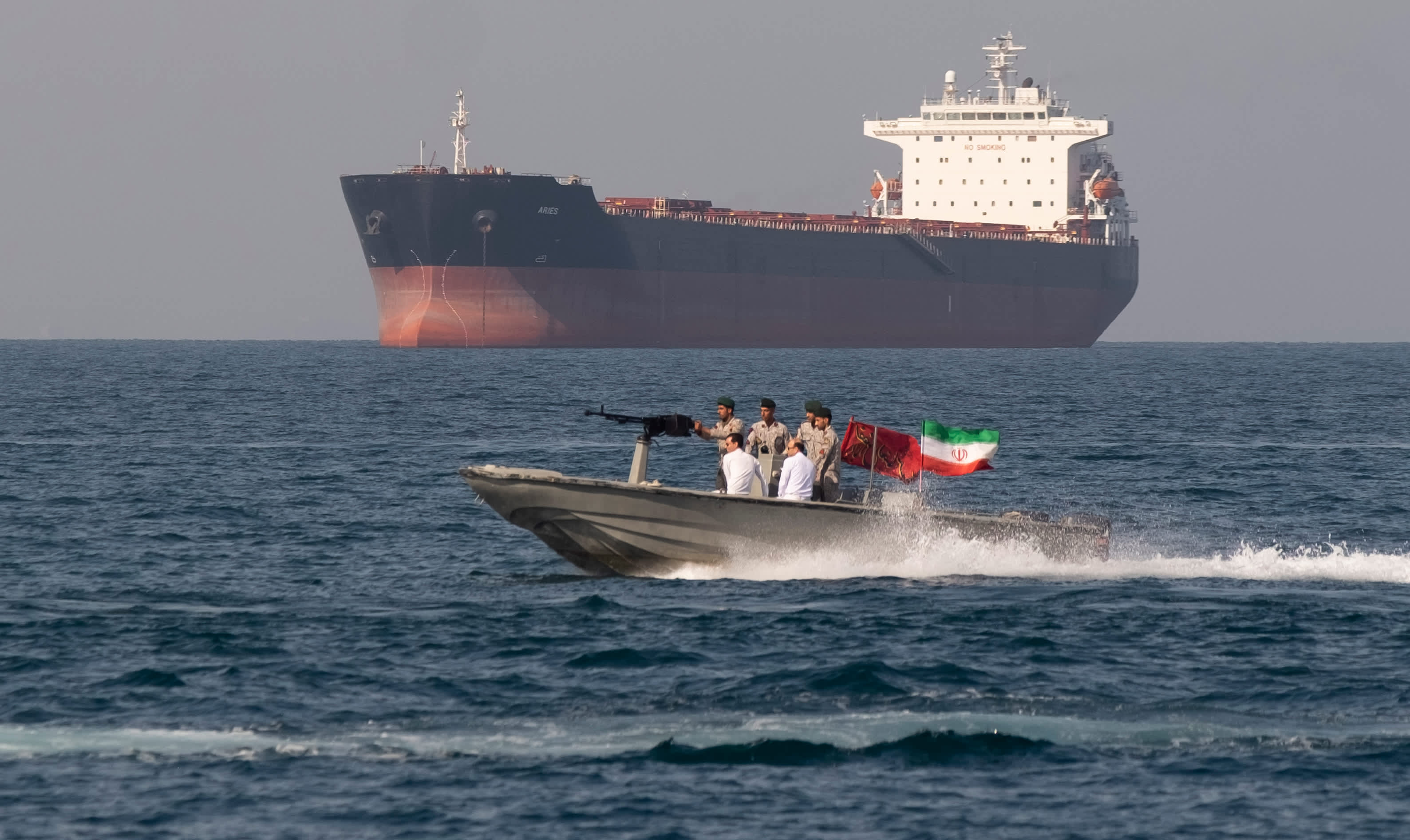
Tanker owners operating VLCC routes through the Middle East Gulf are facing the sharpest single-week margin compression event of 2026: the IMO's announcement of dual evacuation corridors through the Strait of Hormuz, following a preliminary US-Iran peace memorandum signed June 17, signals the beginning of rate normalization that could strip $50,000–100,000 per day from crisis-peak earnings within four to eight weeks but only for operators who misread what this corridor actually authorises.
The Strait of Hormuz a 33 kilometre wide chokepoint between Iran and Oman through which approximately 20% of the world's traded oil and natural gas flows daily has been effectively closed to commercial laden cargo since the conflict disruption began. The IMO's evacuation plan uses two temporary corridors, one north and one south of the traditional Traffic Separation Scheme (TSS) the internationally agreed lane system that organises vessel traffic in congested waters to move approximately 11,000 of the estimated 20,000 stranded seafarers aboard nearly 2,000 vessels. A designated waiting area in international waters is established, and vessels must contact the relevant coastal state before transiting. Safety guarantees have been secured in coordination with Iran, Oman, and regional states, with the United States also party to the framework. This is a humanitarian evacuation. It is not, yet, a commercial reopening.
The structural gap in this announcement is the one nobody is saying clearly: diplomatic safety guarantees between states are not marine war-risk insurance. War-risk cover the specialised insurance policy that compensates shipowners for vessel loss or damage caused by hostile acts for Hormuz-transiting vessels is led by Lloyd's of London and the Joint War Committee (JWC), which designates high-risk areas and sets the terms under which cover is available and at what premium. As of the date of this writing, the JWC has not publicly confirmed reinstatement of standard Hormuz coverage. Without that confirmation, no commercially prudent shipowner will authorise a laden crude or LNG (liquefied natural gas) cargo transit, regardless of what the IMO corridor designations say. The gap between a humanitarian corridor and an insurable trade route is not a technicality it is the entire commercial question.
To understand what war-risk reinstatement actually costs, consider the arithmetic for a VLCC a Very Large Crude Carrier, capable of carrying approximately 2 million barrels of crude oil on the TD3C route, the benchmark for Middle East Gulf to China crude voyages. During the disruption, war-risk premiums for vessels transiting Hormuz were reported at 0.5–1.0% of hull value per transit, on a hull valued at approximately $120–150 million. That adds $600,000–1,500,000 per transit in war-risk alone, before freight, bunkers (the fuel used to power the vessel), or port charges. If Lloyd's reinstates coverage at any level, underwriters and brokers will price the remaining geopolitical uncertainty into that premium industry estimates suggest the first wave of reinstatement pricing could add $1–3 million per laden voyage for a VLCC on MEG to China transit. That cost lands on cargo owners, not shipowners, via freight rate negotiation. But it lands somewhere, and it compresses the arb that made Gulf crude attractive while Hormuz was closed.
On the sell side, tanker owners who have been earning elevated spot rates during the closure now face the directional signal they most feared: a credible reopening pathway. The Baltic Exchange TD3C rate the daily earnings benchmark for VLCCs on the Middle East Gulf to China route has reflected crisis-premium freight throughout the disruption. Normalization, once laden cargo transit is authorised and fleet repositioning accelerates, could compress those earnings by $50,000–100,000 per day back toward pre-crisis levels. For a VLCC earning $150,000/day at crisis peak versus $60,000/day at normalized rates, that is a $90,000/day revenue reduction on a 50 day round voyage, that is $4.5 million per ship. Owners with period time-charter contracts (longer-term fixed-rate hire agreements) locked in at crisis rates are partially insulated. Owners exposed on the spot market are not.
On the buy side, Asian refiners particularly the large Chinese state refiners Sinopec and PetroChina and Japanese and South Korean importers who have been sourcing Middle East crude via the Cape of Good Hope diversion (routing vessels around southern Africa, adding 10–15 days and approximately $2–4/MT in additional freight cost) are watching this corridor announcement as a potential cost-relief signal. However, procurement teams should not restructure supply contracts on the basis of the evacuation corridor alone. The trigger for commercial resumption is not IMO corridor designation it is JWC delisting of Hormuz from its published high-risk area schedule, or a named underwriter publicly reinstating standard cover. Until that happens, the Cape diversion remains the commercially defensible routing.
For large integrated traders a Trafigura, Vitol, or the trading arm of a national oil company such as ADNOC or QatarEnergy the instrument of immediate relevance is the Brent-Dubai spread. The Brent-Dubai spread the price difference between North Sea Brent crude and Middle East Dubai crude has been elevated by the geopolitical risk premium embedded in Dubai pricing during the Hormuz closure. If physical flows resume at scale, that risk premium deflates faster than Brent, compressing the spread. Traders positioned long Brent and short Dubai (betting on spread widening) should assess whether current corridor news justifies partial position unwind. Simultaneously, the JKM-TTF spread the price difference between Japan-Korea Marker LNG and European TTF gas should narrow as Qatari LNG supply routes through Hormuz begin signalling reopening, reducing the Asian scarcity premium.
For smaller regional operators a mid-sized fuel importer in South Asia, an independent bunker trader operating out of Fujairah, or a regional LPG (liquefied petroleum gas) distributor supplying markets that depend on Gulf output derivatives access is limited and the practical calculus is simpler. Do not cancel Cape-routed cargo arrangements until JWC coverage reinstatement is confirmed in writing. If your supply contract contains a war-risk surcharge clause (a contractual provision allowing the freight rate to be adjusted for changes in war-risk insurance costs), review it now, because the direction of that clause will reverse as premiums normalise. Oman-based logistics and anchorage operators at Salalah and Sohar port positioned as natural first-transit waypoints along the southern corridor are already seeing elevated demand for staging services, and short-term anchorage costs in those locations should be factored into any near-term voyage estimate.
The single most important signal for observers to monitor in the next 30 days is not the IMO corridor communiqués it is the JWC published high-risk area list and any Lloyd's market circular on Hormuz coverage reinstatement. When that document appears, it will be the operational starting gun for laden cargo transit, freight rate normalization, and Brent-Dubai spread compression to begin in earnest. A secondary signal is TD3C daily rate movement on the Baltic Exchange: a sustained drop below $100,000/day from crisis peaks, without a corresponding drop in bunker costs, will confirm that market pricing has accepted reopening as probable. The final peace agreement between the US and Iran, according to reports, remains unsigned as of June 23, 2026, and security conditions are described as unsettled. Every day that gap persists, war-risk underwriters have a commercially rational reason to hold their position and so does every prudent shipowner.
.jpg)
.jpg)

'%3e%3cg id='Final-Copy-2_2_' transform='translate(1275.000000, 200.000000)'%3e%3cpath class='st0' d='M7.4,12.8h6.8l3.1-11.6H7.4C4.2,1.2,1.6,3.8,1.6,7S4.2,12.8,7.4,12.8z'/%3e%3c/g%3e%3c/g%3e%3c/g%3e%3cg id='final---dec.11-2020'%3e%3cg id='_x30_208-our-toggle' transform='translate(-1275.000000, -200.000000)'%3e%3cg id='Final-Copy-2' transform='translate(1275.000000, 200.000000)'%3e%3cpath class='st1' d='M22.6,0H7.4c-3.9,0-7,3.1-7,7s3.1,7,7,7h15.2c3.9,0,7-3.1,7-7S26.4,0,22.6,0z M1.6,7c0-3.2,2.6-5.8,5.8-5.8 h9.9l-3.1,11.6H7.4C4.2,12.8,1.6,10.2,1.6,7z'/%3e%3cpath id='x' class='st2' d='M24.6,4c0.2,0.2,0.2,0.6,0,0.8l0,0L22.5,7l2.2,2.2c0.2,0.2,0.2,0.6,0,0.8c-0.2,0.2-0.6,0.2-0.8,0 l0,0l-2.2-2.2L19.5,10c-0.2,0.2-0.6,0.2-0.8,0c-0.2-0.2-0.2-0.6,0-0.8l0,0L20.8,7l-2.2-2.2c-0.2-0.2-0.2-0.6,0-0.8 c0.2-0.2,0.6-0.2,0.8,0l0,0l2.2,2.2L23.8,4C24,3.8,24.4,3.8,24.6,4z'/%3e%3cpath id='y' class='st3' d='M12.7,4.1c0.2,0.2,0.3,0.6,0.1,0.8l0,0L8.6,9.8C8.5,9.9,8.4,10,8.3,10c-0.2,0.1-0.5,0.1-0.7-0.1l0,0 L5.4,7.7c-0.2-0.2-0.2-0.6,0-0.8c0.2-0.2,0.6-0.2,0.8,0l0,0L8,8.6l3.8-4.5C12,3.9,12.4,3.9,12.7,4.1z'/%3e%3c/g%3e%3c/g%3e%3c/g%3e%3c/g%3e%3c/svg%3e) Privacy Choices
Privacy Choices