.avif)
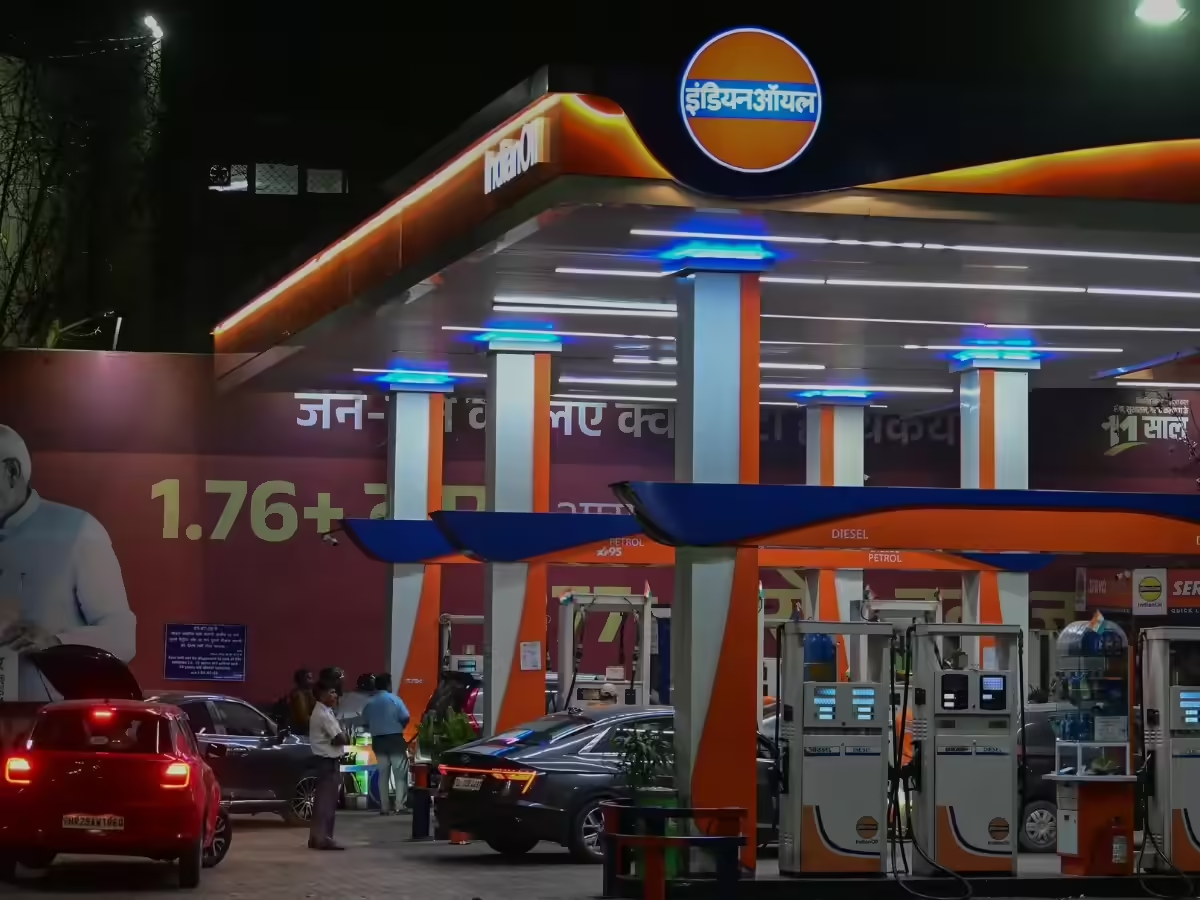
India's state oil marketing companies are losing ₹14 on every litre of petrol and ₹18 on every litre of diesel sold at the pump losses that began accumulating in earnest as crude prices climbed toward $120–125 per barrel in the wake of reported supply disruptions linked to the Strait of Hormuz. These are not paper losses confined to accounting schedules. They are cash losses, absorbed in real time by Indian Oil Corporation (IOCL), Bharat Petroleum (BPCL), and Hindustan Petroleum (HPCL) the three state owned OMCs (oil marketing companies) that collectively supply the bulk of India's petrol and diesel retail volumes. At the current crude price, and with pump prices frozen by government policy, the three companies are, in effect, operating as subsidised fuel distributors rather than commercial enterprises. The scale is structural, the trajectory is worsening, and the credit implications are being felt beyond the OMCs themselves.
To understand how quickly this unravelled, consider the trajectory. Two months before ICRA's April 2026 assessment, crude traded at approximately $70–72 per barrel a level at which OMC marketing margins were thin but manageable. The move to $120–125/bbl represents a $50+ per barrel swing in feedstock cost. Converting that into per-litre terms: one barrel contains roughly 159 litres of crude, and refinery yield for petrol and diesel runs at approximately 40–45% of crude input after processing losses. At $50/bbl additional cost, the crude input charge alone rises by approximately ₹26–30 per litre of finished fuel before any freight, refining, or distribution costs are counted. The government's retail price cap an administrative ceiling that prevents OMCs from recovering these costs from consumers means the entire increment lands on OMC balance sheets. This is the structural constraint that no operational efficiency can bridge at current crude levels.
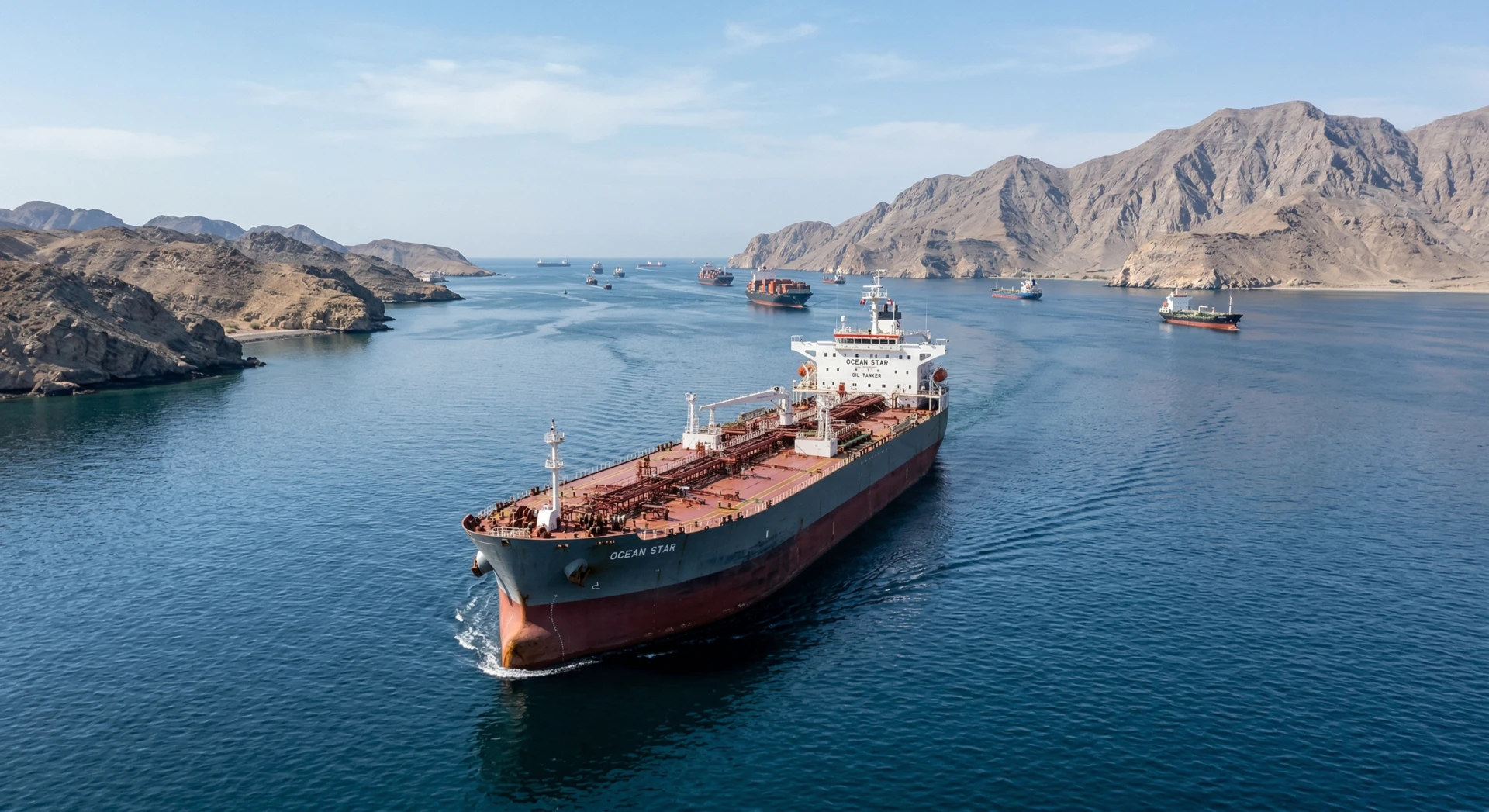
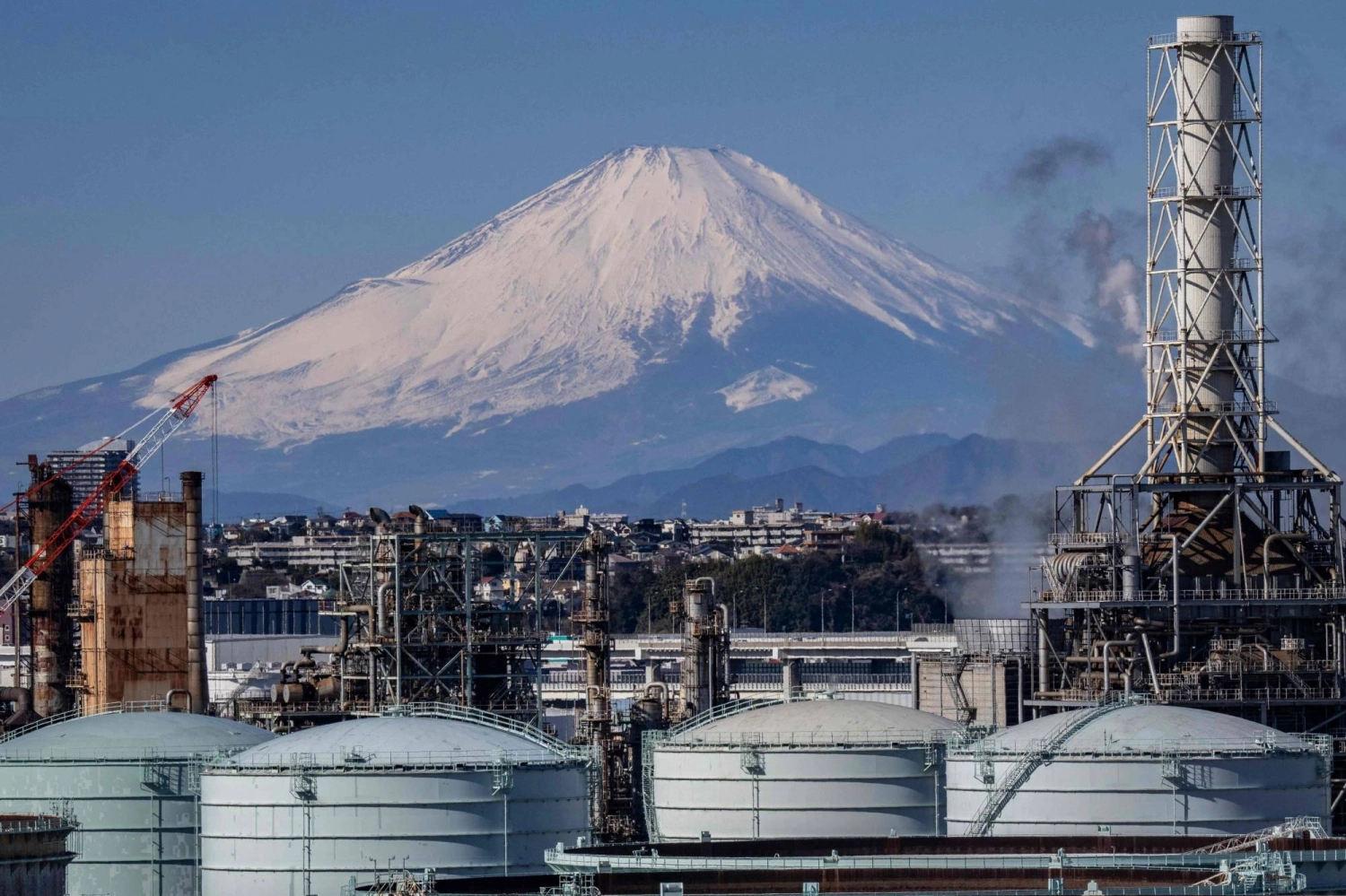
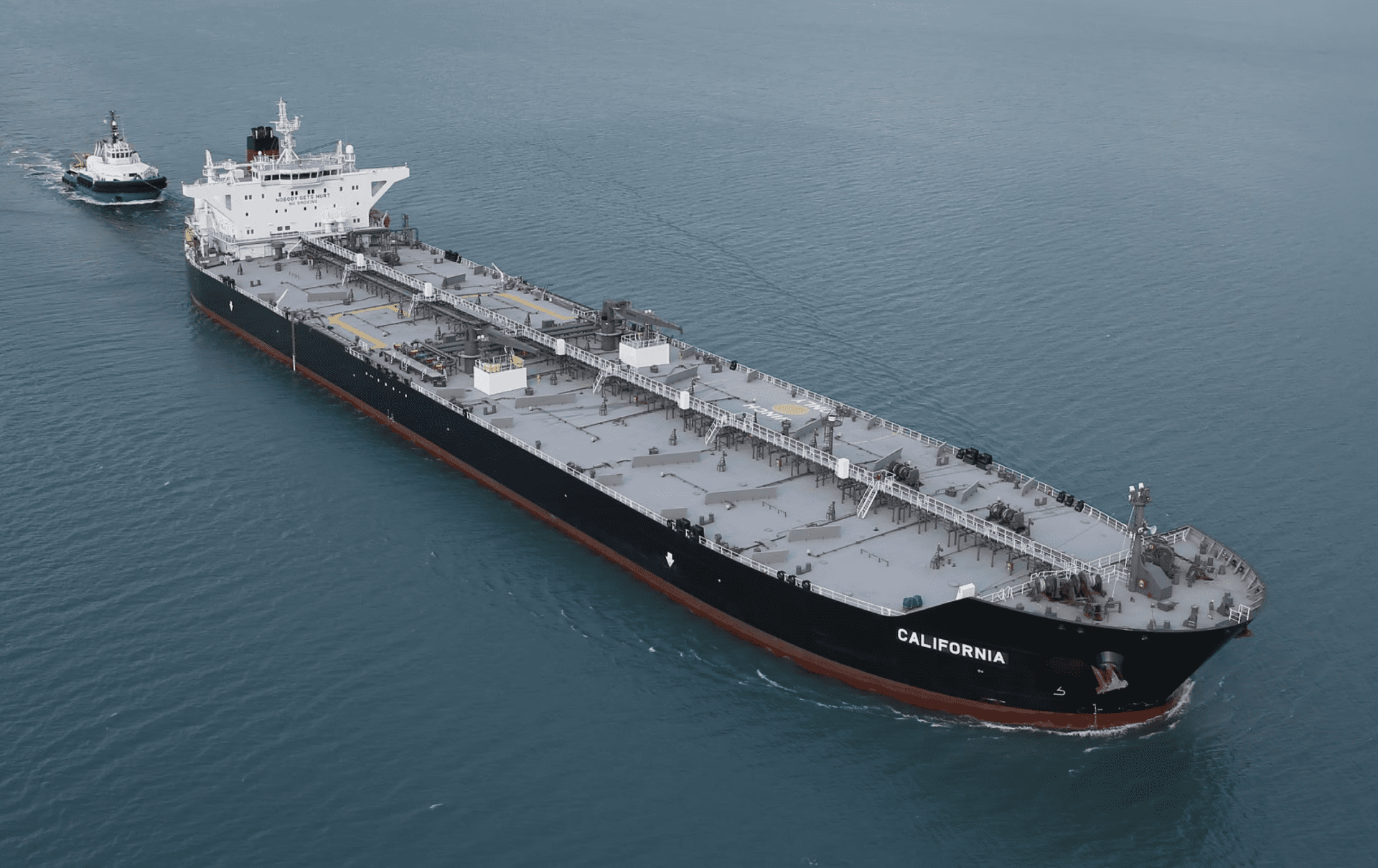
The physical supply chain makes the margin anatomy legible. Indian refineries particularly the large coastal complexes at Jamnagar (private), Koyali, Mathura, Barauni, and Haldia (state-owned) depend heavily on Middle Eastern crude, primarily from Saudi Arabia, Kuwait, Iraq, and the UAE. That crude is loaded onto VLCCs (Very Large Crude Carriers supertankers capable of carrying around 2 million barrels each) at terminals in the Arabian Gulf and transits the Strait of Hormuz before crossing the Arabian Sea to Indian west coast ports, a voyage of roughly 7–10 days. According to reports, disruptions linked to the West Asia crisis have tightened Hormuz flows, compressing available supply and pushing up both crude prices and tanker freight rates simultaneously. OMCs are therefore facing a double squeeze: higher cargo cost and higher freight cost, with no offsetting pass-through to consumers.
Work through the numbers for a single cargo. A mid-sized Indian OMC importing a standard VLCC cargo of 2 million barrels (approximately 270,000 metric tonnes) at $120/bbl pays $240 million for the crude itself. At $70/bbl the pre-crisis baseline that same cargo cost $140 million. The $100 million cargo cost increase, spread across the petrol and diesel volumes refined from that cargo, does not vanish into a rounding error: it accumulates directly as under-recovery the shortfall between what the OMC recovers at the pump and what the fuel actually cost to produce and deliver. Across India's combined petrol and diesel retail volume of approximately 100–110 billion litres annually, even a ₹1/litre under-recovery implies ₹10,000–11,000 crore in annual losses. At ₹14–18/litre, the aggregate under-recovery runs to ₹1.5–2.0 lakh crore per year, sustained. That is not an OMC problem in isolation it is a sovereign fiscal problem in formation.
The margin destruction does not stop at auto fuels. ICRA estimates LPG (liquefied petroleum gas the cooking fuel used by hundreds of millions of Indian households, sold at regulated prices) under-recoveries could reach ₹80,000 crore by FY27 if current crude price trends persist. Fertiliser subsidy burdens driven by higher natural gas and naphtha feedstock costs, both linked to energy price inflation are projected to rise to ₹2.05–2.25 lakh crore against a budgeted ₹1.71 lakh crore: a gap of ₹34,000–54,000 crore above allocation. City gas distribution companies (CGDs entities that pipe compressed natural gas to vehicles and households in urban centres) face similar pass-through constraints. The downstream value chain, from the refinery gate through the retail forecourt and into the kitchen, is under simultaneous stress. ICRA has assigned a negative outlook across fuel retailing, fertilisers, basic chemicals, and petrochemicals while noting that crude oil refining itself retains a stable credit profile, because refiners can still capture crack spreads (the processing margin between crude input and refined product output) even when downstream retailers cannot pass costs forward.
On the buy side, the primary losers are the OMCs themselves but their pain transmits rapidly to banks and bond markets. Working capital facilities (short-term credit lines that fund the gap between buying crude and receiving retail payment) expand sharply when under-recoveries widen. At ₹14–18/litre loss across hundreds of crore of litres per month, OMCs must draw significantly larger credit lines to fund ongoing operations. The hidden counterparties here are the public sector banks and fixed-income investors who hold OMC commercial paper and bonds they are absorbing the sovereign risk at one remove, without the direct fiscal transparency that government budget lines would provide. On the sell side, Middle East crude producers Saudi Aramco, ADNOC, Kuwait Petroleum are capturing $50+ per barrel above the pre-crisis baseline. That premium accrues entirely to the producer and the vessel operator, not to the downstream retailer. India's OMCs are simultaneously price-takers on the buy side and price-setters by government edict on the sell side. The commercial logic is inverted.
For large integrated operators an OMC's trading arm or a private refiner with derivatives access the practical instrument is a combination of crude oil futures hedging on ICE or NYMEX and route diversification toward non-Hormuz origins. West African crude (Angola, Nigeria) arriving via the Cape of Good Hope, US WTI (West Texas Intermediate) or WTS (West Texas Sour) cargoes on longer Pacific routes, and North Sea Forties grade are all viable supply alternatives that bypass the Hormuz chokepoint entirely, though voyage times extend to 25–35 days versus 7–10 days from the Gulf, adding freight cost. For a smaller regional operator an independent city gas distributor or a medium-scale petrochemical feedstock buyer without hedging infrastructure the practical response is to fix bilateral supply contracts with price ceiling clauses, extend inventory cover where storage permits, and identify secondary domestic suppliers who source from non-Gulf origins. Neither approach restores the margin; both reduce the exposure to further disruption-driven spikes.
A structural arbitrage risk deserves specific attention: the widening gap between regulated domestic LPG cylinder prices and market clearing prices creates an incentive for diversion commercial-grade LPG cylinders (sold at market prices) being resold into the subsidised domestic channel, or subsidised domestic cylinders being resold commercially. As under-recoveries approach ₹80,000 crore equivalent, that spread already a known leakage vector in Indian energy markets widens to levels that make diversion commercially attractive at scale. ICRA's aggregate under-recovery estimate effectively quantifies the size of the rent available to arbitrageurs. Enforcement intensity, not pricing reform, typically becomes the government's first response in such environments which is operationally costly and structurally ineffective at eliminating the incentive. The real fix is price deregulation or direct fiscal transfer; neither is politically immediate.
Observers monitoring this situation should track three specific signals over the next 30 days. First, the Indian Basket crude price the weighted average price of the crude blend India actually imports, published daily by the Petroleum Planning and Analysis Cell (PPAC) should be watched for any sustained move below $110/bbl, which would begin to narrow (though not close) the loss. Second, any announcement from India's Ministry of Petroleum and Natural Gas regarding a pump price revision the last major revision was in May 2022 would represent the single most significant commercial event for OMC credit profiles. Third, freight rates on the Middle East–India route (tracked via the Baltic Exchange's TD3C tanker route index) signal whether Hormuz disruption is easing or intensifying: a sustained fall in TD3C rates would indicate tanker flow normalisation, reducing freight pressure on the landed crude cost. Until at least one of these signals turns materially positive, the loss per litre is not a forecast it is the operating reality.
.jpg)
'%3e%3cg id='Final-Copy-2_2_' transform='translate(1275.000000, 200.000000)'%3e%3cpath class='st0' d='M7.4,12.8h6.8l3.1-11.6H7.4C4.2,1.2,1.6,3.8,1.6,7S4.2,12.8,7.4,12.8z'/%3e%3c/g%3e%3c/g%3e%3c/g%3e%3cg id='final---dec.11-2020'%3e%3cg id='_x30_208-our-toggle' transform='translate(-1275.000000, -200.000000)'%3e%3cg id='Final-Copy-2' transform='translate(1275.000000, 200.000000)'%3e%3cpath class='st1' d='M22.6,0H7.4c-3.9,0-7,3.1-7,7s3.1,7,7,7h15.2c3.9,0,7-3.1,7-7S26.4,0,22.6,0z M1.6,7c0-3.2,2.6-5.8,5.8-5.8 h9.9l-3.1,11.6H7.4C4.2,12.8,1.6,10.2,1.6,7z'/%3e%3cpath id='x' class='st2' d='M24.6,4c0.2,0.2,0.2,0.6,0,0.8l0,0L22.5,7l2.2,2.2c0.2,0.2,0.2,0.6,0,0.8c-0.2,0.2-0.6,0.2-0.8,0 l0,0l-2.2-2.2L19.5,10c-0.2,0.2-0.6,0.2-0.8,0c-0.2-0.2-0.2-0.6,0-0.8l0,0L20.8,7l-2.2-2.2c-0.2-0.2-0.2-0.6,0-0.8 c0.2-0.2,0.6-0.2,0.8,0l0,0l2.2,2.2L23.8,4C24,3.8,24.4,3.8,24.6,4z'/%3e%3cpath id='y' class='st3' d='M12.7,4.1c0.2,0.2,0.3,0.6,0.1,0.8l0,0L8.6,9.8C8.5,9.9,8.4,10,8.3,10c-0.2,0.1-0.5,0.1-0.7-0.1l0,0 L5.4,7.7c-0.2-0.2-0.2-0.6,0-0.8c0.2-0.2,0.6-0.2,0.8,0l0,0L8,8.6l3.8-4.5C12,3.9,12.4,3.9,12.7,4.1z'/%3e%3c/g%3e%3c/g%3e%3c/g%3e%3c/g%3e%3c/svg%3e) Privacy Choices
Privacy Choices