.avif)
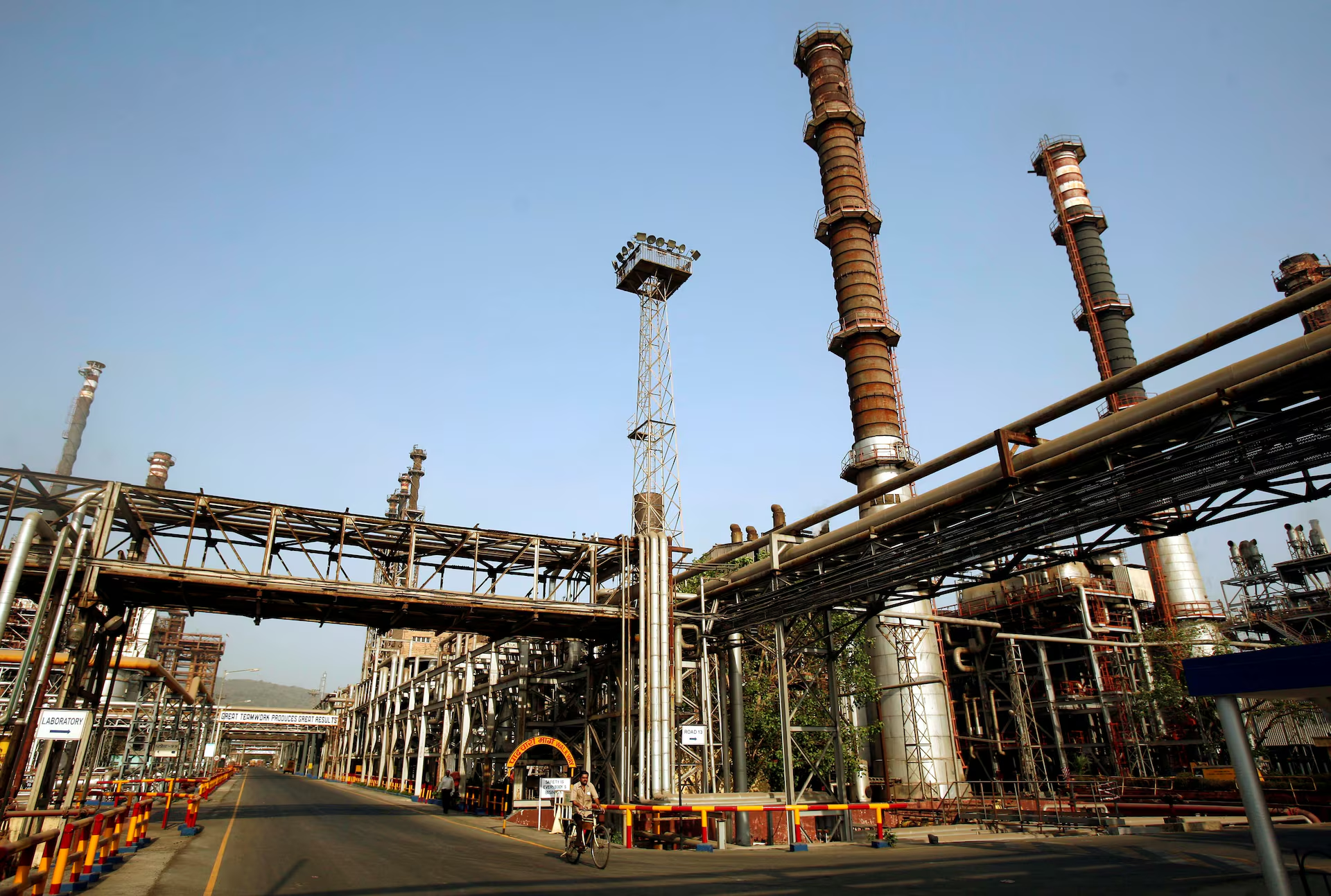
Indian state refiners captured an estimated $6–12 per barrel gross refining margin the difference between the cost of crude feedstock and the value of finished petroleum products during the peak FY26 West Asia energy shock, a spread that would otherwise have been embedded in refined product import invoices and passed directly to Indian industrial and retail consumers. Across India's approximately 250 million metric tonnes (MMT) of annual refining throughput, even a conservative $6/bbl margin retention represents a national-scale fiscal buffer worth tens of billions of dollars. That buffer held but understanding precisely why it held, and where it is structurally fragile, is the more important intelligence for operators planning into FY27 and beyond.
The mechanism is straightforward on the surface. India's refining capacity now among the largest in Asia, with nameplate capacity exceeding 250 MMT per annum across state refiners including Indian Oil Corporation (IOC), Bharat Petroleum (BPCL), and Hindustan Petroleum (HPCL) allowed the country to import crude oil and process it domestically rather than buying finished petroleum products on the open market. Buying crude is structurally cheaper than buying diesel or naphtha (a light hydrocarbon used as petrochemical feedstock and as a petrol blending component) when those products carry the refining margin of a Singapore or South Korean producer. Domestic refining internalised that margin, keeping it within the Indian system. Ernst & Young's FY26 Economy Watch estimates this contributed to GDP resilience, with FY2027 growth projected at 6.6%–6.8% a number that would have been materially lower had India been forced to absorb refined product import costs at crisis-period prices.
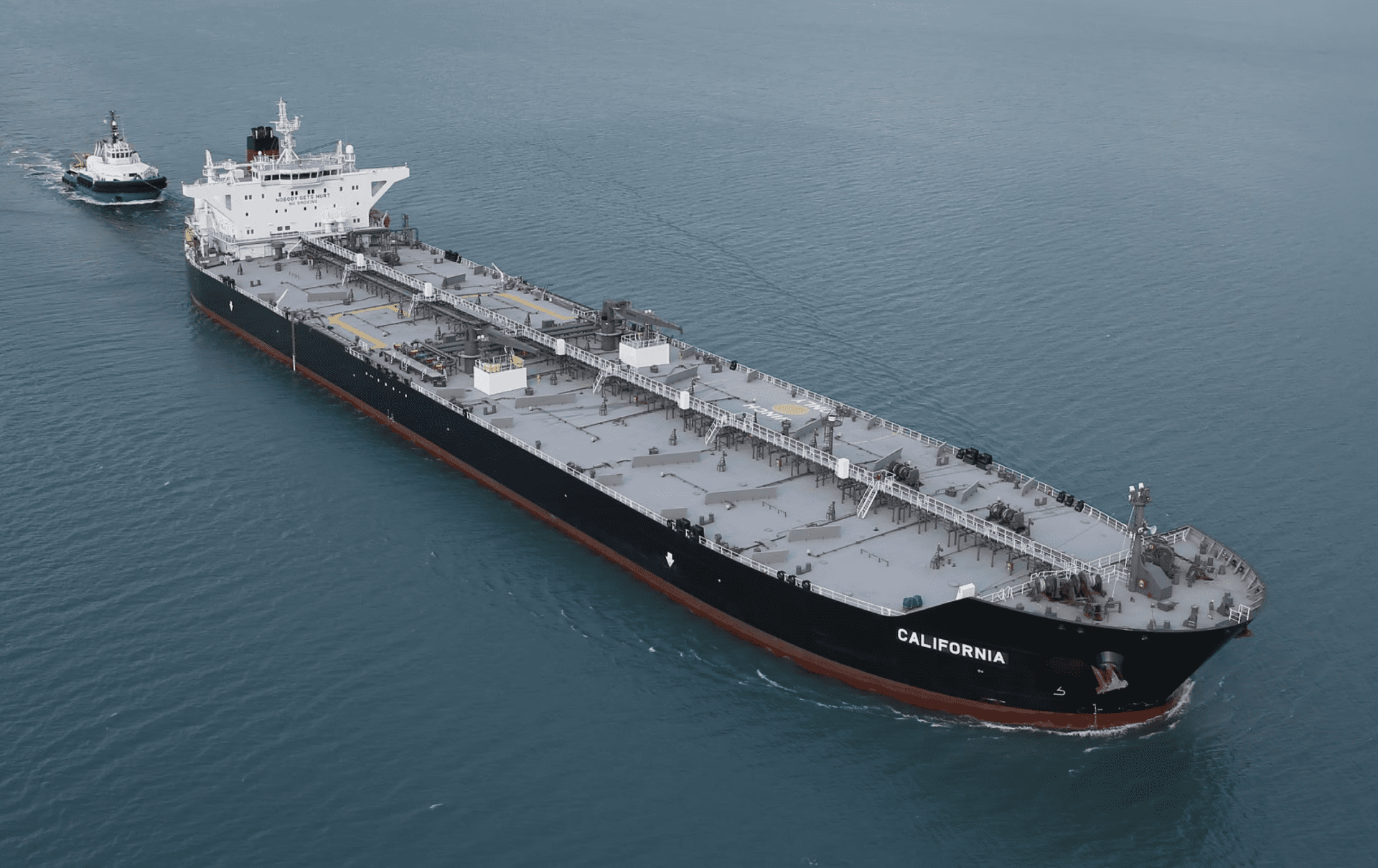
The numbers behind this are instructive. Consider a representative FY26 cargo: IOC lifts a 2 million barrel (approximately 270,000 tonne) VLCC a Very Large Crude Carrier, a supertanker capable of carrying around 2 million barrels from Ras Tanura in Saudi Arabia, transiting the Strait of Hormuz and arriving at Paradip refinery on India's eastern coast after approximately 10–14 days' transit. At a gross refining margin of $9/bbl the midpoint of the $6–12 range observed during peak shock conditions that single cargo generates roughly $18 million in processing value. Had India instead imported an equivalent diesel cargo from a Singapore refiner, the $9/bbl refining margin would have been Singapore's, embedded invisibly in the invoice price. At national scale, across 250 MMT of throughput, the aggregate retention is in the order of $15–25 billion annually. This is not an abstraction it is the difference between a manageable energy import bill and a structurally destabilising one.
The buy side and sell side of this equation point in opposite directions. On the buy side, Indian industrial consumers power generators, fertiliser producers, transport operators benefited from domestic product prices that did not fully reflect the global crisis premium on refined products. Indian state refiners, operating under regulated or semi-regulated pricing frameworks, absorbed some of the crude cost volatility rather than passing it through entirely. On the sell side, refined product exporters who might ordinarily target the Indian market Singapore's major trading refiners, South Korean integrated producers, Middle Eastern product traders found their import arbitrage window narrowed or closed. Estimated displacement of diesel and naphtha import cargoes into India during FY26 runs to several million MMT. For a Singapore based trader running a 50,000-tonne diesel cargo priced at a $4–5/bbl product export margin, the loss of Indian addressable volume represents a material position squeeze, not just a missed opportunity.
Operator scale determines how this story is navigated. For a large integrated operator IOC's trading arm, or a national oil company trading desk with derivatives access the FY26 shock demonstrated the value of crude supply diversification as a margin protection strategy. The EY report recommends accumulating strategic oil reserves (SPR government held crude stockpiles designed to cover supply interruptions, typically measured in days of consumption cover) and expanding domestic crude resources. For IOC at scale, this translates practically into hedging crude price exposure on the Dubai Mercantile Exchange (DME) or Intercontinental Exchange (ICE Brent), locking in feedstock costs when the crude to product spread the crack spread is favourable. For a smaller regional operator an independent fuel distributor in a secondary Indian city, or a state-owned downstream retailer without treasury hedging infrastructure the practical equivalent is securing bilateral term supply agreements with state refiners at formula linked prices, avoiding spot market exposure during volatility windows. The structural lesson from FY26 is that domestic refining capacity is a collective national hedge, but individual operators still require their own margin protection mechanisms.
There is, however, a critical structural constraint that the EY narrative does not fully surface. India's refining buffer works only as long as crude feedstock is accessible, affordable, and compatible with installed refinery configurations. Over 90% of India's crude is now imported up from 54.9% in FY1999 while domestic production has fallen to approximately 26 MMT in FY26 from a peak of 35.9 MMT in FY12. Indian refineries are predominantly configured for medium sour crude grades (crude with moderate sulphur content, typically 1–2%, from the Persian Gulf), meaning a rapid shift to alternative origins West African light-sweet crude, US WTI Midland, Brazilian pre-salt would require significant secondary processing unit upgrades and capital expenditure not currently factored into capacity expansion plans. The buffer protects against product price shocks. It does not protect against a feedstock disruption on the Hormuz corridor itself. That is a different and more acute risk, and one that strategic reserve build-out only partially addresses.
For observers and procurement planners monitoring this situation, the most informative near-term signal is the DME Oman crude benchmark the primary pricing reference for Middle Eastern medium-sour crude flowing to Asia tracked against the Singapore complex refining margin (the crack spread between Dubai crude and Singapore gasoil and naphtha output). When the DME Oman to Singapore gasoil crack spread widens beyond $15/bbl, Indian state refiners are operating in highly favourable margin territory, and domestic product prices are likely to hold stable regardless of global product market conditions. Watch this spread through Q3 FY27 (October–December 2026): if regional tensions persist and crude remains accessible, the domestic refining buffer will continue to function. If Hormuz transit conditions deteriorate through sanctions enforcement, insurance market restrictions, or military incident, according to reports watch the Baltic Dirty Tanker Index VLCC sub-index for freight spikes, which would signal feedstock access costs rising faster than the refining margin can absorb. That is the point at which the buffer begins to erode, and the EY growth projections become optimistic.


.jpg)

'%3e%3cg id='Final-Copy-2_2_' transform='translate(1275.000000, 200.000000)'%3e%3cpath class='st0' d='M7.4,12.8h6.8l3.1-11.6H7.4C4.2,1.2,1.6,3.8,1.6,7S4.2,12.8,7.4,12.8z'/%3e%3c/g%3e%3c/g%3e%3c/g%3e%3cg id='final---dec.11-2020'%3e%3cg id='_x30_208-our-toggle' transform='translate(-1275.000000, -200.000000)'%3e%3cg id='Final-Copy-2' transform='translate(1275.000000, 200.000000)'%3e%3cpath class='st1' d='M22.6,0H7.4c-3.9,0-7,3.1-7,7s3.1,7,7,7h15.2c3.9,0,7-3.1,7-7S26.4,0,22.6,0z M1.6,7c0-3.2,2.6-5.8,5.8-5.8 h9.9l-3.1,11.6H7.4C4.2,12.8,1.6,10.2,1.6,7z'/%3e%3cpath id='x' class='st2' d='M24.6,4c0.2,0.2,0.2,0.6,0,0.8l0,0L22.5,7l2.2,2.2c0.2,0.2,0.2,0.6,0,0.8c-0.2,0.2-0.6,0.2-0.8,0 l0,0l-2.2-2.2L19.5,10c-0.2,0.2-0.6,0.2-0.8,0c-0.2-0.2-0.2-0.6,0-0.8l0,0L20.8,7l-2.2-2.2c-0.2-0.2-0.2-0.6,0-0.8 c0.2-0.2,0.6-0.2,0.8,0l0,0l2.2,2.2L23.8,4C24,3.8,24.4,3.8,24.6,4z'/%3e%3cpath id='y' class='st3' d='M12.7,4.1c0.2,0.2,0.3,0.6,0.1,0.8l0,0L8.6,9.8C8.5,9.9,8.4,10,8.3,10c-0.2,0.1-0.5,0.1-0.7-0.1l0,0 L5.4,7.7c-0.2-0.2-0.2-0.6,0-0.8c0.2-0.2,0.6-0.2,0.8,0l0,0L8,8.6l3.8-4.5C12,3.9,12.4,3.9,12.7,4.1z'/%3e%3c/g%3e%3c/g%3e%3c/g%3e%3c/g%3e%3c/svg%3e) Privacy Choices
Privacy Choices