.avif)

Middle East crude oil traders face a $15-25/bbl margin squeeze as U.S. oil closed at $87.71 per barrel, down more than 2%, while Brent settled at $90.38, down nearly 3% following Trump's abrupt cancellation of Iran strikes. The paper market's immediate repricing ignores the physical reality: even with diplomatic agreement, repositioning tankers will be the biggest obstacle to increasing oil flows through Hormuz, according to Saudi Aramco CEO Amin Nasser. Traders who sold war-premium crude at $95+ levels now face weeks of inventory risk as actual flows normalize slowly.
The margin anatomy reveals asymmetric impacts across the trading ecosystem. On the buy side, Asian refiners capture immediate input cost relief a Sinopec-scale refinery processing 300,000 bpd saves approximately $4.5 million daily on crude costs at current price levels. On the sell side, Middle East crude suppliers lose their geopolitical premium instantly. A UAE National Oil Company cargo that commanded $15/bbl war premium 48 hours ago now competes at normalized spreads against West African and Latin American alternatives. For large integrated traders (Vitol, Trafigura), the volatility creates hedging opportunities through time spreads buying forward crude contracts while selling near-term paper. Smaller regional traders without derivatives access face pure spot price exposure with limited protection mechanisms.
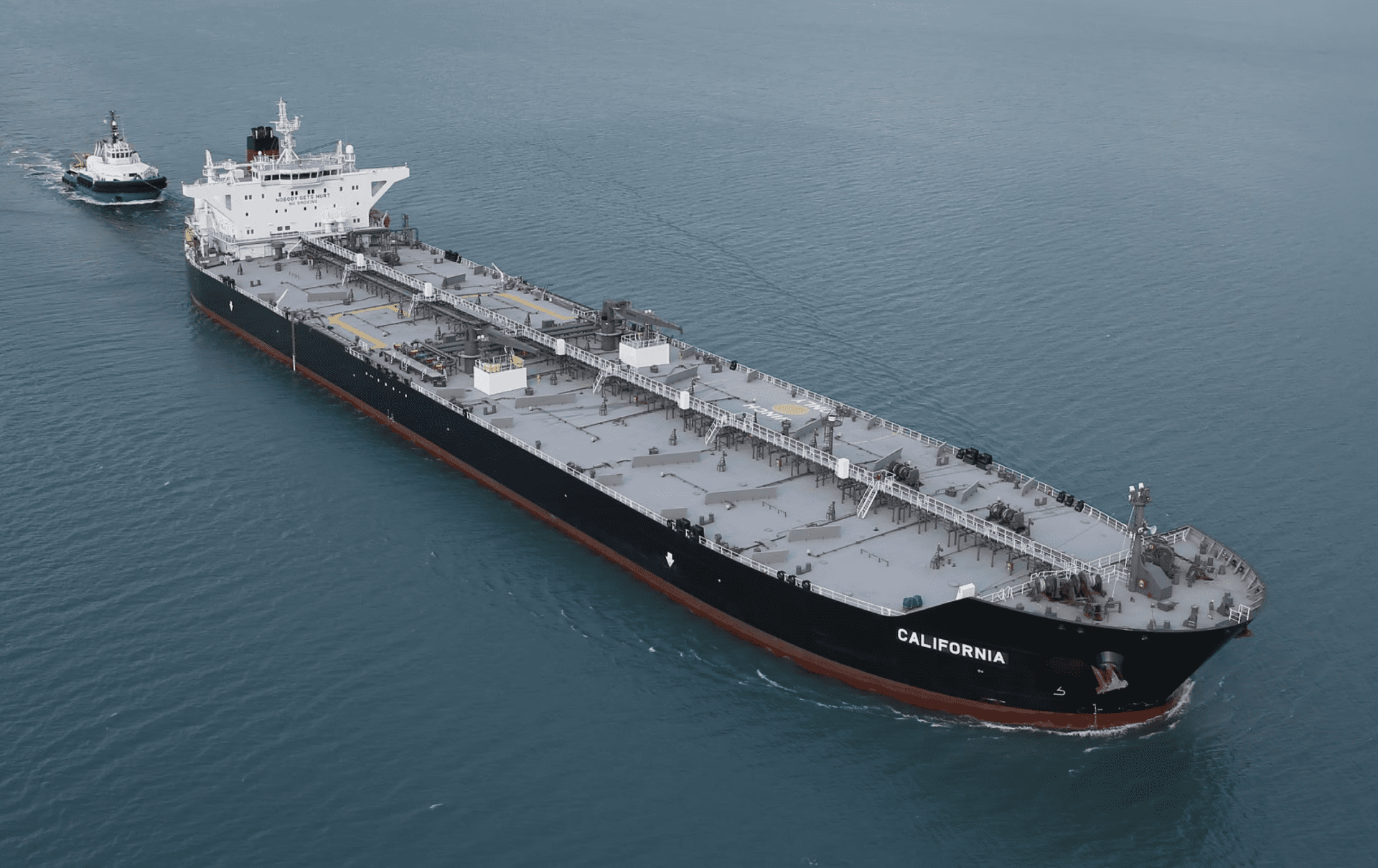
The Strait of Hormuz a 21 mile wide passage through which approximately 20 million barrels per day and ~20% of global petroleum liquids pass in normal times remains effectively closed despite diplomatic optimism. About 10% of the world's biggest tankers, the very large crude carriers, are stuck in the Gulf right now loaded with oil, with each vessel carrying up to around 2 million barrels. These stranded VLCCs represent roughly 60 million barrels of crude equivalent to three days of Saudi Arabia's total production locked in floating storage while markets price in immediate availability.
Freight becomes the critical margin determiner in any Hormuz reopening scenario. The tanker fleet has been dispersed all around the world to fetch oil from regions like the U.S. Gulf Coast while Hormuz is closed, creating a vessel positioning challenge that takes 3-4 weeks to resolve. Current VLCC day rates of $150,000+ on alternative routes versus historical Hormuz rates of $80,000-90,000 mean vessel operators, not cargo owners, capture much of the current premium. When the strait reopens, this $60,000-70,000 daily rate differential equivalent to $2-3/bbl on a standard 2 million barrel cargo reverses immediately, benefiting crude shippers but creating instant losses for tanker operators who chartered tonnage at peak rates.
The financing dimension exposes smaller operators disproportionately. Letters of credit (LC) bank guarantees that payment will be made once shipping documents are presented for Middle East crude currently require 15-25% higher credit lines due to war-risk surcharges and extended voyage times via Cape of Good Hope routing. A mid-sized Indian refiner importing 1 million barrels monthly faces additional LC costs of $3-6 million purely from financing structure changes. Large integrated NOCs with internal financing capabilities avoid these surcharges entirely, creating competitive advantages that persist through the normalization period.
Worked example demonstrates the timeline mismatch: Consider a VLCC carrying 2 million barrels from Ras Tanura to Ningbo. Pre-crisis transit time: 22 days via Hormuz at total voyage cost of $2.8 million ($1.40/bbl). Current alternative routing via Cape of Good Hope: 45 days at $6.8 million ($3.40/bbl). Even with diplomatic agreement signed tomorrow, coordinating naval escorts, reactivating war-risk insurance coverage, and positioning vessels requires minimum 21-28 days. Yet crude futures markets have already eliminated $8-12/bbl war premium, treating normalization as instantaneous. This timing arbitrage between immediate paper relief and delayed physical flows concentrates risk in the physical crude trading community.
Insurance markets reveal the operational complexity behind diplomatic announcements. Protection and indemnity insurance was cancelled from March 5, and all major carriers, including Maersk, CMA CGM, MSC, and Hapag-Lloyd, have all suspended transits. Reactivating war-risk coverage requires Lloyd's of London underwriter committee approval, military escort confirmation, and updated vessel security protocols a bureaucratic process requiring 10-15 business days minimum. Tanker owners cannot legally enter the strait without valid P&I coverage, regardless of diplomatic progress.
Large operators deploy derivative strategies to navigate the volatility. Major trading houses use calendar spreads to monetize the timing disconnect selling July Brent futures (reflecting normalized supply) while buying June contracts (reflecting current tight availability). A $4/bbl spread between consecutive months generates $4 million profit per 1 million barrel position. National oil companies with long-term supply commitments hedge through bilateral arrangements with major refiners, fixing prices quarterly rather than monthly to reduce spot volatility exposure. Regional operators rely on supply diversification shifting to West African or U.S. crude during Hormuz disruption but face 10-15 additional transit days that eliminate most cost arbitrage.
Jebel Ali Port in Dubai, the largest container port in the Middle East and a critical transshipment hub for the entire region, is experiencing congestion from vessels that diverted after the closure. Port congestion adds 3-7 days to vessel turnaround times, translating to additional charter costs of $450,000-1 million per VLCC. These delays persist even after Hormuz reopening as the backlog of stranded vessels creates temporary bottlenecks at loading terminals.
Historical precedent suggests caution about immediate normalization. The 1988 Tanker War saw Hormuz transit restrictions that took six months to fully normalize after ceasefire agreements, despite diplomatic resolutions occurring within weeks. Current complexities including Iranian imposed transit fees of $1+ million per vessel and ongoing U.S. naval blockade exceed 1980s logistical challenges. Market participants pricing immediate supply restoration risk significant position losses as physical reality reasserts.
For observers, monitor the Joint Marine Insurance Commission (JMIC) threat assessment updates. The JMIC downgraded the threat assessment in Hormuz on June 7 from critical to severe, the second highest level, "due to the number of safe transits conducted via the southern route" near Oman's coast, but warned there was still an "elevated risk of attack" in the strait. Any upgrade to "moderate" signals institutional confidence in sustained normalization. Additionally, watch VLCC fixture rates on the Arabian Gulf-Far East route rates dropping below $100,000/day indicate vessel owners expect sustained Hormuz reopening within 30 days.


.jpg)
'%3e%3cg id='Final-Copy-2_2_' transform='translate(1275.000000, 200.000000)'%3e%3cpath class='st0' d='M7.4,12.8h6.8l3.1-11.6H7.4C4.2,1.2,1.6,3.8,1.6,7S4.2,12.8,7.4,12.8z'/%3e%3c/g%3e%3c/g%3e%3c/g%3e%3cg id='final---dec.11-2020'%3e%3cg id='_x30_208-our-toggle' transform='translate(-1275.000000, -200.000000)'%3e%3cg id='Final-Copy-2' transform='translate(1275.000000, 200.000000)'%3e%3cpath class='st1' d='M22.6,0H7.4c-3.9,0-7,3.1-7,7s3.1,7,7,7h15.2c3.9,0,7-3.1,7-7S26.4,0,22.6,0z M1.6,7c0-3.2,2.6-5.8,5.8-5.8 h9.9l-3.1,11.6H7.4C4.2,12.8,1.6,10.2,1.6,7z'/%3e%3cpath id='x' class='st2' d='M24.6,4c0.2,0.2,0.2,0.6,0,0.8l0,0L22.5,7l2.2,2.2c0.2,0.2,0.2,0.6,0,0.8c-0.2,0.2-0.6,0.2-0.8,0 l0,0l-2.2-2.2L19.5,10c-0.2,0.2-0.6,0.2-0.8,0c-0.2-0.2-0.2-0.6,0-0.8l0,0L20.8,7l-2.2-2.2c-0.2-0.2-0.2-0.6,0-0.8 c0.2-0.2,0.6-0.2,0.8,0l0,0l2.2,2.2L23.8,4C24,3.8,24.4,3.8,24.6,4z'/%3e%3cpath id='y' class='st3' d='M12.7,4.1c0.2,0.2,0.3,0.6,0.1,0.8l0,0L8.6,9.8C8.5,9.9,8.4,10,8.3,10c-0.2,0.1-0.5,0.1-0.7-0.1l0,0 L5.4,7.7c-0.2-0.2-0.2-0.6,0-0.8c0.2-0.2,0.6-0.2,0.8,0l0,0L8,8.6l3.8-4.5C12,3.9,12.4,3.9,12.7,4.1z'/%3e%3c/g%3e%3c/g%3e%3c/g%3e%3c/g%3e%3c/svg%3e) Privacy Choices
Privacy Choices