.avif)
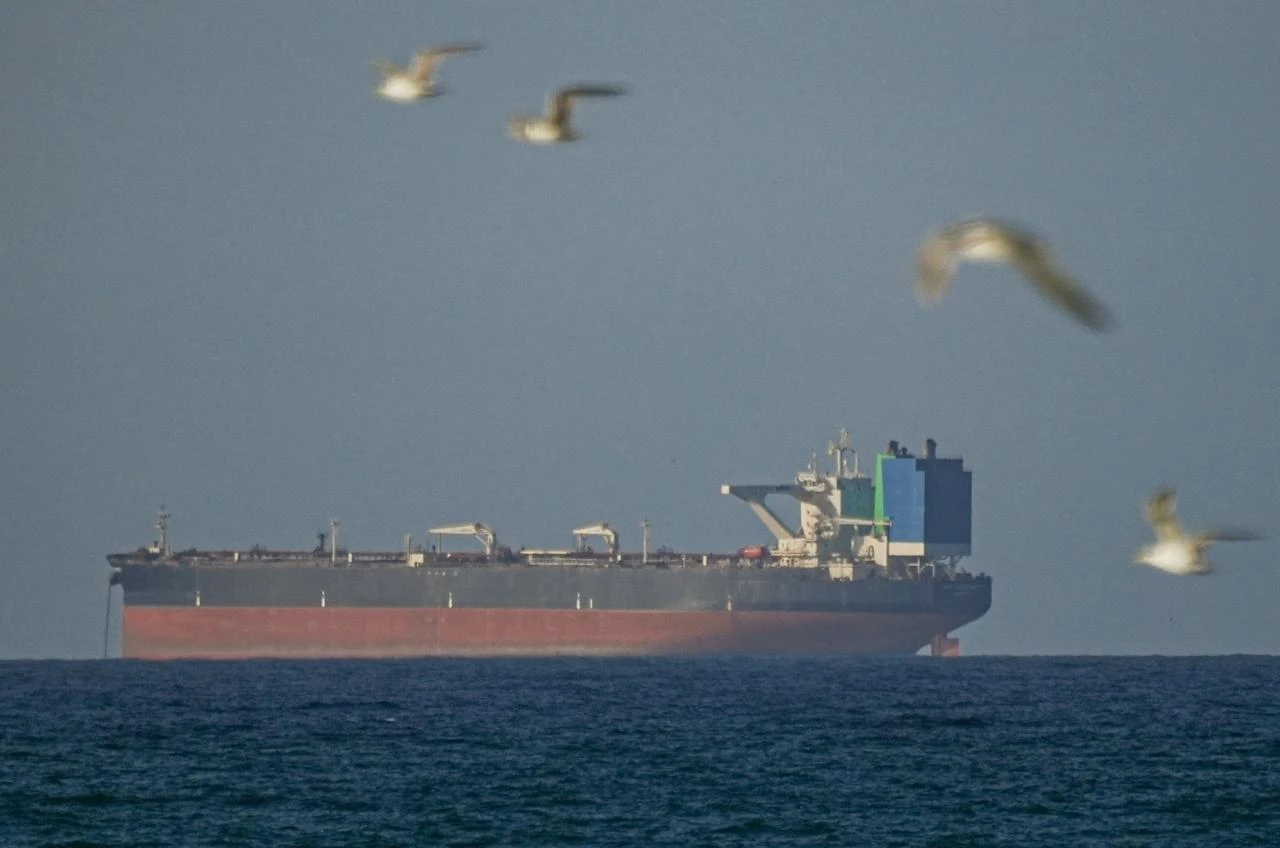
Iranian crude traders and shadow-fleet operators are capturing an estimated $20–30 million per voyage in excess margin right now while US Gulf Coast refiners and downstream buyers from Auckland to Atlanta absorb the cost of a disruption affecting roughly 20% of global oil supply.
According to reports, US forces have been conducting strikes and blocking Iranian port access since early July 2026, while the Islamic Revolutionary Guard Corps (IRGC) has threatened to halt all Gulf oil exports if American forces remain in the region. If that threat were executed, it would not be a partial disruption it would be a structural severance of the world's most critical oil transit corridor. Markets are not fully pricing that tail risk. What they are pricing is a 32.8% probability that WTI (West Texas Intermediate the benchmark price for US crude oil) reaches $90 per barrel in July, up from near-zero probability six weeks ago. Brent crude the North Sea benchmark that prices most international oil is trading at $85–86 per barrel. The question for crude oil traders is not whether the headline risk is real. It is whether the physical picture matches the price signal.
Here is where the physical picture diverges from the headline. Iran has moved approximately 57–80 million barrels of crude during the current sanctions and blockade period, according to available shipping data, with roughly 12 million barrels shipped in the July 7–14 window alone. Much of this cargo is destined for Chinese independent refiners known as "teapots," smaller privately-owned refining operations outside China's state system via shadow-fleet tankers. Shadow-fleet vessels are typically older tankers operating without standard P&I (Protection and Indemnity) insurance the marine insurance that covers third-party liability including environmental damage and port incidents. These ships conduct STS (ship-to-ship) transfers cargo moved between vessels at sea, outside territorial waters specifically to avoid port-level secondary sanctions scrutiny. Approximately 57 million barrels are reportedly sitting on tankers off the Chinese coast awaiting discharge approvals. That is not a supply tightness event. That is a potential supply glut event. If those barrels clear simultaneously, the price impulse that has been driving Brent to $85 reverses sharply and quickly.
To understand where margin is concentrating, decompose a single representative voyage. A VLCC (Very Large Crude Carrier a supertanker capable of lifting approximately 2 million barrels) loading Iranian crude currently receives a discount of roughly $10–15 per barrel to Brent this is the Iranian discount, the price concession sellers accept to move sanctioned barrels. On a 2 million barrel cargo, that discount is worth $20–30 million to the buyer. The shadow-fleet operator charges an elevated freight premium call it $6–8 per barrel versus the $3–4 per barrel a standard insured vessel would earn on a comparable voyage adding another $4–8 million per voyage in freight margin. Taken together, a single shadow-fleet voyage on the Iran–China corridor is generating $25–38 million in combined discount capture and freight premium above what a standard market voyage would yield. That margin sits entirely with Iranian crude intermediaries and shadow-fleet operators. It does not flow to cargo owners operating through transparent channels, and it does not appear in any published freight index.
On the buy side, the picture splits cleanly by geography and feedstock. US Gulf Coast refiners operating on 3-2-1 crack spreads (a refining margin shorthand: the profit from processing three barrels of crude into two barrels of gasoline and one of distillate) are facing margin compression of an estimated $3–5 per barrel. WTI is approaching $80 while gasoline demand in peak summer driving season remains price-inelastic, meaning consumers keep buying regardless of price. Refiners cannot easily pass input cost increases through to retail margin in the short term. The compression is real and is showing up now. Asian teapot refiners buying Iranian discounted crude are, conversely, in a structurally advantaged position their input cost is $10–15 below Brent while their product prices are set against regional benchmarks that reflect the same geopolitical risk premium driving Brent higher. Their margin is wide. Their exposure is regulatory, not economic.
On the sell side, the Brent-Dubai spread the price differential between North Sea Brent crude and Middle East sour crude benchmarked at Dubai is widening as Hormuz risk premium loads into Middle Eastern grades. Sour crude (high-sulphur crude, predominantly from the Gulf) is becoming relatively more expensive versus sweet Atlantic Basin grades (low-sulphur crude from West Africa or the US) as buyers price in supply continuity risk. This creates a clear arbitrage signal: European and Asian buyers are being incentivised to substitute WTI Midland and West African grades for Middle East sour, rerouting Atlantic Basin cargoes eastward. Sellers of WTI Midland and WAF (West Africa) grades have pricing power they did not hold six weeks ago. Sellers of Middle East sour grades face a structural discount pressure they may not fully have marked into forward sales.
For a large integrated trader a Trafigura, Vitol, or national oil company trading arm the instruments are available to position across this dislocation. ICE Brent options provide direct exposure to the $90 WTI scenario at a 32.8% market implied probability. More precisely targeted is a long position on the Brent-Dubai spread itself, which reflects the Atlantic versus Middle East substitution trade directly. The cost of a one-month Brent-Dubai spread option is currently manageable relative to the potential $3–5 widening that full Hormuz disruption would produce. For these operators, the more pressing operational question is vessel procurement: locking in standard insured tonnage now, before any escalation triggers a freight rate spike. The last structurally comparable event the Iran-Iraq tanker war of the 1980s saw freight rates triple within weeks of each major attack. Standard insured VLCC availability on the Arabian Gulf corridor tightened to near-zero at the peak.
For a smaller regional operator a mid-sized Asian fuel importer, an independent distributor, a regional cooperative without derivatives access the practical response is supply-source diversification executed immediately, not monitored as a contingency. If your crude or refined product supply chain currently runs through Hormuz or depends on Middle East sour grades, the time to establish alternative supply lines from Atlantic Basin sources is before the disruption deepens, not after spot availability narrows. Bilaterally fixing freight terms on FOB (Free On Board where the buyer takes responsibility for shipping from the loading port) contracts for the next 30–45 days removes the freight risk from your cost structure while standard vessel availability remains adequate. The uninsured shadow-fleet exposure is a separate and significant risk: any regional operator that has, knowingly or otherwise, taken exposure to Iranian barrels via intermediaries carries an uninsured environmental liability that no current market price is compensating.
The signal to track, with a specific time window, is the Argus Sour Crude Index (ASCI) the benchmark for medium sour crude sold into the US Gulf Coast against the WTI Midland differential, updated weekly every Wednesday. If ASCI weakens relative to WTI Midland by more than $1.50 per barrel in the next two Wednesday readings, it confirms that Atlantic Basin substitution is accelerating and that Middle East sour sellers are losing pricing power faster than headline Brent suggests. Simultaneously, watch the Baltic Dirty Tanker Index (BDTI) Route TD3C the VLCC Arabian Gulf to Japan freight rate benchmark, published daily. If TD3C breaks above 80 Worldscale points (currently trading near 55–60) before July 31, it signals physical freight tightening that precedes any options-market repricing. That is your two-week clock. The 57 million barrels sitting off China are either absorbed quietly and Brent retraces toward $80 or they are not, and the geopolitical risk premium becomes the floor rather than the ceiling.


.jpg)
.jpg)

'%3e%3cg id='Final-Copy-2_2_' transform='translate(1275.000000, 200.000000)'%3e%3cpath class='st0' d='M7.4,12.8h6.8l3.1-11.6H7.4C4.2,1.2,1.6,3.8,1.6,7S4.2,12.8,7.4,12.8z'/%3e%3c/g%3e%3c/g%3e%3c/g%3e%3cg id='final---dec.11-2020'%3e%3cg id='_x30_208-our-toggle' transform='translate(-1275.000000, -200.000000)'%3e%3cg id='Final-Copy-2' transform='translate(1275.000000, 200.000000)'%3e%3cpath class='st1' d='M22.6,0H7.4c-3.9,0-7,3.1-7,7s3.1,7,7,7h15.2c3.9,0,7-3.1,7-7S26.4,0,22.6,0z M1.6,7c0-3.2,2.6-5.8,5.8-5.8 h9.9l-3.1,11.6H7.4C4.2,12.8,1.6,10.2,1.6,7z'/%3e%3cpath id='x' class='st2' d='M24.6,4c0.2,0.2,0.2,0.6,0,0.8l0,0L22.5,7l2.2,2.2c0.2,0.2,0.2,0.6,0,0.8c-0.2,0.2-0.6,0.2-0.8,0 l0,0l-2.2-2.2L19.5,10c-0.2,0.2-0.6,0.2-0.8,0c-0.2-0.2-0.2-0.6,0-0.8l0,0L20.8,7l-2.2-2.2c-0.2-0.2-0.2-0.6,0-0.8 c0.2-0.2,0.6-0.2,0.8,0l0,0l2.2,2.2L23.8,4C24,3.8,24.4,3.8,24.6,4z'/%3e%3cpath id='y' class='st3' d='M12.7,4.1c0.2,0.2,0.3,0.6,0.1,0.8l0,0L8.6,9.8C8.5,9.9,8.4,10,8.3,10c-0.2,0.1-0.5,0.1-0.7-0.1l0,0 L5.4,7.7c-0.2-0.2-0.2-0.6,0-0.8c0.2-0.2,0.6-0.2,0.8,0l0,0L8,8.6l3.8-4.5C12,3.9,12.4,3.9,12.7,4.1z'/%3e%3c/g%3e%3c/g%3e%3c/g%3e%3c/g%3e%3c/svg%3e) Privacy Choices
Privacy Choices