.avif)

Iranian missile and drone strikes on Fujairah eliminate the last viable Gulf oil export bypass route, leaving Asian crude importers with no alternative to Strait of Hormuz supply that has been blocked since February 28. Three Indian nationals were injured in a fire at Fujairah Oil Industry Zone after the drone attack, but the commercial consequence extends far beyond immediate damage. Brent crude jumped to $114.33 per barrel as markets recognized that Iran had successfully severed the UAE's oil export lifeline. For Asian crude buyers Indian state refiners processing 5 million barrels daily, Chinese independent refiners, Japanese utilities this marks the complete collapse of Gulf supply alternatives. The equation was already constrained before Monday's attack: ADCOP at 71% utilization could handle only 1.07 million barrels daily against the UAE's pre-war export capacity of 2.8 million barrels. Now that partial pressure valve is gone entirely.
The Abu Dhabi Crude Oil Pipeline (ADCOP) a 400-kilometer strategic pipeline connecting UAE inland oil fields to Fujairah on the Gulf of Oman, bypassing the Strait of Hormuz entirely was never designed as a complete Hormuz replacement. Built in 2012 with 1.5 million barrel daily capacity, it was intended as a partial bypass valve for Abu Dhabi National Oil Company (ADNOC) crude exports. Fujairah is the terminus of a pipeline the UAE has used to avoid shipping some of its oil through the strait and is home to extensive oil storage facilities. Since Hormuz closure in February, ADCOP has operated at maximum sustainable rates 1.07 million barrels daily but this represented only 38% of pre-war UAE crude export volumes. The remaining 62% of UAE crude stayed in the ground, honoured through inventory drawdowns, or rerouted through alternative Atlantic Basin suppliers at substantial premiums. The Fujairah attack eliminates even this constrained bypass option.
The commercial margin anatomy reveals why this attack matters beyond headline oil price moves. Before February, a mid-sized Asian crude importer a 200,000 barrel per day independent Chinese refiner could source Gulf crude at Dubai benchmark pricing plus $2-3/barrel freight to deliver crude at roughly $108/barrel total landed cost. Shipping traffic through the Strait of Hormuz has been largely blocked by Iran since 28 February 2026, forcing that same refiner toward alternative supply. West Texas Intermediate from US Gulf Coast via Pacific transit delivers at $115/barrel landed cost a $7/barrel penalty that translates to $1.4 million additional cost per cargo, $42 million monthly for a typical independent refiner loading 30 cargoes. With Fujairah bypass eliminated, that premium persists indefinitely rather than providing partial Gulf supply continuity.
On the sell side, this represents a catastrophic margin collapse for ADNOC crude marketing operations. ADNOC's crude trading arm had restructured its entire export architecture around ADCOP maximum utilization since February. Term contract obligations to Asian buyers long-term supply agreements typically running 12-24 months were maintained through ADCOP loadings at Fujairah rather than traditional Hormuz routing. These contracts typically include force majeure clauses for "acts of war" but Asian buyers had accepted ADCOP alternative delivery precisely to avoid triggering those clauses. The UAE strongly condemned what it called renewed Iranian aggression and accused Iran of a terrorist attack on a vessel affiliated with Abu Dhabi National Oil Company. With Fujairah loading suspended, ADNOC faces either force majeure declarations triggering penalty clauses and buyer contract renegotiations or sourcing replacement crude from Atlantic Basin suppliers at $8-12/barrel premiums to fulfil existing commitments.
For large integrated oil trading houses Vitol, Trafigura, Mercuria the Fujairah attack creates immediate arbitrage opportunities in Atlantic Basin crude. North Sea Brent, typically trading at $2-4/barrel premium to Dubai crude for Asian delivery, can now command $10-15/barrel premiums as Gulf alternatives disappear. A large trader moving 500,000 barrels monthly of Forties crude (a North Sea Brent component) to Asian buyers can capture an additional $5-7.5 million monthly margin premium. The constraint: Atlantic Basin crude production cannot replace 15-20 million barrels daily of Gulf crude exports indefinitely. These premiums reflect temporary scarcity rather than sustainable arbitrage. Large traders with storage capacity benefit; those without crude inventory face the same replacement cost pressures as end buyers.
For smaller regional operators mid-sized fuel distributors across Southeast Asia, independent storage terminal operators in Singapore and Rotterdam the Fujairah attack eliminates a critical supply diversification option. These operators typically lack derivatives market access for crude price hedging and relied on geographical diversification sourcing 60% from Gulf suppliers via Hormuz, 30% from Fujairah bypass, 10% from Atlantic Basin to manage supply security. With both Hormuz and Fujairah unavailable, they face 100% reliance on Atlantic Basin supply at premium pricing without hedging instruments to manage the increased cost volatility. A mid-sized Singapore trader handling 50,000 barrels daily loses $350,000 monthly from the eliminated Fujairah option alone.
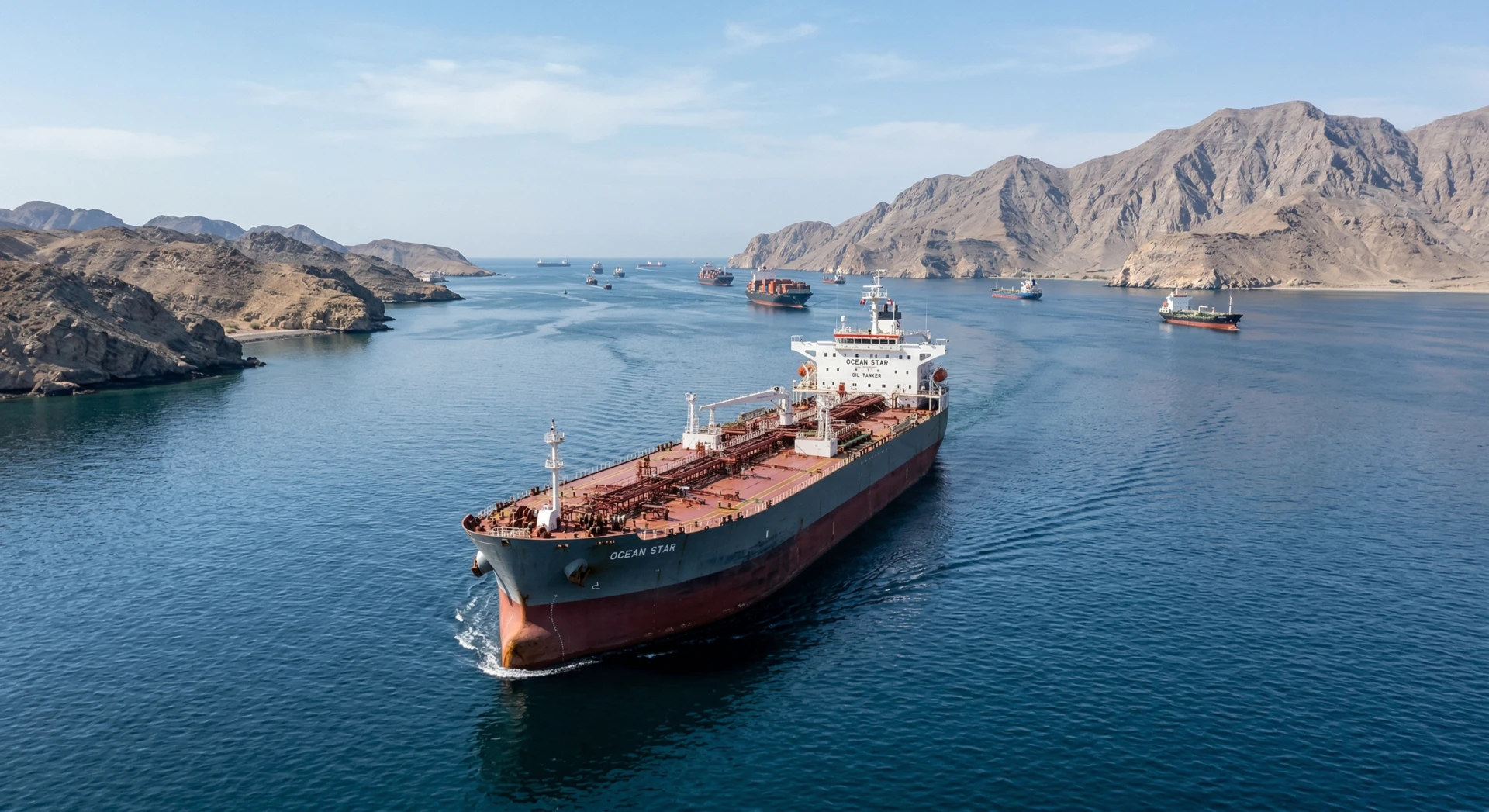
The freight dimension reveals where additional margin concentrates following this infrastructure elimination. Oil tankers passing through accounted for an estimated 15 million barrels per day of crude and other oil product exports, about one-fifth of the world's oil trade. Very Large Crude Carriers (VLCCs) 2 million barrel capacity supertankers that previously loaded at Fujairah for 22 day voyages to Asian refineries now compete for Atlantic Basin loading slots. VLCC day rates from US Gulf Coast to Asia have increased from $28,000 daily in January to $65,000 daily following the Fujairah attack. A VLCC operator earns an additional $37,000 daily $1.48 million additional per 40 day round voyage. This accrues entirely to vessel operators rather than crude cargo owners. For crude buyers, freight now represents 8-12% of total delivered cost compared to 3-5% before the crisis.
Iran's strategic calculus demonstrates sophisticated targeting of bypass infrastructure rather than primary export routes. The attacks came after Trump announced Project Freedom to free stranded ships from the Strait of Hormuz, with Admiral Brad Cooper reporting American forces eliminated six small Iranian boats. The Iranian Revolutionary Guard Corps (IRGC) response was precise: rather than escalate at Hormuz directly, Iran targeted the infrastructure that allowed partial Gulf export continuity. Iran declared a new maritime control zone in the strait and warned commercial vessels against transiting without coordination with Iranian forces. This creates operational deterrence where every US attempt to restore Hormuz transit generates Iranian countermoves against alternative export infrastructure. The strategic message: Iran can eliminate bypass alternatives faster than they can be restored.
The financing structure reveals why this infrastructure targeting proves particularly damaging to Gulf crude export viability. International crude oil sales operate through Letters of Credit (LCs) bank guarantees that payment occurs upon presentation of shipping documents including bills of lading, cargo manifests, and destination certificates. Gulf crude LCs typically specify "Fujairah or Hormuz loading" as acceptable delivery terms, providing buyers with supply security and sellers with delivery flexibility. The UAE's Foreign Ministry said these attacks represent a dangerous escalation and an unacceptable violation. With both loading options eliminated, existing LC arrangements require renegotiation toward Atlantic Basin alternatives a process requiring 30-45 days for credit approval and documentation amendments. During this financing gap, crude flows halt entirely rather than switching automatically to alternative supply sources.
The infrastructure ceiling becomes apparent when examining ADCOP's utilization constraints. Even at maximum 1.5 million barrel daily theoretical capacity, ADCOP could never replace the 15-20 million barrels daily that transited Hormuz during normal operations. The UAE had positioned ADCOP as a "strategic reserve export route" rather than primary export infrastructure. Iran began to control traffic through the strait and charging tolls of over $1 million per ship. Gulf oil producers collectively required 25-30 million barrels daily export capacity; ADCOP provided 1.5 million barrels at maximum utilization. The arithmetic never supported complete bypass functionality it was always a partial pressure valve that allowed continued term contract performance rather than comprehensive alternative routing. Iran's targeting eliminated that limited flexibility entirely.
The counterparty concentration effect amplifies commercial impact beyond simple supply disruption. Asian crude buyers had concentrated their non-Hormuz Gulf supply through Fujairah loading precisely to maintain supplier diversification while managing logistics complexity. Importing countries, particularly in Asia, are suffering as they face fuel shortages. A major Japanese refinery consortium typically sourced 40% of crude requirements from Saudi Aramco and ADNOC via Hormuz, 20% from UAE via Fujairah, and 40% from Atlantic Basin suppliers. This provided geographical and counterparty diversification across three distinct supply chains. With both Gulf routes eliminated, 60% of supply requirements pivot to Atlantic Basin alternatives where counterparty concentration increases substantially. Atlantic Basin crude supply concentrates among fewer major producers primarily US shale operators, Brazilian Petrobras, Norwegian Equinor creating supplier concentration risk that did not exist under diversified Gulf sourcing.
The timeline for bypass restoration reveals the structural damage this attack creates for Gulf oil export architecture. Fujairah oil infrastructure includes not just ADCOP terminal facilities but extensive crude storage tanks, loading jetties, and vessel traffic management systems developed over 12 years of operation. Authorities in Fujairah said an Iranian drone sparked a fire at a key oil facility, wounding three Indian nationals. Physical infrastructure restoration requires 6-18 months depending on damage assessment, equipment procurement, and construction scheduling. However, operational restoration requires insurance coverage, security guarantees, and buyer confidence factors that remain unavailable as long as Iran maintains capabilities and willingness to target bypass infrastructure. Even if physical repairs complete within 6 months, commercial operations cannot resume without credible security guarantees that Iran cannot currently provide and has no incentive to offer.
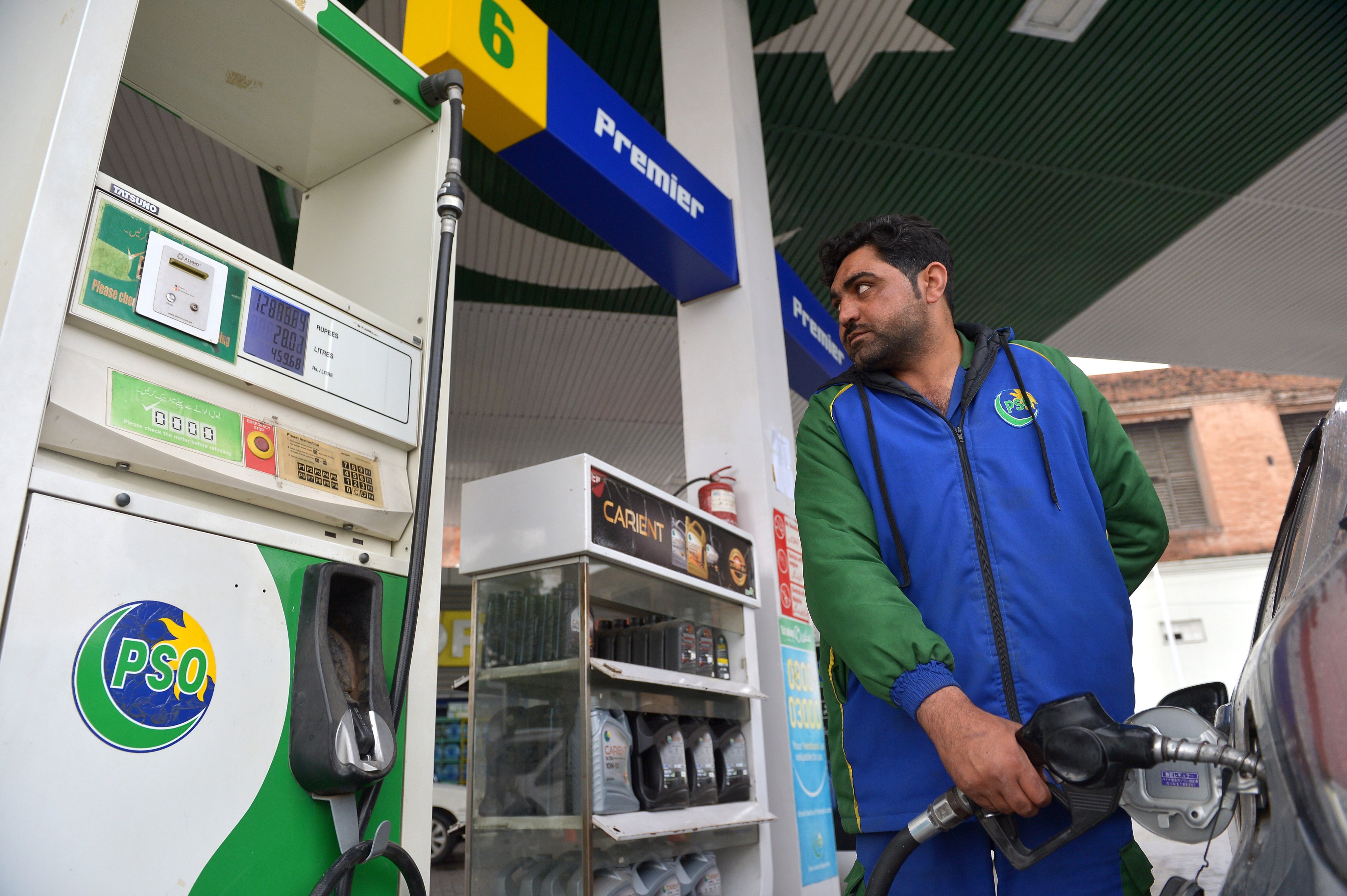
For observers monitoring this commercial collapse, the key signal shifts from Hormuz reopening speculation toward Atlantic Basin crude price differentials. Brent-WTI spread typically $2-6/barrel reflecting transportation cost differences has widened to $12-18/barrel as Asian buyers compete for non-Gulf supply. Brent ticked back up past $114 as markets reacted to the UAE's interceptions. When this spread exceeds $20/barrel, it signals that Asian crude demand cannot be satisfied through Atlantic Basin supply alone, indicating either demand destruction or involuntary inventory drawdowns. Monitor the Dubai-Brent spread specifically: when it inverts Dubai crude trading above Brent despite Gulf supply constraints it confirms that remaining Gulf crude trades at scarcity premiums rather than competitive pricing. This inversion, if sustained beyond 30 days, indicates permanent structural change rather than temporary supply disruption in Gulf oil export capabilities.
.jpg)
.jpg)

'%3e%3cg id='Final-Copy-2_2_' transform='translate(1275.000000, 200.000000)'%3e%3cpath class='st0' d='M7.4,12.8h6.8l3.1-11.6H7.4C4.2,1.2,1.6,3.8,1.6,7S4.2,12.8,7.4,12.8z'/%3e%3c/g%3e%3c/g%3e%3c/g%3e%3cg id='final---dec.11-2020'%3e%3cg id='_x30_208-our-toggle' transform='translate(-1275.000000, -200.000000)'%3e%3cg id='Final-Copy-2' transform='translate(1275.000000, 200.000000)'%3e%3cpath class='st1' d='M22.6,0H7.4c-3.9,0-7,3.1-7,7s3.1,7,7,7h15.2c3.9,0,7-3.1,7-7S26.4,0,22.6,0z M1.6,7c0-3.2,2.6-5.8,5.8-5.8 h9.9l-3.1,11.6H7.4C4.2,12.8,1.6,10.2,1.6,7z'/%3e%3cpath id='x' class='st2' d='M24.6,4c0.2,0.2,0.2,0.6,0,0.8l0,0L22.5,7l2.2,2.2c0.2,0.2,0.2,0.6,0,0.8c-0.2,0.2-0.6,0.2-0.8,0 l0,0l-2.2-2.2L19.5,10c-0.2,0.2-0.6,0.2-0.8,0c-0.2-0.2-0.2-0.6,0-0.8l0,0L20.8,7l-2.2-2.2c-0.2-0.2-0.2-0.6,0-0.8 c0.2-0.2,0.6-0.2,0.8,0l0,0l2.2,2.2L23.8,4C24,3.8,24.4,3.8,24.6,4z'/%3e%3cpath id='y' class='st3' d='M12.7,4.1c0.2,0.2,0.3,0.6,0.1,0.8l0,0L8.6,9.8C8.5,9.9,8.4,10,8.3,10c-0.2,0.1-0.5,0.1-0.7-0.1l0,0 L5.4,7.7c-0.2-0.2-0.2-0.6,0-0.8c0.2-0.2,0.6-0.2,0.8,0l0,0L8,8.6l3.8-4.5C12,3.9,12.4,3.9,12.7,4.1z'/%3e%3c/g%3e%3c/g%3e%3c/g%3e%3c/g%3e%3c/svg%3e) Privacy Choices
Privacy Choices