.avif)
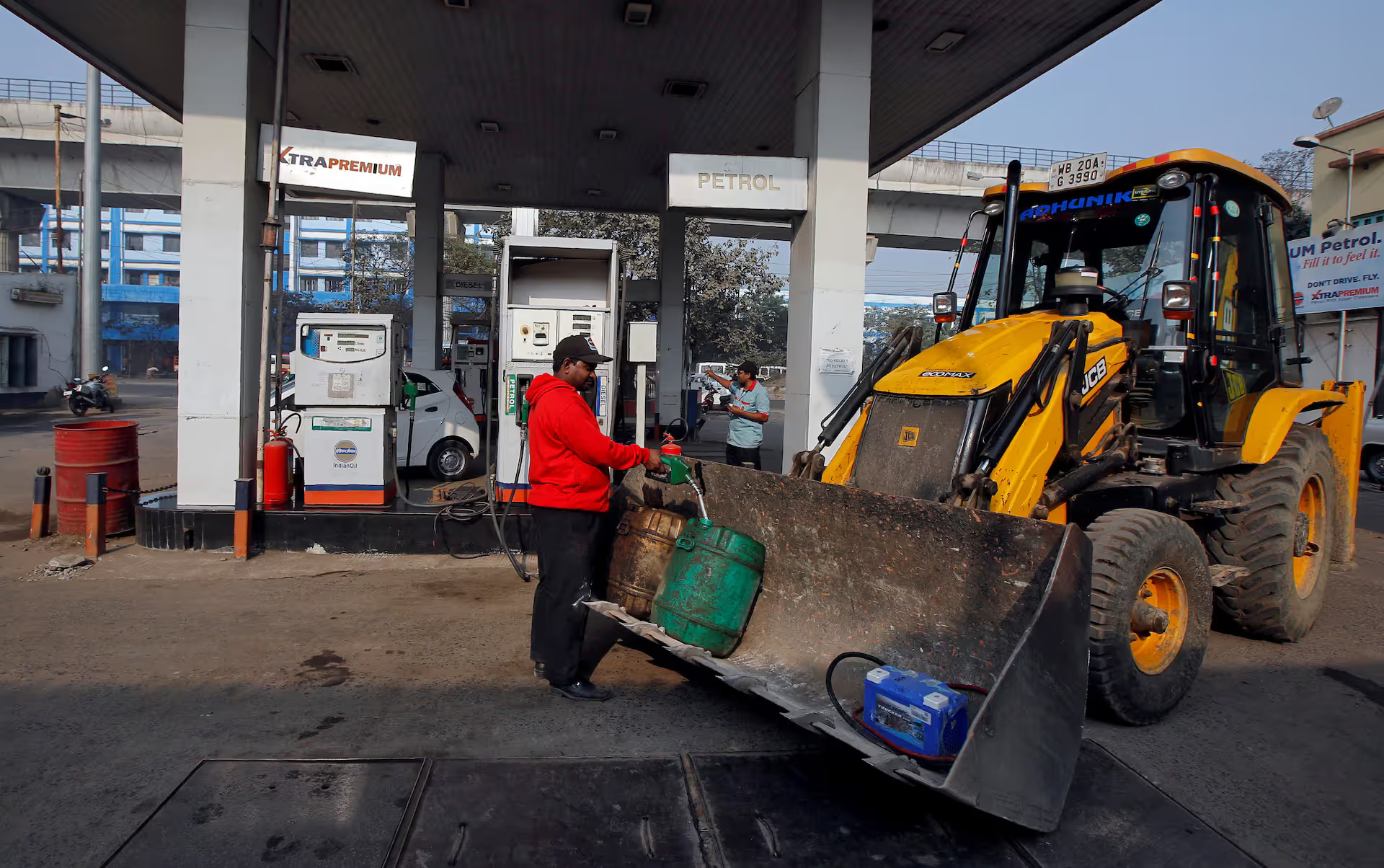
India's imposition of a 21.5 rupees per liter windfall tax on diesel exports has effectively shut down the arbitrage window that had been drawing refined products away from domestic markets. The timing proves critical for product tanker operators who had positioned vessels to capture India to Europe spreads, as the tax now makes those routes uneconomical. Meanwhile, the government slashed diesel excise duties to zero and petrol duties to 3 rupees per liter moves that simultaneously reduce domestic fuel costs while keeping exportable volumes in country. For operators with fixtures loading Indian diesel, this represents an immediate shift in cargo availability and destination economics.
The panic buying that triggered these policy changes remains unexplained in official statements, creating uncertainty about underlying supply chain resilience. Product tanker operators face a market where cargo stems that were previously destined for export arbitrage may now stay domestic, tightening available tonnage for international routes. The government's disclosure of 60 day crude oil stock cover and one month LPG buffer the first such transparency since West Asia conflicts began suggests authorities are managing genuine supply concerns rather than pure perception issues. This stock revelation indicates India's refiners may be operating closer to minimum working inventories than previously understood, potentially affecting their willingness to commit to term export contracts.
For tanker operators, the immediate consequence splits along fixture timing and destination flexibility. Those with vessels already fixed for Indian diesel exports find themselves squeezed by cargo economics that no longer work, while operators positioning for future stems face reduced availability as refiners prioritize domestic supply security. European buyers who had relied on Indian diesel arbitrage now confront both higher prices and reduced volumes, potentially driving them toward alternative supply sources that favor different shipping routes. The shift also benefits sellers in other regions Middle East producers and US Gulf refiners gain pricing power as Indian competition retreats from export markets, though vessel demand patterns will adjust accordingly.
The broader question centers on whether India's policy response addresses structural supply issues or temporary market dislocations. For observers tracking regional energy security, the key signal lies in how quickly India's domestic fuel queues normalize and whether export tax levels adjust downward in coming weeks. If the windfall tax proves temporary, operators should prepare for renewed arbitrage opportunities as Indian refiners resume export optimization. However, if current policies reflect a longer-term strategic pivot toward domestic supply prioritization, the reshaping of Asia-Europe product flows could prove more permanent than current market positioning suggests. The timing coincidence between panic buying and broader West Asia tensions suggests external supply risks may have exposed domestic distribution vulnerabilities that policy alone cannot resolve.

.jpg)
.jpg)

'%3e%3cg id='Final-Copy-2_2_' transform='translate(1275.000000, 200.000000)'%3e%3cpath class='st0' d='M7.4,12.8h6.8l3.1-11.6H7.4C4.2,1.2,1.6,3.8,1.6,7S4.2,12.8,7.4,12.8z'/%3e%3c/g%3e%3c/g%3e%3c/g%3e%3cg id='final---dec.11-2020'%3e%3cg id='_x30_208-our-toggle' transform='translate(-1275.000000, -200.000000)'%3e%3cg id='Final-Copy-2' transform='translate(1275.000000, 200.000000)'%3e%3cpath class='st1' d='M22.6,0H7.4c-3.9,0-7,3.1-7,7s3.1,7,7,7h15.2c3.9,0,7-3.1,7-7S26.4,0,22.6,0z M1.6,7c0-3.2,2.6-5.8,5.8-5.8 h9.9l-3.1,11.6H7.4C4.2,12.8,1.6,10.2,1.6,7z'/%3e%3cpath id='x' class='st2' d='M24.6,4c0.2,0.2,0.2,0.6,0,0.8l0,0L22.5,7l2.2,2.2c0.2,0.2,0.2,0.6,0,0.8c-0.2,0.2-0.6,0.2-0.8,0 l0,0l-2.2-2.2L19.5,10c-0.2,0.2-0.6,0.2-0.8,0c-0.2-0.2-0.2-0.6,0-0.8l0,0L20.8,7l-2.2-2.2c-0.2-0.2-0.2-0.6,0-0.8 c0.2-0.2,0.6-0.2,0.8,0l0,0l2.2,2.2L23.8,4C24,3.8,24.4,3.8,24.6,4z'/%3e%3cpath id='y' class='st3' d='M12.7,4.1c0.2,0.2,0.3,0.6,0.1,0.8l0,0L8.6,9.8C8.5,9.9,8.4,10,8.3,10c-0.2,0.1-0.5,0.1-0.7-0.1l0,0 L5.4,7.7c-0.2-0.2-0.2-0.6,0-0.8c0.2-0.2,0.6-0.2,0.8,0l0,0L8,8.6l3.8-4.5C12,3.9,12.4,3.9,12.7,4.1z'/%3e%3c/g%3e%3c/g%3e%3c/g%3e%3c/g%3e%3c/svg%3e) Privacy Choices
Privacy Choices