.avif)
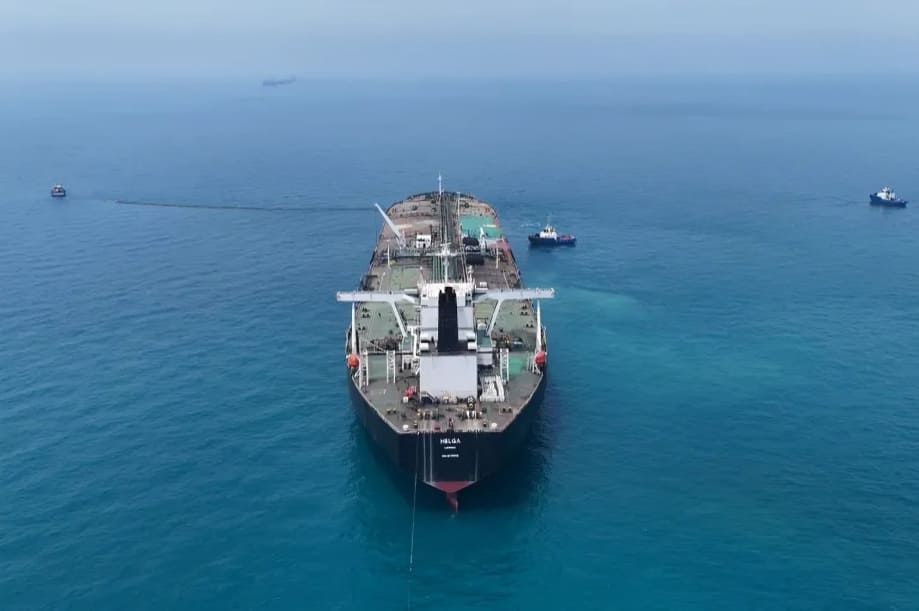
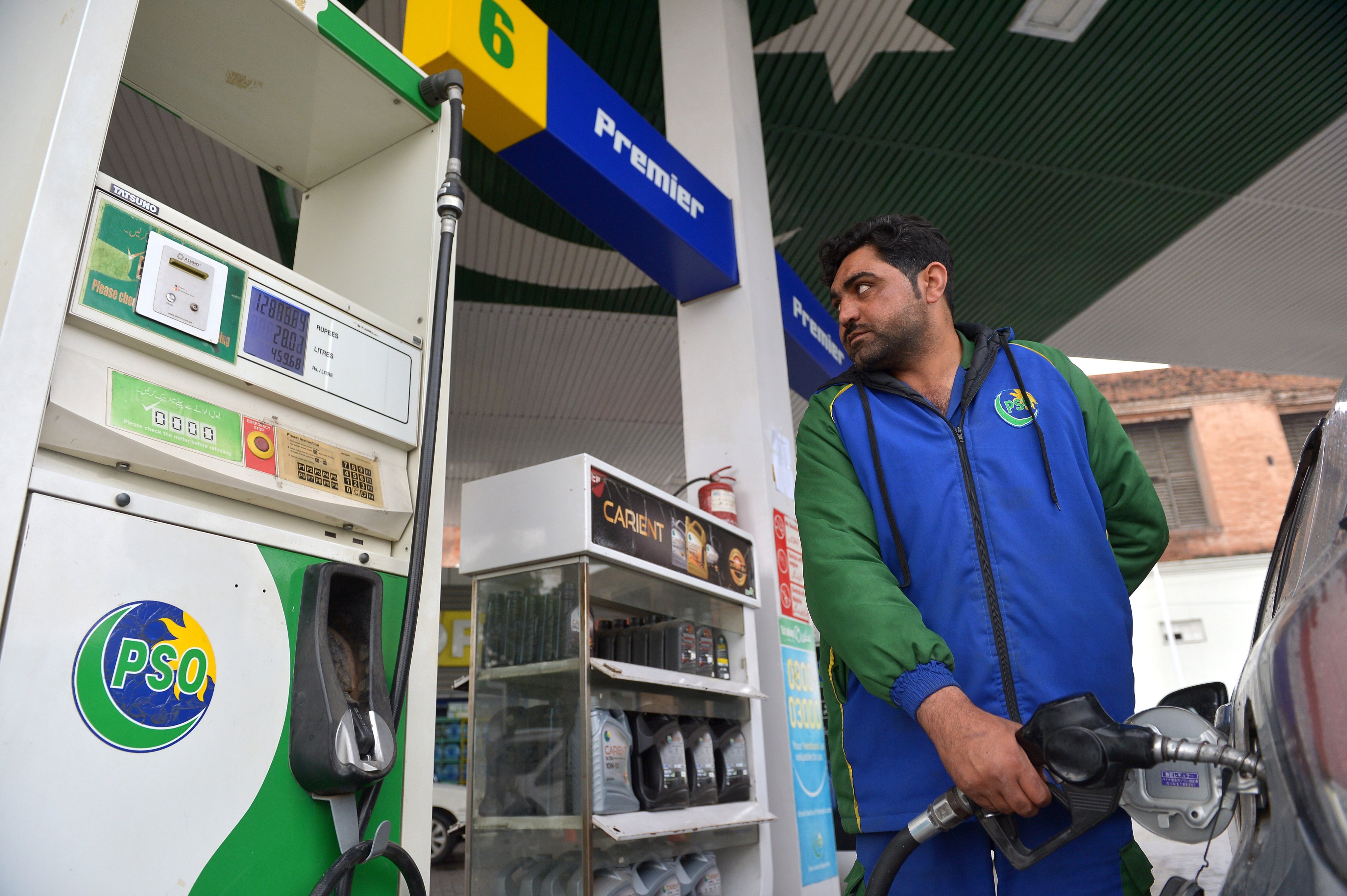
VLCC owners face margin compression exceeding $50 million per voyage as US gas prices climb from $2.98 to $4.46 per gallon and Brent crude trades near $108/barrel amid Project Freedom's one-way evacuation from the Strait of Hormuz. President Trump announced the US Navy will guide foreign ships through the strait starting Monday, describing the operation as helping vessels "freely and ably get on with their business" while maintaining the blockade that prevents new entries. For VLCC operators, this creates an unprecedented margin anatomy where approximately 2,000 ships remain stranded in the Gulf and each successful evacuation commands premiums, but return voyages are impossible until the strait reopens.
The escort operation codenamed Project Freedom establishes what industry sources call a "margin trap" for VLCC owners. US Central Command deploys guided-missile destroyers, over 100 aircraft, and 15,000 service members to guide vessels out, but ships "will not be returning until the area becomes safe for navigation" according to Trump. Consider a standard VLCC carrying 2 million barrels: pre-crisis, the vessel earned approximately $14,000/day on Gulf-Asia routes. Under Project Freedom, successful evacuation generates immediate charter premiums of $80,000-120,000/day a five to eight-fold increase but eliminates return cargo opportunities that typically provide 60-70% of annual revenue. The arithmetic is brutal: short-term windfalls cannot compensate for structural route elimination.
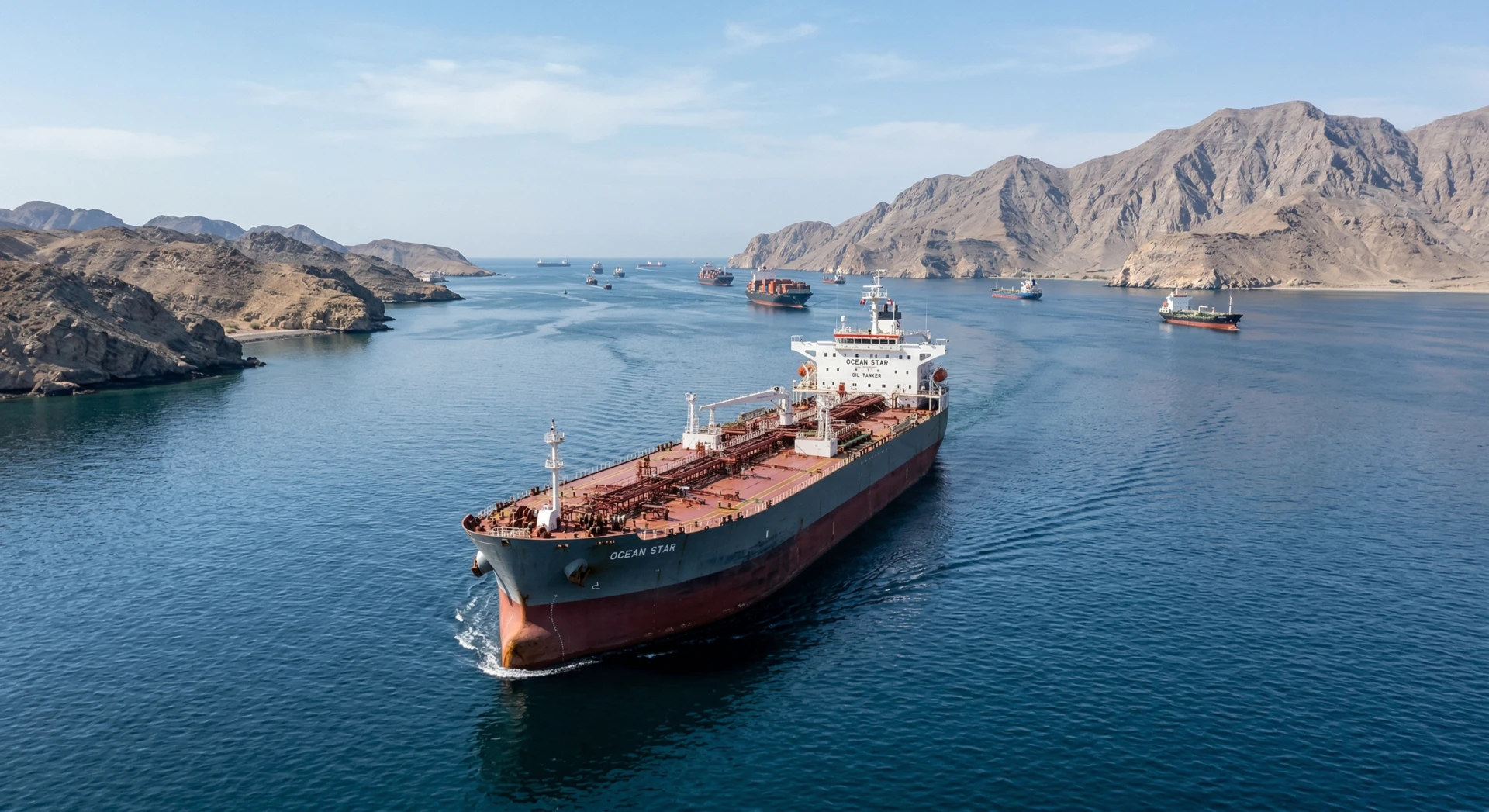
Freight rates now concentrate margin in evacuation rather than normal trade cycles. Pre-war, about 138 vessels transited the Strait daily, but marine traffic data shows growing clusters of loitering vessels on both sides since March 1. VLCC time-charter rates have surged from $25,000/day in February to current levels exceeding $100,000/day for available tonnage, but availability has collapsed as vessels either remain trapped or avoid the Gulf entirely. The margin concentration favors operators with vessels already positioned outside the Gulf over those with assets stranded inside. Atlantic Basin VLCCs now command premiums of $40,000-60,000/day above Gulf-positioned vessels a reversal of historical patterns where Gulf proximity provided competitive advantage.
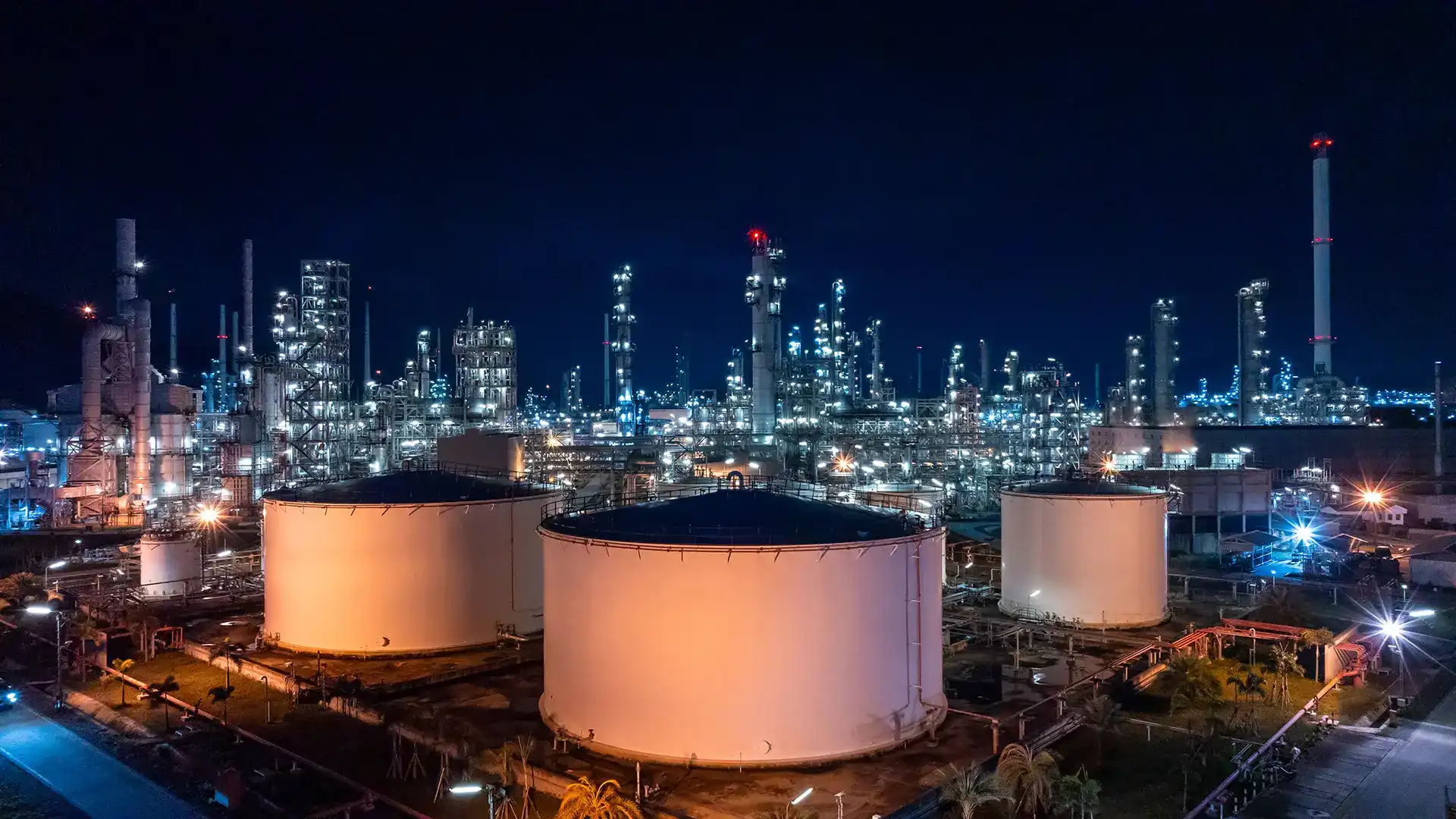
On the buy side, Asian refiners face acute supply disruption as MEG crude availability collapses. The Strait of Hormuz, through which 20% of world oil and LNG shipped during peacetime, has become "the chokepoint of the global economy" with tremors "being felt across the world". Japanese and South Korean refineries, which typically source 40-50% of crude requirements from the Gulf, now pay premiums of $15-25/barrel for substitute barrels from West Africa, North Sea, and US shale. The delivered cost impact for a typical 300,000 barrel/day refinery approaches $1.5 million daily costs that compress refining margins and ultimately reach pump prices globally.
On the sell side, Gulf crude producers face catastrophic revenue loss despite higher benchmark prices. The US Department of Defense estimates Iran lost $4.8 billion in oil revenue from April 13 to May 1, with 31 tankers carrying 53 million barrels "stuck in the Gulf". Saudi Arabia and UAE producers, despite supporting US operations, suffer identical logistical constraints. Saudi Aramco's Ras Tanura terminal the world's largest oil port has seen loading capacity utilization drop from 90% to approximately 15% as VLCCs avoid the route. The revenue impact for Gulf producers approaches $2 billion daily in deferred or cancelled sales, creating cash flow pressures that persist even after benchmark prices recover.
For large integrated traders like Vitol, Trafigura, and national oil company trading arms, Project Freedom creates both opportunity and structural risk. These operators can deploy derivatives strategies buying Brent calls while selling WTI puts to capture the widening Brent-WTI spread, now exceeding $8/barrel compared to historical $2-4/barrel ranges. Time spreads offer additional upside: front-month Brent trades $12-15/barrel above six-month forwards, creating profitable storage arbitrage for operators with tank capacity. However, physical positioning becomes critical as paper profits depend on eventual normalization of Gulf flows.
For smaller regional operators mid-sized fuel importers, independent distributors, regional cooperatives Project Freedom offers no derivatives hedging options but creates existential supply security risks. A typical Southeast Asian fuel distributor sourcing 50,000 barrels/month from Gulf refineries now faces supply interruption lasting potentially 6-12 months. Practical alternatives include diversifying suppliers to minimize Gulf dependence (target: reduce from 70% to 40% of supply), establishing bilateral fixed-price contracts with non-Gulf producers lasting 12-18 months, and building inventory buffers equivalent to 60-90 days consumption versus historical 30-45 days.
The financing dimension creates compounding pressure across the crude trade ecosystem. Letters of credit (LCs) bank guarantees that payment will be made once shipping documents are presented now cost 2-3% annually for Gulf-related transactions versus 0.3-0.5% for Atlantic Basin trades. Working capital requirements have effectively doubled as buyers must finance longer supply chains and sellers face extended payment cycles. For a $100 million crude cargo, additional financing costs approach $2-3 million annually equivalent to $1-1.50/barrel in margin compression that cannot be recovered through operational efficiency.
Mine clearance operations add temporal complexity that extends beyond immediate evacuation. The United States estimates it will take six months to clear mines Iran has laid, while Iran has published maps showing mined areas and an alternative route bringing ships closer to Iran's coast rather than Oman's. Historical precedent suggests longer timelines: during the Iran-Iraq Tanker War of the 1980s, comprehensive mine clearance required 18-24 months after hostilities ended. Insurance markets price this uncertainty through war risk premiums now exceeding $300,000 per VLCC voyage compared to $15,000-25,000 historically.
Market structure permanently shifts as Project Freedom establishes precedent for military-escorted commercial shipping. The operation creates a template where geopolitical crises trigger immediate naval involvement in commodity logistics fundamentally altering risk-return calculations for global trade routes. Alternative supply chains that bypass traditional chokepoints gain permanent strategic premium, while infrastructure investments in non-traditional routes accelerate. The Red Sea-Suez Canal route gains relative importance, as does the Cape of Good Hope alternative despite 14-21 additional sailing days and $8-12/barrel additional transport costs.
For observers, the definitive signal emerges through the Brent-Dubai spread the price difference between North Sea crude and Middle East crude. Pre-crisis, this spread traded between -$2 to +$3/barrel. Current levels exceeding +$25/barrel indicate complete Gulf supply disruption. Spread normalization below $10/barrel within 30 days would suggest successful evacuation and potential route reopening. Above $30/barrel indicates permanent structural shift toward non-Gulf crude dependence, requiring 12-24 months for alternative supply infrastructure development.
.jpg)
.jpg)

'%3e%3cg id='Final-Copy-2_2_' transform='translate(1275.000000, 200.000000)'%3e%3cpath class='st0' d='M7.4,12.8h6.8l3.1-11.6H7.4C4.2,1.2,1.6,3.8,1.6,7S4.2,12.8,7.4,12.8z'/%3e%3c/g%3e%3c/g%3e%3c/g%3e%3cg id='final---dec.11-2020'%3e%3cg id='_x30_208-our-toggle' transform='translate(-1275.000000, -200.000000)'%3e%3cg id='Final-Copy-2' transform='translate(1275.000000, 200.000000)'%3e%3cpath class='st1' d='M22.6,0H7.4c-3.9,0-7,3.1-7,7s3.1,7,7,7h15.2c3.9,0,7-3.1,7-7S26.4,0,22.6,0z M1.6,7c0-3.2,2.6-5.8,5.8-5.8 h9.9l-3.1,11.6H7.4C4.2,12.8,1.6,10.2,1.6,7z'/%3e%3cpath id='x' class='st2' d='M24.6,4c0.2,0.2,0.2,0.6,0,0.8l0,0L22.5,7l2.2,2.2c0.2,0.2,0.2,0.6,0,0.8c-0.2,0.2-0.6,0.2-0.8,0 l0,0l-2.2-2.2L19.5,10c-0.2,0.2-0.6,0.2-0.8,0c-0.2-0.2-0.2-0.6,0-0.8l0,0L20.8,7l-2.2-2.2c-0.2-0.2-0.2-0.6,0-0.8 c0.2-0.2,0.6-0.2,0.8,0l0,0l2.2,2.2L23.8,4C24,3.8,24.4,3.8,24.6,4z'/%3e%3cpath id='y' class='st3' d='M12.7,4.1c0.2,0.2,0.3,0.6,0.1,0.8l0,0L8.6,9.8C8.5,9.9,8.4,10,8.3,10c-0.2,0.1-0.5,0.1-0.7-0.1l0,0 L5.4,7.7c-0.2-0.2-0.2-0.6,0-0.8c0.2-0.2,0.6-0.2,0.8,0l0,0L8,8.6l3.8-4.5C12,3.9,12.4,3.9,12.7,4.1z'/%3e%3c/g%3e%3c/g%3e%3c/g%3e%3c/g%3e%3c/svg%3e) Privacy Choices
Privacy Choices