.avif)
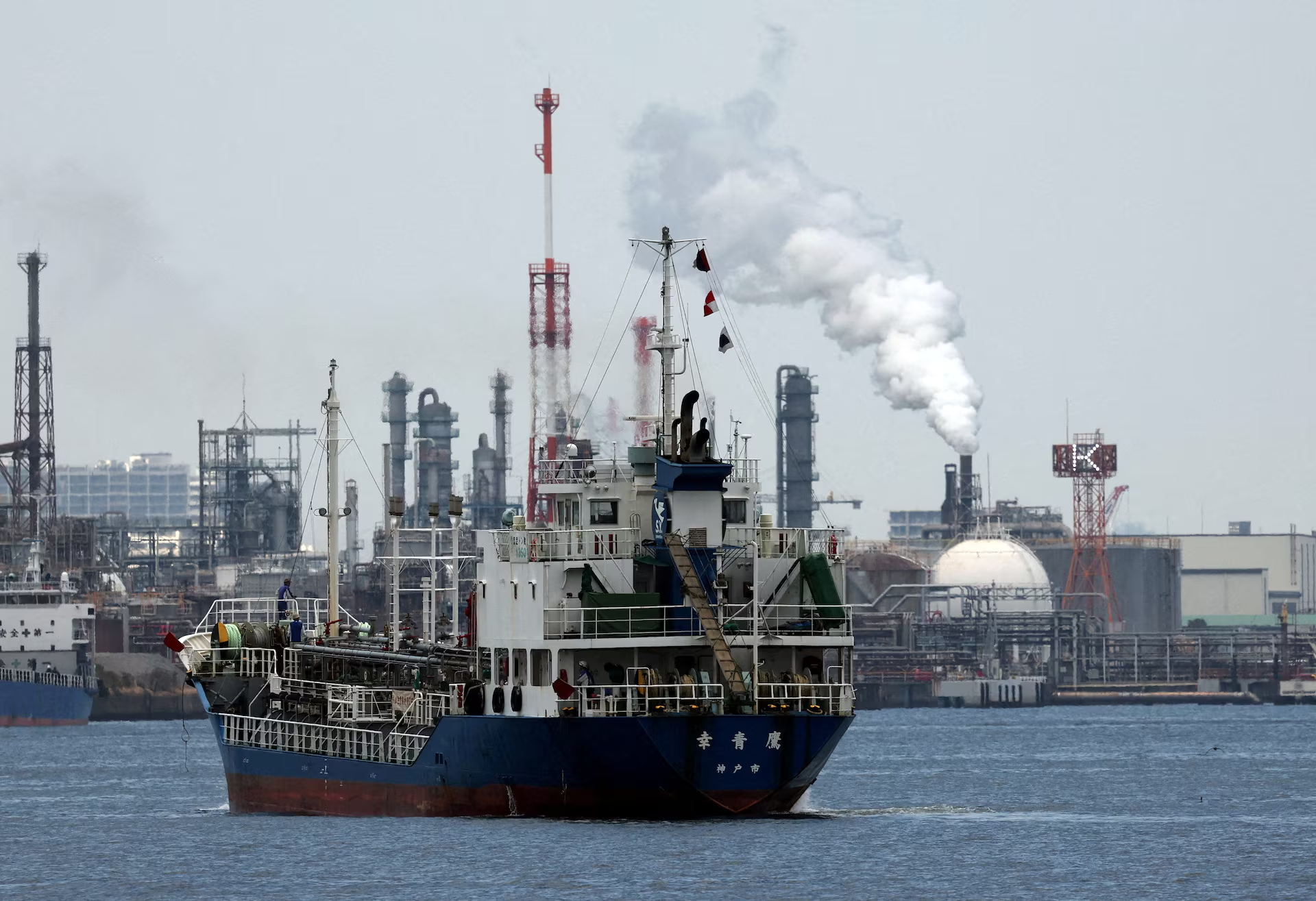
Japanese Naphtha Importers face margin compression of approximately $180–220 per metric tonne as Toyota's third consecutive month of sales decline 3.1% year over year to 849,306 vehicles in April signals broader industrial feedstock stress hitting Japan's manufacturing base. Current naphtha CFR Japan prices at $944.61/MT represent a 21% premium over traditional Middle East sourcing, while exports to the Middle East plunged 92% with only 2,418 vehicles shipped quantifying the supply chain disruption beyond headline automotive figures. Japan relies on the Middle East for 40% of its naphtha imports and 40% of domestic naphtha is refined from crude oil mainly from that region. Naphtha a light petroleum fraction used to produce ethylene, propylene, and other basic petrochemicals that form the building blocks for plastics, synthetic rubber, and chemical fibres has become Japan's critical supply chain chokepoint.
Naphtha CFR Japan physical prices jumped from $622.58/MT in late February to $756.00/MT by early March, a 21% spike that exceeds typical seasonal volatility by a factor of four. Consider a mid-sized Japanese petrochemical company importing 30,000 tonnes monthly for ethylene cracking operations. At pre-crisis pricing around $650/MT, monthly feedstock costs were approximately $19.5 million. At current levels near $945/MT, the same volume costs $28.4 million an additional $8.9 million monthly, or $107 million annualised impact that cannot be absorbed without passing costs downstream. Thinner manufacturers report raw material deliveries have dropped to roughly half of normal levels, with some companies considering temporary shutdowns as supplies run dry. The automotive data merely surfaces the broader industrial stress: ICIS analysts estimate average cracker utilization rates in Japan dropped to around 50% in April, constraining the entire petrochemical value chain.
On the buy side: Large integrated importers like Itochu Corporation and Marubeni are securing alternative naphtha supplies from US Gulf Coast and Northwest Europe at $180–220/MT premiums over traditional Middle East sources. US Atlantic Coast has begun exporting naphtha to India, with 17,200 barrels per day recently shipped from Paulsboro, New Jersey, demonstrating the emergence of transatlantic arbitrage flows. These buyers can hedge exposure through Singapore naphtha swaps, but the instruments trade thin and basis risk remains substantial. On the sell side: Middle East producers lose established customer relationships built over decades, while facing force majeure declarations from buyers unable to take contracted cargoes. China has directed its refiners to immediately stop all oil product exports except to Hong Kong and Macau, removing potential relief supplies from the broader Asian market.
For large integrated trading houses (Mitsui, Itochu, national oil company trading arms) with derivatives access: Singapore Exchange naphtha CFR Japan swaps provide partial hedge coverage, but calendar spreads remain volatile and basis risk between physical deliveries and financial settlement persists. Monthly hedge costs approximate $15–25/MT for near-term protection. For smaller regional operators independent chemical distributors, specialty plastics manufacturers, regional petrochemical cooperatives without derivatives access: bilateral term contracts with suppliers offer price stability but require higher creditworthiness thresholds and longer commitment periods. Alternative hedging through crude oil futures provides imperfect correlation but accessible risk management for companies lacking naphtha-specific instruments.
Japan has secured enough petroleum-derived naphtha to last into 2027, with imports expected to triple in May, according to Prime Minister Takaichi, but this reflects emergency stockpiling at premium costs rather than sustainable commercial operations. Observers should monitor the Japan Petrochemical Industry Association's monthly supply reports, due by the 15th of each month, which provide upstream capacity utilisation and downstream demand indicators. A Kyodo News poll found over 70% of Japanese respondents expressed concern about naphtha supply disruptions, as Japan sources more than 90% of its oil from the Middle East. The forward signal: sustained naphtha premiums above $850/MT CFR Japan through September indicate structural supply chain realignment rather than temporary disruption Japanese industrial competitiveness erodes as feedstock costs permanently reset higher.

.jpg)


'%3e%3cg id='Final-Copy-2_2_' transform='translate(1275.000000, 200.000000)'%3e%3cpath class='st0' d='M7.4,12.8h6.8l3.1-11.6H7.4C4.2,1.2,1.6,3.8,1.6,7S4.2,12.8,7.4,12.8z'/%3e%3c/g%3e%3c/g%3e%3c/g%3e%3cg id='final---dec.11-2020'%3e%3cg id='_x30_208-our-toggle' transform='translate(-1275.000000, -200.000000)'%3e%3cg id='Final-Copy-2' transform='translate(1275.000000, 200.000000)'%3e%3cpath class='st1' d='M22.6,0H7.4c-3.9,0-7,3.1-7,7s3.1,7,7,7h15.2c3.9,0,7-3.1,7-7S26.4,0,22.6,0z M1.6,7c0-3.2,2.6-5.8,5.8-5.8 h9.9l-3.1,11.6H7.4C4.2,12.8,1.6,10.2,1.6,7z'/%3e%3cpath id='x' class='st2' d='M24.6,4c0.2,0.2,0.2,0.6,0,0.8l0,0L22.5,7l2.2,2.2c0.2,0.2,0.2,0.6,0,0.8c-0.2,0.2-0.6,0.2-0.8,0 l0,0l-2.2-2.2L19.5,10c-0.2,0.2-0.6,0.2-0.8,0c-0.2-0.2-0.2-0.6,0-0.8l0,0L20.8,7l-2.2-2.2c-0.2-0.2-0.2-0.6,0-0.8 c0.2-0.2,0.6-0.2,0.8,0l0,0l2.2,2.2L23.8,4C24,3.8,24.4,3.8,24.6,4z'/%3e%3cpath id='y' class='st3' d='M12.7,4.1c0.2,0.2,0.3,0.6,0.1,0.8l0,0L8.6,9.8C8.5,9.9,8.4,10,8.3,10c-0.2,0.1-0.5,0.1-0.7-0.1l0,0 L5.4,7.7c-0.2-0.2-0.2-0.6,0-0.8c0.2-0.2,0.6-0.2,0.8,0l0,0L8,8.6l3.8-4.5C12,3.9,12.4,3.9,12.7,4.1z'/%3e%3c/g%3e%3c/g%3e%3c/g%3e%3c/g%3e%3c/svg%3e) Privacy Choices
Privacy Choices