.avif)

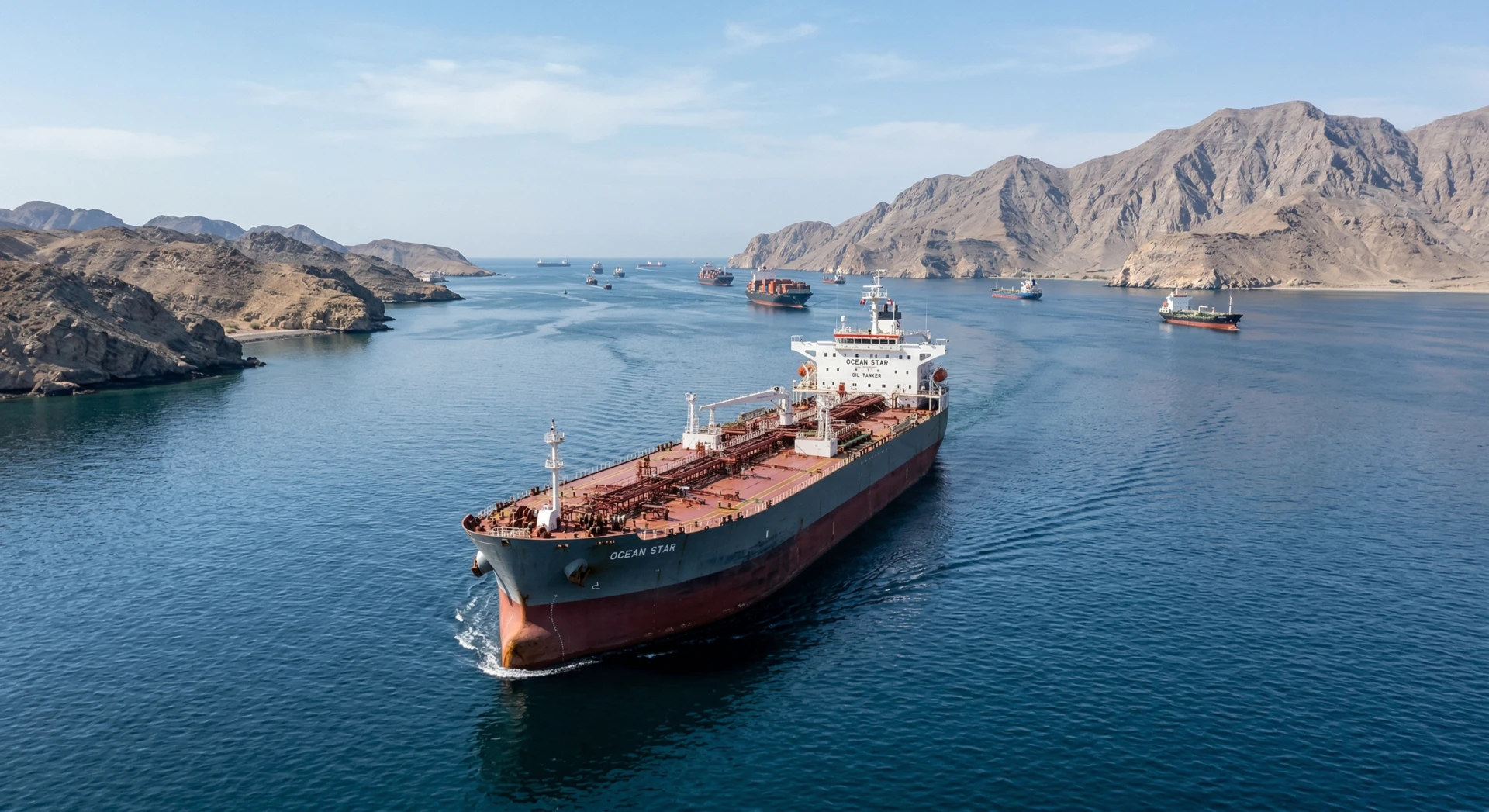
Japan's importers face a $4 billion annual cost shock as crude oil imports from the Middle East plunged 64% in April, marking the steepest drop since 1980, while the trade balance grew to a surplus of 301.9 billion yen ($1.90 billion). The positive headline masks profound supply chain disruption for Japanese refiners forced to replace cheap Middle East crude with US barrels costing $8-12/barrel more. Over 90% of Japan's oil imports have come from the Middle East, and most of them have come via the strait, making this the most dramatic supply substitution in Japan's modern energy history.
A Japanese refiner importing 100,000 barrels per day faces an additional cost of $800,000 to $1.2 million daily approximately $30 million monthly from sourcing US crude instead of Dubai crude. Brent crude is trading at $112.93 per barrel, about $47 higher than where it stood a year ago, while Dubai crude commands similar premiums. The switch from Middle East to US crude adds transport costs of 35 additional days and VLCC freight rates that have doubled since pre-crisis levels. This margin compression isn't captured in Japan's positive trade data because the cost increase appears as higher import values, not reduced competitiveness.
On the buy side: Japanese refiners like JXTG and Idemitsu Kosan are absorbing margin compression of $50-75 million monthly as they lock in expensive US crude through bilateral contracts extending 6-12 months forward. These refiners cannot pass through the full cost increase to domestic fuel distributors without risking market share, particularly for industrial diesel and heavy fuel oil where Korean and Singaporean competition remains fierce. The hidden inflation builds into Japan's energy cost structure regardless of positive trade balance headlines.
On the sell side: US crude exporters capturing windfall margins of $2-3 billion annually from Japan's forced displacement demand. Gulf Coast refiners with spare export capacity can command $6-8/barrel premiums to Asian buyers desperate for reliable supply. An increase in crude oil imports from the U.S. offset part of that, but only partially Japanese buyers pay whatever premium necessary to secure barrels, creating seller's market conditions that benefit Permian Basin producers and US Gulf Coast export terminals.
For large integrated traders like Vitol or ExxonMobil's trading arm: the arbitrage concentrates in freight and regional price spreads, with traders chartering VLCCs at $25-30/MT (double pre-crisis rates) to carry US crude to Japan. Japan has moved to diversify crude procurement by sourcing additional supplies from the United States and other non-Middle Eastern producers, but the offset has been partial at best. These traders hedge the 35 day voyage using Brent-WTI spreads and freight derivatives, but smaller operators cannot access these instruments.
For smaller regional operators independent Japanese fuel distributors, regional cooperatives without refining assets the practical equivalent involves accepting higher wholesale costs from refiners and extending customer payment terms to 60-90 days rather than 30 days. These operators diversify supplier relationships bilaterally, sourcing Korean petroleum products when Japanese refiner margins become prohibitive, and adjusting inventory management to carry 45-60 days of stock rather than 30 days to buffer supply disruption risk.
Crude oil import volumes collapsed 64% in April, the steepest fall since 1980 according to a finance ministry official, with the value decline of 49.9% the largest since the depths of the COVID-19 pandemic in November 2020. Yet Japan's export machinery continues operating by drawing down strategic petroleum reserves built during decades of energy security planning. Export resilience has been supported in part by domestic production drawing on Japan's substantial strategic oil reserves, a buffer that cannot be sustained indefinitely. Japan's 324 million barrel Strategic Petroleum Reserve provides 90 days of protection at current consumption, but every month of Middle East supply disruption drains this buffer.
The Korean petroleum product arbitrage emerges as Japanese refiners struggle with feedstock costs. Japan's energy imports fell in April despite rapidly rising global oil and gas prices due to the Middle East conflict, but Korean refiners maintaining Middle East crude access through Iran exemptions can export diesel and gasoline to Japan at elevated margins. This creates dependency on Korean product imports when Japan historically exported refined products across Asia.
Freight becomes the critical margin determinant in this crisis. VLCCs carrying 2 million barrels from US Gulf Coast to Japan earn approximately $28-30/MT at current rates around $56-60 million per voyage compared to $16-20 million pre-crisis. The Persian Gulf would typically supply economies with around 20 million barrels of oil per day, and the war triggered a surge in prices that topped at $116 per barrel in March. The additional $40 million per voyage cost must be absorbed somewhere in the supply chain ultimately by Japanese refiners unable to pass through full costs to end consumers without destroying demand.
The last comparable crisis was the 1979 Iranian revolution, when Japan also faced Middle East supply disruption lasting 18 months. Current disruption shows no clear resolution timeline. Abu Dhabi National Oil Co.'s CEO said full recovery in Middle Eastern oil flows is unlikely before late 2027, making this a structural shift rather than temporary disruption for Japanese energy buyers.
For observers: monitor the Japan-Korea petroleum product spread when Korean diesel commands $15+/MT premiums to Singapore prices, Japanese refiner economics are unsustainable. Track Japan's weekly SPR draw data published by METI; drawdown rates exceeding 1.5 million barrels weekly indicate crisis acceleration. Tokyo is considering a supplementary budget of around 3 trillion yen for the current fiscal year, a signal that the government regards the Hormuz closure as a prolonged rather than temporary feature of the economic environment. Watch for Japanese government petroleum product import quotas by July 2026 as the clearest signal that domestic refining capacity cannot handle the margin compression from US crude dependency.

.jpg)
.jpg)

'%3e%3cg id='Final-Copy-2_2_' transform='translate(1275.000000, 200.000000)'%3e%3cpath class='st0' d='M7.4,12.8h6.8l3.1-11.6H7.4C4.2,1.2,1.6,3.8,1.6,7S4.2,12.8,7.4,12.8z'/%3e%3c/g%3e%3c/g%3e%3c/g%3e%3cg id='final---dec.11-2020'%3e%3cg id='_x30_208-our-toggle' transform='translate(-1275.000000, -200.000000)'%3e%3cg id='Final-Copy-2' transform='translate(1275.000000, 200.000000)'%3e%3cpath class='st1' d='M22.6,0H7.4c-3.9,0-7,3.1-7,7s3.1,7,7,7h15.2c3.9,0,7-3.1,7-7S26.4,0,22.6,0z M1.6,7c0-3.2,2.6-5.8,5.8-5.8 h9.9l-3.1,11.6H7.4C4.2,12.8,1.6,10.2,1.6,7z'/%3e%3cpath id='x' class='st2' d='M24.6,4c0.2,0.2,0.2,0.6,0,0.8l0,0L22.5,7l2.2,2.2c0.2,0.2,0.2,0.6,0,0.8c-0.2,0.2-0.6,0.2-0.8,0 l0,0l-2.2-2.2L19.5,10c-0.2,0.2-0.6,0.2-0.8,0c-0.2-0.2-0.2-0.6,0-0.8l0,0L20.8,7l-2.2-2.2c-0.2-0.2-0.2-0.6,0-0.8 c0.2-0.2,0.6-0.2,0.8,0l0,0l2.2,2.2L23.8,4C24,3.8,24.4,3.8,24.6,4z'/%3e%3cpath id='y' class='st3' d='M12.7,4.1c0.2,0.2,0.3,0.6,0.1,0.8l0,0L8.6,9.8C8.5,9.9,8.4,10,8.3,10c-0.2,0.1-0.5,0.1-0.7-0.1l0,0 L5.4,7.7c-0.2-0.2-0.2-0.6,0-0.8c0.2-0.2,0.6-0.2,0.8,0l0,0L8,8.6l3.8-4.5C12,3.9,12.4,3.9,12.7,4.1z'/%3e%3c/g%3e%3c/g%3e%3c/g%3e%3c/g%3e%3c/svg%3e) Privacy Choices
Privacy Choices