.avif)

Kuwait crude exporters face immediate margin erosion as Iran's deadly airport drone strike killing one and injuring 63 introduces the first civilian infrastructure attack since April's ceasefire. The margin impact is quantifiable: Kuwait's crude trades at a $2-4/barrel discount to Brent to compensate buyers for escalation risk, erasing roughly $5-10 million daily from Kuwait's 2.4 million barrel per day export revenues. With Brent crude trading near $97/barrel and volatile regional conditions maintaining elevated prices, the geographical risk premium has become material.
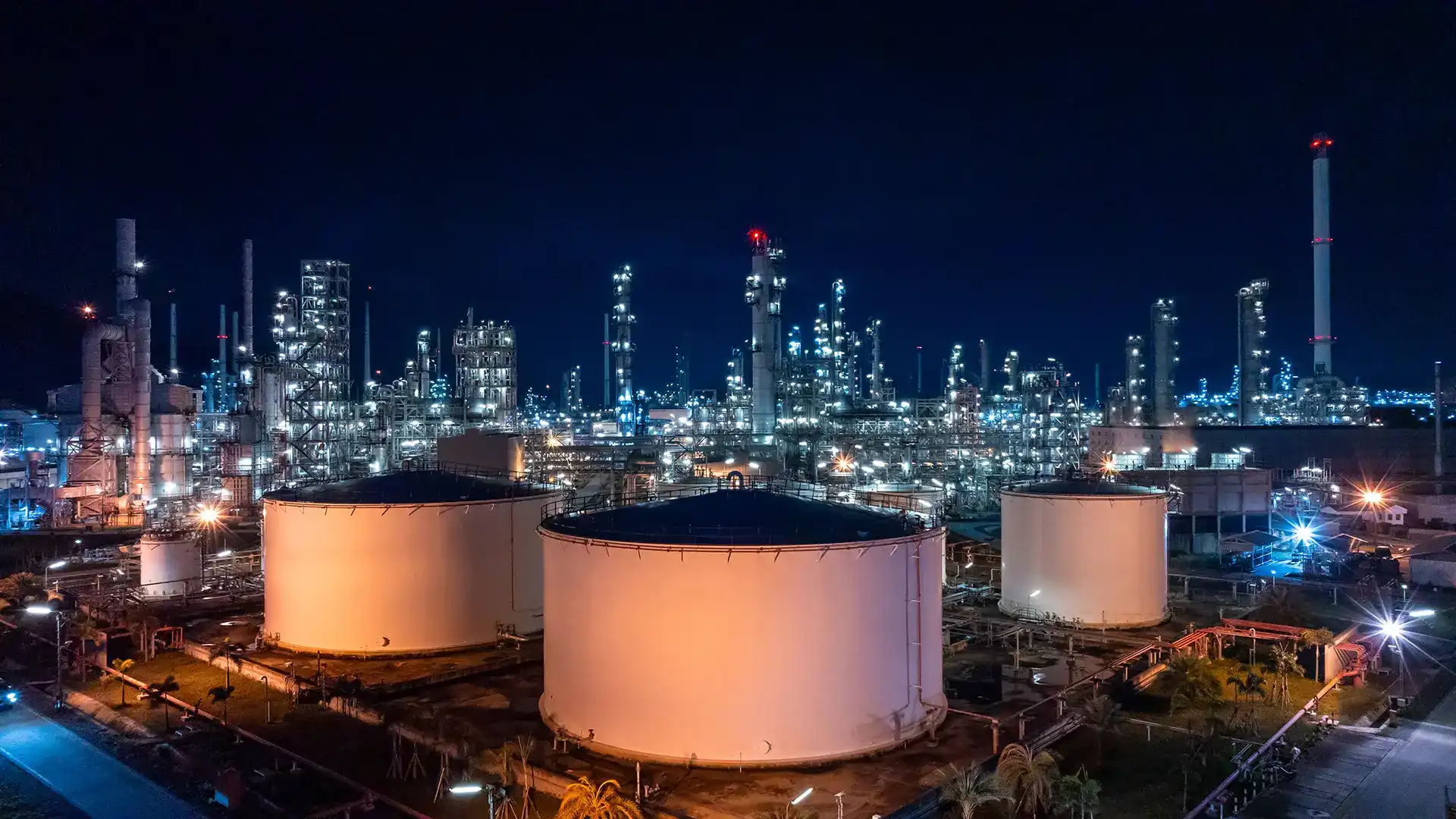
The infrastructure targeting represents a structural escalation. Kuwait International Airport suffered severe damage to Terminal One facilities, forcing temporary closure, but the real vulnerability lies thirty kilometres south. Kuwait's Mina al-Ahmadi and Mina Abdullah export terminals which collectively handle Kuwait's entire 2.4 million bpd crude export capacity sit exposed to the same drone technology that struck the airport. A loaded 2 million barrel VLCC (Very Large Crude Carrier) at either terminal represents $190 million of crude at current prices. Iran's demonstration of precision strike capability against civilian infrastructure signals that oil facilities are no longer theoretical targets.
On the buy side, Asian refiners Kuwait's primary export market now factor escalation premiums into term contracts. A mid-sized South Korean refiner importing 100,000 bpd of Kuwait crude faces an additional $2-4 million monthly cost from risk premiums alone. Chinese independent refiners, already operating on thin margins, reduce Kuwait crude purchasing and substitute with Saudi Arab Light or UAE Murban crude, which trade without Kuwait's geographical discount. Japanese refiners with long-term Kuwait contracts hedge escalation risk through freight derivatives, paying an additional $3-5/MT premium for insurance coverage.
On the sell side, Kuwait Petroleum Corporation confronts margin compression across its entire crude portfolio. The company's flagship Kuwait Export Crude a medium sour grade that typically commands Asian benchmark pricing now trades at Dated Brent minus $2-4/barrel. This discount directly impacts state revenues: at 2.4 million bpd export volumes, each $1/barrel discount costs Kuwait approximately $875 million annually. Kuwait's crude marketing division must either accept discounted pricing or reduce export volumes, storing crude domestically until risk premiums recede.
For large integrated traders Vitol, Trafigura, or national oil company trading arms the Kuwait situation creates both margin pressure and arbitrage opportunities. Traders with existing Kuwait crude positions face immediate mark to market losses of $2-4/barrel but can hedge through Brent futures or Dubai swaps. The risk premium creates a contango structure in Kuwait crude pricing, where near-term cargoes trade at steeper discounts than forward deliveries. A sophisticated trader can capture this spread by selling prompt Kuwait cargoes and buying forward positions, earning $1-2/barrel on the time spread.
For smaller regional operators mid-sized fuel importers or independent distributors the Kuwait risk premium offers no hedging mechanisms. A regional fuel distributor with 30 day Kuwait crude supply contracts cannot access derivatives markets to hedge geopolitical risk. These operators respond practically: diversifying supplier base away from Kuwait toward UAE or Saudi alternatives, accepting higher procurement costs to reduce supply chain vulnerability. The margin concentration moves from Kuwait's oil fields to UAE's Abu Dhabi terminals or Saudi Arabia's Ras Tanura complex.
The freight dimension compounds Kuwait's disadvantage. Iranian forces have effectively closed the Strait of Hormuz to normal commercial traffic since March 4, 2026, forcing Kuwait crude to reach Asian markets via longer routes around Africa or through Red Sea alternatives. A VLCC carrying Kuwait crude to Japan now requires 35-40 days versus the normal 20-25 days through Hormuz, adding approximately $8-12/MT in additional freight costs. This freight premium accrues entirely to vessel operators Kuwait's crude FOB pricing remains unchanged, but delivered costs to Asian buyers increase substantially.
The financing structure reveals where ultimate risk concentrates. Kuwait crude sales typically operate on 30-60 day letter of credit terms, with payment due upon bill of lading presentation. If Iran escalates to actual oil terminal strikes, Kuwait faces not just lost production but cargo financing complications. Banks providing trade finance for Kuwait crude cargoes now demand additional security or increase letter of credit fees, adding 25-50 basis points to financing costs. For a standard $100 million crude cargo, this represents an additional $250,000-500,000 in financing costs per shipment.
Historical precedent suggests margin impact intensifies rapidly. During the 1980s Iran-Iraq tanker war, crude from threatened export terminals traded at $5-15/barrel discounts to benchmark pricing within weeks of initial attacks. The current Brent crude price, which reached $138/barrel in April following Strait of Hormuz closure, demonstrates markets' sensitivity to Persian Gulf supply disruption. Kuwait's current $2-4/barrel discount could widen to $8-12/barrel if Iran demonstrates capability to strike oil infrastructure directly.
For observers, the key indicator is the Kuwait-Brent spread behavior over the next 10 trading days. If the discount widens beyond $5/barrel, it signals market expectation of imminent oil infrastructure attacks. Conversely, spread narrowing below $1.50/barrel would indicate successful diplomatic de-escalation. With mixed signals on US-Iran negotiations and President Trump disputing Iranian claims about suspended talks, the crude market remains on edge for further escalation signals. Kuwait crude traders should monitor the Dubai-Brent spread daily as the primary indicator of regional risk premium changes affecting all Middle East crude grades.


.jpg)
.jpg)

'%3e%3cg id='Final-Copy-2_2_' transform='translate(1275.000000, 200.000000)'%3e%3cpath class='st0' d='M7.4,12.8h6.8l3.1-11.6H7.4C4.2,1.2,1.6,3.8,1.6,7S4.2,12.8,7.4,12.8z'/%3e%3c/g%3e%3c/g%3e%3c/g%3e%3cg id='final---dec.11-2020'%3e%3cg id='_x30_208-our-toggle' transform='translate(-1275.000000, -200.000000)'%3e%3cg id='Final-Copy-2' transform='translate(1275.000000, 200.000000)'%3e%3cpath class='st1' d='M22.6,0H7.4c-3.9,0-7,3.1-7,7s3.1,7,7,7h15.2c3.9,0,7-3.1,7-7S26.4,0,22.6,0z M1.6,7c0-3.2,2.6-5.8,5.8-5.8 h9.9l-3.1,11.6H7.4C4.2,12.8,1.6,10.2,1.6,7z'/%3e%3cpath id='x' class='st2' d='M24.6,4c0.2,0.2,0.2,0.6,0,0.8l0,0L22.5,7l2.2,2.2c0.2,0.2,0.2,0.6,0,0.8c-0.2,0.2-0.6,0.2-0.8,0 l0,0l-2.2-2.2L19.5,10c-0.2,0.2-0.6,0.2-0.8,0c-0.2-0.2-0.2-0.6,0-0.8l0,0L20.8,7l-2.2-2.2c-0.2-0.2-0.2-0.6,0-0.8 c0.2-0.2,0.6-0.2,0.8,0l0,0l2.2,2.2L23.8,4C24,3.8,24.4,3.8,24.6,4z'/%3e%3cpath id='y' class='st3' d='M12.7,4.1c0.2,0.2,0.3,0.6,0.1,0.8l0,0L8.6,9.8C8.5,9.9,8.4,10,8.3,10c-0.2,0.1-0.5,0.1-0.7-0.1l0,0 L5.4,7.7c-0.2-0.2-0.2-0.6,0-0.8c0.2-0.2,0.6-0.2,0.8,0l0,0L8,8.6l3.8-4.5C12,3.9,12.4,3.9,12.7,4.1z'/%3e%3c/g%3e%3c/g%3e%3c/g%3e%3c/g%3e%3c/svg%3e) Privacy Choices
Privacy Choices