.avif)
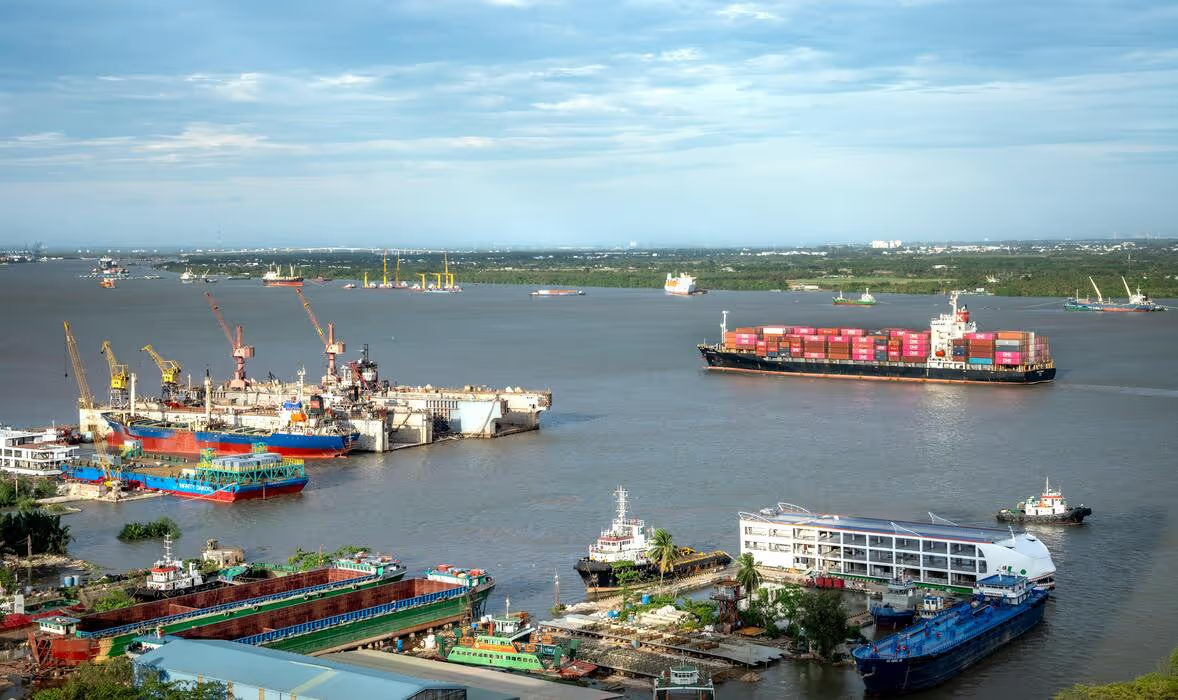
Shadow fleet tanker operators across Asia have generated billions of dollars in Iranian crude arbitrage since February by exploiting Malaysian jurisdictional gaps, with United Against Nuclear Iran documenting 42 ship to ship transfers in waters off Johor. The transfers typically occur in the Eastern Outer Port Limits (EOPL) a zone 70 kilometres off Johor in the South China Sea that sits along one of the world's busiest maritime trade routes and is about halfway between Iran and China, which buys about 90% of Iranian oil. With Brent crude at $106 per barrel and Iranian crude typically trading at $10-15 discounts to benchmarks, each successful cargo transfer to Chinese buyers generates $20-30 million in gross revenue for shadow fleet operators.
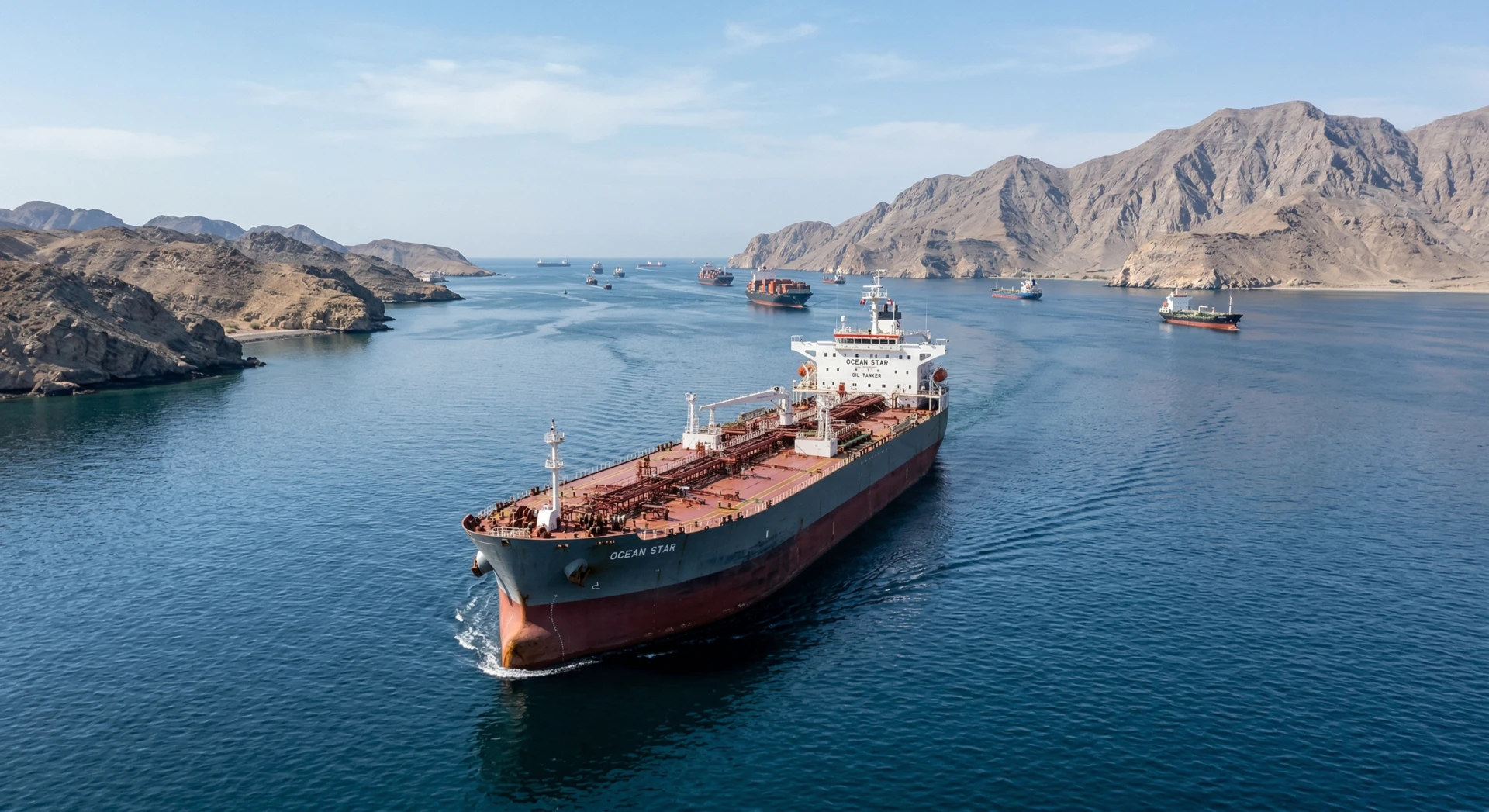
Ship to ship transfers (STS) the practice of moving cargo between vessels at sea have become the primary mechanism for Iranian sanctions evasion because they make it harder for buyers and regulators to trace the oil's origin. The Iranian shadow fleet aging tankers that often operate with disabled tracking systems, false identities and opaque ownership structures uses these operations to manipulate location signals, falsify shipping documents or blend Iranian crude with oil from other sources before cargoes are delivered to buyers, primarily in China. Consider a typical Very Large Crude Carrier (VLCC) carrying 2 million barrels from Iranian fields: if purchased at a $12/barrel discount to Brent and delivered to a Chinese independent refinery, the cargo generates approximately $24 million in price advantage over compliant crude purchases.
Malaysian Maritime Enforcement Agency Director General Mohamad Rosli Abdullah acknowledges the operations but emphasises jurisdictional constraints: "The selection of such locations is intended to exploit jurisdictional gaps and limit direct enforcement action by local authorities". The transfers occur outside Malaysia's territorial waters and in remote areas beyond radar coverage, especially in locations near maritime boundaries or international shipping routes. This legal arbitrage allows operators to conduct business in international waters where Malaysian enforcement cannot reach, despite the economic activity clearly benefiting from Malaysian port services, bunker fuel supplies, and logistics infrastructure.
On the buy side: Chinese independent "teapot" refineries smaller facilities that lack access to compliant crude supply chains benefit from Iranian crude discounts that can improve refining margins by $8-12 per barrel compared to benchmark purchases. Chinese independent teapot refineries continue to play a vital role in sustaining Iran's oil economy, with companies like Hengli purchasing billions of dollars' worth of Iranian petroleum. These refineries can process Iranian crude at significantly lower input costs while selling refined products at market prices, capturing the entire discount as additional margin.
On the sell side: Iranian oil exporters and Revolutionary Guard Corps commercial operations face severe revenue pressure from US sanctions but maintain cash flow through shadow fleet operations. Recent budget estimates point to a four fold dollar increase in oil allocations to Iran's armed forces, exceeding 10 billion dollars annually and totaling over 500,000 barrels per day, with over half of Iran's total oil revenues allocated to armed forces by end 2025. Shadow fleet transfers allow Iran to monetise this crude at approximately 85-90% of Brent prices rather than accepting deeper discounts or storage costs.
For large integrated traders with derivatives access companies like Vitol, Trafigura, or Chinese state oil companies the Iranian shadow fleet creates both risk and opportunity. Compliant operators lose potential arbitrage margins by avoiding Iranian crude but benefit from tighter global supply conditions that boost prices for their legitimate crude portfolios. The IEA reports crude oil flows through the Strait of Hormuz fell by nearly 6 million barrels per day in the first quarter, creating supply tightness that benefits holders of non-Iranian crude.
For smaller regional operators mid-sized fuel importers, independent distributors, regional shipping companies without derivatives hedging capacity, the Iranian shadow fleet represents both competitive threat and practical alternative. Regional bunker fuel suppliers around Malaysian waters benefit from increased vessel traffic, while legitimate crude traders face price competition from discounted Iranian volumes. Small tanker operators willing to enter the shadow fleet earn freight premiums of $5-8 per metric tonne above normal rates but risk sanctions designation and banking access.
Freight rates for shadow fleet operations command significant premiums over clean tanker charters. A VLCC earning $14/MT on legitimate routes can command $20-25/MT for Iranian transfers, generating an additional $10-20 million per voyage in gross freight revenue. However, these vessels face escalating sanctions risk: since President Trump resumed office, his Administration has sanctioned more than 180 vessels responsible for shipping Iranian petroleum and petroleum products. The commercial calculation weighs premium freight earnings against potential asset seizure, banking restrictions, and port access limitations.
For observers monitoring this trade: watch the Baltic Dirty Tanker Index spread between VLCC rates to Singapore versus Middle East Gulf loading. When VLCC earnings from Hormuz-Singapore routes exceed Malaysia-Singapore routes by more than $3-4/MT, shadow fleet activity typically increases as operators exploit the margin differential. Track monthly port call data at Johor and Singapore for vessels with recent AIS gaps exceeding 72 hours a reliable indicator of potential STS activity. Malaysian authorities have committed to "strengthen monitoring and enhance strategic cooperation with relevant agencies", though enforcement remains constrained by international maritime law.

.jpg)
.jpg)
'%3e%3cg id='Final-Copy-2_2_' transform='translate(1275.000000, 200.000000)'%3e%3cpath class='st0' d='M7.4,12.8h6.8l3.1-11.6H7.4C4.2,1.2,1.6,3.8,1.6,7S4.2,12.8,7.4,12.8z'/%3e%3c/g%3e%3c/g%3e%3c/g%3e%3cg id='final---dec.11-2020'%3e%3cg id='_x30_208-our-toggle' transform='translate(-1275.000000, -200.000000)'%3e%3cg id='Final-Copy-2' transform='translate(1275.000000, 200.000000)'%3e%3cpath class='st1' d='M22.6,0H7.4c-3.9,0-7,3.1-7,7s3.1,7,7,7h15.2c3.9,0,7-3.1,7-7S26.4,0,22.6,0z M1.6,7c0-3.2,2.6-5.8,5.8-5.8 h9.9l-3.1,11.6H7.4C4.2,12.8,1.6,10.2,1.6,7z'/%3e%3cpath id='x' class='st2' d='M24.6,4c0.2,0.2,0.2,0.6,0,0.8l0,0L22.5,7l2.2,2.2c0.2,0.2,0.2,0.6,0,0.8c-0.2,0.2-0.6,0.2-0.8,0 l0,0l-2.2-2.2L19.5,10c-0.2,0.2-0.6,0.2-0.8,0c-0.2-0.2-0.2-0.6,0-0.8l0,0L20.8,7l-2.2-2.2c-0.2-0.2-0.2-0.6,0-0.8 c0.2-0.2,0.6-0.2,0.8,0l0,0l2.2,2.2L23.8,4C24,3.8,24.4,3.8,24.6,4z'/%3e%3cpath id='y' class='st3' d='M12.7,4.1c0.2,0.2,0.3,0.6,0.1,0.8l0,0L8.6,9.8C8.5,9.9,8.4,10,8.3,10c-0.2,0.1-0.5,0.1-0.7-0.1l0,0 L5.4,7.7c-0.2-0.2-0.2-0.6,0-0.8c0.2-0.2,0.6-0.2,0.8,0l0,0L8,8.6l3.8-4.5C12,3.9,12.4,3.9,12.7,4.1z'/%3e%3c/g%3e%3c/g%3e%3c/g%3e%3c/g%3e%3c/svg%3e) Privacy Choices
Privacy Choices