.avif)

Container lines face $200-400 per container margin compression as MSC's hybrid sea-land route reshuffles Europe-Gulf freight flows starting May 10. VLCC spot rates on MEG-China hold at WS126.5 roughly $112,400/day TCE but product tanker rates are softening, with LR2s down to WS168 for MEG-Japan, a 21 point slide in two weeks. For container operators, the new MSC route represents both margin compression for direct Hormuz services and margin opportunity for Red Sea-Gulf corridors that avoid the contested strait entirely.
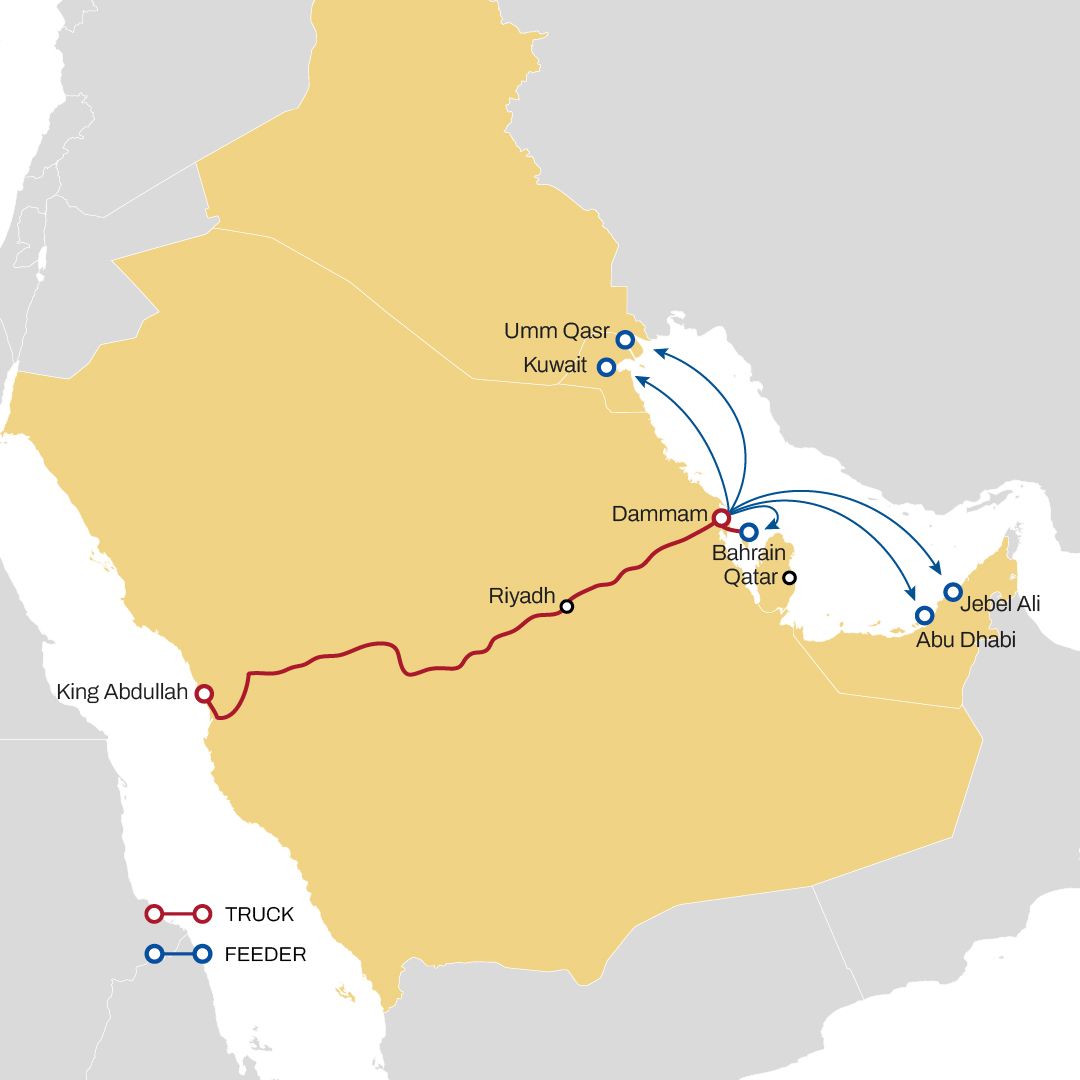
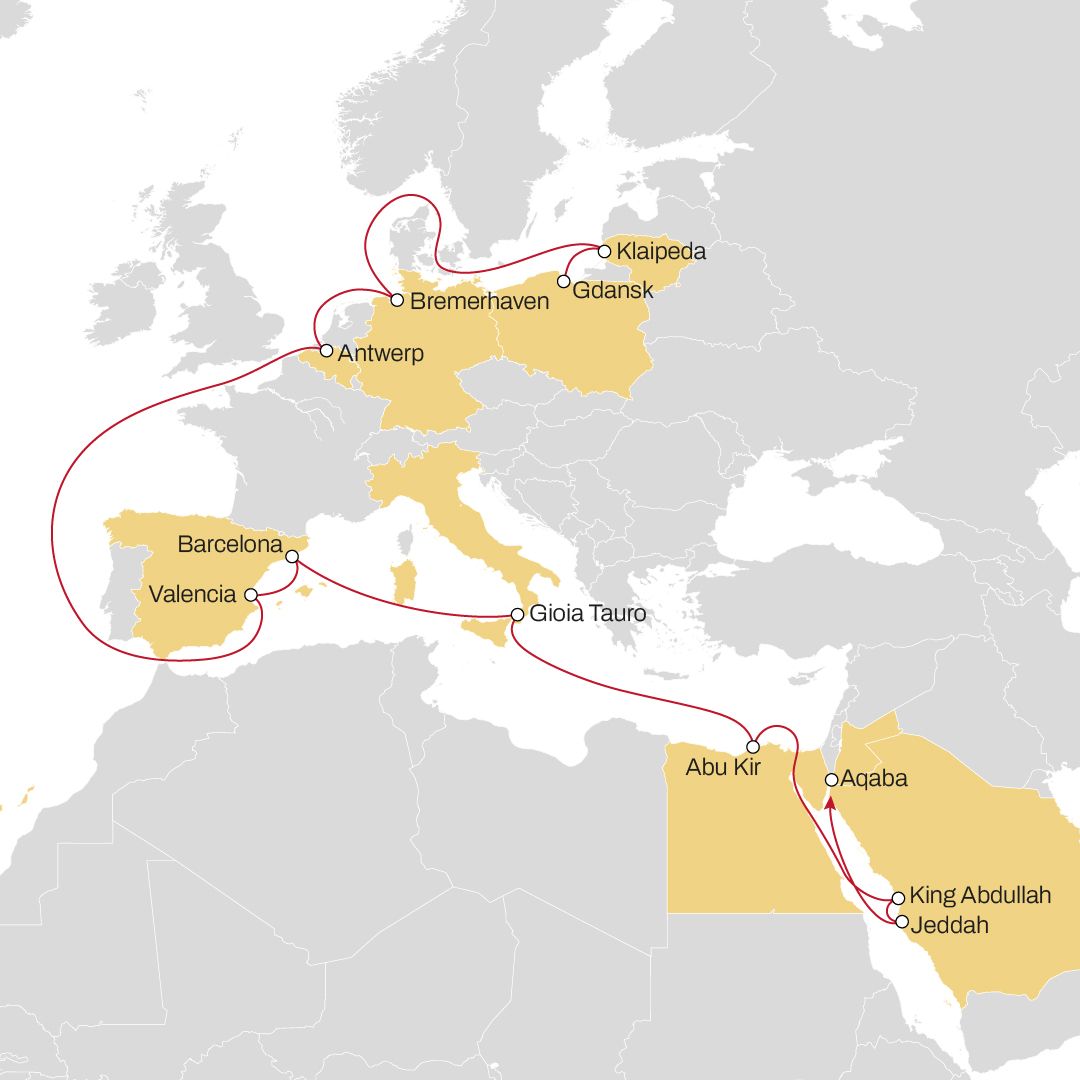
MSC's Europe, Red Sea Middle East Express launches with first sailing from Antwerp on May 10 (Voyage OC619 A), connecting Gdansk, Klaipeda, Bremerhaven, Antwerp, Valencia, Barcelona, Gioia, Tauro, Abu Kir-King Abdullah, Jeddah and Aqaba. The service combines sea transport with an 800 mile overland route across Saudi Arabia, moving cargo from Red Sea ports to Gulf destinations including Jebel Ali and Abu Dhabi through feeder networks. A 20 foot container (TEU) the standard unit of container measurement moving from Hamburg to Dubai via this route adds roughly 4-6 days transit time but eliminates Hormuz exposure entirely. The key margin question: does the $200-400 trucking premium offset the insurance and delay costs of contested strait transit?
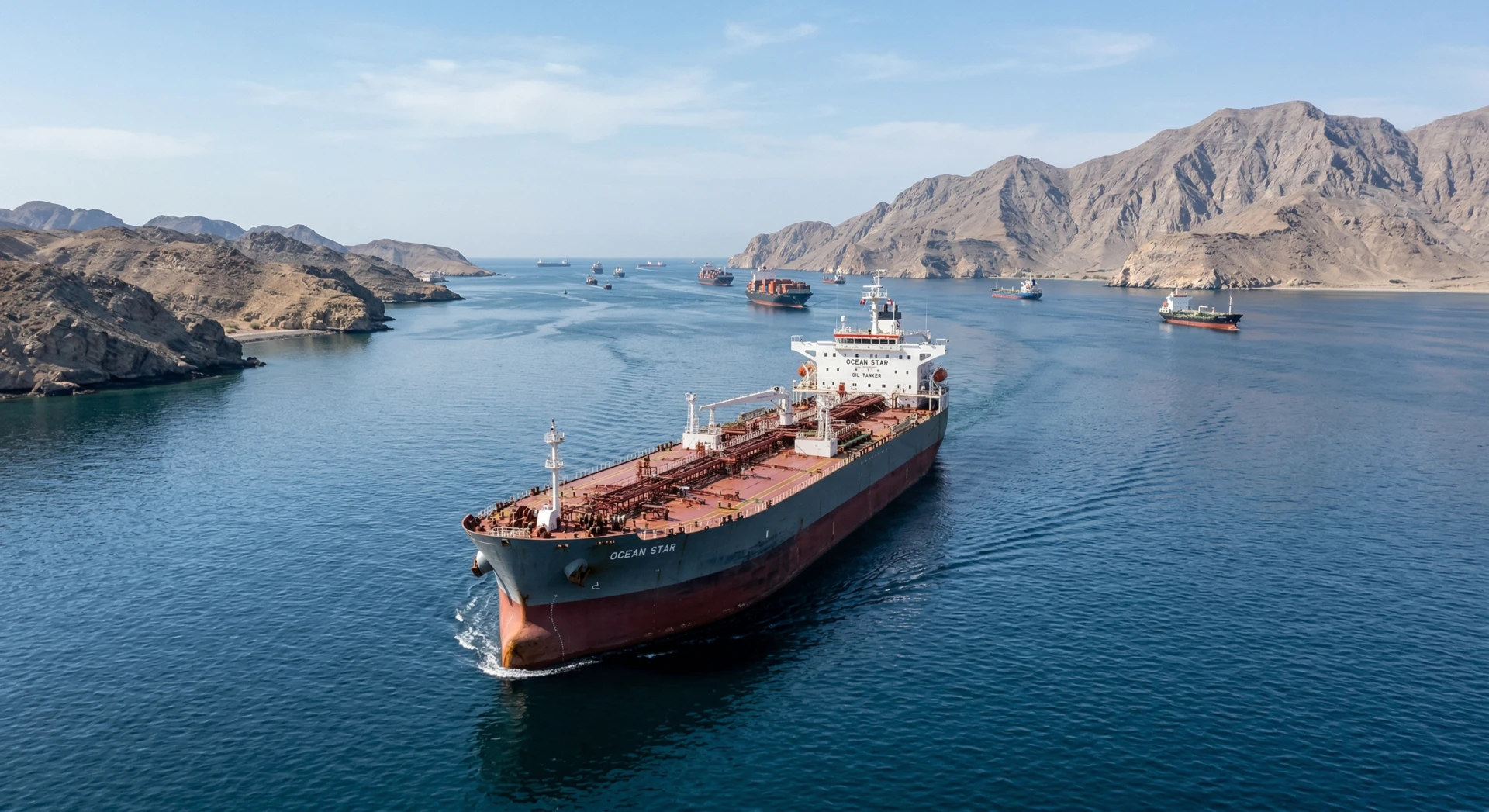
Pentagon's Project Freedom, launched May 4, succeeded in moving two US-flagged commercial vessels through Hormuz with destroyer escort, but Defense Secretary Pete Hegseth calls it "focused in scope and temporary in duration". The ships carried US military security teams aboard as Iran launched missile, drone, and small boat attacks during transit the US military intercepted attacks and destroyed Iranian craft. This is not normal shipping this is a proof of concept military operation. Defense experts question whether Project Freedom addresses the underlying problem: "uncertainty about safety means ship captains and shipping companies are hesitant to take the risk".
Weekly transits through Hormuz fell from 78 to 35 by April 27 a 55% week-on-week decline with over 150 non-sanctioned crude and product tankers stranded in the Gulf, including 62 VLCCs. Each stranded VLCC represents roughly 2 million barrels of crude oil approximately $180 million of cargo at current prices. The strait normally carries about 20 million barrels per day of oil and one-fifth of global LNG trade, mostly flowing to Asian customers including South Korea, Japan, China, and India. The economic stakes explain why MSC moves first: containers are higher-value, time-sensitive cargo that can absorb trucking premiums that crude oil cannot.
For large integrated container lines MSC, Maersk, CMA CGM with global networks and long-term customer contracts, the Saudi landbridge offers service continuity worth premium pricing. MSC operates approximately 1,000 vessels with 7 million TEU capacity (21.4% of global container capacity) and transports 30 million TEUs annually. At MSC's scale, adding $300/TEU trucking costs to maintain Gulf market access protects billions in annual revenue streams. The Red Sea leg operates normally; the trucking leg is the new variable. Saudi Arabia's logistics infrastructure ports, customs, trucking capacity becomes the bottleneck.
Precedent exists: the US-backed "Land Connectivity by Trucks" project created in 2023 reduced a 14 day sea journey to just four days, with Eilat-based Trucknet Enterprise providing logistics technology for Arab companies. But that involved smaller volumes. Container flows are different: faster coordination between ports, trucking, and customs will determine whether this model holds at scale. Saudi Arabia must clear 3,000-4,000 TEU per day to handle one typical MSC container vessel that requires dozens of truck movements per hour, customs systems that process containers rather than individual trucks, and return cargo to avoid empty backhauls.
For smaller regional container operators without MSC's network density, the Saudi landbridge represents margin compression they cannot absorb. A mid-sized feeder operator moving 500 TEU from Jeddah to Kuwait cannot spread the $200-400/TEU trucking cost across diverse revenue streams. These operators depend on direct Hormuz services returning to normal operations which explains why they await Project Freedom's effectiveness rather than rushing to multimodal alternatives. More shipping lines will test hybrid sea-land routes if Hormuz disruption continues, but early movers will secure trucking capacity, inland routes, and port slots before the network tightens.
Saudi Arabia Railways has expanded container train services while new multimodal logistics corridors are developed to improve supply chain efficiency. This is infrastructure scaling in real-time. King Abdullah Port on the Red Sea and Jebel Ali in Dubai become the critical nodes the margin concentrates at ports that can efficiently transfer containers between sea and land transport modes. Increased volumes will push Gulf port operators to expand handling capacity and improve turnaround times. Port congestion becomes the new chokepoint replacing strait blockade.
Market participants face asymmetric choices. Until ceasefire negotiations resolve core disputes around sanctions relief, Iran's enrichment capacity, and security guarantees, most operators will consider Hormuz transit extreme risk regardless of US naval presence. Container lines with premium cargo and schedule reliability requirements shift to multimodal routes immediately. Bulk carriers and tankers with lower value, time flexible cargo wait for military escorts or negotiate through alternative routes. The freight market bifurcates: premium for reliability, discount for risk tolerance.
Iran has effectively sealed the strait by threatening mines, drones, missiles, and fast-attack craft, while the US counters with port blockades and escorted transits Iran's Revolutionary Guard Corps issued expanded area control warnings for vessels to stick to designated corridors or face "decisive response". This is active maritime warfare disguised as commercial navigation. Insurance markets price accordingly: Iran can still pose threats keeping insurance costs high and discouraging shipping companies. Lloyd's of London war risk premiums likely exceed the $300/TEU Saudi trucking surcharge.
Monitor three indicators over the next 30 days, Saudi trucking spot rates from Jeddah to Dammam (if they exceed $500/TEU, the model breaks), King Abdullah Port container throughput compared to pre-crisis baseline (capacity constraints emerge above 120% of normal volumes), and MSC's Europe-Gulf transit times including trucking leg (reliability degrades beyond 18 day total transit). A protected corridor through Hormuz has strategic value even if only limited ships use it initially, because insurance rates, shipping schedules, oil prices, and naval deployments all react to perceived military ability to keep the chokepoint usable. The landbridge operates regardless of military outcomes that independence commands premium pricing.

.jpg)
.jpg)

'%3e%3cg id='Final-Copy-2_2_' transform='translate(1275.000000, 200.000000)'%3e%3cpath class='st0' d='M7.4,12.8h6.8l3.1-11.6H7.4C4.2,1.2,1.6,3.8,1.6,7S4.2,12.8,7.4,12.8z'/%3e%3c/g%3e%3c/g%3e%3c/g%3e%3cg id='final---dec.11-2020'%3e%3cg id='_x30_208-our-toggle' transform='translate(-1275.000000, -200.000000)'%3e%3cg id='Final-Copy-2' transform='translate(1275.000000, 200.000000)'%3e%3cpath class='st1' d='M22.6,0H7.4c-3.9,0-7,3.1-7,7s3.1,7,7,7h15.2c3.9,0,7-3.1,7-7S26.4,0,22.6,0z M1.6,7c0-3.2,2.6-5.8,5.8-5.8 h9.9l-3.1,11.6H7.4C4.2,12.8,1.6,10.2,1.6,7z'/%3e%3cpath id='x' class='st2' d='M24.6,4c0.2,0.2,0.2,0.6,0,0.8l0,0L22.5,7l2.2,2.2c0.2,0.2,0.2,0.6,0,0.8c-0.2,0.2-0.6,0.2-0.8,0 l0,0l-2.2-2.2L19.5,10c-0.2,0.2-0.6,0.2-0.8,0c-0.2-0.2-0.2-0.6,0-0.8l0,0L20.8,7l-2.2-2.2c-0.2-0.2-0.2-0.6,0-0.8 c0.2-0.2,0.6-0.2,0.8,0l0,0l2.2,2.2L23.8,4C24,3.8,24.4,3.8,24.6,4z'/%3e%3cpath id='y' class='st3' d='M12.7,4.1c0.2,0.2,0.3,0.6,0.1,0.8l0,0L8.6,9.8C8.5,9.9,8.4,10,8.3,10c-0.2,0.1-0.5,0.1-0.7-0.1l0,0 L5.4,7.7c-0.2-0.2-0.2-0.6,0-0.8c0.2-0.2,0.6-0.2,0.8,0l0,0L8,8.6l3.8-4.5C12,3.9,12.4,3.9,12.7,4.1z'/%3e%3c/g%3e%3c/g%3e%3c/g%3e%3c/g%3e%3c/svg%3e) Privacy Choices
Privacy Choices