.avif)
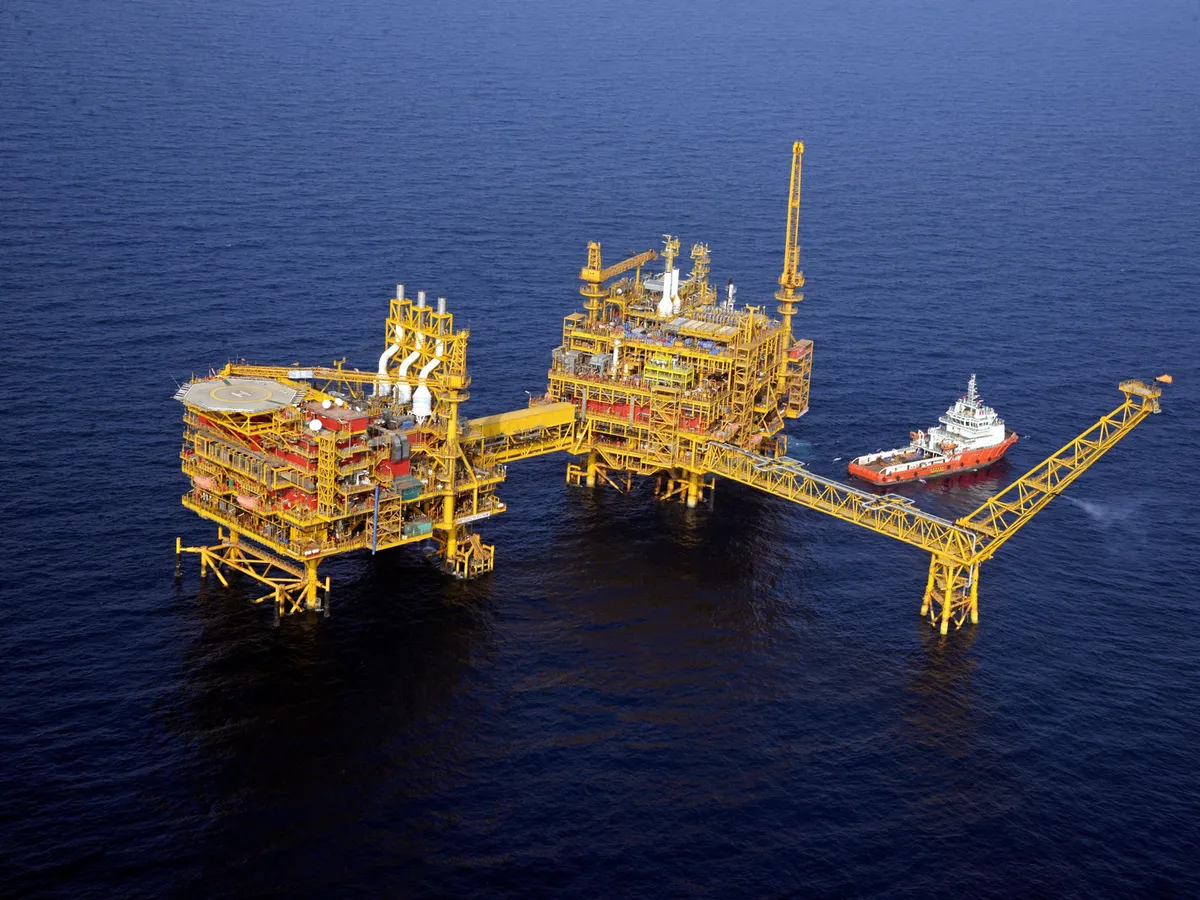
International bond investors pricing ONGC paper will continue to pay sovereign equivalent risk premiums BBB-, not BBB+ on foreign currency debt from today, regardless of how much Fitch has improved its view of the company's intrinsic strength.
Fitch's rating action on 10 July 2026 separates two distinct measures. The Standalone Credit Profile (SCP) a rating agency's assessment of a company's intrinsic financial strength, stripped of any government support or sovereign ceiling was upgraded one notch to BBB+. The Long-Term Foreign Currency Issuer Default Rating (IDR) the rating that actually governs what international lenders and bond investors charge ONGC to borrow in dollars or euros was affirmed at BBB-, unchanged. The gap exists because Fitch's methodology caps any state-owned enterprise's external IDR at the sovereign rating of its home country. India's sovereign sits at BBB-. ONGC cannot be rated higher in foreign currency, no matter how strong its books look. The practical consequence: ONGC's dollar bond spreads will not compress materially on this news. Trade finance counterparties extending letters of credit bank guarantees that payment will be made once shipping documents are presented will still price ONGC at sovereign-equivalent risk. The upgrade is real. The funding cost benefit is structurally limited.
The financial picture Fitch is responding to is, however, genuinely improved. Fitch projects ONGC's consolidated EBITDA earnings before interest, taxes, depreciation, and amortisation, the standard measure of operating cash generation in capital-intensive industries at approximately Rs 940 billion annually in the near term, roughly $11.3 billion at current exchange rates. Net leverage total net debt divided by EBITDA, the ratio lenders use to assess whether a company can service its borrowings is projected to rise toward 1.5x by FY2027 as capital expenditure increases, but remains well below Fitch's 2.0x upgrade threshold. To put that in context: at Rs 940 billion EBITDA and 1.5x net leverage, ONGC carries approximately Rs 1.4 trillion in net debt substantial, but manageable against cash flows of that magnitude. The agency cites ONGC's massive reserve base and vertically integrated structure upstream oil and gas production feeding into refining, marketing, and petrochemicals as the stabilising architecture. When crude prices rise, upstream earnings climb. When crude softens, feedstock costs for downstream refining fall, supporting margins at HPCL, ONGC's listed refining and marketing subsidiary.
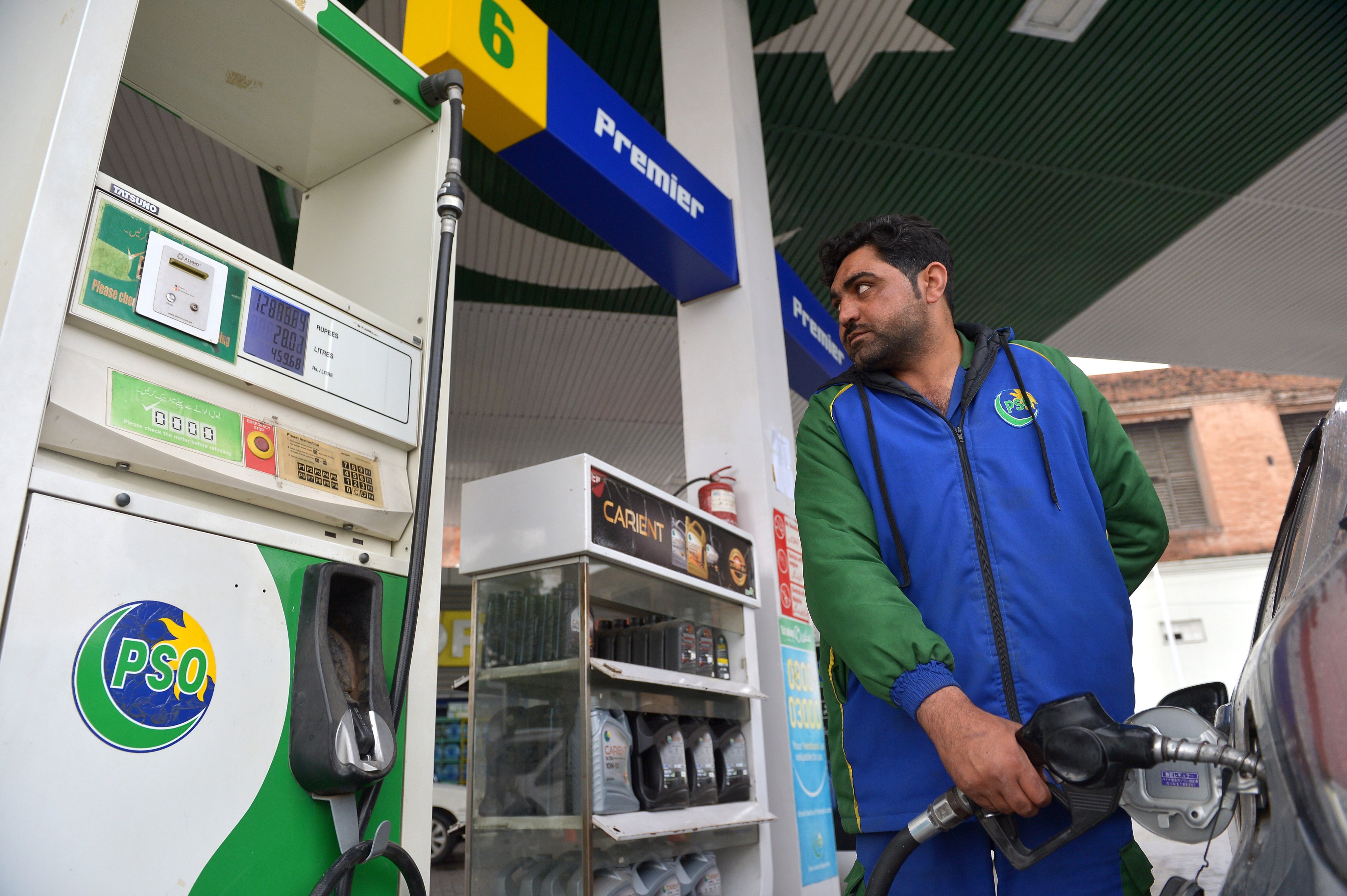
That vertical integration has a structural flaw that Fitch acknowledges but cannot quantify cleanly: retail fuel prices in India are administered set by the government, not the market. When global crude prices fall, the government does not automatically pass savings through to ONGC subsidiaries; past subsidy sharing arrangements have periodically required upstream producers to absorb discounts on crude sold to state refiners. HPCL's marketing margins in FY2027 are expected to remain compressed because retail petrol and diesel prices have not moved in step with Brent. Consider the mechanism: if Brent crude the international benchmark price set by North Sea oil trading, the reference point for roughly two-thirds of global crude is at $85 per barrel and HPCL's refinery gate cost reflects that fully, but pump prices are capped at levels calibrated to a $75 barrel, the downstream marketing margin is structurally negative by an amount equivalent to $10 per barrel across throughput. Fitch treats this as a partial offset, absorbed by upstream gains, rather than a systemic risk. That assessment holds at current Brent levels. If Brent were to fall sharply toward $65 and the government maintained retail prices, the direction reverses and downstream margins recover, which is precisely why Fitch is more optimistic about FY2028.
On the buy side, sovereign wealth funds, Asian development finance institutions, and long duration pension funds holding ONGC's dollar bonds will not reprice risk on this action alone the IDR anchor holds them at BBB-. The more interesting opportunity is in ONGC's domestic rupee denominated paper. Sophisticated fixed income investors who already carry India sovereign risk in their base case may find rupee bonds issued at ONGC's domestic credit profile closer to BBB+ modestly mispriced relative to the foreign-currency instruments. That is a credit arbitrage worth examining in the July–September 2026 quarter, before any FY2027 upstream earnings releases close the gap. On the sell side, ONGC's upstream division benefits directly from elevated Brent in FY2027: every $5 per barrel move in Brent translates to approximately Rs 40–50 billion in incremental upstream EBITDA at ONGC's production volumes. Smaller regional energy companies supplying ONGC's offshore exploration programme vessel operators, drilling contractors, subsea equipment providers should note that continued capital expenditure in offshore projects, despite negative near-term free cash flow, signals that procurement volumes in that supply chain remain supported through FY2027. For observers tracking the practical signal, watch the Brent forward curve specifically the 12 month forward price published daily on ICE Futures Europe through the October 2026 quarter. If the forward curve holds above $80 per barrel, ONGC's upstream earnings trajectory remains consistent with the Fitch thesis and the BBB+ SCP is well-supported. If the forward curve breaks below $75 and domestic retail fuel prices remain administered at current levels, downstream margin pressure will widen without the upstream offset, and the 1.5x leverage projection becomes more binding. The second signal: India's sovereign rating itself. Any positive sovereign rating action by Fitch even a Stable to Positive outlook shift would immediately unlock the IDR ceiling and allow ONGC's external rating to be upgraded in practice, not just in theory. That is the single event that converts this SCP improvement into a tangible funding cost benefit for Indian State-owned Upstream Producers.
.jpg)
.jpg)
'%3e%3cg id='Final-Copy-2_2_' transform='translate(1275.000000, 200.000000)'%3e%3cpath class='st0' d='M7.4,12.8h6.8l3.1-11.6H7.4C4.2,1.2,1.6,3.8,1.6,7S4.2,12.8,7.4,12.8z'/%3e%3c/g%3e%3c/g%3e%3c/g%3e%3cg id='final---dec.11-2020'%3e%3cg id='_x30_208-our-toggle' transform='translate(-1275.000000, -200.000000)'%3e%3cg id='Final-Copy-2' transform='translate(1275.000000, 200.000000)'%3e%3cpath class='st1' d='M22.6,0H7.4c-3.9,0-7,3.1-7,7s3.1,7,7,7h15.2c3.9,0,7-3.1,7-7S26.4,0,22.6,0z M1.6,7c0-3.2,2.6-5.8,5.8-5.8 h9.9l-3.1,11.6H7.4C4.2,12.8,1.6,10.2,1.6,7z'/%3e%3cpath id='x' class='st2' d='M24.6,4c0.2,0.2,0.2,0.6,0,0.8l0,0L22.5,7l2.2,2.2c0.2,0.2,0.2,0.6,0,0.8c-0.2,0.2-0.6,0.2-0.8,0 l0,0l-2.2-2.2L19.5,10c-0.2,0.2-0.6,0.2-0.8,0c-0.2-0.2-0.2-0.6,0-0.8l0,0L20.8,7l-2.2-2.2c-0.2-0.2-0.2-0.6,0-0.8 c0.2-0.2,0.6-0.2,0.8,0l0,0l2.2,2.2L23.8,4C24,3.8,24.4,3.8,24.6,4z'/%3e%3cpath id='y' class='st3' d='M12.7,4.1c0.2,0.2,0.3,0.6,0.1,0.8l0,0L8.6,9.8C8.5,9.9,8.4,10,8.3,10c-0.2,0.1-0.5,0.1-0.7-0.1l0,0 L5.4,7.7c-0.2-0.2-0.2-0.6,0-0.8c0.2-0.2,0.6-0.2,0.8,0l0,0L8,8.6l3.8-4.5C12,3.9,12.4,3.9,12.7,4.1z'/%3e%3c/g%3e%3c/g%3e%3c/g%3e%3c/g%3e%3c/svg%3e) Privacy Choices
Privacy Choices