.avif)
Otto Energy's shareholders face a binary outcome over the next 90 days: either a binding bid for South Marsh Island 71 and Green Canyon 21 materialises at a premium to the company's current micro-cap valuation, or advisory and legal fees erode a meaningful share of net proceeds from assets that generate strong free cash flow but appeal to a narrowing buyer universe.
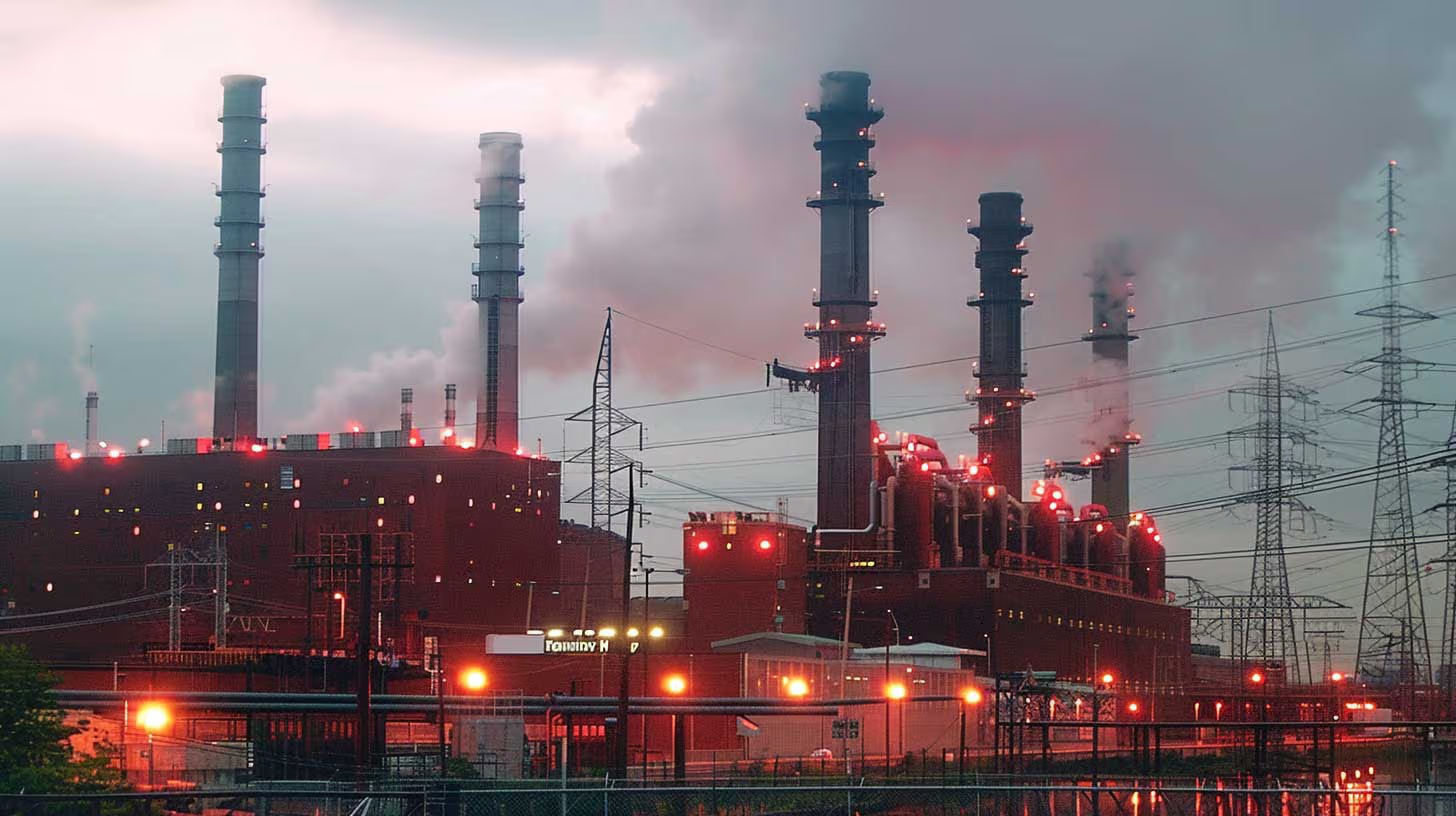
Otto Energy a small ASX-listed upstream oil and gas company with producing assets in the Gulf of America (the federally rebranded Gulf of Mexico) announced on 24 June 2026 that it has formally launched a structured, competitive sale of its two Gulf of America assets. South Marsh Island 71 is a shelf production field in the shallow water Gulf, typically accessed by jackup rigs and producing from reservoirs a few hundred metres below the seabed. Green Canyon 21 is a deepwater well sitting in roughly 500 metres of water, a more capital intensive operating environment that requires specialised subsea infrastructure. PetroDivest Advisors has been appointed exclusive financial adviser meaning it has sole mandate to run the sale process with Norton Rose Fulbright US LLP providing US legal counsel and Steinepreis Paganin handling Australian legal requirements, reflecting Otto's dual ASX-listed and US-operating structure. The company carries no debt, and TipRanks has noted the assets deliver consistent free cash flow cash remaining after operating and maintenance costs making them genuinely productive rather than speculative.
The commercial friction lives in the acquirer pool, and that pool is shrinking. NAV net asset value, the estimated worth of reserves and cash flows minus liabilities is the standard valuation framework for upstream asset sales. Otto's executive chairman Justin Clyne has stated publicly that the market price does not reflect intrinsic NAV, a common condition for micro-cap producers. At $0.006 per share, Otto's total market capitalisation is under A$10 million. Advisory fees for a transaction of this complexity two separate asset types, dual-jurisdiction legal counsel, a competitive bidding process typically run 2–4% of transaction value for boutique mandates, plus fixed legal costs that could reach US$500,000–$1 million regardless of outcome. If the assets sell for, say, US$15 million combined, transaction costs of US$1–2 million represent 7–13% of gross proceeds before any consideration of plugging and abandonment liabilities the legally mandated cost of decommissioning wells at end of life, which in the Gulf can run US$1–5 million per well and attach to the seller's balance sheet until contractually transferred. The announcement does not quantify these liabilities.
On the sell side, Otto's position is rational but time-sensitive. A debt-free balance sheet and a commodity price environment that remains constructive for Gulf production gives the company genuine optionality but only if a credible bidder emerges before the price window closes or the process generates a thin one-bid outcome. The major integrated oil companies (IOCs) BP, Shell, Chevron have spent the past three years systematically exiting mature Gulf shelf positions, not acquiring them. The natural buyer universe for assets like South Marsh Island shelf production is Gulf-specialist operators, private equity backed upstream vehicles, or master limited partnerships (MLPs tax-advantaged structures that pool energy assets and distribute cash flows to unit holders), though the MLP buyer base has substantially consolidated since 2020. On the buy side, a Gulf-focused private equity acquirer with existing Gulf infrastructure could bolt on South Marsh Island production at low incremental operating cost, potentially valuing the asset above what Otto's share price implies that gap is the arbitrage. For a larger integrated operator with Gulf exposure, these assets are almost certainly sub-scale relative to their transaction minimum thresholds.
For large upstream operators or NOCs (national oil companies) evaluating Gulf of America portfolio additions, the signal to watch is whether a second or third bid materialises in the PetroDivest process competitive tension is the single most reliable indicator that NAV is being realised rather than discounted. A single-bidder process, by contrast, typically closes at 70–80% of the seller's NAV estimate. For smaller regional producers or independent Gulf operators considering comparable monetisations, Otto's process is a live stress test of the current market for shelf and upper-deepwater assets: if the sale closes above NAV, it signals a bid-ask reset across similar Gulf micro-cap holdings. For observers, the specific signal is Otto's ASX announcement of a binding heads of agreement (HOA) a preliminary deal document which the company would be obligated to disclose to the Australian Securities Exchange promptly upon execution. If no HOA announcement appears within 60–90 days of the 24 June launch, the absence itself is informative: it suggests either a thin bidder pool, an unresolved abandonment liability gap, or a price expectation mismatch that no competitive process has bridged.


.jpg)
.jpg)

'%3e%3cg id='Final-Copy-2_2_' transform='translate(1275.000000, 200.000000)'%3e%3cpath class='st0' d='M7.4,12.8h6.8l3.1-11.6H7.4C4.2,1.2,1.6,3.8,1.6,7S4.2,12.8,7.4,12.8z'/%3e%3c/g%3e%3c/g%3e%3c/g%3e%3cg id='final---dec.11-2020'%3e%3cg id='_x30_208-our-toggle' transform='translate(-1275.000000, -200.000000)'%3e%3cg id='Final-Copy-2' transform='translate(1275.000000, 200.000000)'%3e%3cpath class='st1' d='M22.6,0H7.4c-3.9,0-7,3.1-7,7s3.1,7,7,7h15.2c3.9,0,7-3.1,7-7S26.4,0,22.6,0z M1.6,7c0-3.2,2.6-5.8,5.8-5.8 h9.9l-3.1,11.6H7.4C4.2,12.8,1.6,10.2,1.6,7z'/%3e%3cpath id='x' class='st2' d='M24.6,4c0.2,0.2,0.2,0.6,0,0.8l0,0L22.5,7l2.2,2.2c0.2,0.2,0.2,0.6,0,0.8c-0.2,0.2-0.6,0.2-0.8,0 l0,0l-2.2-2.2L19.5,10c-0.2,0.2-0.6,0.2-0.8,0c-0.2-0.2-0.2-0.6,0-0.8l0,0L20.8,7l-2.2-2.2c-0.2-0.2-0.2-0.6,0-0.8 c0.2-0.2,0.6-0.2,0.8,0l0,0l2.2,2.2L23.8,4C24,3.8,24.4,3.8,24.6,4z'/%3e%3cpath id='y' class='st3' d='M12.7,4.1c0.2,0.2,0.3,0.6,0.1,0.8l0,0L8.6,9.8C8.5,9.9,8.4,10,8.3,10c-0.2,0.1-0.5,0.1-0.7-0.1l0,0 L5.4,7.7c-0.2-0.2-0.2-0.6,0-0.8c0.2-0.2,0.6-0.2,0.8,0l0,0L8,8.6l3.8-4.5C12,3.9,12.4,3.9,12.7,4.1z'/%3e%3c/g%3e%3c/g%3e%3c/g%3e%3c/g%3e%3c/svg%3e) Privacy Choices
Privacy Choices