.avif)
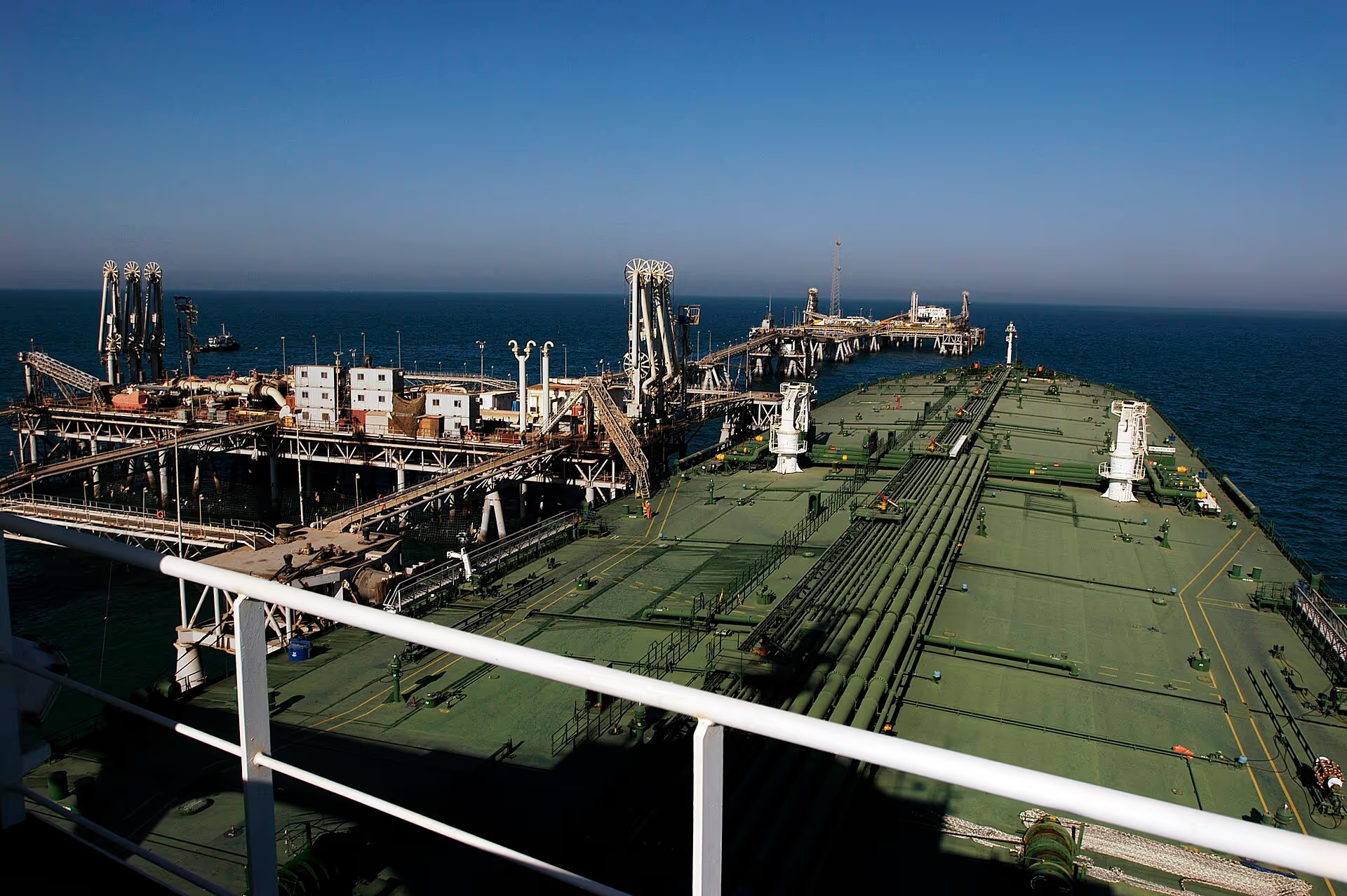
Oil futures closed Friday near their lowest levels since the US-Iran war began, with West Texas Intermediate under $85 per barrel for July deliveries, down almost 4% on the day. Persian Gulf crude exporters stand to recover $15-20 per barrel in war-risk premiums if President Trump's announced Iran peace deal materializes this weekend. The arithmetic is immediate: prices peaked at more than $110 per barrel in April after rocketing from less than $70 before the war began. For a mid-sized Persian Gulf national oil company shipping 500,000 barrels per day, premium recovery translates to $7.5-10 million in additional daily revenue. The margin flows directly to producers refiners have already absorbed the premium through higher input costs. Trump wrote on Truth Social that "The Deal is scheduled to get signed tomorrow, and immediately after it is signed, the Hormuz Strait is OPEN TO ALL", though Iran's foreign ministry maintains no final decision has been reached.
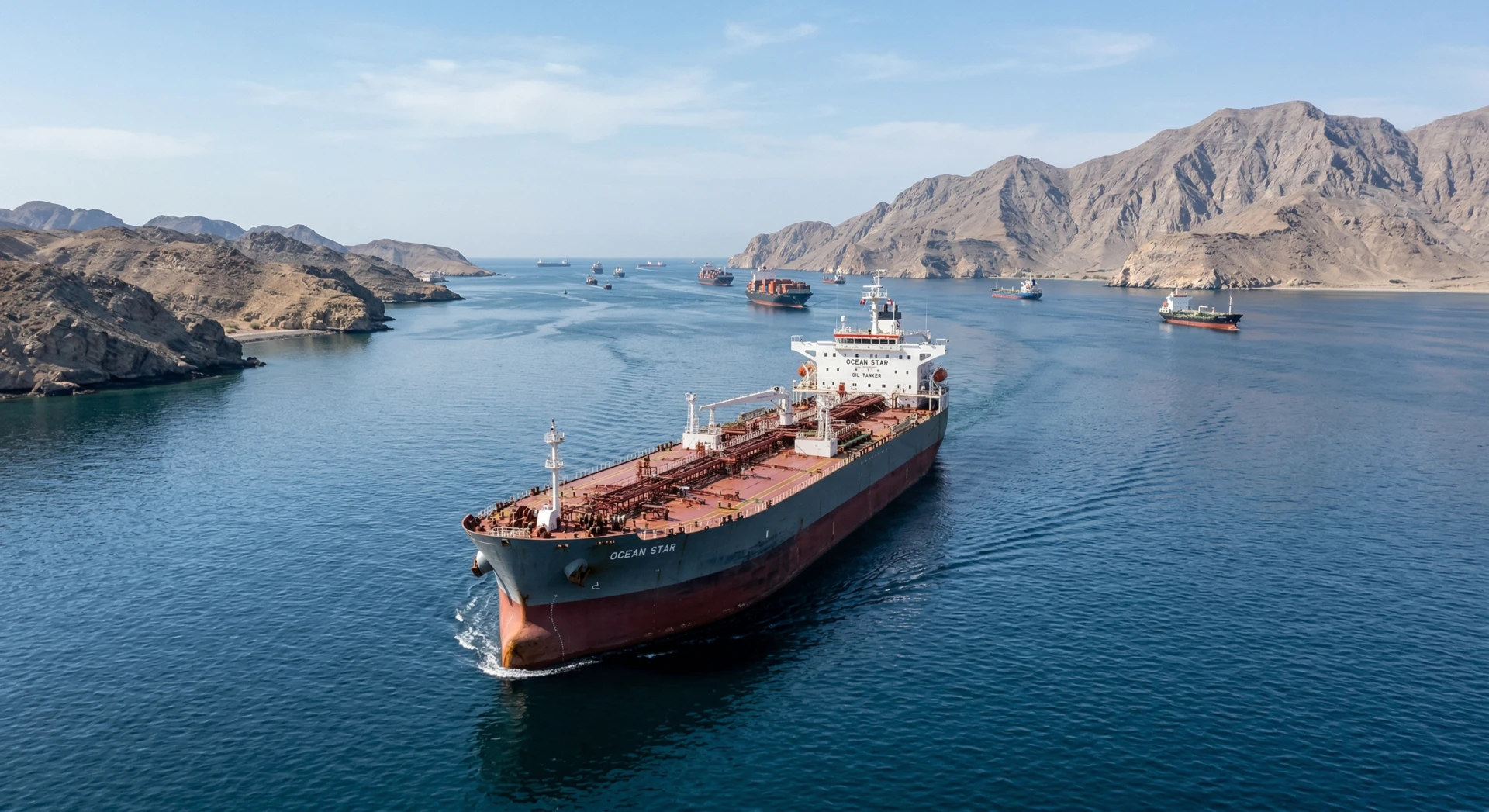
VLCC spot rates from the Middle East Gulf to China surged above $400,000/day, with a peak of $424,000/day, shattering all historical records during the conflict. A Very Large Crude Carrier a supertanker capable of carrying 2 million barrels normally earns $40-80,000 per day on the Middle East to Asia route. At current war-premium rates of $400,000 daily, a single 25 day voyage from Ras Tanura to Shanghai generates $10 million in freight costs. Before the conflict, the same voyage cost $2 million. The $8 million difference per cargo flows entirely to vessel operators, not oil producers or buyers. For VLCC operators, peace represents an immediate $300,000+ daily rate collapse. Current spot prices for fixing a VLCC from the Gulf to China are hitting $200,000/day, equivalent to nearly $5/barrel a direct tax on every barrel that moves through the strait.
The freight mathematics reveal where war margins concentrate. A standard VLCC charter from Kuwait to Ningbo carries 2 million barrels and takes 22 days. At pre-war rates of $60,000 daily, total voyage costs were $1.32 million, or $0.66 per barrel. At current rates of $400,000 daily, voyage costs are $8.8 million, or $4.40 per barrel. The $3.74 per barrel freight premium represents pure margin for vessel operators with existing tonnage. For crude buyers Asian refineries, European majors, US Gulf Coast processors the freight premium adds directly to input costs without operational benefit. Asian refiners face sharp increases in landed crude costs due to longer-haul routes, while European natural gas and oil prices are rising rapidly as LNG flows and oil shipments reroute away from the Gulf.
Buy-side positioning varies dramatically by access to hedging instruments. Large integrated oil companies ExxonMobil, TotalEnergies, Shell can protect against price volatility through derivatives markets, locking in current elevated prices for forward delivery or purchasing put options to establish floor prices. A major European refinery might buy Brent put options at $85/barrel, ensuring protection if peace collapses the war premium overnight. The cost: $2-4 per barrel in option premiums, but protection against $20 downside moves. Regional players without derivatives access face binary exposure. A mid-sized Japanese refiner holding 10 million barrels in floating storage watches $150-200 million in inventory value fluctuate with each diplomatic headline.
Sell-side dynamics split between immediate producers and alternative suppliers. Persian Gulf producers Saudi Aramco, Kuwait Petroleum, UAE's ADNOC benefit from both premium recovery and freight normalization. Each million barrels exported gains $15-20 million from price recovery while saving $3-4 million in freight costs. The double benefit flows directly to state revenues, supporting fiscal positions already strained by defense spending increases. Alternative suppliers face margin compression. US shale producers lose the $15-20 premium that made exports to Asia economically viable. Crude oil output has been high in the Persian Gulf after an increase in production from OPEC, with more crude oil production subsequently lowering prices in the region, further increasing demand for crude oil from the Persian Gulf. West African producers Angola, Nigeria lose Asian market access as Persian Gulf crudes regain cost competitiveness.
Operational de-escalation timelines challenge immediate transit assumptions embedded in current derivative positions. During the 60 day period, the Strait of Hormuz would be open with no tolls and Iran would agree to clear the mines it deployed in the strait to let ships pass freely. Mine clearing operations require specialized vessels and typically take 2-4 weeks for a waterway of Hormuz's complexity. War-risk insurance restoration follows successful mine clearance but requires Lloyd's of London syndicate approval historically a 1-2 week process. Pilot services restoration depends on Iranian cooperation and typically requires 1-2 weeks to rebuild local knowledge and communication protocols. The earliest realistic full transit resumption is 4-6 weeks post-signature, not the immediate reopening priced into current positions.
Storage plays and contango positions face timing mismatches. Traders holding crude in floating storage tankers anchored offshore waiting for higher prices bet on sustained war premiums lasting months. Iran wants a deal that allows Tehran to charge ships "for services rendered" when they transit the Strait of Hormuz, with Iran imposing a toll system during the war, which the U.S. and other nations say violates international law. If peace removes the premium within weeks, storage costs of $0.50-1.00 per barrel daily quickly erode profits. A trader holding 2 million barrels in floating storage pays $1-2 million weekly in carrying costs. Contango structures where forward prices exceed spot prices collapse when physical supply constraints disappear, eliminating the price differential that justifies storage.
For large integrated traders Vitol, Trafigura, Glencore with global logistics networks, peace represents profit reallocation rather than loss. War premiums in Persian Gulf crudes disappear, but freight savings and route optimization create new arbitrage opportunities. A major trading house might redirect 5-10 cargoes monthly from Atlantic Basin alternatives back to Middle East origins, capturing $2-5 million per cargo in logistics efficiencies. Access to derivatives markets allows position hedging: selling Brent futures at $87 while maintaining physical long positions protects against price collapse while preserving upside if negotiations fail.
For smaller regional operators independent fuel distributors, regional refining cooperatives, mid-sized importers without derivatives access, peace represents binary exposure. A regional Japanese fuel importer with 90 day forward purchase commitments at $105 Brent faces immediate $20/barrel losses if peace materializes. The practical equivalent to derivatives hedging: bilateral contract renegotiation with suppliers, inventory adjustment to minimum operating levels, and supplier diversification to reduce single source exposure. These mechanisms provide partial protection but lack the precision of financial instruments.
Route economics undergo immediate recalibration. The Middle East Gulf to Asia VLCC route the benchmark TD3C carried by the Baltic Exchange represents 40% of global crude trade volumes. Spot rate strength in the MEG has cascaded through global freight prices, leading to a surge in rates for VLCCs and other tanker segments worldwide, with the Baltic Exchange's MEG-China TD3C index coming in at a record $423,736 per day on Monday, up 94% from Friday. Peace normalizes this benchmark, creating cascading effects across all tanker segments. Aframax rates from US Gulf Coast to Caribbean, Suezmax rates from West Africa to Europe all decline as Middle East tonnage returns to global circulation.
The Brent-Dubai spread the price differential between North Sea and Middle East crudes compresses from current levels near $8-12 per barrel toward historical norms of $2-4 per barrel. This spread determines whether Atlantic Basin crudes can economically reach Asian refineries. At current spreads, North Sea crudes remain competitive in Asia despite longer voyage distances. Spread compression eliminates this arbitrage, redirecting North Sea barrels to European and Atlantic markets while Asian buyers return to Middle East suppliers. Current oil prices: WTI crude oil is $84.88 per barrel, Brent crude is $86.80 per barrel, representing a narrow $1.92 spread that normalizes with Persian Gulf access restoration.
War-risk insurance providers face immediate premium collapse but maintain exposure through cancellation clauses. Lloyd's of London syndicates charging $2-5 per barrel in war-risk premiums lose this revenue stream but remain liable for policies written during conflict periods. A major syndicate writing $500 million in Persian Gulf coverage monthly loses $40-50 million in annualized premium income. The exposure continues until policy expiration typically 30-90 days creating timing mismatches between premium loss and liability reduction. Marine insurers without war-risk exposure benefit from increased conventional coverage as transit volumes normalize.
emerge through refined product markets and alternative energy positioning. Refined product cracks the margin between crude oil and gasoline or diesel compress as refinery input costs normalize. Freight costs for crude oil have never been higher, adding enormous premiums to global energy prices. Asian refineries running on expensive alternative crudes regain competitiveness, pressuring US Gulf Coast and European refining margins. Natural gas markets face competing pressures: reduced geopolitical risk premiums versus renewed crude oil availability reducing gas to oil switching incentives.
Procurement teams across energy intensive industries require immediate scenario planning. Airlines with fuel hedging programs face mark to market losses if oil prices collapse but benefit from lower operational costs in subsequent quarters. Chemical companies using naphtha feedstocks see input cost relief but must adjust procurement strategies as Middle East supplies return. Power generators in Asia running expensive LNG due to crude unavailability face fuel switching decisions as economics normalize. The speed of price adjustment potentially occurring within 24-48 hours of deal signature compresses decision making timelines from weeks to hours.
For market observers, the key signal is the Brent-Dubai spread convergence timeline. Historical peacetime spreads of $2-4 per barrel require full Persian Gulf production restoration and freight normalization. Oil Prices Rise as Iran and the U.S. Trade Attacks While U.S. Oil Inventories Fall Again, with recent updates showing WTI Oil rises as Iran and the U.S. trade attacks. Monitor the spread weekly through July 31, 2026. Convergence below $3 per barrel indicates successful operational normalization. Persistent spreads above $6 per barrel suggest incomplete peace implementation or hidden operational constraints. The spread serves as the real-time barometer of Persian Gulf integration into global crude flows, regardless of diplomatic headlines or political declarations.

.jpg)
.jpg)

'%3e%3cg id='Final-Copy-2_2_' transform='translate(1275.000000, 200.000000)'%3e%3cpath class='st0' d='M7.4,12.8h6.8l3.1-11.6H7.4C4.2,1.2,1.6,3.8,1.6,7S4.2,12.8,7.4,12.8z'/%3e%3c/g%3e%3c/g%3e%3c/g%3e%3cg id='final---dec.11-2020'%3e%3cg id='_x30_208-our-toggle' transform='translate(-1275.000000, -200.000000)'%3e%3cg id='Final-Copy-2' transform='translate(1275.000000, 200.000000)'%3e%3cpath class='st1' d='M22.6,0H7.4c-3.9,0-7,3.1-7,7s3.1,7,7,7h15.2c3.9,0,7-3.1,7-7S26.4,0,22.6,0z M1.6,7c0-3.2,2.6-5.8,5.8-5.8 h9.9l-3.1,11.6H7.4C4.2,12.8,1.6,10.2,1.6,7z'/%3e%3cpath id='x' class='st2' d='M24.6,4c0.2,0.2,0.2,0.6,0,0.8l0,0L22.5,7l2.2,2.2c0.2,0.2,0.2,0.6,0,0.8c-0.2,0.2-0.6,0.2-0.8,0 l0,0l-2.2-2.2L19.5,10c-0.2,0.2-0.6,0.2-0.8,0c-0.2-0.2-0.2-0.6,0-0.8l0,0L20.8,7l-2.2-2.2c-0.2-0.2-0.2-0.6,0-0.8 c0.2-0.2,0.6-0.2,0.8,0l0,0l2.2,2.2L23.8,4C24,3.8,24.4,3.8,24.6,4z'/%3e%3cpath id='y' class='st3' d='M12.7,4.1c0.2,0.2,0.3,0.6,0.1,0.8l0,0L8.6,9.8C8.5,9.9,8.4,10,8.3,10c-0.2,0.1-0.5,0.1-0.7-0.1l0,0 L5.4,7.7c-0.2-0.2-0.2-0.6,0-0.8c0.2-0.2,0.6-0.2,0.8,0l0,0L8,8.6l3.8-4.5C12,3.9,12.4,3.9,12.7,4.1z'/%3e%3c/g%3e%3c/g%3e%3c/g%3e%3c/g%3e%3c/svg%3e) Privacy Choices
Privacy Choices