.avif)
Petronas's declaration of eight discoveries totalling more than 1 billion barrels of oil equivalent (BOE) on Suriname's Block 52 creates an immediate and material uplift in the asset's negotiated equity value at a risked resource valuation of $10–15 per BOE, the gross resource is nominally worth $10–15 billion before a single development dollar is spent. That number is not production revenue; it is the starting figure for co-venturer carry negotiations, project financing term sheets, and future farm-down discussions. The Final Investment Decision (FID) the formal corporate commitment to fund and build a project is now expected in 2026, with first gas production targeted for approximately 2030. Upstream exploration companies evaluating entry into the Guyana-Suriname Basin have a narrowing window to price acreage before FID removes the frontier-stage discount.
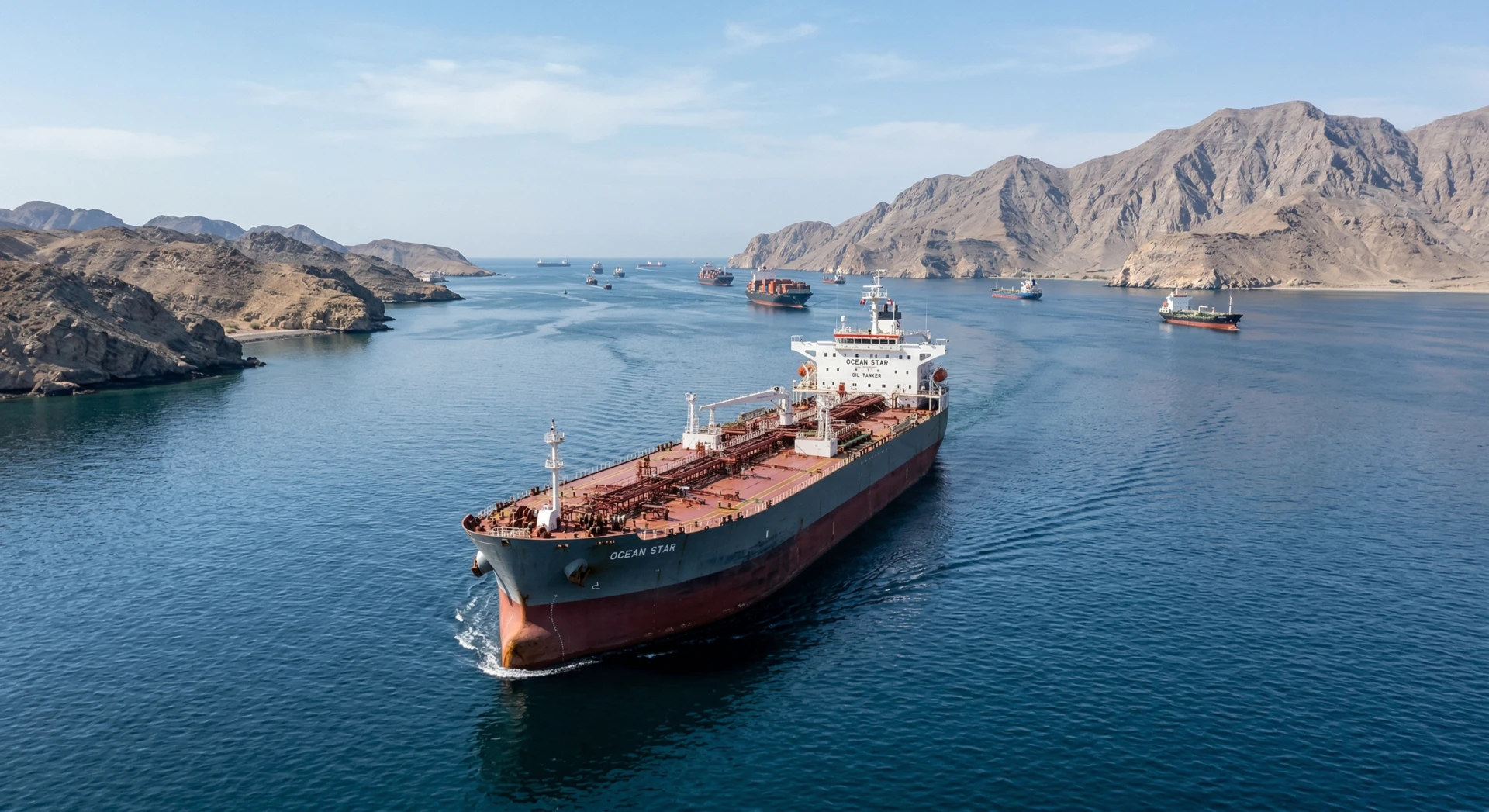
Block 52 sits within the Golden Lane corridor, a structural trend running along the offshore shelf of Suriname and neighbouring Guyana. The geological engine beneath both countries is the same: Upper Cretaceous Campanian age sandstone reservoirs ancient seabed sands deposited roughly 72–83 million years ago sitting within the Guyana-Suriname Basin. These reservoirs are the same formation that enabled ExxonMobil's Stabroek Block in Guyana to grow from a single discovery in 2015 to more than 11 billion BOE and five sanctioned FPSO projects within a decade. FPSO stands for Floating Production, Storage and Offloading vessel a ship-shaped facility moored offshore that processes crude and stores it until a tanker collects the cargo. The geological analogy is well-founded; the commercial analogy is not yet earned. Suriname has confirmed the hydrocarbons. It has not yet confirmed the infrastructure to move them.
That infrastructure gap is the central constraint separating exploration success from production cash flow, and it is worth decomposing precisely. The Sloanea 1 gas discovery made in 2020 and subsequently declared commercially viable by Staatsolie, Suriname's national oil company anchors the gas development case. But commercial viability of a single well does not resolve the downstream question: where does the gas go? Unlike Guyana, which has an established FPSO led oil export model under ExxonMobil's operational discipline, Suriname possesses no sanctioned LNG export terminal, no domestic pipeline grid of scale, and no confirmed petrochemical anchor customer. LNG liquefied natural gas, methane chilled to minus 162°C so it can be loaded onto specialist tankers requires a liquefaction train, loading infrastructure, and long-term offtake contracts before a lender will commit financing. A 2030 first gas delivery requires FEED (Front-End Engineering and Design, the detailed blueprints that precede construction contracts) completion, EPC (Engineering, Procurement and Construction) contractor mobilisation, and financing close all within roughly 18 months of a 2026 FID. In mature basins with established contractors, that is achievable. In a frontier basin with no legacy offshore gas infrastructure, it is aggressive.
To make the timeline concrete: consider a mid-tier exploration company holding a 15% working interest in a comparable Atlantic Basin gas development of 500 billion cubic feet recoverable resource. At a development cost of $2.50 per thousand cubic feet consistent with deepwater Atlantic benchmarks total project capex runs to approximately $1.25 billion. That company's share is $187 million. If financing close slips by 12 months, the company carries an additional year of cost of capital on committed funds approximately $15–20 million at current weighted average capital costs while receiving zero production revenue. First gas at 2030 versus 2031 is not a scheduling nuance; it is a material shift in project IRR (Internal Rate of Return, the annualised return on invested capital). For a project already carrying frontier basin risk, that slippage can push IRR below the 12–15% threshold most exploration companies require to sanction deepwater gas.
On the buy side, the most directly affected parties are Asian LNG importers specifically the Japanese and South Korean utilities that have been diversifying supply away from Australian and Qatari long-term contracts. Suriname's Atlantic Basin location offers genuine destination optionality: cargoes can reach Asian JKM-priced markets (Japan-Korea Marker, the benchmark price for LNG delivered to Northeast Asia) or European TTF priced markets (Title Transfer Facility, the Dutch gas hub that serves as Europe's reference price) depending on which spread is more attractive at loading. At current spreads JKM at approximately $13–14/MMBtu and TTF at $11–12/MMBtu Atlantic Basin LNG leans Asian, but that calculus shifts with European storage cycles. Buyers negotiating long-term supply agreements post-2028 should treat Suriname as a credible optionality position, not yet a deliverable contract. On the sell side, existing Atlantic Basin LNG exporters particularly US Gulf LNG projects selling on Henry Hub-linked pricing face a new long-run competitor that carries no domestic gas cost base and potentially lower royalty regimes in a frontier fiscal environment.
For a large integrated energy company or NOC trading arm with derivatives access, the current moment is a positioning window on NAV (Net Asset Value) the discounted present value of future cash flows from a producing asset. The practical instrument is a farm-in negotiation: acquiring a working interest in Block 52 or adjacent acreage at frontier-stage pricing before FID triggers a re-rating of asset value. Staatsolie's open licensing round covering more than 70,000 square kilometres across five offshore sectors provides the vehicle. TotalEnergies is already leading a separate consortium toward Suriname's first offshore oil production around 2028, establishing that international operators can execute in this jurisdiction. For a smaller regional exploration company without the balance sheet to carry deepwater development costs independently, the practical equivalent is a carried-interest arrangement where a larger partner funds exploration costs in exchange for a larger production share or a structured joint venture with Staatsolie that reduces upfront capital commitment in exchange for local content obligations.
The single most time-bound signal for observers is the FID announcement itself, expected before the end of 2026. Watch for Petronas's official project sanction statement, which will specify the development concept (FPSO-based gas processing, pipeline to shore, or LNG export), the confirmed co-venture partners, and the financing structure. If the FID is announced with a fully subscribed financing package and named EPC contractors, the 2030 first gas target becomes credible and asset valuations across the Golden Lane corridor will re-rate materially upward. If FID is announced without confirmed financing or is deferred into 2027, the infrastructure ceiling reasserts itself and exploration stage acreage pricing will soften accordingly. Monitor Petronas's Bursa Malaysia exchange filings and Staatsolie's official announcements through Q4 2026 as the primary verification sources.
.jpg)

'%3e%3cg id='Final-Copy-2_2_' transform='translate(1275.000000, 200.000000)'%3e%3cpath class='st0' d='M7.4,12.8h6.8l3.1-11.6H7.4C4.2,1.2,1.6,3.8,1.6,7S4.2,12.8,7.4,12.8z'/%3e%3c/g%3e%3c/g%3e%3c/g%3e%3cg id='final---dec.11-2020'%3e%3cg id='_x30_208-our-toggle' transform='translate(-1275.000000, -200.000000)'%3e%3cg id='Final-Copy-2' transform='translate(1275.000000, 200.000000)'%3e%3cpath class='st1' d='M22.6,0H7.4c-3.9,0-7,3.1-7,7s3.1,7,7,7h15.2c3.9,0,7-3.1,7-7S26.4,0,22.6,0z M1.6,7c0-3.2,2.6-5.8,5.8-5.8 h9.9l-3.1,11.6H7.4C4.2,12.8,1.6,10.2,1.6,7z'/%3e%3cpath id='x' class='st2' d='M24.6,4c0.2,0.2,0.2,0.6,0,0.8l0,0L22.5,7l2.2,2.2c0.2,0.2,0.2,0.6,0,0.8c-0.2,0.2-0.6,0.2-0.8,0 l0,0l-2.2-2.2L19.5,10c-0.2,0.2-0.6,0.2-0.8,0c-0.2-0.2-0.2-0.6,0-0.8l0,0L20.8,7l-2.2-2.2c-0.2-0.2-0.2-0.6,0-0.8 c0.2-0.2,0.6-0.2,0.8,0l0,0l2.2,2.2L23.8,4C24,3.8,24.4,3.8,24.6,4z'/%3e%3cpath id='y' class='st3' d='M12.7,4.1c0.2,0.2,0.3,0.6,0.1,0.8l0,0L8.6,9.8C8.5,9.9,8.4,10,8.3,10c-0.2,0.1-0.5,0.1-0.7-0.1l0,0 L5.4,7.7c-0.2-0.2-0.2-0.6,0-0.8c0.2-0.2,0.6-0.2,0.8,0l0,0L8,8.6l3.8-4.5C12,3.9,12.4,3.9,12.7,4.1z'/%3e%3c/g%3e%3c/g%3e%3c/g%3e%3c/g%3e%3c/svg%3e) Privacy Choices
Privacy Choices