.avif)

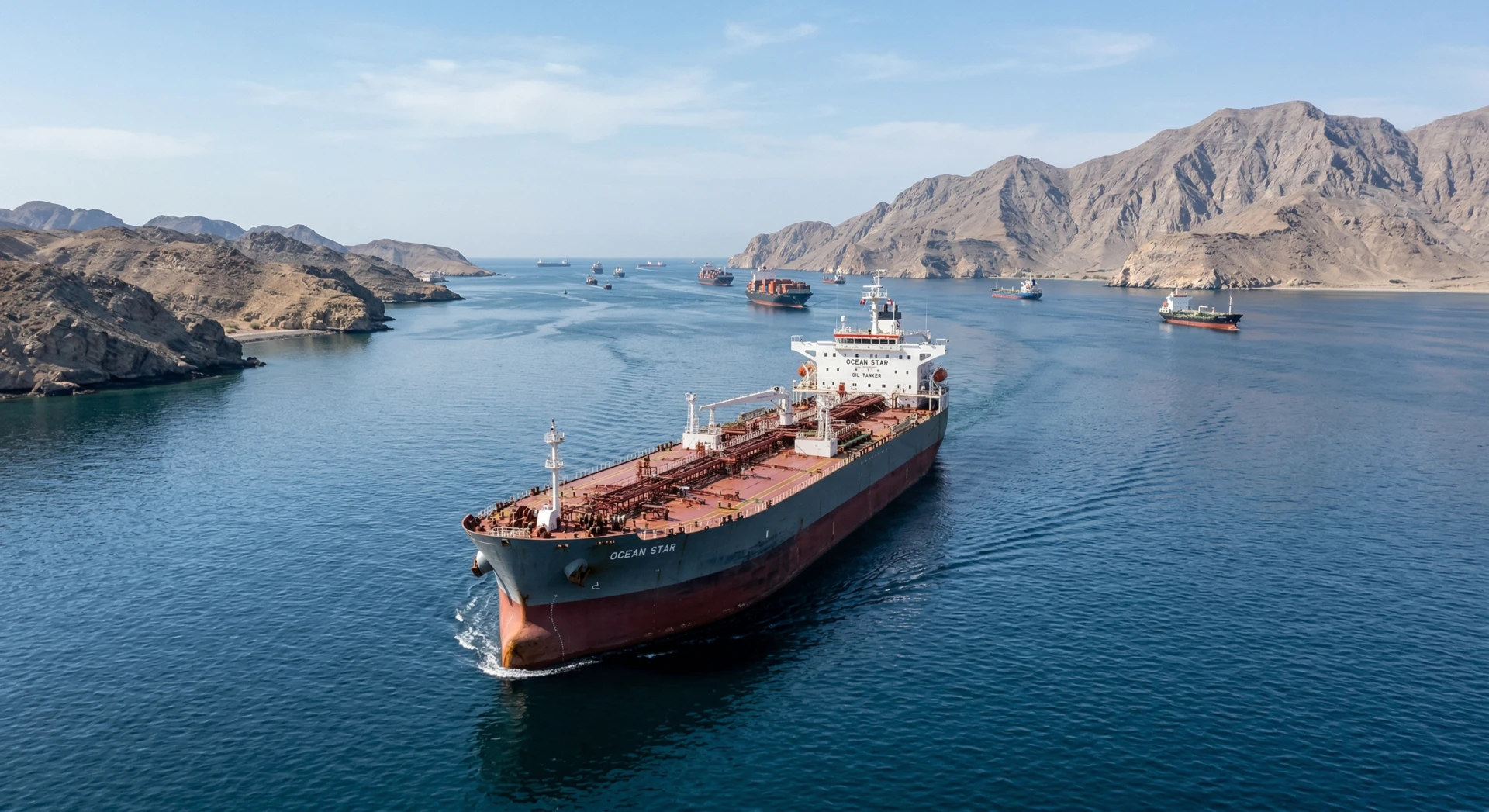
Crude oil trading desks and European energy procurement teams face the same counterintuitive reality simultaneously: the world's most critical energy chokepoint has been shut since February 2026, yet Brent crude cannot sustain above $100 per barrel and TTF the Title Transfer Facility benchmark, Europe's wholesale natural gas price quoted in euros per megawatt hour at the Dutch hub closed the week of 5 June at approximately €48.50, lower than it was before the Hormuz crisis began. The Strait of Hormuz remains effectively closed under a dual blockade. A 28 February 2026 closure, triggered by US-Israeli strikes on Iran that killed its Supreme Leader, prompted Iran to seal the waterway with IRGC naval patrols, sea mines, and vessel attacks. As of 9 June 2026, with Brent trading at $93-94 per barrel, transit traffic through the strait sits at roughly 10% of its pre-war average of 95 vessels daily, with war-risk insurance priced at eight times pre-crisis levels and every major carrier Maersk, CMA CGM, MSC, Hapag-Lloyd still suspended from Gulf operations. With the single most important oil and gas transit route blocked, energy prices should be stratospheric. Instead, they are held down by a phenomenon 4,000 miles east in Beijing. The arithmetic is unambiguous: China's crude import collapse has been large enough, precise enough, and fast enough to offset the entire Hormuz disruption and in doing so, it has handed European households and industrial buyers a temporary reprieve they do not know they are receiving and cannot count on lasting.
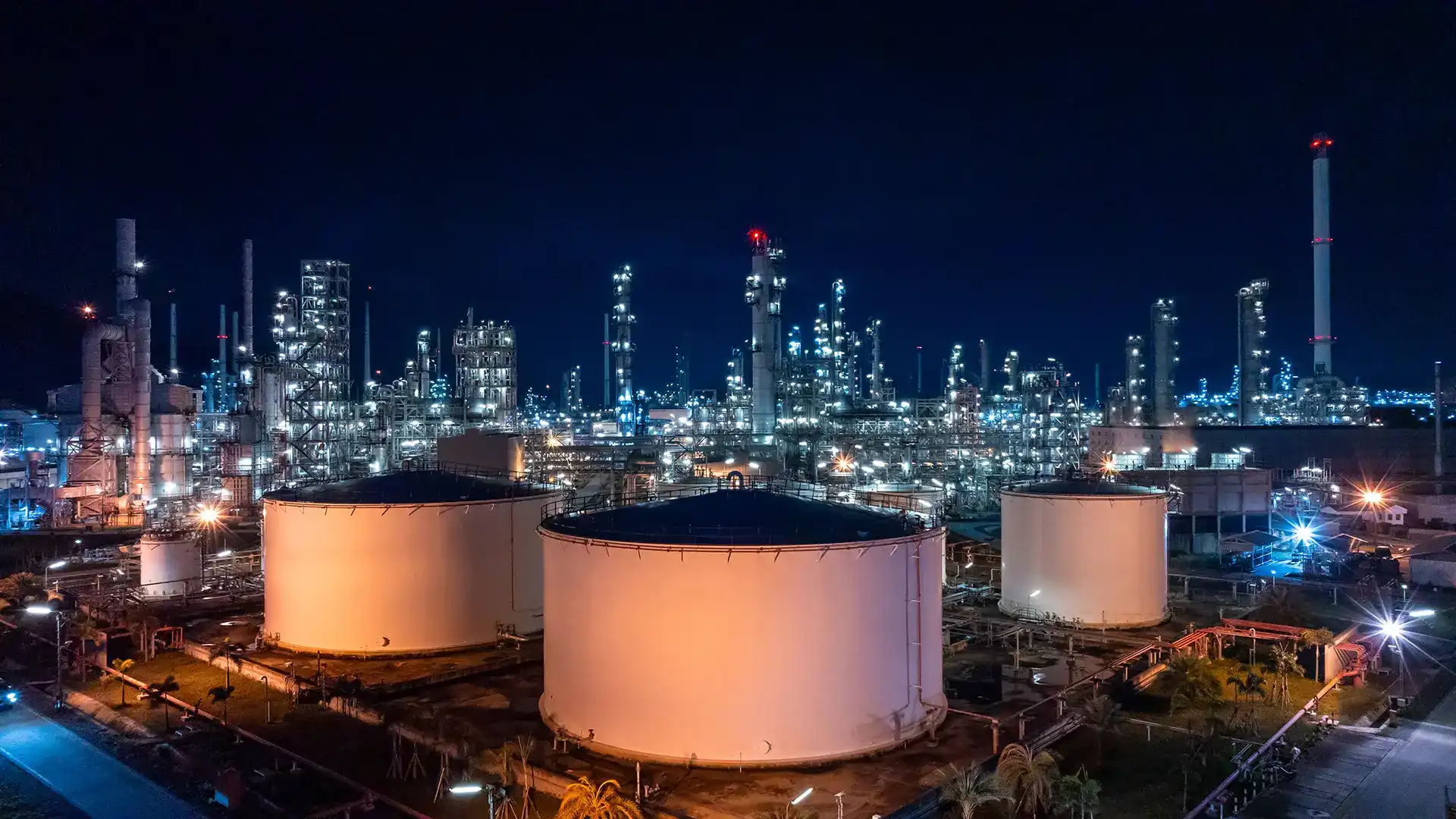
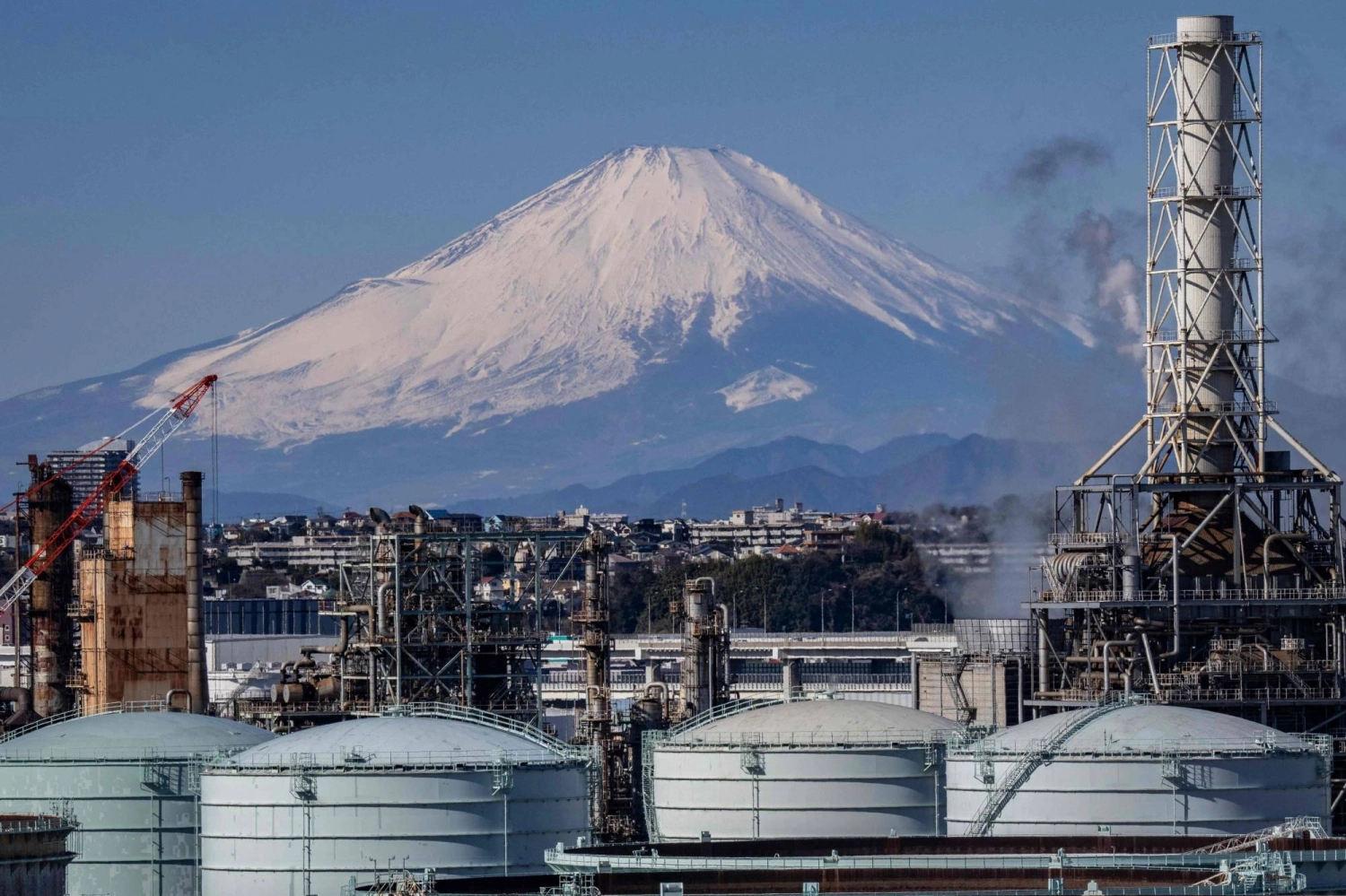
The specific numbers define the scale of what China has absorbed. Chinese seaborne crude purchases fell by 3.6 million barrels per day between February and April 2026 a reduction large enough to neutralise, barrel for barrel, the loss of Iraqi, Saudi, Kuwaiti, and Emirati volumes that would normally transit Hormuz. Official data from Beijing's General Administration of Customs shows China imported crude oil at a daily rate of 11.99 million barrels in early 2026, marginally above the 2025 average of 11.55 million barrels per day itself a record. The crisis reversed this trajectory sharply. China's April crude imports fell 20% year on year to 38.47 million tonnes, the lowest level since July 2022. Independent refiners the so called "teapot" facilities concentrated in Shandong province that typically process 3-4 million barrels daily of discounted crude from Iran, Russia, and Venezuela have drawn down the inventory stockpiles built during 2025's record import year rather than compete for scarce spot cargoes at crisis premiums. According to Rystad Energy, China stockpiled 430,000 barrels per day in 2025, building strategic petroleum reserve cover to 90-100 days of import requirements. State-owned enterprises Sinopec and PetroChina, with long-term supply agreements and substantial strategic reserves, have simultaneously delayed discretionary spot purchases while Hormuz remains blocked. The strategy is rational and precise: why pay $12-15 per barrel in alternative source premiums when you hold 90 days of inventory?
The geopolitical timeline matters because markets are currently pricing it incorrectly. On 1 June 2026, Iran formally ended indirect negotiations with the United States and vowed to completely seal the Strait of Hormuz not merely restrict it, but seal it while simultaneously threatening to extend the blockade to the Bab al-Mandeb strait at the southern entrance to the Red Sea. Brent rose 6.7% to $97.28 within hours of that announcement. The market's reaction was correct. The subsequent reversion below $95 was not. The 1 June walkout represents a qualitative escalation: Iran has moved from tactical restriction of the strait to formal declaration of intent to close it entirely and expand the theatre to a second chokepoint simultaneously. The Bab al-Mandeb the 29 kilometre wide passage between Yemen and Djibouti through which roughly 10% of world traded oil passes, and through which European LNG import cargoes route from Qatar and East Africa would, if blocked, compound the Hormuz disruption rather than substitute for it. Two chokepoints closed simultaneously would remove any remaining bypass logic from the global energy routing map. This was the threat the market absorbed on 1 June and then dismissed within 48 hours. It should not have been dismissed.
The preceding timeline helps contextualise why the 1 June walkout marks a genuine break from earlier signals. When Pakistan mediated talks produced a two week ceasefire announcement on 8 April, Brent fell 15.9% in a single session to $92.30 on hopes of imminent strait reopening. That relief proved illusory within 24 hours, as the IRGC reimposed restrictions citing Israeli ceasefire violations in Lebanon. Traffic remained at roughly 5% of normal under an Iranian supervised northern corridor accessible only to vessels Iran deemed non-hostile. When the United States then imposed a counter naval blockade of Iranian ports on 13 April following the collapse of the Islamabad Talks, Iran declared this a ceasefire violation of its own. By 9 June, despite the ceasefire remaining nominally in place extended through ongoing Doha negotiations the strait operates at approximately 10% of pre-war volume. The sequence is not a negotiation approaching resolution. It is a negotiation that has already failed, with Iran having formally declared on 1 June that it considers the talks ended. Markets that price Brent below $95 on the assumption of Q3 reopening are pricing an outcome the Iranian Foreign Ministry has explicitly foreclosed.
The OPEC+ headline numbers deserve scrutiny that most market commentary has not applied. The cartel authorised another 188,000 barrels per day of production increases for July the fourth consecutive monthly rise at its 7 June meeting. Bloomberg's energy analyst Javier Blas identified the structural problem with treating this figure as meaningful supply: OPEC+ quotas cover only crude oil and exclude condensates and natural gas liquids the lighter petroleum streams that flow alongside crude from Gulf fields and count as oil supply in global demand statistics but sit entirely outside the quota framework. This is not an accounting curiosity. Gulf fields, particularly in Abu Dhabi and Qatar, produce significant condensate volumes. Reporting quota compliance while condensate flows freely underneath the quota line constitutes, as Blas characterised it, artistic deception: the headline barrel number overstates the tightening discipline while the actual supply picture is looser than the number implies. More fundamentally, the 188,000 barrels per day authorised for July are phantom barrels. They are real in the sense that field capacity exists to produce them. They are phantom in the sense that the physical transit route to their largest customers is closed, and Kuwait a significant Gulf producer has already signalled that its output will not recover quickly even after Hormuz reopens, citing infrastructure maintenance backlogs. Physical supply and paper quotas have completely decoupled. Traders who build positions on the OPEC+ headline number without adjusting for the condensate exclusion and the transit constraint are trading a fiction.
Consider the specific mechanics of this margin destruction across the Gulf producer complex. Iraq routes 95% of its oil exports through Hormuz, because its southern Basra terminals sit inside the Gulf and its Turkey pipeline remains largely offline following damage. Iraq-China crude flows collapsed 92%, from 790,000 barrels per day in February to roughly 60,000 in May a number that functions as the single clearest quantitative measure of how completely shut Hormuz actually is. Because Iraq has almost no pipeline bypass to the Red Sea, its export figure is a near-pure reading of strait access conditions, not contaminated by rerouting. Iraq has been forced into a 70% production cut, from 4.3 million to 1.3 million barrels per day since the conflict began. The lost revenue is immediate and unrecoverable: at current prices, Iraq alone surrendered approximately $180 million in daily oil income. Saudi Arabia, Kuwait, and the UAE face structurally identical bottlenecks unable to reach their largest Asian customer while alternative markets require shipping routes that add $15-20 per barrel in freight costs. The UAE's existing Abu Dhabi Crude Oil Pipeline which bypasses Hormuz entirely via an overland route to Fujairah on the Indian Ocean coast carries just 1.5 million barrels per day, a physical ceiling against the 20 million barrels that once flowed through the strait daily. Physical crude accumulates in Fujairah storage tanks, unable to reach the scale of buyers that previously absorbed Gulf volumes.
On the buy side, Chinese refiners and trading houses have turned the crisis into a procurement advantage. The teapot refining complex, which built inventory during 2025's record import year specifically to exploit discount opportunities in constrained markets, is running existing stockpiles rather than buying. This is not panic or dysfunction. It is the rational execution of an inventory strategy that was built for exactly this contingency. Large state-owned enterprises like Sinopec and PetroChina have the balance sheet and the reserve position to hold off spot purchases for months. The effect, measured in Brent prices, is that the world's largest oil buyer has temporarily removed itself from the marginal price-setting role and in doing so, has placed a ceiling on a market that physical supply conditions would otherwise push through $100 without resistance. On the sell side, West African producers like Nigeria and Angola who in previous Gulf disruptions captured significant market share by diverting Atlantic Basin cargoes to Asian buyers willing to pay premiums over constrained Middle East supply find this time different. Chinese demand destruction has neutralised their freight advantage. A Suezmax carrying 1 million barrels from Lagos to Qingdao earns $35-40 per tonne at current rates double pre-crisis levels but arrives at a Chinese discharge port to find no willing buyers at the delivered price. The phantom barrels of OPEC+ authorisation apply equally to West African sellers: the paper volumes exist but the demand counterparty has withdrawn.
For traders operating at the large integrated level a Trafigura, Vitol, Gunvor, or the trading arm of a national oil company the China-Hormuz dynamic has created a hedging environment where physical fundamentals and paper markets simultaneously send contradictory signals, making this one of the most treacherous positioning environments since the 2008 financial crisis. A major trading house holding long positions in Dubai crude the benchmark for Middle East physical crude, quoted in dollars per barrel at delivery to Oman for July delivery faces the prospect of delivery into a transit route that is physically inaccessible. The Brent-Dubai differential the price gap between North Sea crude and Middle East crude that normally determines whether Atlantic Basin oil can flow economically to Asian refineries has been swinging $8 per barrel intraday, a range that historically took an entire month to traverse. Simultaneously, the traditional refinery arbitrage of buying cheap Middle East crude and selling refined products into Asia has inverted: refiners must now import expensive Atlantic Basin crude, adding $12-15 per barrel to their input costs, while refined product export margins to Chinese customers have collapsed because Chinese demand has fallen. For a mid-sized Indian refiner processing 200,000 barrels daily a scale that represents a significant portion of Indian independent refining capacity this is an unhedgeable squeeze. Crude input costs are up $12-15 per barrel against the alternative; refined product revenues are down because Asian demand is soft; and neither dynamic has a straightforward financial instrument available at regional scale to neutralise it.
The financing dimension of this crisis is distinct from any previous Gulf disruption and explains why the 8 April ceasefire announcement provided such transitory price relief. Chinese banks, wary of US Treasury and EU secondary sanctions exposure under both the Iranian port blockade imposed on 13 April and the IRGC's corridor access conditions, have tightened letters of credit the bank-guaranteed payment instruments that make most international commodity trade possible for Middle East crude purchases. A letter of credit works by having the buyer's bank guarantee payment to the seller's bank once shipping documents are presented; the bank absorbs the buyer's credit risk for the duration of transit and port processing. Documentary credit requirements for Middle East crude now demand 120 day validity instead of the standard 90 day term, reflecting the extended voyage times and port clearance delays of rerouted cargoes. This adds financing costs of approximately $0.50-0.80 per barrel on every cargo. Trade finance desks at European and Asian banks are pricing risk premiums of 150-200 basis points above SOFR the Secured Overnight Financing Rate, the benchmark interest rate for dollar denominated trade finance for any crude cargo transiting within 200 nautical miles of Iranian territorial waters. At current SOFR levels, that premium represents a meaningful additional burden on every letter of credit opened for Gulf-origin crude. The financing cost add-on is not large relative to the headline crude price, but it is permanent for the duration of the crisis and it accumulates across every cargo, every trade cycle, every counterparty chain. It is also invisible in Brent price quotes, meaning that traders watching the screen price are not seeing the true delivered cost of Gulf crude.
The freight dimension concentrates wealth in a specific and counterintuitive place: shipowners, not cargo owners, are capturing the crisis premium. VLCCs Very Large Crude Carriers, supertankers capable of loading 2 million barrels that would normally transit Hormuz to Asia now earn $45-50 per tonne on alternative routes to European destinations, against $14-18 per tonne pre-crisis. A VLCC carrying 2 million barrels from Jeddah to Rotterdam earns approximately $80 million per voyage at current freight rates, compared with $30 million pre-crisis. The additional $50 million per voyage flows entirely to the vessel operator, not to the cargo owner, not to the refiner processing the crude, and not to the end consumer. Suezmax tankers mid-size vessels carrying approximately 1 million barrels, the standard unit for West African and Mediterranean crude trades loading at Red Sea terminals command $38-42 per tonne. However, the 28 day voyage from Jeddah to Rotterdam versus 15 days to Shanghai means annual vessel utilisation falls, partially offsetting the per-voyage rate improvement. The operational constraint is more severe than the headline rate suggests: war-risk insurance withdrawal by six major P&I clubs, the mine clearance operations still required along the northern Iranian shipping corridor, and the backlog of 1,550 stranded vessels create a physical bottleneck that will persist well beyond any ceasefire announcement. One analyst at a major maritime insurance house estimated that full freight normalisation through Hormuz will not occur before 2027 even under an optimistic ceasefire scenario, because the operational restoration of the corridor mine-clearing, P&I reinstatement, carrier confidence rebuilding requires time that geopolitical announcements cannot compress.
The TTF natural gas dimension of this crisis has received almost no attention in commodity trade intelligence focused on crude markets, and this gap is the most commercially consequential omission for a European operator audience. TTF the wholesale gas benchmark priced in euros per megawatt hour at the Dutch Title Transfer Facility hub is not independent of oil markets when the supply source is liquefied natural gas transiting Hormuz. Approximately 20% of the world's LNG trade originates in Qatar and transits Hormuz or passes through its Iranian approach corridor. A portion of this flow also exits through Bab al-Mandeb en route to Europe. With both chokepoints now under Iranian threat Hormuz functionally closed and Bab al-Mandeb explicitly threatened on 1 June European LNG import prices carry a latent disruption premium that is not yet priced into TTF's current €48.50 level. If Iran follows through on its 1 June threat to extend the blockade to Bab al-Mandeb, European LNG cargoes diverted around the Cape of Good Hope face an additional 14 day voyage premium, adding approximately €2-4 per megawatt hour to delivered LNG cost at Northwest European terminals. This is not a marginal adjustment. For a European industrial gas buyer consuming 50 million cubic metres annually a mid-sized ceramics plant, a glass manufacturer, a fertiliser producer a €3/MWh increase in gas input cost represents approximately €1.5 million in annual cost uplift that cannot be passed through into product prices without competitive consequences. The current TTF level is artificially suppressed, for the same reason Brent is artificially suppressed: Chinese demand weakness is holding down LNG spot prices at exactly the moment that physical supply infrastructure is under genuine structural threat.
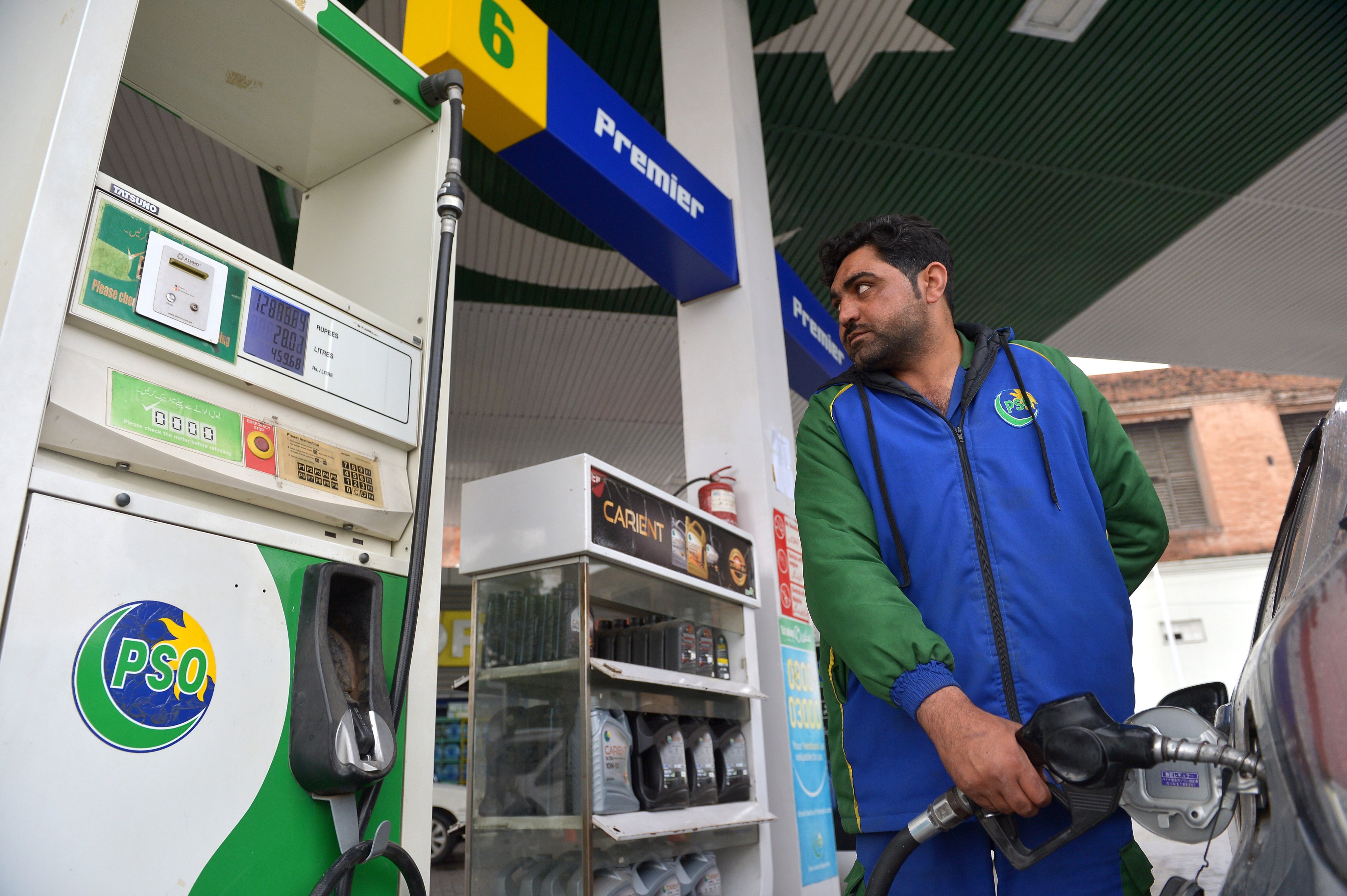
The downstream European exposure extends beyond the gas benchmark itself to the named operators who carry concentrated commodity input cost risk. TotalEnergies and Shell Europe's two largest integrated energy companies, both with significant Middle East crude sourcing and LNG import operations carry direct exposure to the widening gap between Brent screen prices and actual delivered costs of Gulf crude. Both companies source significant volumes from Gulf producers under long-term supply agreements; both now face the operational reality that agreed supply cannot physically reach its destination at contracted volumes. European airlines face a parallel and more immediately visible crisis. Jet fuel kerosene, or Jet A-1, the aviation fuel priced off crude oil and refined products markets has repriced sharply relative to pre-crisis levels as Atlantic Basin crude replaces cheaper Gulf crude in European refinery feedstock slates. Lufthansa and IAG the International Airlines Group that owns British Airways, Iberia, and Vueling have disclosed widening fuel cost exposure in their Q2 guidance. American Airlines has already suspended specific summer routes over jet fuel cost economics, the first major US carrier to make explicit route suspensions directly attributable to the Hormuz disruption. For a European airline operating a medium haul network, a $15 per barrel increase in crude input cost translates to approximately a 10-12% increase in fuel burn costs on a 90 minute sector, at a point in the summer schedule when capacity is committed and yield management has already been executed. The hedge position that protected Q1 costs is rolling off. Q3 and Q4 fuel exposure is open.
Central and Eastern Europe occupies the most structurally exposed position in the European operator landscape, for reasons that compound across supply chains. Countries in Poland, Hungary, the Czech Republic, Slovakia, and the Baltic states replaced Russian pipeline crude and natural gas with seaborne and LNG cargoes routed past the Gulf following the 2022 energy shock and the subsequent sanctions architecture. They are now simultaneously exposed to a closed Hormuz strait restricting the Gulf crude they substitute for Russian pipeline volumes, and a shrinking Russian supply backstop as Ukrainian drone strikes on Russian oil refineries at Ryazan, Saratov, and Novoshakhtinsk have reduced Russian export refinery capacity and tightened the availability of Russian petroleum products that would otherwise flow through Belarus into Central European markets. The squeeze is structural and bilateral: the diversification strategy that was intended to reduce exposure to a single supplier has inadvertently created exposure to two simultaneous crises in two separate supply chains, with no remaining backstop to absorb either.
Historical comparison confirms the current situation is anomalous in the direction of underpricing, not overpricing. During the 1980s Iran-Iraq tanker war, Brent crude rose from $28 to $42 a 50% increase within six months of major strait disruptions, and that was when Hormuz disruption was threatened and intermittent rather than sustained and near-total. The 1990-91 Gulf War saw crude spike from $17 to $46 as markets priced the risk of complete Middle East supply loss over a period of weeks. The 1973 Arab oil embargo produced a 400% crude price increase on the back of a supply reduction that was quantitatively smaller than what the current strait closure represents in physical barrels withheld. In each previous case, the market priced the supply disruption in full within days of its onset. In the current crisis, the market has found a counterweight in Chinese demand destruction of a scale that has no precedent in previous disruptions China imported negligible volumes during the tanker war, the Gulf War, and the embargo. Beijing has become the globe's demand shock absorber precisely because it is now the world's largest single crude importer, capable of adjusting its purchasing volumes by 3-4 million barrels per day in either direction through inventory management alone.
The moment that absorber reverses is the moment the price ceiling lifts. China's strategic petroleum reserves currently hold 90-100 days of import cover; if imports remain at current suppressed levels through summer 2026, that cover declines to 60-70 days by September. National oil companies have announced plans for at least 169 million barrels of additional storage capacity in 2025-2026, capacity that must be filled once built. Seasonal industrial demand in China which historically accelerates in Q3 as manufacturing and construction activity peaks will create refinery throughput requirements that inventory drawdown cannot satisfy indefinitely. The observable early signals will arrive before the official customs data: watch the weekly crude oil tanker loading nominations at Qingdao and Ningbo for acceleration above recent averages, and monitor the Brent-Dubai differential for compression below $2 per barrel, which historically indicates Asian refinery buying is resuming at scale. When those signals appear with Hormuz still functionally closed, with Iranian talks formally ended as of 1 June, with Bab al-Mandeb under active threat, and with Kuwait having signalled its output will not recover quickly even after reopening nothing in the physical supply architecture constrains Brent above $100 or TTF above €55. The current price level is not a market judgment that the crisis is manageable. It is a market judgment that China will continue to not buy. When that judgment proves wrong, European energy bills crude derived fuel costs, gas input costs for industry, aviation fuel for airlines face the repricing that Hormuz alone would have delivered in any previous era of this market.
.jpg)
.jpg)

'%3e%3cg id='Final-Copy-2_2_' transform='translate(1275.000000, 200.000000)'%3e%3cpath class='st0' d='M7.4,12.8h6.8l3.1-11.6H7.4C4.2,1.2,1.6,3.8,1.6,7S4.2,12.8,7.4,12.8z'/%3e%3c/g%3e%3c/g%3e%3c/g%3e%3cg id='final---dec.11-2020'%3e%3cg id='_x30_208-our-toggle' transform='translate(-1275.000000, -200.000000)'%3e%3cg id='Final-Copy-2' transform='translate(1275.000000, 200.000000)'%3e%3cpath class='st1' d='M22.6,0H7.4c-3.9,0-7,3.1-7,7s3.1,7,7,7h15.2c3.9,0,7-3.1,7-7S26.4,0,22.6,0z M1.6,7c0-3.2,2.6-5.8,5.8-5.8 h9.9l-3.1,11.6H7.4C4.2,12.8,1.6,10.2,1.6,7z'/%3e%3cpath id='x' class='st2' d='M24.6,4c0.2,0.2,0.2,0.6,0,0.8l0,0L22.5,7l2.2,2.2c0.2,0.2,0.2,0.6,0,0.8c-0.2,0.2-0.6,0.2-0.8,0 l0,0l-2.2-2.2L19.5,10c-0.2,0.2-0.6,0.2-0.8,0c-0.2-0.2-0.2-0.6,0-0.8l0,0L20.8,7l-2.2-2.2c-0.2-0.2-0.2-0.6,0-0.8 c0.2-0.2,0.6-0.2,0.8,0l0,0l2.2,2.2L23.8,4C24,3.8,24.4,3.8,24.6,4z'/%3e%3cpath id='y' class='st3' d='M12.7,4.1c0.2,0.2,0.3,0.6,0.1,0.8l0,0L8.6,9.8C8.5,9.9,8.4,10,8.3,10c-0.2,0.1-0.5,0.1-0.7-0.1l0,0 L5.4,7.7c-0.2-0.2-0.2-0.6,0-0.8c0.2-0.2,0.6-0.2,0.8,0l0,0L8,8.6l3.8-4.5C12,3.9,12.4,3.9,12.7,4.1z'/%3e%3c/g%3e%3c/g%3e%3c/g%3e%3c/g%3e%3c/svg%3e) Privacy Choices
Privacy Choices