.avif)
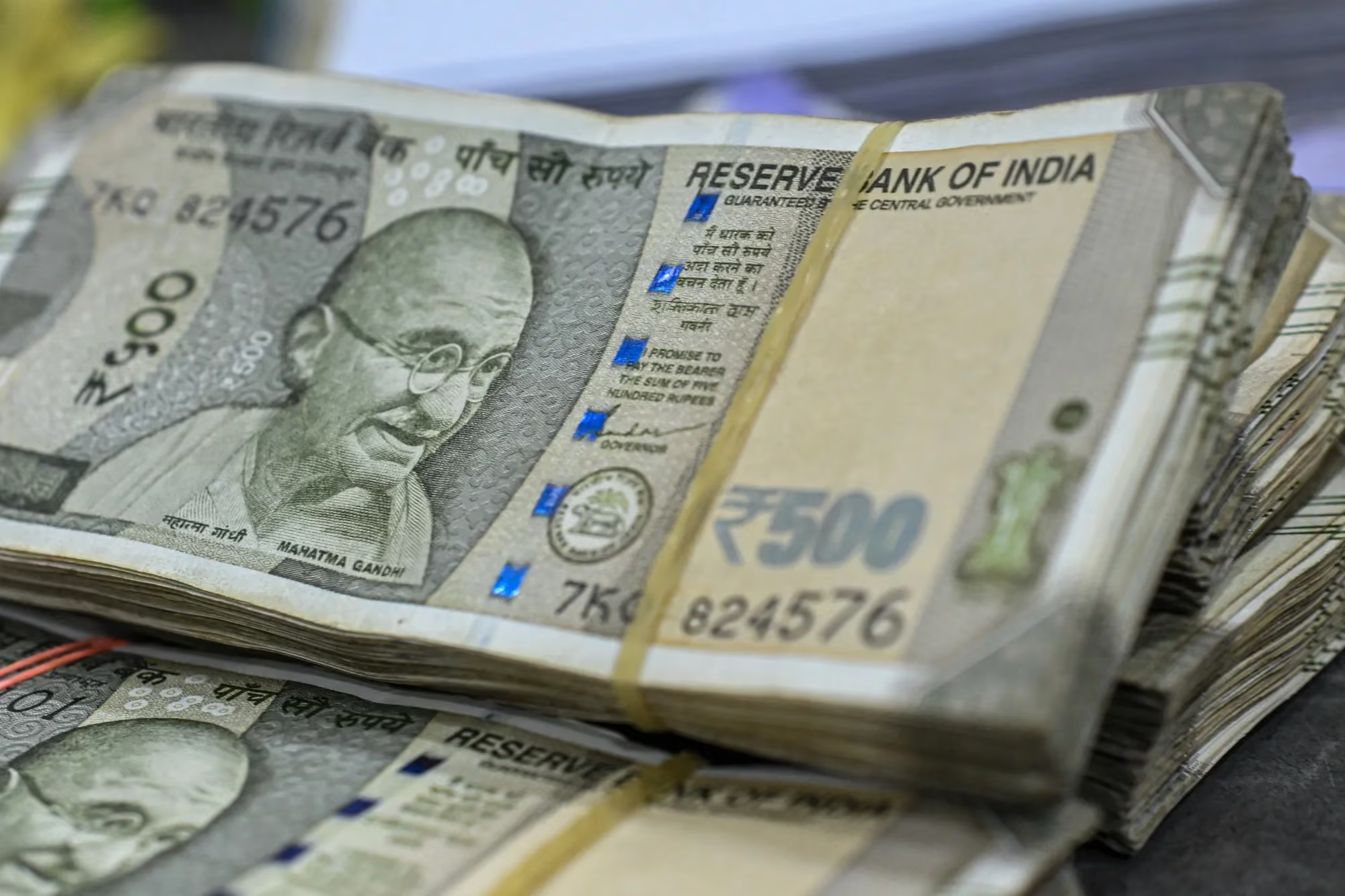
Indian crude importers face an immediate liquidity crunch as foreign exchange reserves fell $7.5 billion to $681.4 billion in the week ended May 22, with the Reserve Bank of India (RBI) burning through dollar reserves to defend the rupee against sustained energy price pressure. India's forex reserves dropped $7.511 billion to $681.384 billion during the week ended May 22, following a previous week's drop of $8.094 billion to $688.894 billion. For large integrated importers national oil companies, private refiners, state-owned enterprises every percentage point of rupee depreciation adds approximately Rs 1,200 per barrel to procurement costs on a landed basis. The Rupee slid to a record low of 96.96 per dollar before being shored up by firm RBI intervention over multiple trading sessions, eventually ending the session at 95 per dollar, up 0.7% week on week. The arithmetic is stark: at current import volumes of 5.5 million barrels daily, each rupee of depreciation translates to roughly $67 million in additional monthly procurement costs for the sector collectively.
The margin anatomy reveals where the pressure concentrates. As of March 11, 2026, the price of the Indian crude basket reached US$113.57 per barrel, marking a sharp jump compared with previous months when it fluctuated within the US$62-70 per barrel range. For a mid-sized private refinery importing 100,000 barrels daily, the move from $68 to $114 per barrel represents an additional $4.6 million in daily procurement costs $138 million monthly. Currency depreciation compounds this burden. The rupee's slide from 83.5 to 95 per dollar since February adds another 14% to dollar-denominated costs when converted to rupee terms. This is not gradual margin erosion this is step-function cost inflation that rewrites procurement economics entirely. The combined impact: a 65% increase in rupee-denominated crude costs over three months, before factoring freight premiums or financing charges.
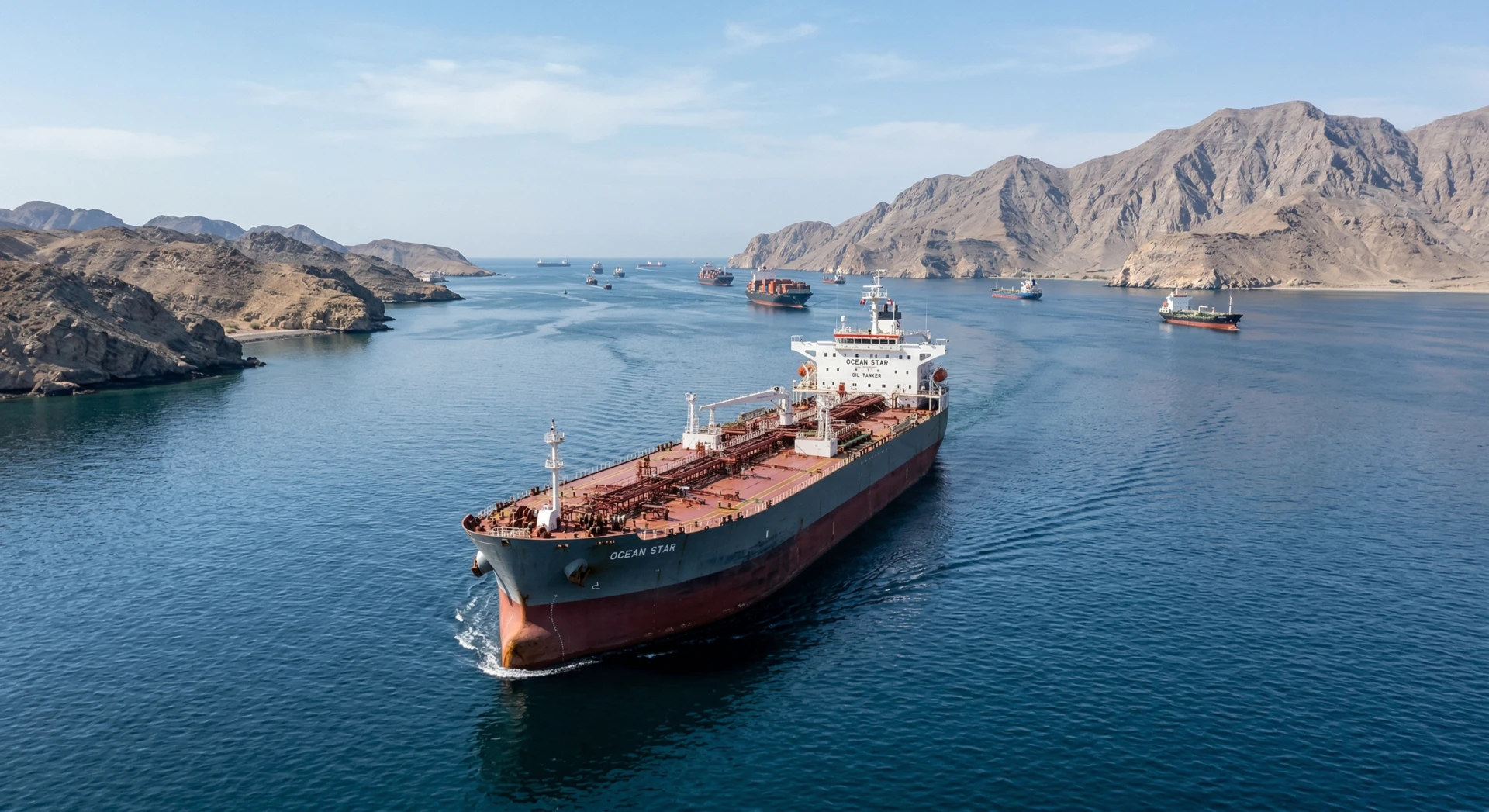
Freight is compounding the crisis through route diversification requirements. The Strait of Hormuz is a roughly 33 kilometre wide channel between the Gulf of Oman and the Persian Gulf, through which an estimated 20% of global oil trade transits daily. Any disruption to shipping through it has immediate consequences for crude availability worldwide. India sources around 40 per cent of its crude oil imports, over 50 per cent of LNG imports and nearly 90 per cent of LPG imports through routes linked to the strategic waterway. A VLCC (Very Large Crude Carrier a supertanker capable of carrying 2 million barrels) on the traditional Persian Gulf to West Coast India route previously earned approximately $8 per metric tonne. Today, alternative routing through Atlantic Basin suppliers commands $18-24 per metric tonne, with Brazil-India voyages requiring 35-40 days versus 18-22 days from the Gulf. The additional $16 per metric tonne translates to $32 million per VLCC voyage expense that either compresses refiner margins or passes through to end consumers via higher fuel prices.
On the buy side: Large integrated refiners Indian Oil Corporation, Reliance Industries, Bharat Petroleum face immediate working capital pressure as letter of credit (LC) costs escalate alongside currency volatility. An LC a bank guarantee that payment will be made once shipping documents are presented now carries higher fees due to increased counterparty risk and currency hedging requirements. Where LC fees previously ranged 0.8-1.2% of cargo value, current rates reach 1.8-2.5% for 90 day terms. For a $150 million crude cargo, this represents an additional $1.5-2 million in transaction costs per shipment. Forward currency hedging previously available at 2-4% premium for 6 month terms now costs 7-12% premium, reflecting heightened volatility expectations.
On the sell side: International crude suppliers Saudi Aramco, UAE's ADNOC, Russian trading entities are adjusting contract terms to accommodate payment risk and currency volatility. Where previous term contracts allowed 60-90 day payment cycles, current negotiations favor 30-45 day terms with enhanced security requirements. Some suppliers are demanding escrow arrangements or increased margin deposits additional working capital requirements that squeeze buyer liquidity. Spot premiums over dated Brent have widened from $2-4 per barrel to $8-12 per barrel for alternative supply sources, as sellers price in logistics complexity and extended voyage times. The premium represents pure margin transfer from buyer to seller importers absorb higher acquisition costs while suppliers capture scarcity value.
For traders and intermediaries: Independent trading houses Vitol, Trafigura, regional distributors face compressed margins as bid-offer spreads widen amid volatility while credit costs increase. The DXY exchange rate fell to 98.8926 on May 29, 2026, down 0.13% from the previous session. Over the past month, the United States Dollar has strengthened 0.85%. Dollar strength against emerging market currencies creates natural hedge opportunities for traders with dollar funding access, but smaller operators without derivatives access struggle to manage currency exposure. Independent refiners and fuel distributors typically 50,000-200,000 barrel monthly importers cannot access the forward currency markets effectively and resort to faster inventory turnover to minimize exposure, reducing their operational flexibility.
For large integrated traders with derivatives access: Major trading houses utilize currency forwards, crude oil futures spreads, and freight derivatives to partially offset margin compression. A typical hedge structure involves selling USD/INR forward contracts to lock exchange rates while simultaneously buying crude oil call options to cap procurement costs. Current 6 month USD/INR forward rates trade at 97.5-98.2, allowing some protection against further depreciation, though at significant premium cost. Cross-commodity spreads selling refined product futures while buying crude futures provide margin protection when refining economics deteriorate, though basis risk remains substantial given supply chain disruptions.
For smaller regional operators without derivatives access: Mid-sized fuel importers, independent storage operators, and regional distributors rely on practical alternatives including bilateral arrangements with suppliers for extended payment terms, inventory management to minimize exposure duration, and supplier diversification to avoid single-source dependency. Some operators negotiate rupee denominated contracts with domestic refiners or establish currency pooling arrangements with other importers to share hedging costs. These solutions provide partial protection but cannot fully offset the structural margin compression facing the sector.
For observers: Monitor the USD/INR weekly fixing published by the Foreign Exchange Dealers Association of India (FEDAI) each Friday sustained moves above 97 signal continued reserve pressure requiring policy response. The RBI's weekly foreign exchange reserves bulletin, released each Friday, provides the primary signal of intervention intensity. The kitty had expanded to an all-time high of $728.494 billion during the week ended February 27 this year before the onset of the Middle East conflict. Reserve levels approaching $650 billion would likely trigger enhanced capital controls or emergency financing measures. Track the Indian crude basket price published monthly by the Petroleum Planning and Analysis Cell sustained levels above $110 per barrel indicate structural margin pressure that reserves alone cannot buffer indefinitely. The next policy pivot arrives within 60 days if reserves continue declining at current pace.

.jpg)
.jpg)

'%3e%3cg id='Final-Copy-2_2_' transform='translate(1275.000000, 200.000000)'%3e%3cpath class='st0' d='M7.4,12.8h6.8l3.1-11.6H7.4C4.2,1.2,1.6,3.8,1.6,7S4.2,12.8,7.4,12.8z'/%3e%3c/g%3e%3c/g%3e%3c/g%3e%3cg id='final---dec.11-2020'%3e%3cg id='_x30_208-our-toggle' transform='translate(-1275.000000, -200.000000)'%3e%3cg id='Final-Copy-2' transform='translate(1275.000000, 200.000000)'%3e%3cpath class='st1' d='M22.6,0H7.4c-3.9,0-7,3.1-7,7s3.1,7,7,7h15.2c3.9,0,7-3.1,7-7S26.4,0,22.6,0z M1.6,7c0-3.2,2.6-5.8,5.8-5.8 h9.9l-3.1,11.6H7.4C4.2,12.8,1.6,10.2,1.6,7z'/%3e%3cpath id='x' class='st2' d='M24.6,4c0.2,0.2,0.2,0.6,0,0.8l0,0L22.5,7l2.2,2.2c0.2,0.2,0.2,0.6,0,0.8c-0.2,0.2-0.6,0.2-0.8,0 l0,0l-2.2-2.2L19.5,10c-0.2,0.2-0.6,0.2-0.8,0c-0.2-0.2-0.2-0.6,0-0.8l0,0L20.8,7l-2.2-2.2c-0.2-0.2-0.2-0.6,0-0.8 c0.2-0.2,0.6-0.2,0.8,0l0,0l2.2,2.2L23.8,4C24,3.8,24.4,3.8,24.6,4z'/%3e%3cpath id='y' class='st3' d='M12.7,4.1c0.2,0.2,0.3,0.6,0.1,0.8l0,0L8.6,9.8C8.5,9.9,8.4,10,8.3,10c-0.2,0.1-0.5,0.1-0.7-0.1l0,0 L5.4,7.7c-0.2-0.2-0.2-0.6,0-0.8c0.2-0.2,0.6-0.2,0.8,0l0,0L8,8.6l3.8-4.5C12,3.9,12.4,3.9,12.7,4.1z'/%3e%3c/g%3e%3c/g%3e%3c/g%3e%3c/g%3e%3c/svg%3e) Privacy Choices
Privacy Choices